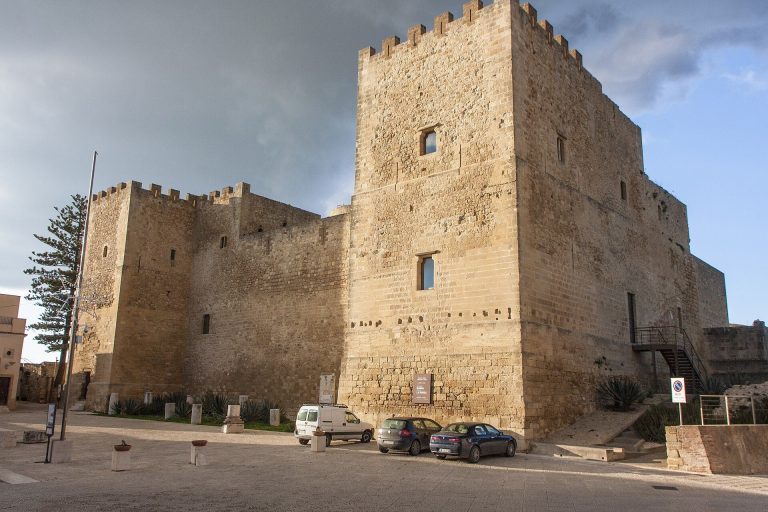
Chiesa della Madonna delle Giummare: A Former Royal Abbey in Italy
Site at a Glance
- Popularity
- Very Low
- Country
- Italy
- Primary era
- Medieval
- Eras represented
- Medieval
- Civilizations
- Kingdom of Sicily, Norman
- Site type
- Religious
- Remains
- Fortified Church
On this page12 sections
History
Foundation and Greek rite
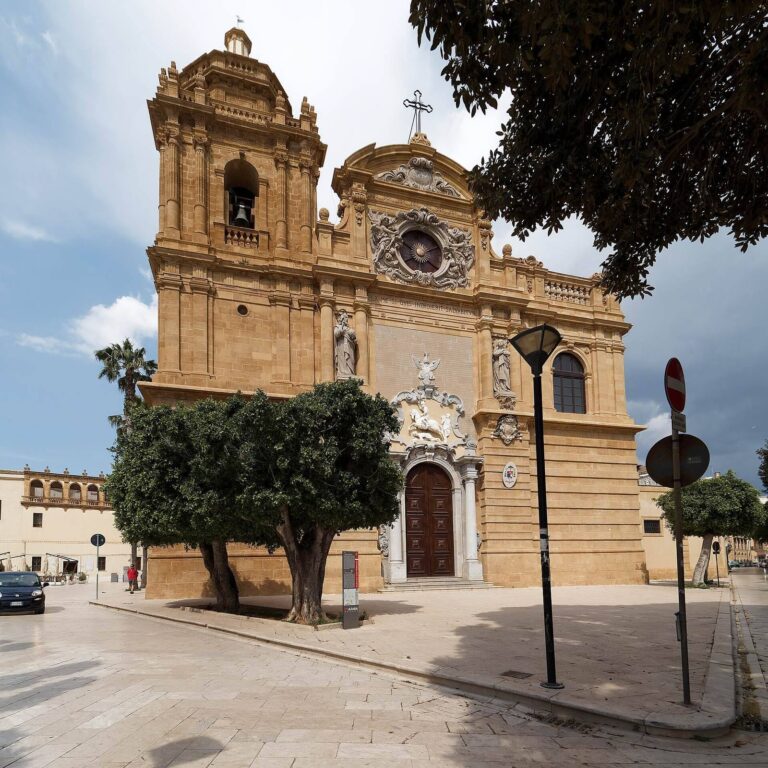
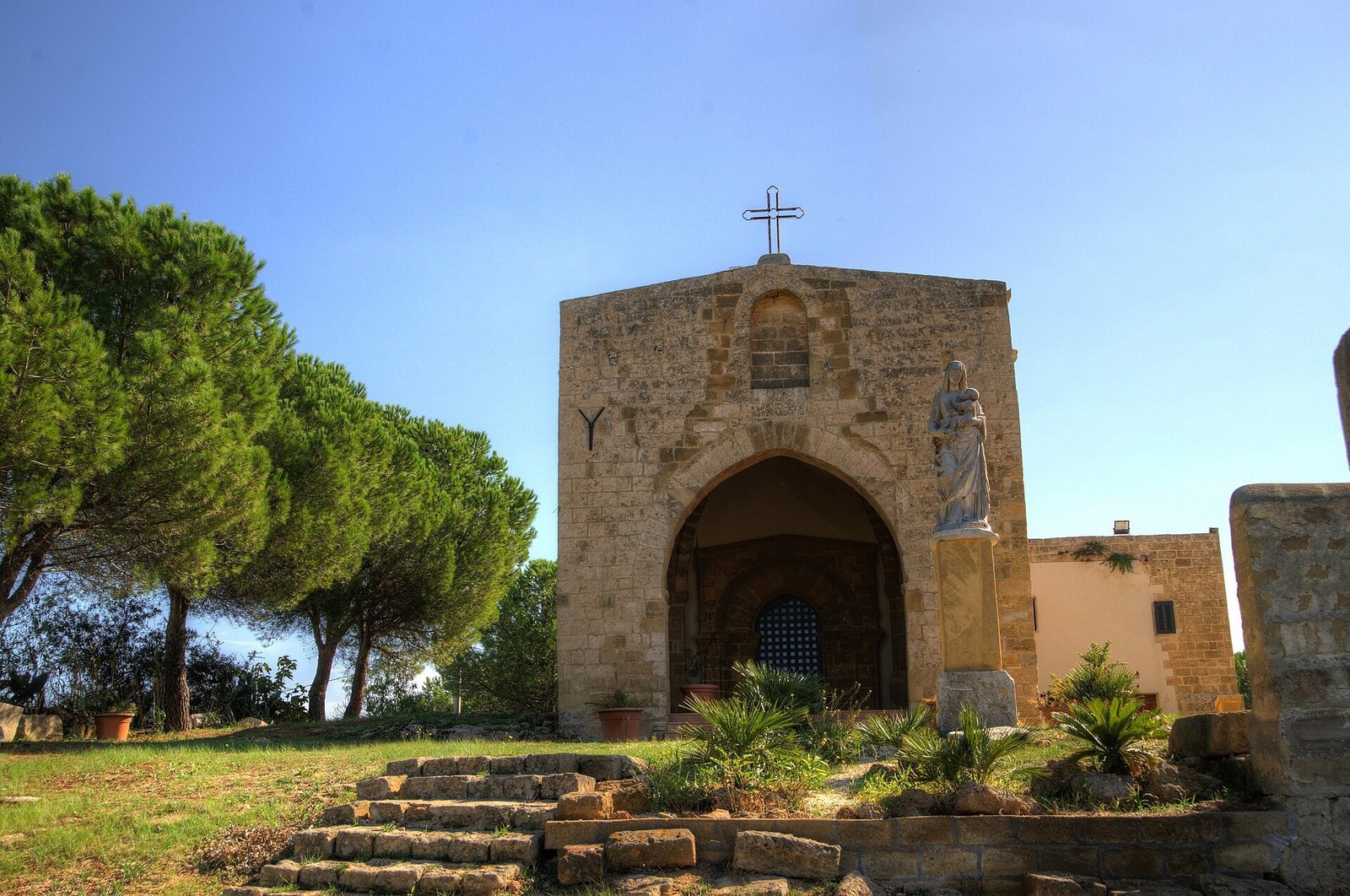
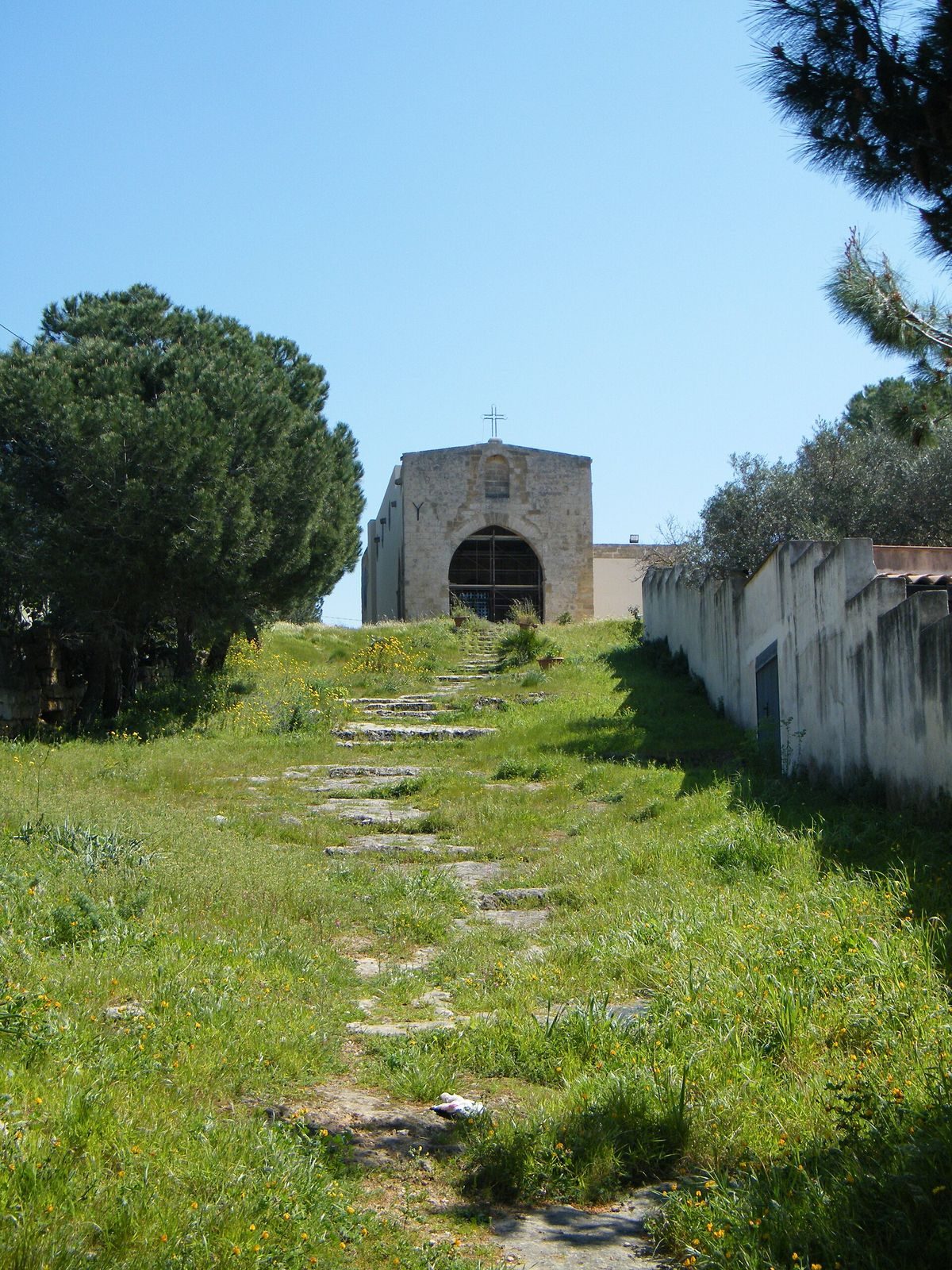
The Chiesa della Madonna delle Giummare is a Catholic church in Italy, founded in 1072 by Norman ruler Count Roger I, the first Count of Sicily, as the Royal Abbey of Santa Maria dell’Alto. The church was completed in 1103. The abbey was a royal abbey-fortress, a monastery associated with royal authority and a defensive role. The church is also known as Madonna dell’Alto and Santa Maria dell’Alto. Its architecture is described as Byzantine-Norman and Arab-Norman, traditions combining Byzantine, Arab, and Norman influences.
The abbey was established where the Giummare watchtower had stood. The tower’s name came from giummara, a local term for the wild-growing dwarf palm. The community initially followed the Greek rite, an Eastern Christian form of worship shaped by Byzantine liturgy, and the Rule of Saint Basil, a monastic rule associated with the fourth-century bishop and theologian Basil of Caesarea. A royal diploma issued by Norman king Roger II in 1145 identifies the abbey as dependent on the Archimandritate of the Most Holy Savior of Messina, a religious jurisdiction headed by an archimandrite.
Changing monastic affiliations
By 1444 the abbey had become Benedictine, belonging to a Western monastic order whose members follow the Rule of Saint Benedict. It later came under the monastery of Gangivecchio. From 1567 to 1811, the Order of Saint John of Jerusalem, a religious and military order, held the abbey in commendam, administering its ecclesiastical affairs or revenues without necessarily serving as its resident monastic superior.
Continued worship and modern status
The church underwent alterations and destruction over the centuries. In 1873 it was transferred to the Diocese of Mazara del Vallo on the condition that it remain open for worship, and it continues in use as a Catholic church. The Ministry of Public Education declared it of historical and artistic interest in 1931, and a royal decree granted it legal personality in 1938.
Remains
Church fabric
The church’s layout centers on a single nave covered by three barrel vaults, curved ceilings that extend along the length of the space. Its entrance, side niches, and defensive features make up the principal surviving architectural groups.
Nave and entrance
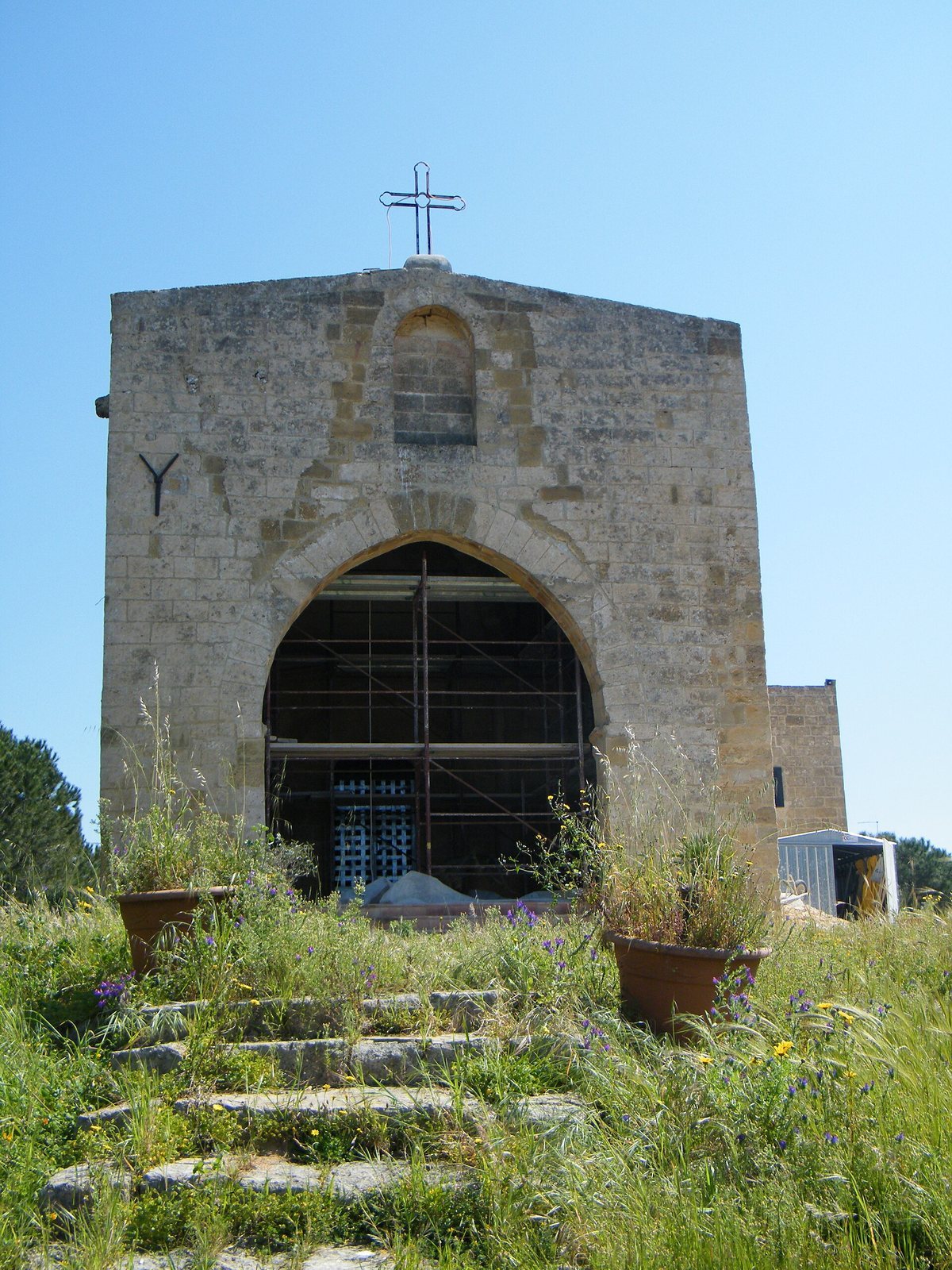
A porch, or covered entrance, stands on the façade. Two pointed arches open in its left wall beside a portal dating to the fourteenth century.
Niches and sculpture
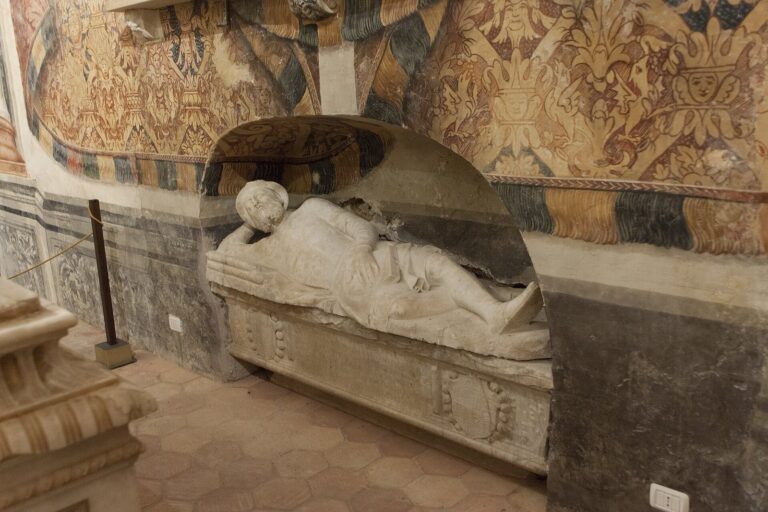
Two side niches contain Byzantine frescoes, paintings made on plaster, depicting Saint Basil of Caesarea and Saint John Chrysostom, an influential early Christian bishop and preacher. One of the paintings is severely damaged. The north niche served as the prothesis, where Eucharistic offerings were prepared in the Byzantine rite; the south niche was the diaconicon, a service area for liturgical items.
A large central niche holds a marble statue of the Madonna, Mary, with the infant Jesus. Made in 1575, the statue bears its maker’s signature.
Defensive features
A defensive tower adjoins the church. On its south side stands a high bastion, a projecting defensive platform.
Objects and furnishings
Stone objects
In 1876, a Roman urn at the church was being used as a washing basin. It is now kept in Mazara del Vallo Cathedral. A plain Corinthian capital, a carved column top in the Corinthian style, was hollowed out for use as a holy-water basin. The small column that supported it, along with the capital, is now in the Diocesan Museum.
Silver liturgical objects
The church retains a silver incense burner and its incense boat, a small vessel for holding incense, as well as a silver monstrance, used to display the consecrated host. These objects bear the coats of arms of the Burgio and Riggio families and a Maltese cross, an emblem associated with the Order of Saint John.