Belaya Fortress (Bely): A Russian Border Stronghold
Site at a Glance
- Popularity
- Medium
- Country
- Russia
- Primary era
- Early Modern
- Eras represented
- Early Modern
- Civilizations
- Unclassified
- Site type
- Military
- Remains
- Fort
On this page11 sections
History
Belaya Fortress (Bely) was a Russian border stronghold in Tver Oblast, Russia, founded in 1506 to defend the frontier against the Grand Duchy of Lithuania. Its history reflects the repeated contests for control of this border region.
Early fortifications and Russian foundation
The earliest defenses stood on the hill now called Cathedral Hill, when the area belonged to the Principality of Smolensk, a regional power. Under Lithuanian rule, the site became an estate and residence of the Belsky princes. They joined the Russian state with their lands in 1499.
Grand Prince Vasily III ordered the military governor Pyotr Semyonovich Loban-Ryapolovsky to establish a large wooden fortress on earthen ramparts. Its purpose was to guard the Russian border against Lithuania.
Sieges and changing rule
During the Russo-Lithuanian War of 1507–1508, a conflict between Russia and Lithuania, the army of King Sigismund I besieged and burned the fortress in 1508. Russian forces under Daniil Shchenya soon retook it. In the Russo-Polish War of 1609–1618, fought between Russia and the Polish-Lithuanian Commonwealth, a state formed by the union of Poland and Lithuania, the fortress surrendered after a long siege in 1610.
In 1613, Prince Dmitry Cherkassky’s forces surrounded the stronghold, and its garrison capitulated. Many Scottish and Irish mercenaries taken prisoner then entered Russian service as a separate company called the “Belsky Germans.” Russian usage of “Germans” could refer broadly to Western Europeans. George Lermont, an ancestor of the poet Mikhail Lermontov, was among the captives.
The Truce of Deulino in 1618 returned the fortress to the Commonwealth. At the start of the Smolensk War, another conflict between Russia and the Commonwealth, Russian forces under Prince Semyon Prozorovsky captured it. In 1634, the fortress’s defense compelled King Władysław IV to negotiate peace. The resulting Peace of Polyanovka transferred Belaya back to the Commonwealth. Russian forces took it without resistance in 1654.
Decline and later status
By the mid-18th century, the fortress had lost its military purpose and fallen into decline. Belaya Fortress is now designated a cultural heritage monument of federal significance in Russia.
Remains
Layout and surviving features
The fortress occupied a hill, with heavy oak-log walls extending for more than a kilometer along earthen ramparts. It could hold up to 10,000 soldiers, and the civilian settlement could shelter inside during a siege. Its defenses also included ammunition cellars, food storehouses, wells, and underground passages.
Upper Town
The Upper Town, or citadel, was the more strongly defended section. A wall and four towers enclosed it. Within were the military governor’s office, an administrative office, a salt storehouse, and a well.
Lower Town
The larger Lower Town adjoined the citadel to the south. Its five towers rose 10 to 20 meters, with lookout structures above their tent-shaped roofs. The eastern entrance passed beneath the Gate Tower. Extending south in an arm, the Lower Town ended at the Sleeve Tower’s former site, where a T-34 tank, a Soviet design developed during the Second World War, now stands.
Outer defenses and landscape
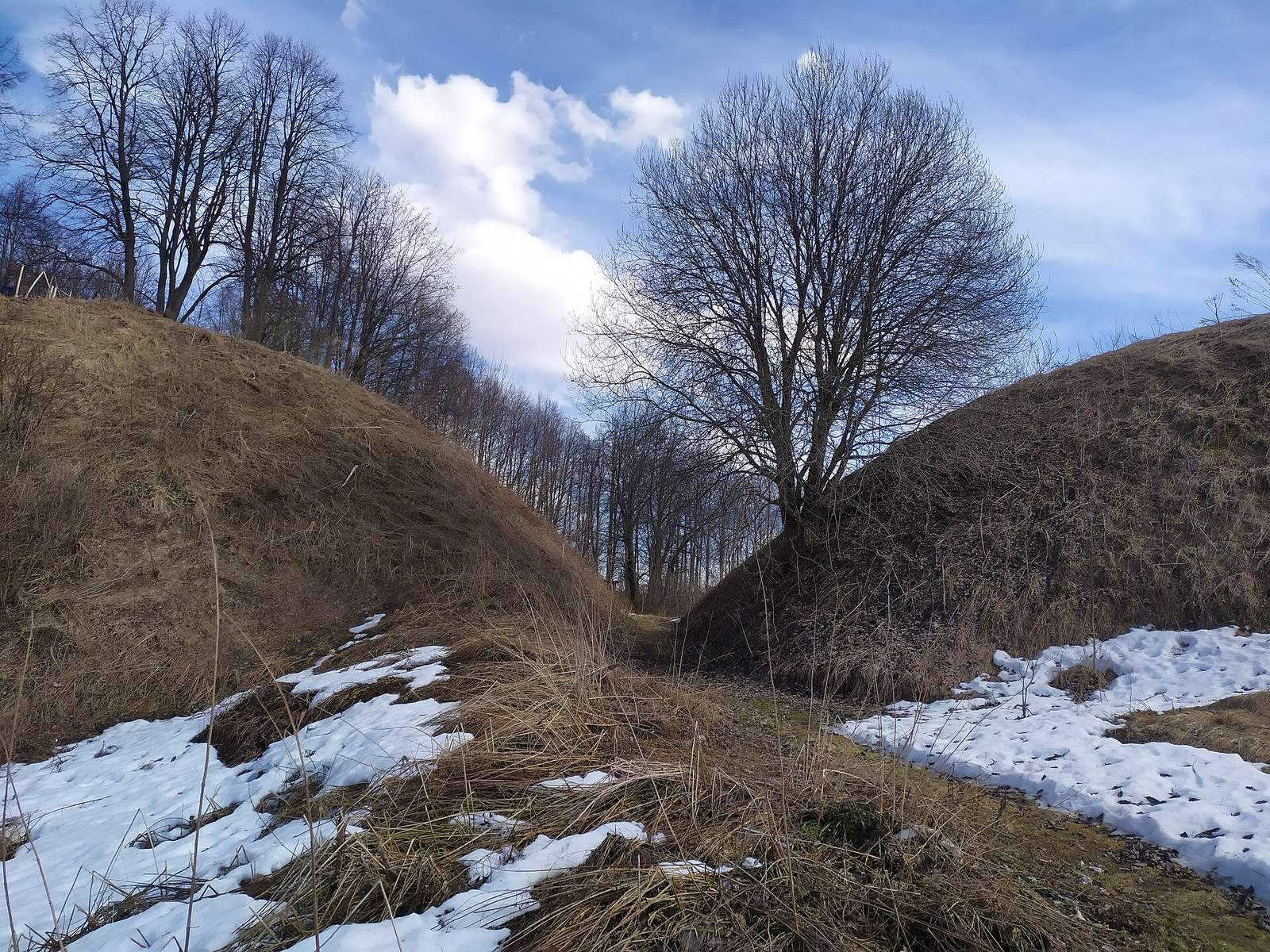
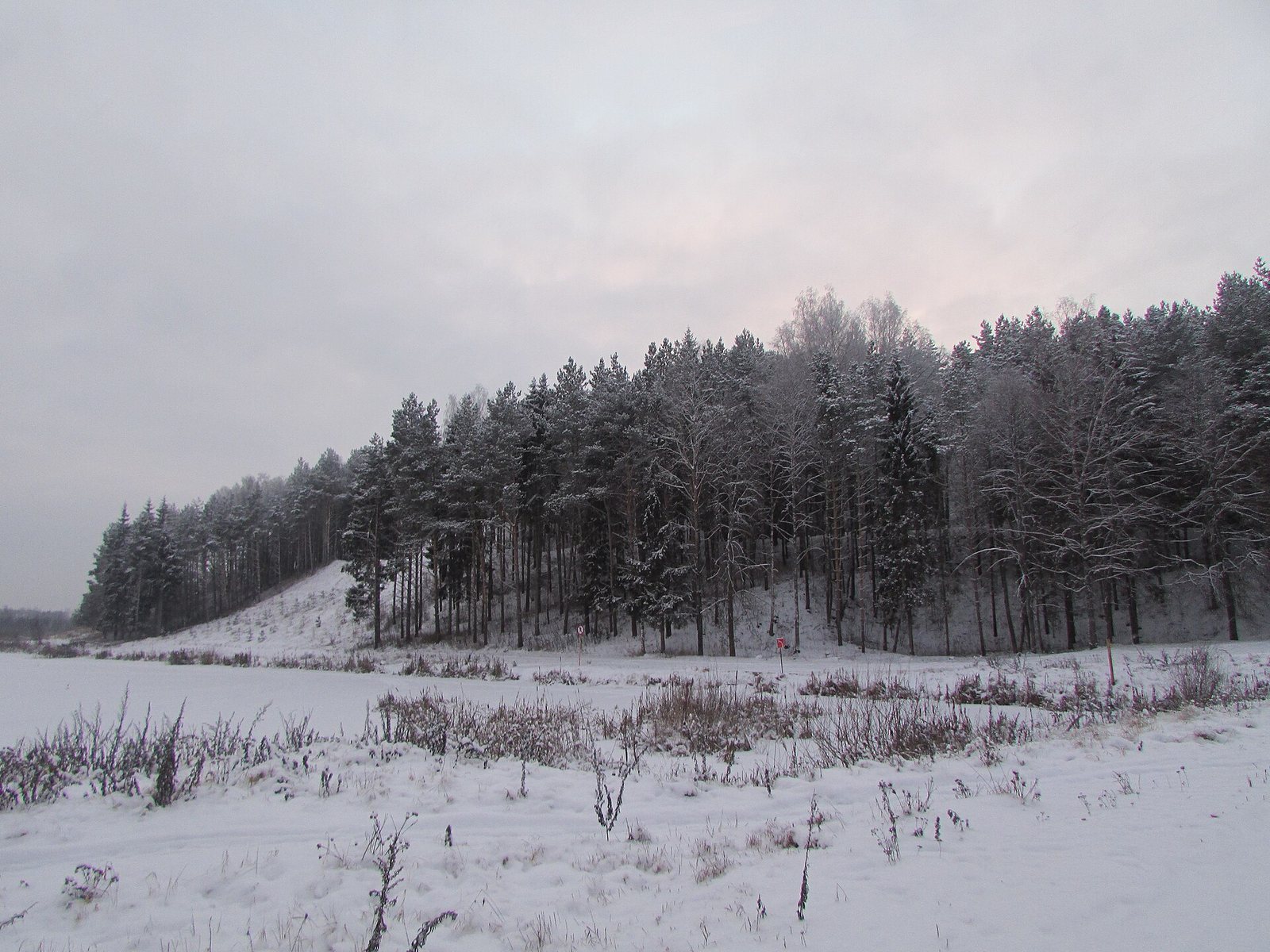
An additional barrier of oak posts ran through the ditches and along the banks of the lake and river, where defenders could meet an initial assault. A deep moat protected the western side; the Obsha River bordered the north, Lake Vesyoloye and the Vesyolka River lay to the east, and a marsh protected the south.
Ramparts and representations
Sections of the earthen ramparts survive. A plan and a model depict the fortress, with the model showing it from the east.
Trinity Cathedral
A stone Trinity Cathedral was built on the hill in the early 19th century, on the site of an earlier wooden church. The cathedral gave the hill its name, Cathedral Hill.