Lilibeo (Lilybaeum): A Carthaginian Stronghold and Roman City in Sicily
Site at a Glance
- Rating
- 4.4
- Popularity
- Low
- Country
- Italy
- Primary era
- Classical
- External website
- Open
- Eras represented
- Classical
- Civilizations
- Carthaginian, Roman
- Site type
- City
On this page18 sections
History
Lilibeo, also known as Lilybaeum, was an ancient Carthaginian and Roman city on the site of modern Marsala in Italy. Carthage founded it in 397 BC after the destruction of Motya, creating a fortified stronghold on Sicily’s western headland during the classical period. The city inherited Motya’s strategic role as the island’s closest point to Africa and later became one of Sicily’s most prosperous Roman communities.
Before the Carthaginian foundation
The headland was apparently frequented or inhabited in prehistoric times, including by a Sicani community during the Chalcolithic period. Diodorus stated, however, that no earlier city existed there. Later traditions connected the headland with the Knidians under Pentathlos, who were said to have landed there before founding Lipara. Hannibal also arrived with a large Carthaginian army in 409 BC before attacking Selinus.
Diodorus associated the name Lilibeo with a spring on the headland. Another explanation connects it with the city’s position facing the coast of Libya. After Dionysius I, the tyrant of Syracuse, destroyed Motya in 397 BC, Carthage transferred the surviving inhabitants to the headland. The new settlement was fortified and quickly became a principal Carthaginian base in Sicily.
Carthaginian stronghold
Lilibeo’s defenses allowed it to withstand a siege by Dionysius in 368 BC. Around 276–277 BC, Pyrrhus, king of Epirus, campaigned in Sicily and besieged the city for two months after conquering the other Sicilian cities. He eventually abandoned the attempt to capture it.
During the First Punic War, Rome’s first major war against Carthage, Roman forces besieged Lilibeo from 250 BC. Carthage had recently moved the entire population of Selinus into the city and placed a garrison of 10,000 men there under Himilco. Carthaginian sorties burned Roman siege engines, while attempts to close the harbor with earthworks failed under heavy waves. In 249 BC, the Carthaginian fleet based at nearby Drepana defeated the Roman fleet commanded by the consul Publius Claudius, and later Roman fleets suffered shipwrecks.
Rome abandoned its attempt to blockade Lilibeo from the sea but maintained the land siege for several years. In 241 BC, Carthage made peace after Lutatius Catulus defeated the Carthaginians at the Battle of the Aegates Islands. Lilibeo and Drepana were then ceded to Rome. During the war, the Carthaginian general Hamilcar Barca also helped protect Lilibeo by fortifying ancient Eryx.
Although Lilibeo remained a Carthaginian city and was never governed by the Greek city-states of Sicily, it gradually became culturally Hellenized. Its coins followed Greek types, and Greek language and literature could be studied there in Cicero’s time. Its inhabitants were known as Lilybaitēs, a name later Latinized as Lilybaetanus.
Roman prosperity and military importance
Under Roman rule, Lilibeo became a municipium, a city incorporated into the Roman state while retaining a degree of local civic organization. It remained a prosperous center, a major Roman base for expeditions to Africa, and an important maritime and commercial link between Italy and North Africa. It was also the seat of one of Sicily’s two quaestors, Roman financial and administrative magistrates, while the other was based at Syracuse. Cicero served as quaestor at Lilibeo and described it in 75 BC as a splendidissima civitas, or very distinguished community.
At the beginning of the Second Punic War, in 218 BC, Lilibeo was the base of the praetor Marcus Aemilius’s fleet. That force defeated a Carthaginian attempt to surprise the city, and Roman troops later launched smaller raids against the African coast from the same base. Scipio Africanus departed from Lilibeo in 204 BC for the campaign that defeated Carthage. In 149 BC, Scipio the Younger assembled there the fleet that sailed to Africa.
Julius Caesar used Lilibeo as a base for his African operations during the civil war in 47 BC. In 36 BC, Sextus Pompey used the city as a base during his conflict with the Second Triumvirate, the three-man political alliance that governed Rome after the death of Julius Caesar.
Imperial and post-Roman transformations
Lilibeo retained its importance during the imperial period. Inscriptions show that its population was divided into twelve tribes, an unusual arrangement for a Roman city, and the city continued to mint its own coins. During the reign of Pertinax in AD 192–193, it became the Roman Colonia Helvia Augusta Lilybaitanorum, a formally established Roman colonial community.
After the fall of the Roman Empire, Lilibeo remained an important Sicilian city under Gothic and Vandal rule and after the Arab conquest. The Vandals devastated it in the early fifth century, after which it came under the rule of the Vandal king Trasamund and his wife Amalafrida. Belisarius later captured the city for the Byzantine emperor Justinian. A period of decline followed, associated with Byzantine disinterest and pirate raids.
After the Arab conquest in the ninth century, the ancient city ceased to function as a major urban center and became the archaeological site beneath modern Marsala. The Arabs valued the city and its harbor and called it Marsah Allah, meaning “God’s harbor,” a name that developed into Marsala. From the eleventh century onward, Marsala passed through Norman, Swabian, Angevin, Aragonese, and Spanish rule.
Archaeological rediscovery
Because the ancient city lies beneath the modern urban center, excavation has been difficult. Archaeological campaigns in 1939, 1972, the 2000s, and 2007–2008 revealed parts of the settlement, roads, fortifications, residences, cemeteries, sculptures, inscriptions, and evidence of cult activity. The archaeological park began to take shape from 2002, and the Sicilian Region established the Lilibeo-Marsala Archaeological Park in 2019. Lilibeo and ancient Motya were included in Italy’s UNESCO World Heritage candidate list in 2006 under the title “Mothia Island and Lilibeo: The Phoenician-Punic Civilization in Italy.”
Remains
The ancient city occupied the low, rocky Lilibeo headland, which extends into the sea among numerous reefs. Navigation around the promontory was dangerous, but Lilibeo possessed a safe harbor. The headland formed Sicily’s western extremity and its closest point to Africa. Ancient estimates of the distance to Africa ranged from about 185 to 278 kilometers, while the actual distance is approximately 145 kilometers.
Headland defenses and excavated city
During the Carthaginian period, the settlement apparently covered the entire headland. Its landward base was defended by a wall with towers and a deep, broad ditch. Two substantial defensive ditches on the northern and southern sides remain visible in short stretches. The principal excavated area lies near the tip of the headland, within the archaeological park and the wider 28-hectare Capo Boeo archaeological area. Most of the visible remains date from the Roman imperial period, broadly between the second and fourth centuries AD.
Roman urban block
Imperial residences
One excavated Roman insula, or urban block, contained two wealthy imperial residences. A large building exposed in 1939 had spacious rooms arranged around a tetrastyle atrium, a central space with four columns around its opening, and a peristyle, a court or garden enclosed by a colonnade. The block included partly paved streets, marble pavements, mosaic floors, and private baths. The mosaics feature mythological scenes and decorative motifs derived from North Africa.
Excavations in the 1970s identified two building phases within the block. The earlier phase belonged to the second and first centuries BC, while the later phase ran from the late second to the third century AD. Work during the 2000s exposed further walls and marble paving, together with objects including brooches, coins, ornaments, a stone pediment bearing a Latin inscription, and the second-century AD marble statue known as the Lilybaean Venus.
Principal street
Excavations in 2007 revealed the course of the ancient decumanus maximus, the principal east–west street of a Roman town. Its identification helps define the organization of the Roman settlement around the excavated urban block and its associated residences.
Cemeteries and painted burial chamber
Punic-style tombs
The cemeteries lay west of the city and were used from the fourth century BC to the first century AD. Many burials occupied Punic-style chambers cut into the rock. Finds from the cemeteries included sarcophagi, urns, pottery placed as grave goods, and numerous funerary stelae, some shaped as naiskoi, small temple-like frames used in funerary and votive art.
Hypogeum of Crispia Salvia
The hypogeum of Crispia Salvia is an underground burial chamber used from the second century AD. A husband dedicated it to his wife, Crispia Salvia. Its walls are covered with vivid polychrome paintings showing a flute player with dancers, a funerary banquet, erotes among garlands, and baskets filled with flowers and fruit.
Sculpture and religious evidence
Lilybaean Venus
A marble statue of Venus Callipyge, also called the Lilybaean Venus, was found in 2005 during excavation near the Church of San Giovanni Battista al Boeo. Dating from the second half of the second century AD, it is a Roman copy of a second-century BC Hellenistic statue. The figure was carved from a single block of crystalline marble. It is headless and lacks more than half of the right arm, which originally covered the breast, more than half of the left arm, which held the himation, a Greek-style outer garment, about half of the right leg, and part of the left leg.
Isis and Hercules
A statue of Isis was discovered near the Roman villa in 2008. Its identification rests on the position of the hand resting on the chest. The same excavation produced a small column with a Greek inscription mentioning Isis, an Egyptian goddess whose worship spread widely through the Mediterranean. Another inscription records a sanctuary associated with Hercules, although the structure itself is described only as a possible temple.
Archaeological museum and Carthaginian ship
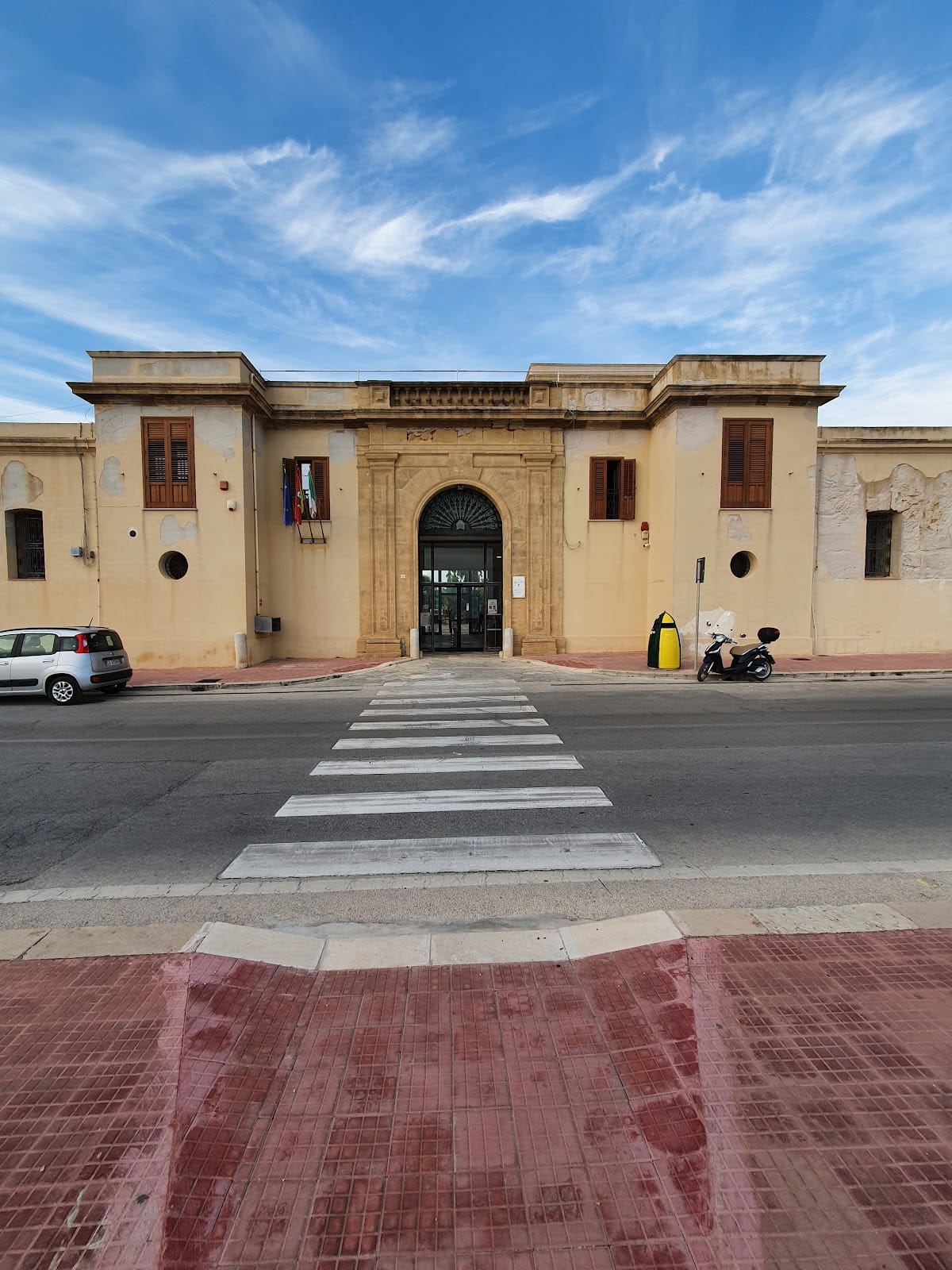
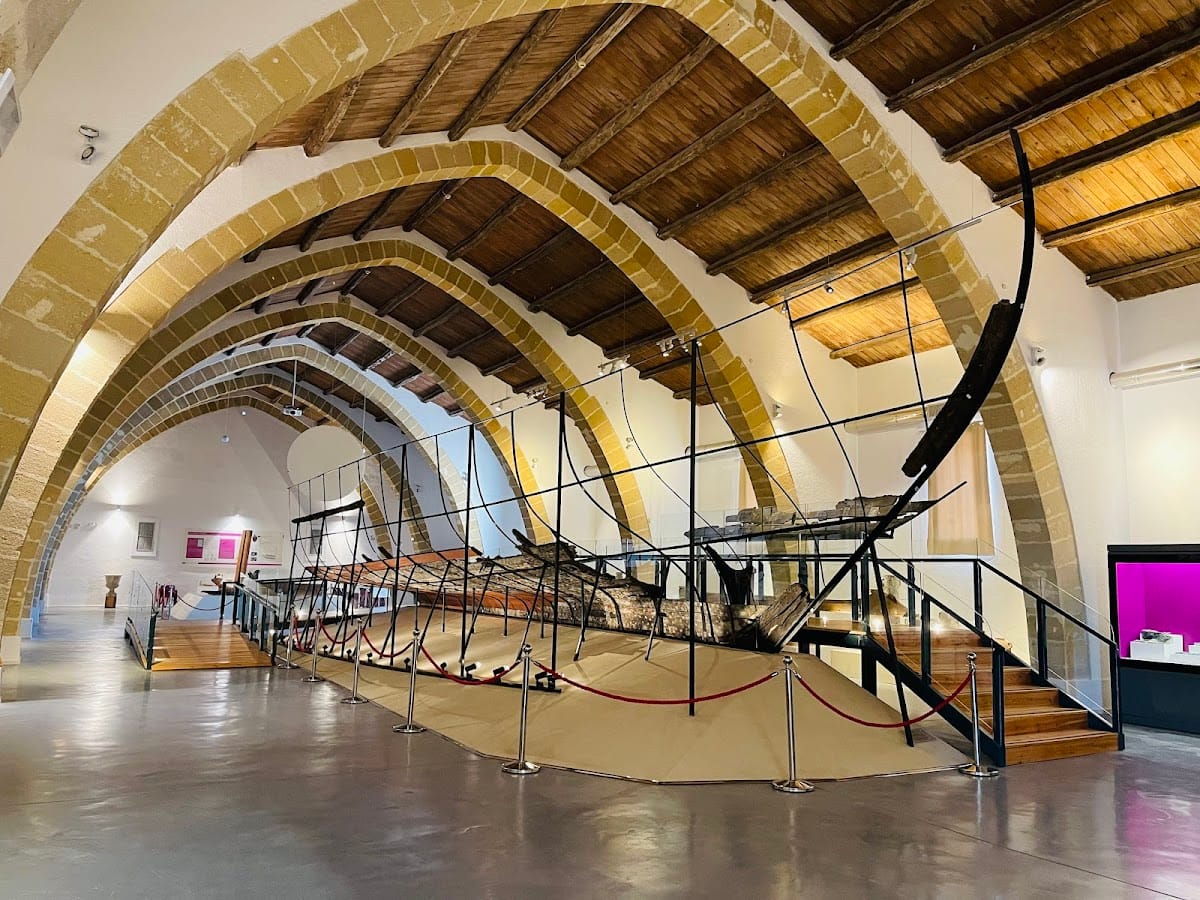
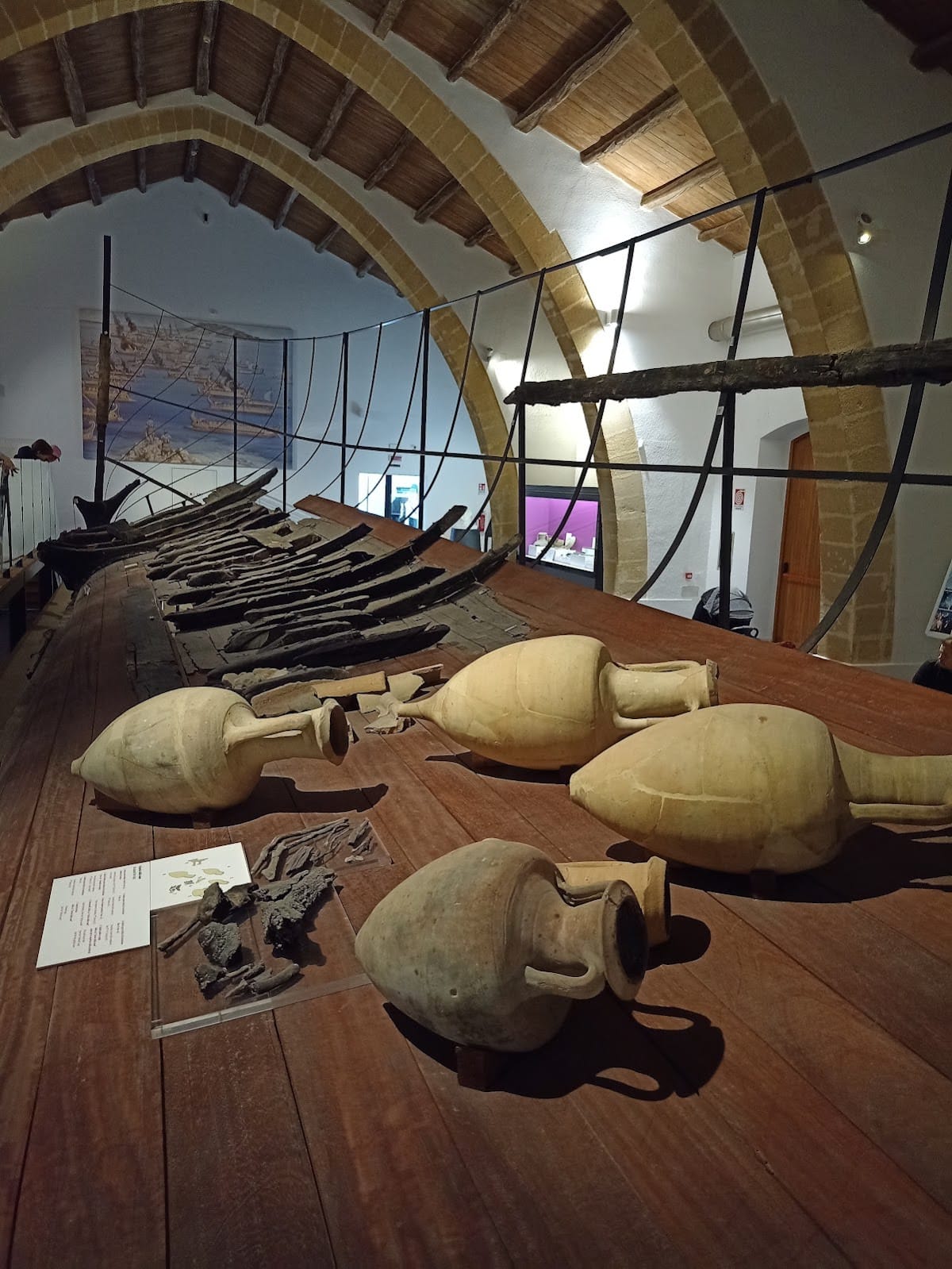
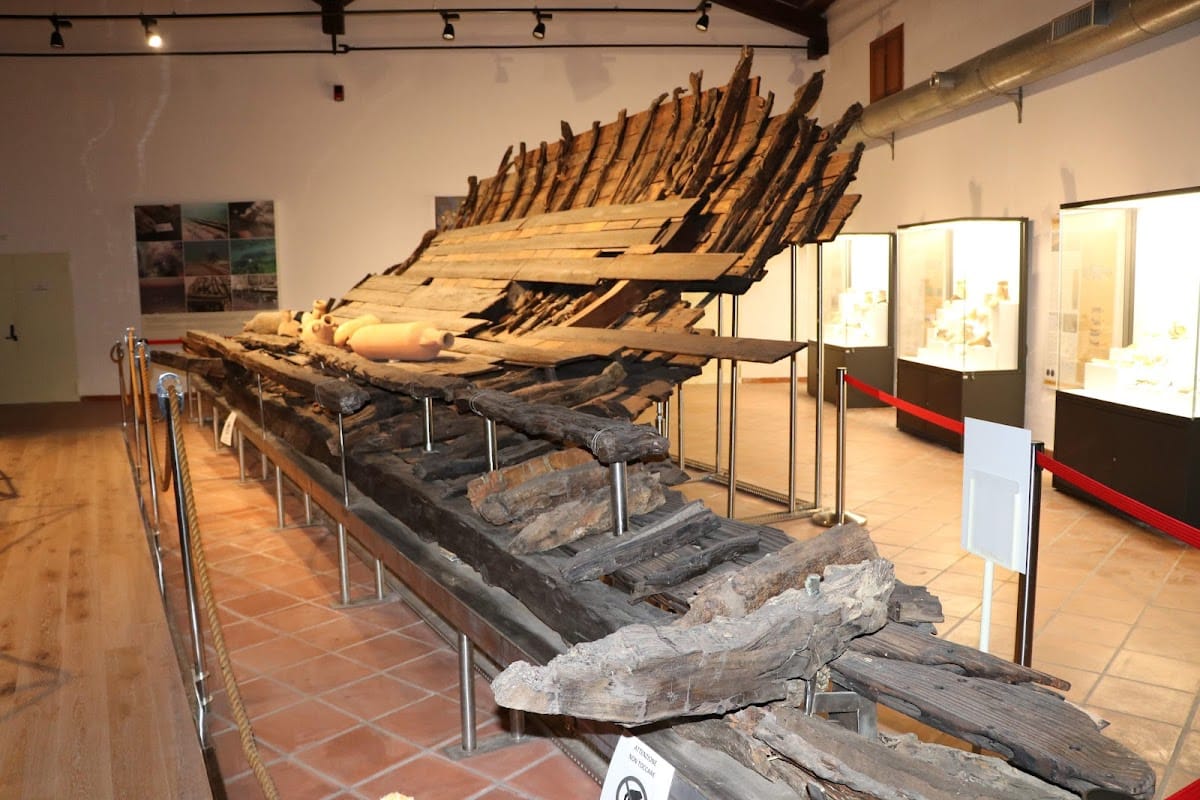
Finds from Lilibeo are preserved in the Regional Archaeological Museum of Lilibeo at Marsala, also known as the Baglio Anselmi Museum. The collections include prehistoric and Roman material from the surrounding excavations. The museum also preserves a Carthaginian warship used in the Battle of the Aegates Islands, the naval engagement that ended the First Punic War.
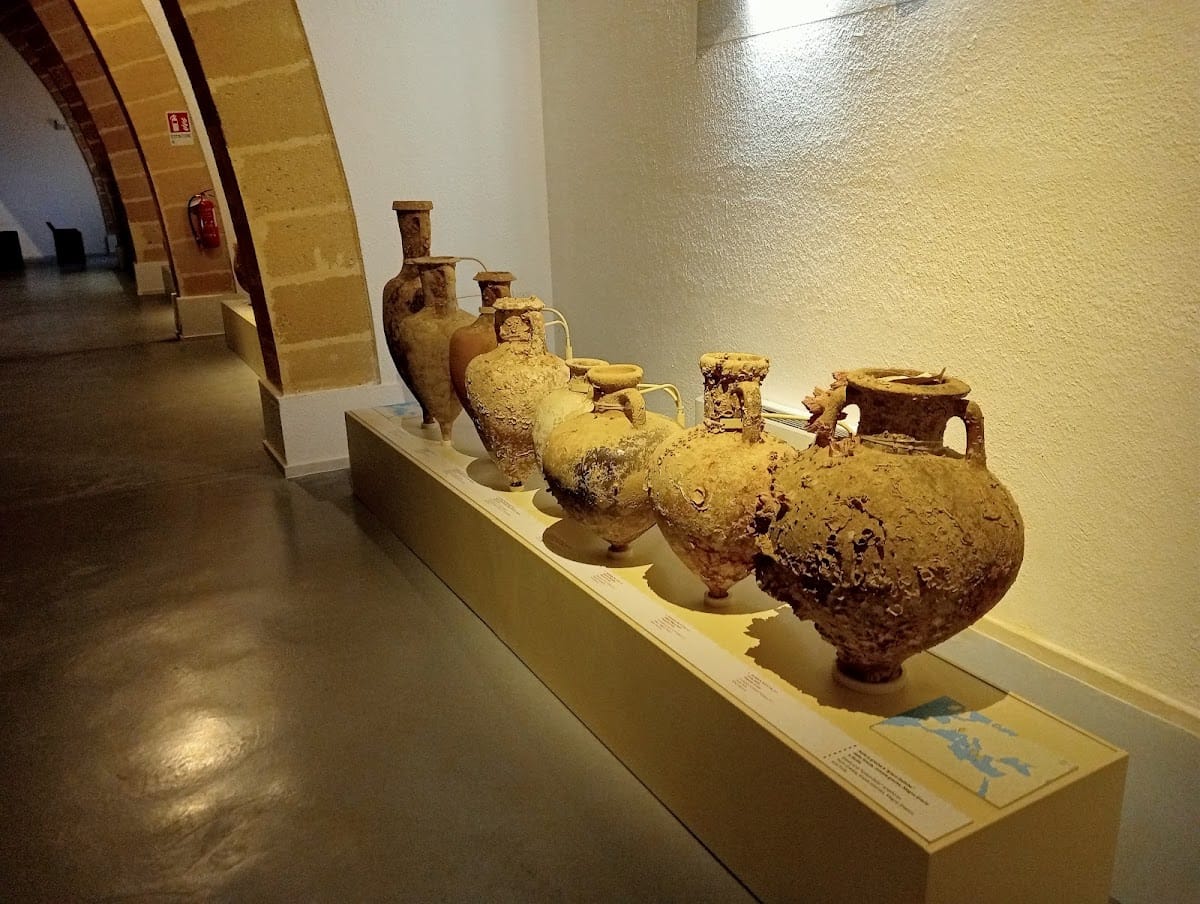
The ship is regarded as a unique surviving example of a Carthaginian warship. Algae from the Stagnone lagoon protected its wood through a process compared with vacuum preservation, and the construction nails remain in place. The vessel illustrates Carthaginian prefabricated shipbuilding because each plank carries an incised Phoenician-Punic alphabet symbol that helped carpenters assemble the hull quickly. Associated remains include amphorae, spears, a wooden block possibly used as fuel for the cooking fire, olive stones, plant leaves, and a well-preserved rope.