Château Saint Georges: A Historic Wine Estate in France


Site at a Glance
- Rating
- 4.7
- Popularity
- Low
- Country
- France
- Primary era
- Early Modern
- External website
- Open
- Eras represented
- Early Modern
- Civilizations
- French
- Site type
- Domestic
- Remains
- Manor House
On this page7 sections
History
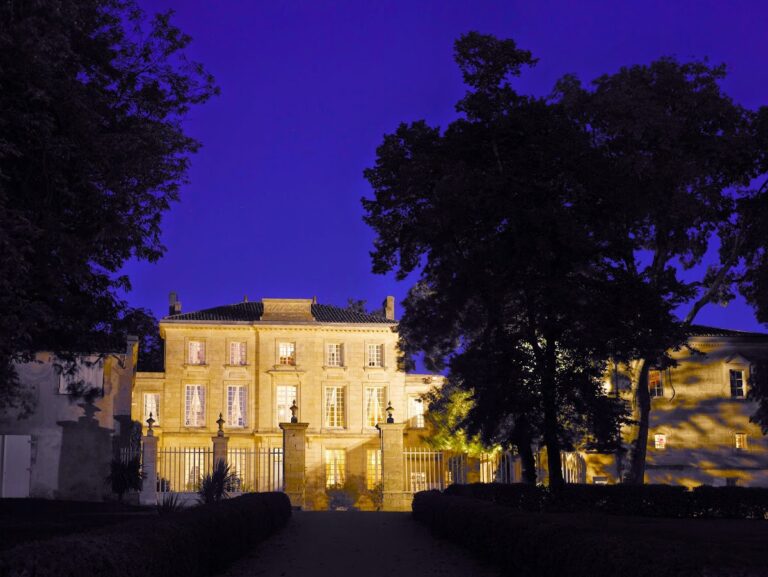
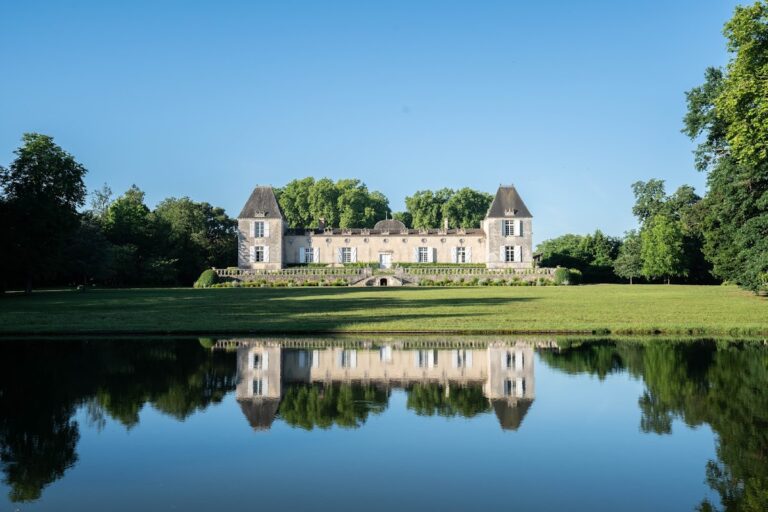
Château Saint Georges is a wine estate in Montagne, France, founded in 1772 in the Saint-Georges-Saint-Émilion appellation of the Libournais wine region. Its main residence combines a Neoclassical facade with four towers that recall the property’s earlier character as a feudal castle.
Ownership and wine production
The Desbois family has owned Château Saint Georges since 1891. Jean-Philippe Janoueix joined the estate as a co-owner in 2013 and became its manager in October 2015.
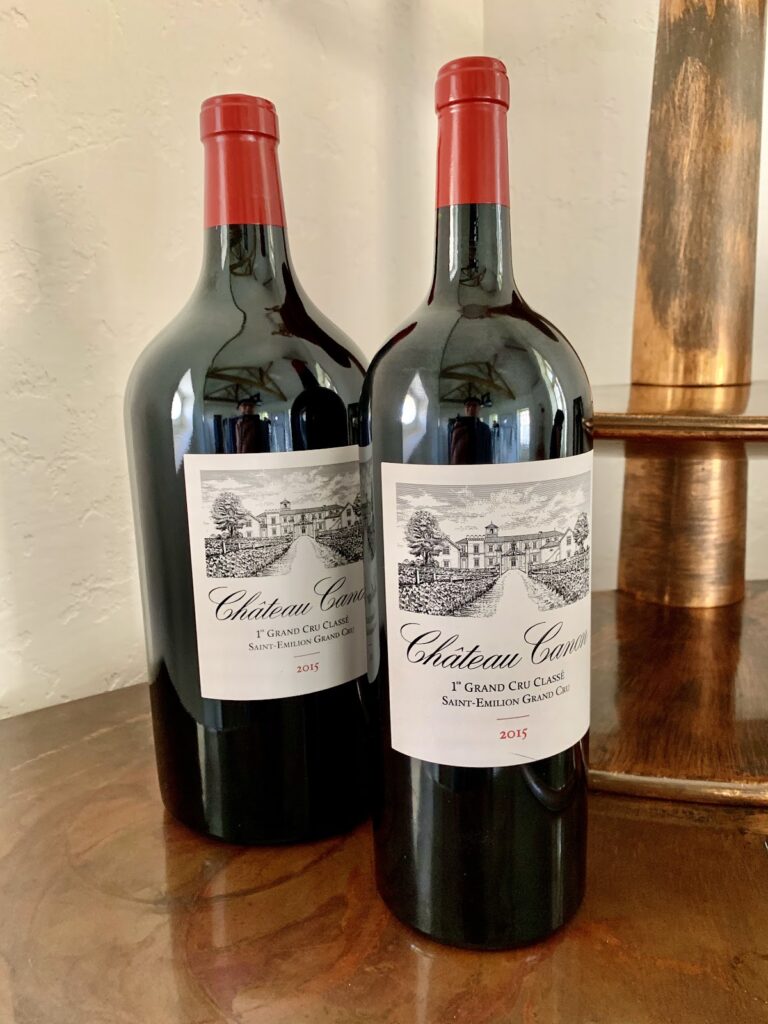
The estate produces three wines: Château Saint Georges, its principal wine; Château Puy Saint Georges, its second wine; and Trilogie du Château Saint Georges. Annual production is approximately 300,000 bottles. The vineyards are planted with 80 percent Merlot, 10 percent Cabernet Sauvignon, and 10 percent Cabernet Franc. The vines are cultivated without irrigation, while the grapes are harvested by hand, crushed, and fermented at the winery.
Remains
The estate combines a substantial rural residence, defensive-looking towers, ornamental gates, and a vineyard extending across clay-limestone soils. Its architectural character brings together the memory of a feudal castle and the formal appearance of an eighteenth-century country house.
Main residence and estate features
Neoclassical chartreuse
The main residence is a chartreuse, a substantial French country house or manor, with a Neoclassical facade designed by Victor Louis. Louis was an eighteenth-century French architect best known for designing Bordeaux’s Grand-Théâtre. The facade gives the residence its formal architectural expression.
Towers and wrought-iron gates
Four towers surround the château and evoke its earlier identity as a feudal castle. The estate also has wrought-iron gates that have been discussed in publications, adding an ornamental element to the property’s entrance features.
Vineyard
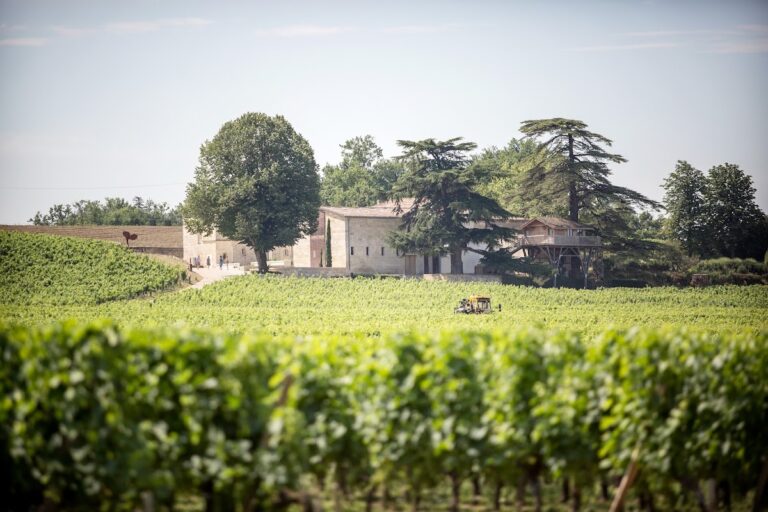
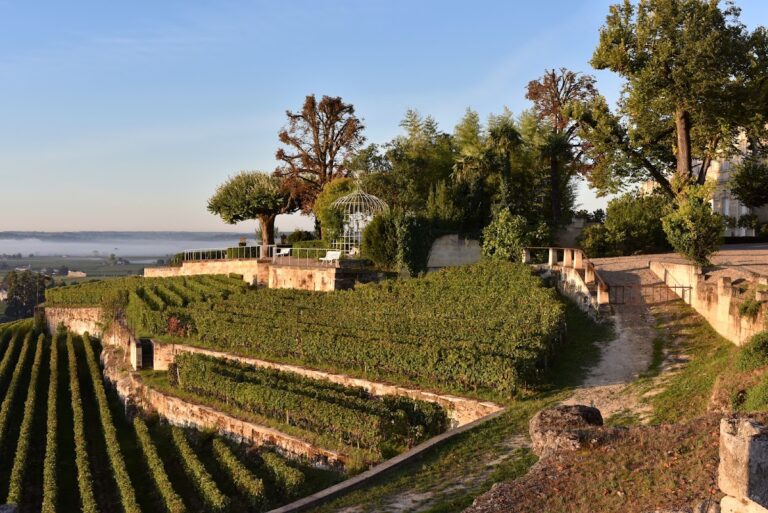
The vineyard covers 45 hectares on clay-limestone soils suited to Merlot, Cabernet Sauvignon, and Cabernet Franc. These cultivated grounds form the productive landscape of the estate.
Nearby sites