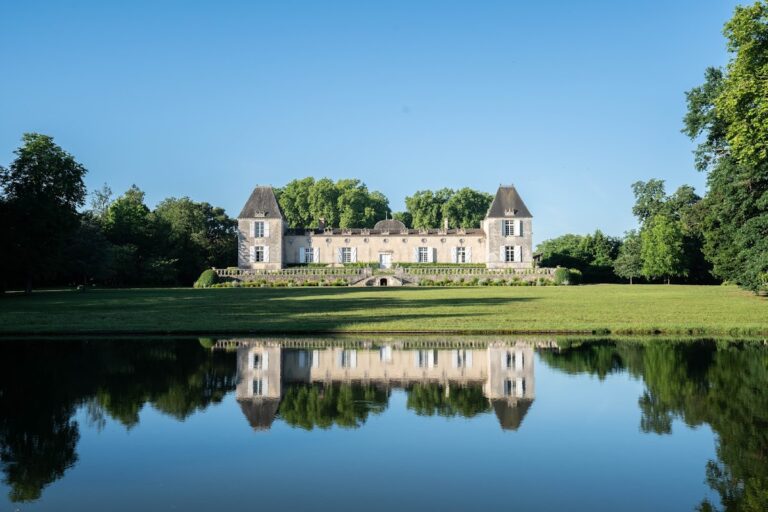
Château Franc Mayne: A Saint-Émilion Grand Cru Classé Wine Estate


Site at a Glance
- Rating
- 4.7
- Popularity
- Low
- Country
- France
- Primary era
- Early Modern
- External website
- Open
- Eras represented
- Early Modern
- Civilizations
- French
- Site type
- Economic
- Remains
- Production Complex
On this page11 sections
History
Château Franc Mayne is a seven-hectare wine estate in Saint-Émilion, France, within the Saint-Émilion Grand Cru appellation. Grand Cru Classé is a higher classification for estates recognized in the Saint-Émilion wine classification system, and the property has held this status since the classification of 1954.
Origins and Setting
The estate occupies a single holding in the northwestern part of the appellation, on the hillside leading toward the Côte de Franc. Its name derives from this nearby slope. The property was formerly known as La Gomerie. An ancient Gallo-Roman road runs beside the estate, while an old post relay recalls pilgrims who traveled toward Santiago de Compostela.
Changes in Ownership
Ownership passed from Jean Theillasoubre to the AXA insurance group in 1984. In 1996, the Belgian wine merchant Georgy Fourcroy acquired the property. Griet Van Malderen-Laviale and Hervé Laviale became its owners in early 2005 and undertook extensive changes to the estate.
The Laviales created guest rooms and completely renovated the vat house. From 2006, the updated facilities enabled the vats to be filled by gravity, changing the way harvested grapes entered the winemaking process.
Recent Viticultural Development
At the end of 2017, industrialist Jean-Pierre Savare and his family acquired Château Franc Mayne and entrusted Martine Cazeneuve with directing the project. The new owners began restructuring the vineyard, with the aim of producing wines with greater vivacity and tension.
In 2019, the estate entered into a contract with Ecocert and formally began its conversion to organic viticulture. It produces Château Franc Mayne Grand Cru Classé as its principal wine, together with Les Cèdres de Franc Mayne as a second wine. The second wine comes from younger vines and is intended for earlier consumption, while the Grand Vin is made for extended aging.
Remains
The estate combines an eighteenth-century Gironde country house, production buildings, vineyards, and underground galleries formed by earlier stone extraction. The galleries extend beneath the upper part of the property, and part of this quarry network now serves as a barrel cellar.
Buildings and Underground Galleries
Main House
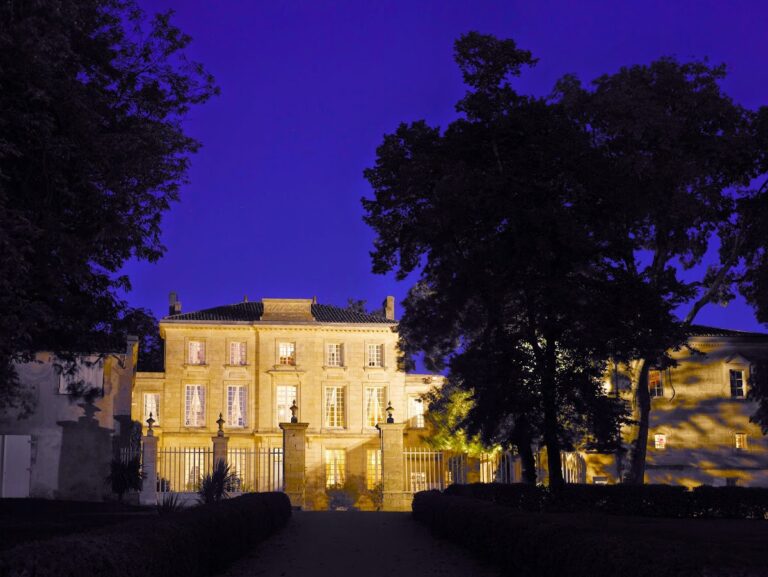
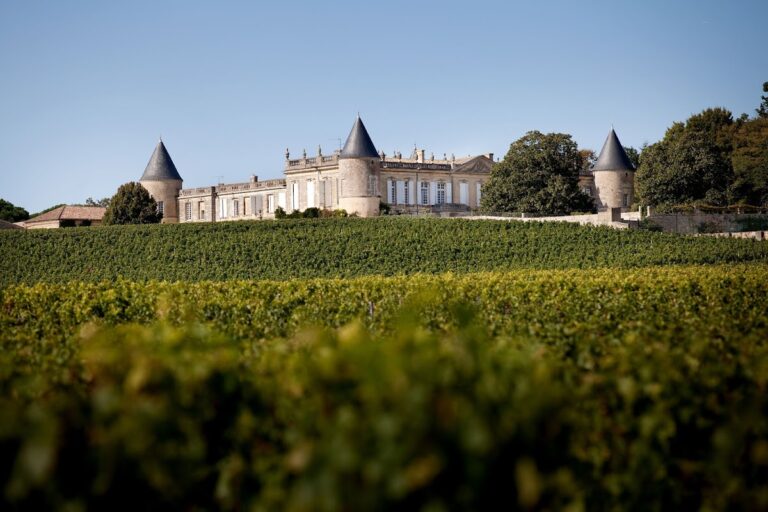
The main house is a typical eighteenth-century Maison girondine, a traditional country or estate house associated with the Gironde and Bordeaux region. It forms the principal historic domestic building within the estate.
Quarries and Barrel Cellar
Approximately two hectares of underground galleries lie beneath the upper section of the property. These spaces were created from former stone-extraction quarries, and part of the network has been converted into a cellar for barrels. The galleries are also associated with the estate’s presentation of a sound-and-light spectacle.
Winery and Vineyard
Vat House
The renovated vat house contains both wooden and stainless-steel vats. Since 2006, its arrangement has allowed the vats to be filled by gravity. Grapes are harvested by hand and sorted repeatedly in the vineyard and winery, including with a Triebaie machine, which removes unsuitable fruit before fermentation.
Vineyard and Wine Production
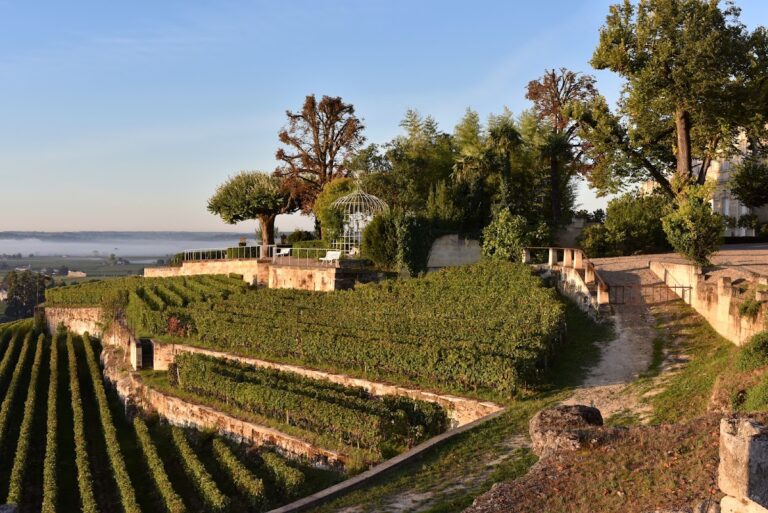
The vines grow mainly in clay-limestone soil, with molasse, a relatively soft sedimentary rock or sediment, and sand in the lower part of the property. Merlot accounts for approximately 90 percent of the planting and Cabernet Franc for 10 percent. Yields are limited to 38 hectolitres per hectare.
Malolactic fermentation, a secondary process that converts sharper malic acid into softer lactic acid, takes place in new oak barrels. The first wine is aged for approximately 16 to 18 months, partly in new French-oak barrels and partly in barrels previously used for one wine. The second wine is aged for approximately 12 to 14 months in barrels that have held one or two wines and is not matured in new barrels. Made entirely from Merlot grown in the same general terroir as the Grand Vin, it is produced in quantities of approximately 5,000 to 6,000 bottles, while the first wine amounts to about 24,000 bottles.