Château de Sales: A Historic Wine Estate in Libourne


Site at a Glance
- Rating
- 4.7
- Popularity
- Very Low
- Country
- France
- Primary era
- Early Modern
- External website
- Open
- Eras represented
- Early Modern
- Civilizations
- French
- Site type
- Domestic
- Remains
- Castle
On this page10 sections
History
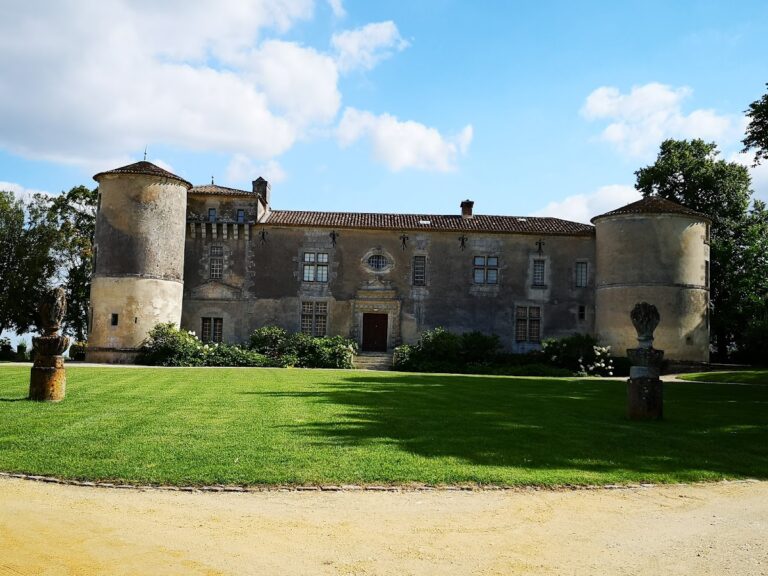
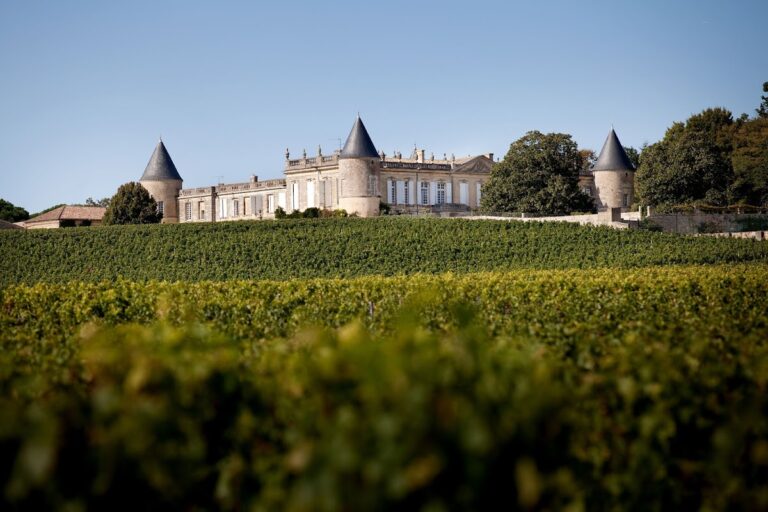
Château de Sales is a wine estate in France, located in the communes of Libourne and Lalande-de-Pomerol in Gironde. Its château appears to have been built during the first half of the seventeenth century by Jean de Sauvanelle, the estate’s first owner and a mayor of Libourne. The complex follows a fortress-like plan and is decorated in the Mannerist style, an artistic tradition known for sophisticated and highly artificial forms.
Ownership since the sixteenth century
The Sauvanelle family acquired the estate in 1578. Ownership subsequently passed through four families, the Sauvanelle, Desaigues, de Laage, and Lambert families. The estate’s boundaries remain close to those established in the sixteenth century, although approximately three hectares were lost during the French Revolution.
The Lambert heirs, who are direct descendants of the Sauvanelle family, and their children remain the owners. In 2018, Marine Treppoz became president and Vincent Montigaud became director. The estate continues to function as a wine property northwest of the Pomerol appellation, a legally defined geographic designation for agricultural products.
Later development and protection
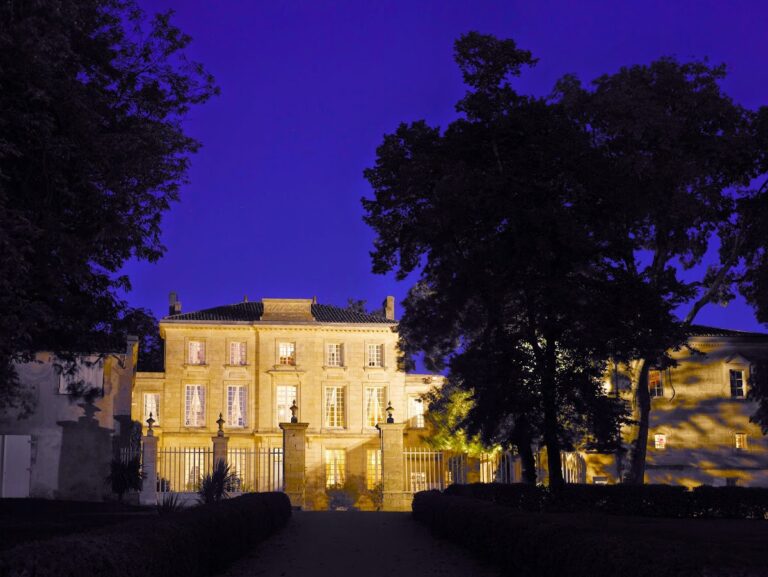
A chartreuse, a type of French rural manor house especially associated with the southwest, was added in the middle of the seventeenth century. Its interior decoration was renewed after 1734. The gardens were laid out between 1770 and 1772, and a water feature was created between 1770 and 1780. A second garden followed in 1834, after which the earlier garden no longer served as a kitchen garden. The roofs of the service buildings were rebuilt between 1830 and 1840.
The entire château, including its façades, roofs, and gardens, has been listed as a French historic monument since 1996. The chartreuse is also listed. The estate received Haute Valeur Environnementale certification in 2020, a French environmental designation for agricultural properties meeting defined standards for biodiversity, plant protection, fertilizer use, and resource management.
Remains
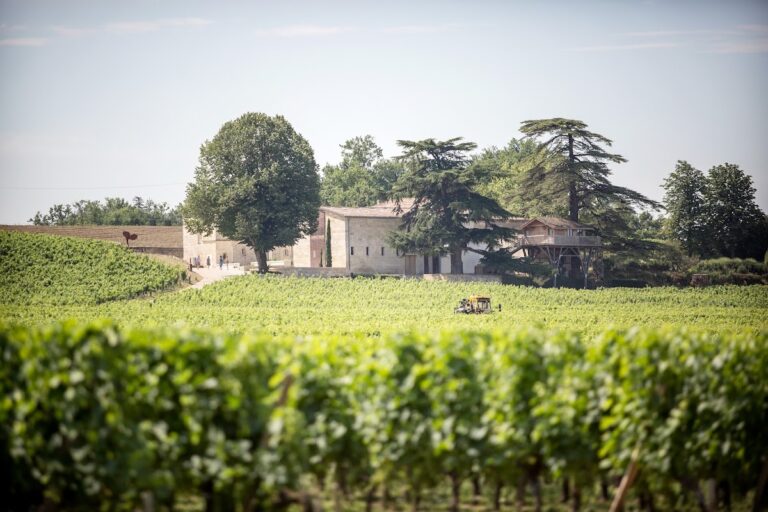
Château de Sales retains an enclosed complex arranged around an interior courtyard, preserving the outline of a fortress while incorporating the refined decoration associated with Mannerism. The buildings, chartreuse, gardens, water feature, service structures, and surrounding vineyard form the principal physical elements of the estate.
Enclosed buildings
The château
The château forms part of a fully enclosed building complex organized around an interior courtyard. Its fortress-based plan reflects the arrangement established during its construction in the first half of the seventeenth century, while its decoration has the sophisticated, elongated character of Mannerism. Its façades and roofs survive as protected elements, together with the gardens associated with the château.
The chartreuse and service buildings
The chartreuse was built in the middle of the seventeenth century as part of the estate’s rural architectural group. Its interior was redecorated after 1734. The service buildings retain roof frameworks rebuilt between 1830 and 1840, linking the surviving complex to later alterations made during the nineteenth century.
Gardens and vineyard
Gardens and water feature
The first gardens were established between 1770 and 1772 and were later replaced by lawns. A second garden was added in 1834, changing the function of the earlier garden, while the estate’s water feature dates from between 1770 and 1780.
Vineyard
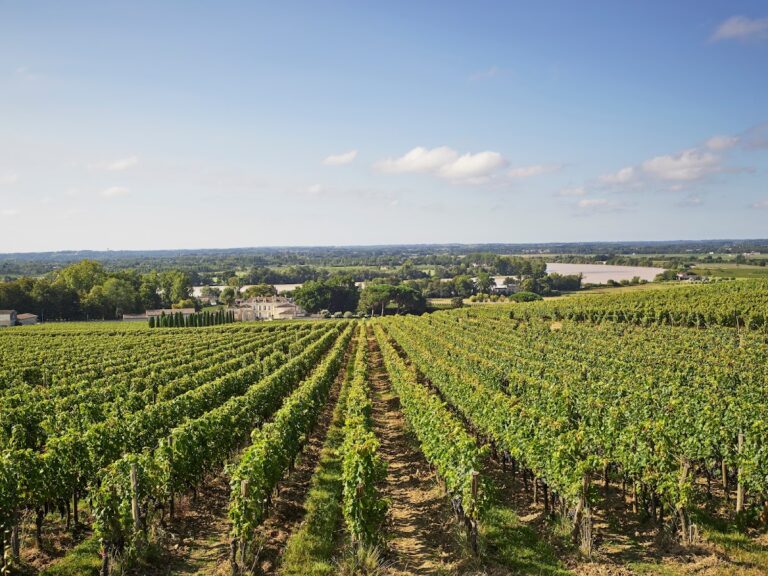
The property covers 90 hectares, including 47.6 hectares of vineyards. The vineyard occupies the largest area within the Pomerol appellation. Its planting is composed of 73 percent Merlot, 15 percent Cabernet Sauvignon, and 12 percent Cabernet Franc, with an average density of 5,900 vines per hectare.
Nearby sites