Château de Marouatte: A Historic Castle in Grand-Brassac, France


Site at a Glance
- Rating
- 4.9
- Popularity
- Very Low
- Country
- France
- Primary era
- Medieval
- External website
- Open
- Eras represented
- Medieval, Early Modern
- Civilizations
- French
- Site type
- Military
- Remains
- Castle
On this page6 sections
History
Château de Marouatte is a historic castle in Grand-Brassac, France, in the Périgord region of Dordogne. Its oldest parts were built between the thirteenth and sixteenth centuries, and the castle served as a fief, a landed estate held through a feudal relationship, first by the Montagrier family and later by the Chabot de Jarnac family.
The Montagrier and Chabot de Jarnac families
By the late sixteenth century, the castle was associated with Guy de Chabot, Baron of Jarnac. A baron was a member of the lower-ranking European nobility. Guy de Chabot served as an officer of the Prince of Condé and commanded one hundred light cavalrymen, mounted troops equipped for speed rather than heavy battlefield protection.
Local tradition portrayed Guy de Chabot as a violent and predatory lord who attacked his own vassals. This reputation helped give Marouatte, also known as Marouate, Maroite, or Maroitte, a fearful place in regional memory. One tradition even claimed that the devil lived at Maroite.
Revolutionary destruction and restoration
A Périgord folk legend tells that the devil held such loud revels at Maroite that they could be heard at Peignefort, another castle about three kilometres away. The devil then destroyed everything between Peignefort and Creyssac, apart from a door bolt that he later carried away.
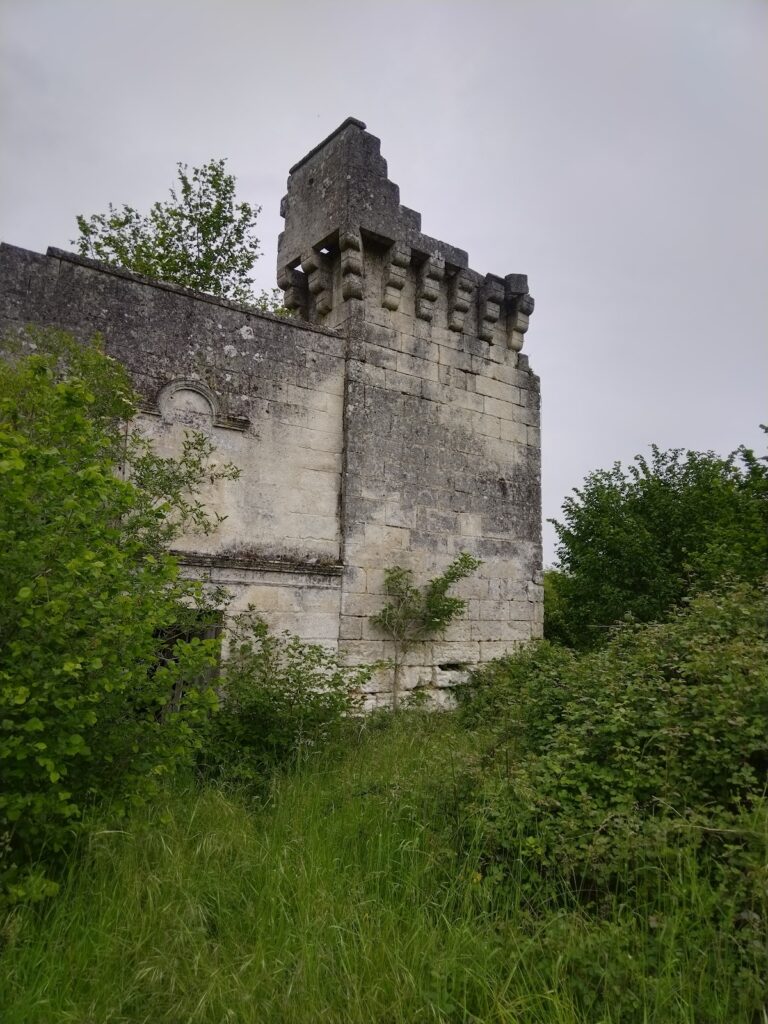
The castle was largely destroyed during the French Revolution, the period of political and social upheaval that began in 1789 and abolished the French feudal order among other changes. Afterward, parts of the structure were used as a stone quarry. During the nineteenth century, Maxime Dannery, an architect of historic monuments in Dordogne, restored the castle.
In 1993 and 1994, the progressive rock group Marillion used Château de Marouatte to record its album Brave. Part of the castle was also used as a filming location for the television programme X Factor in March 2011. The property is privately owned.
Remains
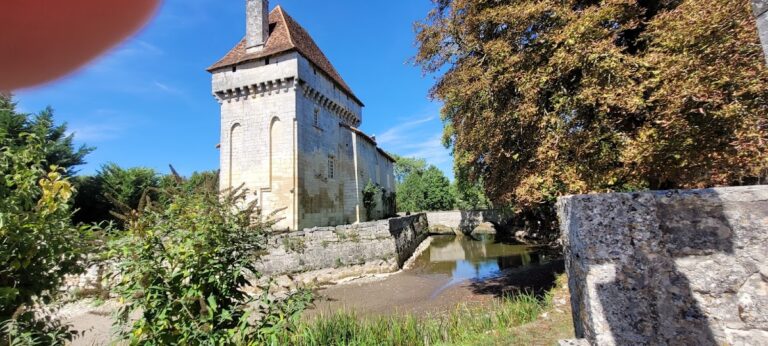
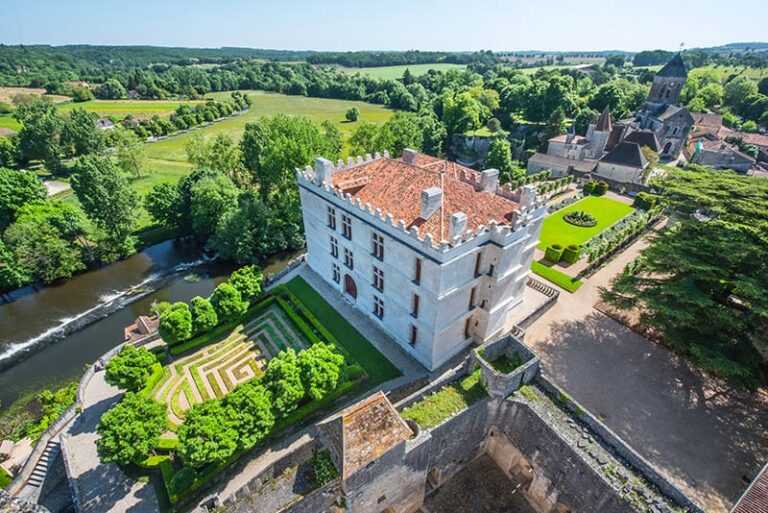
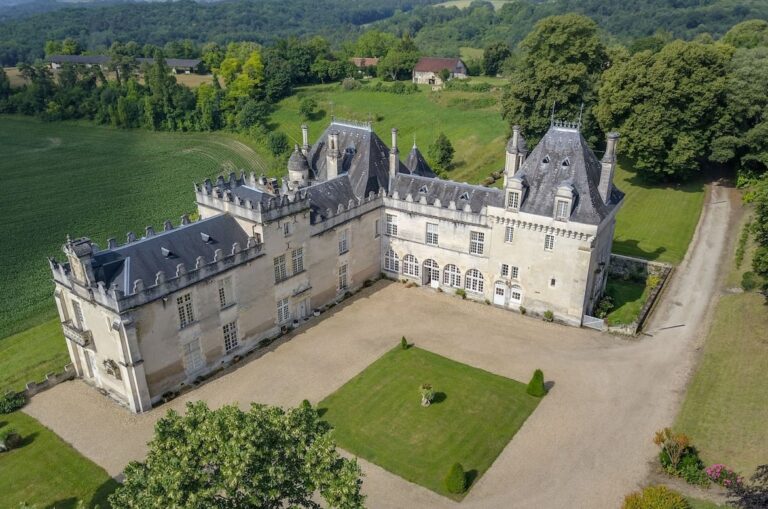
Château de Marouatte stands in Périgord, in the north-western part of the Dordogne department, on the north side of departmental road 93 and a few hundred metres from Saint-Vivien. It overlooks the road and the Euche valley from a height of approximately 40 metres. The surviving complex is arranged in two enclosures, with the principal castle at the southern end of the larger outer area.
Outer enclosure
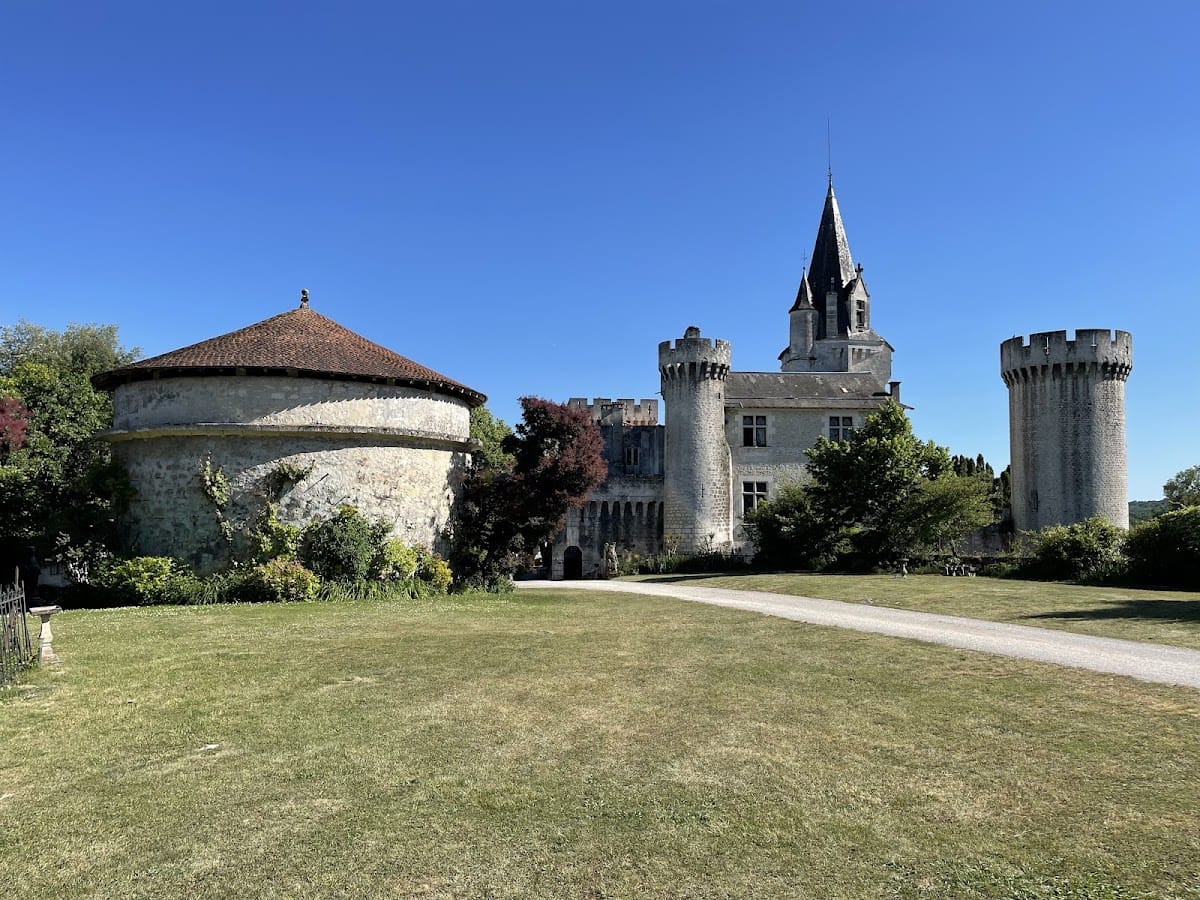
The large outer enclosure contains the castle’s outbuildings and a dovecote, a building designed for keeping pigeons. This enclosure forms the broader setting for the main castle and extends to its southern tip.
Main castle and inner enclosure
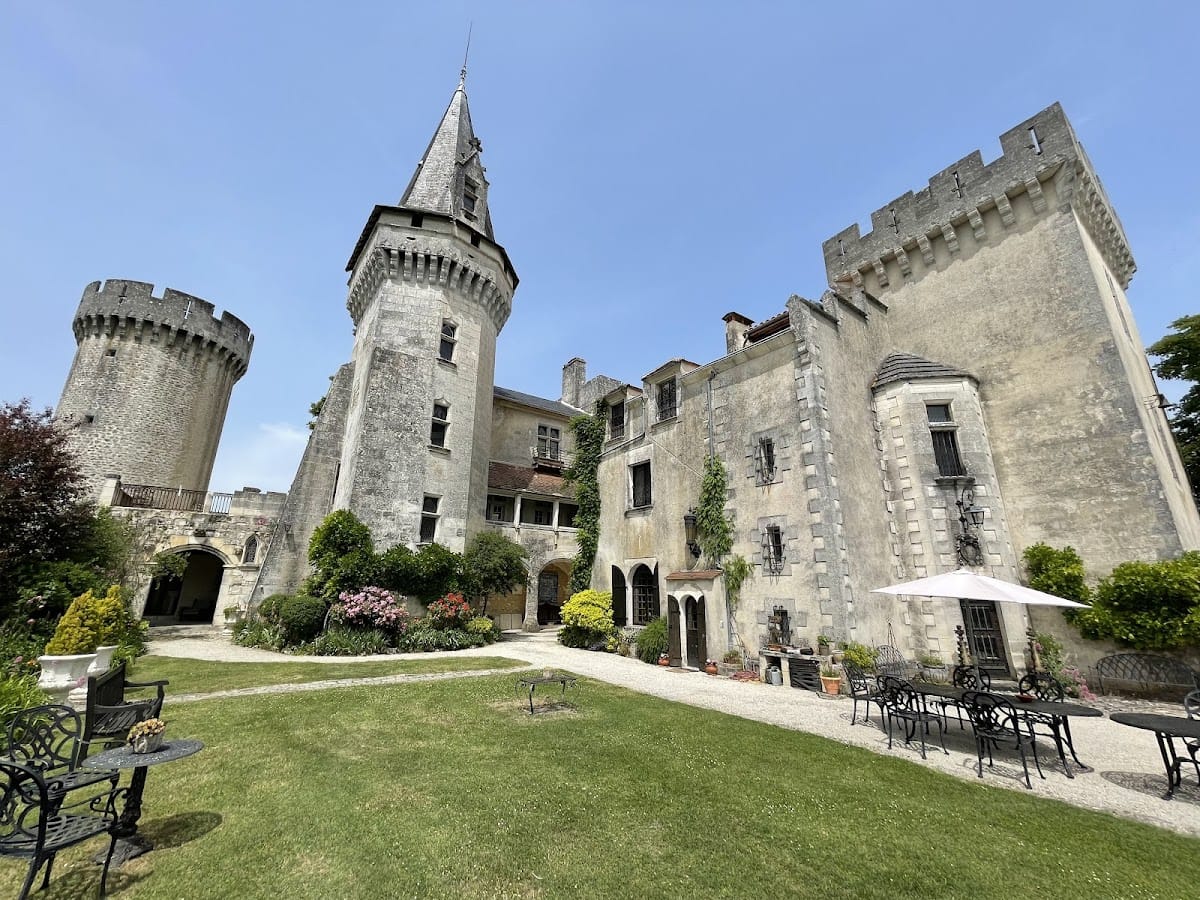
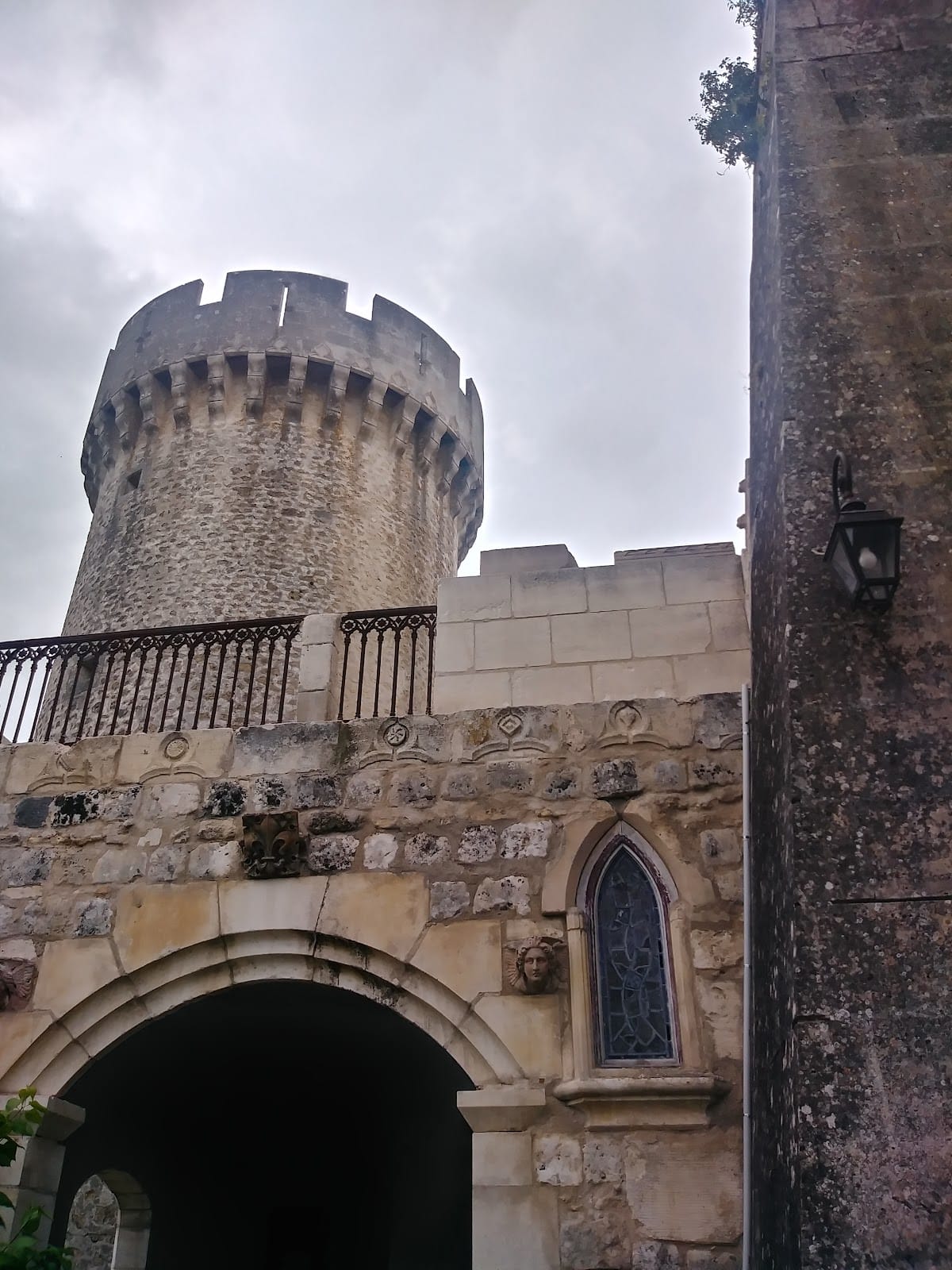
The main castle consists of two residential buildings, a keep, and a chapel. A keep is the principal fortified tower of a castle. These buildings are enclosed by a second defensive boundary with four round towers placed at the corners. The towers have crenellations, the notched parapets used along defensive walls and towers.