Château du Lude: A Medieval Castle and Renaissance Estate in France


Site at a Glance
- Rating
- 4.6
- Popularity
- Very Low
- Country
- France
- Primary era
- Medieval
- Eras represented
- Classical, Medieval, Early Modern, Modern
- Civilizations
- French, Roman
- Site type
- Military
- Remains
- Castle
On this page15 sections
History
Château du Lude is a historic castle in France, near Jouy-le-Potier in the Sologne, whose origins reach back to a Gallo-Roman villa and whose principal medieval and Renaissance development took place between the twelfth and fifteenth centuries. The site stands beside the Cosson, a tributary of the Beuvron, and became a fortified residence associated for centuries with the House of Beauvilliers.
Antiquity and Early Medieval References
The site appears to have been inhabited from Antiquity. During the Gallo-Roman period, when Roman rule coexisted with indigenous Gallic traditions in Gaul, a villa was built on wooden piles in marshy ground beside the road linking Cenabum, now Orléans, with Augustoritum, now Limoges.
A fountain at Le Lude dates from the fifth century. It was dedicated to Sainte Corneille, but its earlier religious association was with Cornelia, a Druidic water deity. The fountain, together with a temple dedicated to Jupiter at Jouy-le-Potier, was reportedly Christianized by Saint-Aignan, bishop of Orléans, with the agreement of Pope Leo I.
A document dated 726, associated with Charles Martel and Childeric III, mentions Le Lude. It attributes the great tithe of Chaumont to the local lord for defending Chaumont-sur-Tharonne against the Saracens.
The Beauvilliers Lordship
The House of Beauvilliers held Le Lude by the end of the eleventh century. During the twelfth century, it enlarged the fortified site with a principal tower, or donjon, the strong central tower of a medieval castle. Herbert de Beauvilliers was recorded as its owner in 1115, while Jodoin de Beauvilliers took part in the Crusades.
Around 1320, Gédoin V de Beauvilliers married Marie of Orléans. Her parentage remains uncertain: she has been identified either as an illegitimate daughter of Charles of Valois or as a member of the Payen family of Orléans, but neither identification is established by the surviving historical record.
Their son Robert de Beauvilliers, who lived from 1322 to 1368, married Jeanne de Sancerre. She was lady of Saint-Brisson and the daughter of Geoffroy de Saint-Brisson, lord of Thoury and governor of Blois.
War and Succession in the Fourteenth and Fifteenth Centuries
In 1365, during the Hundred Years’ War, the French commander Bertrand du Guesclin and his Grandes Compagnies stayed at the castle before continuing toward the kingdom of Castile. The Grandes Compagnies were armed companies active in France during and after the conflict. Their presence caused serious harm in the surrounding area.
In 1391, Pérenelle de Manchecourt, widow of Jehan de Beauvilliers, married Jehan de Courtenay. Jehan de Courtenay administered Le Lude until 1412 for his stepson, Jehan de Beauvilliers, known as Jehan le Camus.
Jehan le Camus de Beauvilliers fought at the siege of Jargeau and died there in June 1429. He left no heir, so the castle passed to his sister Isabeau de La Rable on 20 June 1429.
Early Renaissance Rebuilding
From 1467, Jean de La Rable undertook a complete rebuilding of the castle in the early Renaissance style, while retaining the medieval donjon. The work created the entrance gate, a residential building with a spiral staircase in an external stair tower, a low Italianate gallery, a chapel, stables, and ancillary buildings.
Louis XI and Jean de Dunois regularly visited Le Lude to hunt between 1465 and 1483. They came from nearby residences at Cléry-Saint-André and Beaugency. Jean de Dunois, also known as the Bastard of Orléans, was a prominent French military leader. The estate was attached to the apanage of the Bastard of Orléans, an estate or territorial grant assigned to a member of a ruling dynasty. He was lord of the castellany of Beaugency, a territorial jurisdiction administered from a castle, and a companion of Louis XI and Joan of Arc.
Wars of Religion and Later Ownership
During the French Wars of Religion, the conflicts between Catholic and Protestant forces in sixteenth-century France, Le Lude served as a stronghold of the Catholic army. The Huguenot leader and admiral Gaspard II de Coligny besieged the castle in 1562 and 1563. He ordered the donjon demolished as a symbol of the family’s power, and the castle suffered severe damage.
In 1654, César de La Rable, the last Beauvilliers descendant of Le Lude, sold the estate to the Egrot de La Borde family of Orléans. One member of that family was treasurer of France at Orléans. This was the first sale of the estate.
During the French Revolution, the dovecote was demolished because it was regarded as a sign of the owner’s economic power. The feudal titles were burned in the square at Jouy-le-Potier.
The second sale took place in 1834, when the castle was acquired by the Gayot de Bastide family of Limousin. Their descendants remain the owners.
Nineteenth- and Twentieth-Century Changes
Around 1860, the medieval donjon was completely demolished. Its twelfth-century stones, recognizable by their bossed surfaces, were reused in the construction of the large chapel. The chapel served local inhabitants because Le Lude was closer for Sunday Mass than the more distant towns. It held about 70 people, and a chaplain lived there until 1914.
In 1896, Maurice Bastide du Lude commissioned the architect Henri Rapine to restore the castle. The work reconstructed part of the enclosure wall, repaired the façades and Renaissance-style dormer windows, and gave the gate, drawbridge, and west façade a Gothic appearance. Because the missing wall left the castle open toward the southeast, landscape architect Georges Le Breton created a park on that side in the same year.
Maurice Bastide du Lude owned the castle from 1893 to 1960. In 1905, he had the dovecote farm restored as an eighteenth-century-style garden folly for use as his artists’ studio. There he practiced sculpture, engraving, and etching, an intaglio printmaking method in which acid bites a design into a metal plate. Between the two World Wars, he regularly welcomed Jeanne Champillou, teaching her engraving and allowing her to use his press.
The park was classified in 1945 under the law of 2 May 1930 protecting natural sites of artistic, historical, scientific, legendary, or picturesque character. The castle has been listed as a historic monument since 2002. It remains a private residence, while a pilgrimage associated with the cult of Sainte Corneille takes place each year in the park on the last Sunday of June. Sainte Corneille is regarded as the patron saint of the Sologne region of Loiret.
Remains
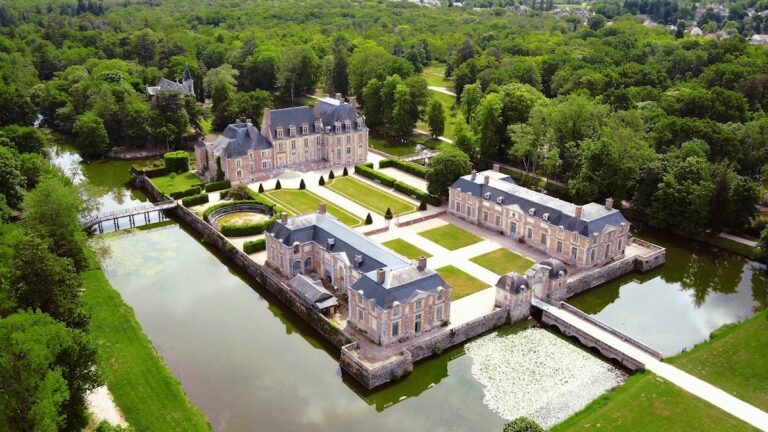
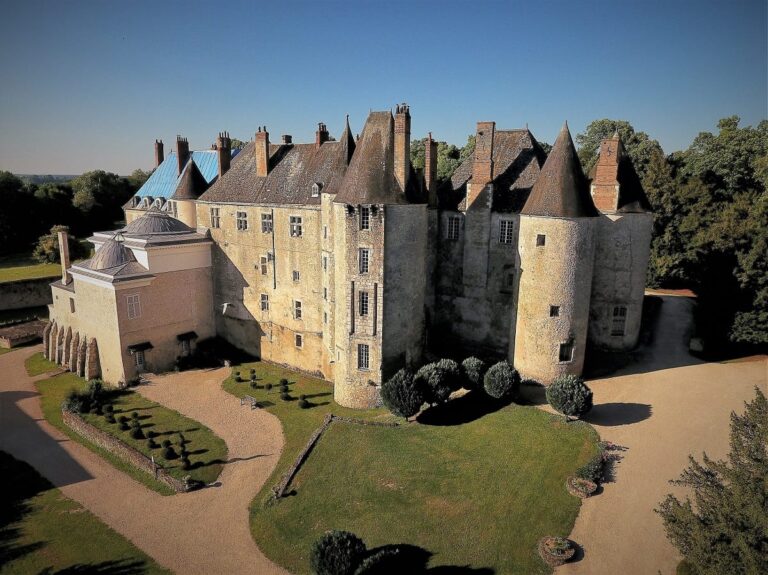
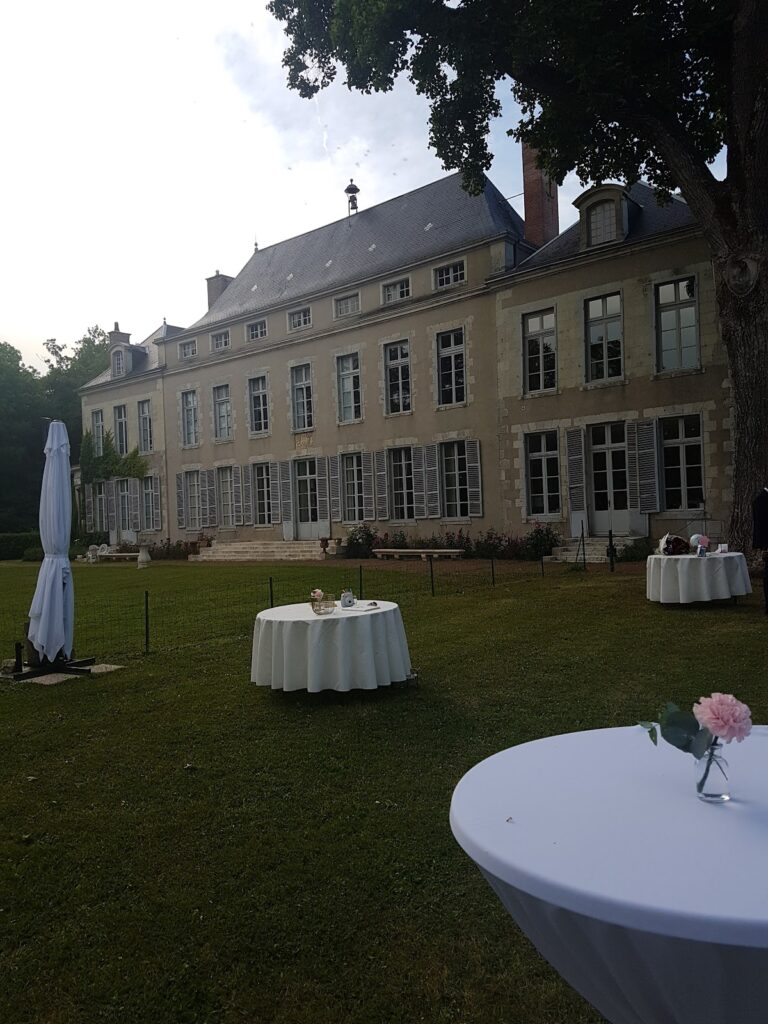
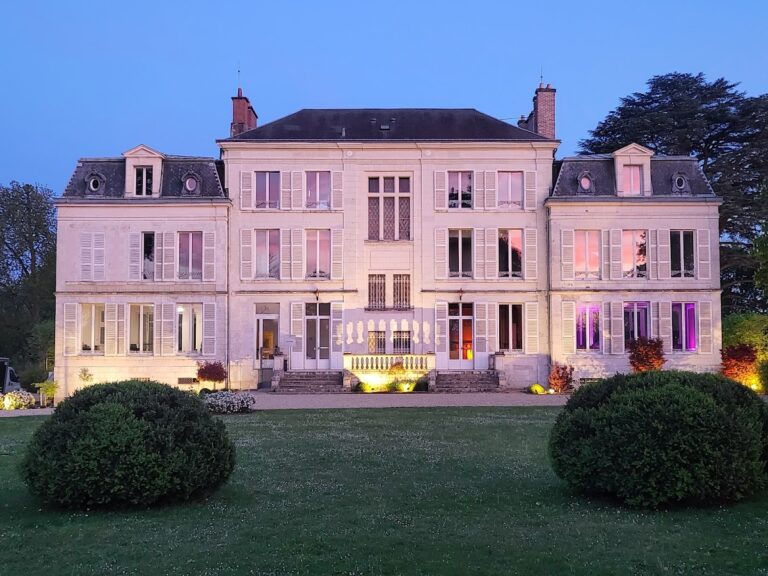
Château du Lude occupies a polygonal mound on the course of the Cosson and was formerly enclosed by moats. A drawbridge crosses the moats and leads to the entrance gate and courtyard. The surviving buildings form an L-shaped arrangement, with a low wing connecting the main residential building to the fortified entrance structure, or châtelet.
Castle Buildings and Surviving Medieval Fabric
Entrance and Residential Buildings
The entrance gate faces the main residential building. That building has a projecting external stair tower containing a spiral staircase. The fifteenth-century rebuilding also included a low Italianate gallery, a chapel, stables, and ancillary buildings. The entrance gate, drawbridge, west façade, façades, and Renaissance-style dormer windows were altered during the restoration directed by Henri Rapine in the late nineteenth century, which gave several elements a Gothic appearance.
The Chapel and Reused Donjon Stone
The large chapel incorporates bossed stones from the twelfth-century donjon, which was destroyed during the Wars of Religion and demolished completely around 1860. The reused masonry preserves a physical connection with the earlier fortified castle. The chapel accommodated approximately 70 people and served the surrounding population until the chaplaincy ended in 1914.
Service Buildings and Park
Dovecote Farm and Artists’ Studio
The dovecote farm was restored in 1905 in the manner of an eighteenth-century garden folly. It became Maurice Bastide du Lude’s artists’ studio and contained a press for engraving and etching. The building reflects a later artistic use of a former estate structure.
Service Courtyard
Near the castle, a square courtyard of service buildings is arranged around a kitchen garden. It contains an orangery, stables, a presbytery, and a kennel dating from the seventeenth, eighteenth, and nineteenth centuries.
Park and Fountain
The park occupies the southeast side of the castle, where the enclosure wall was missing. It was created in 1896 as part of the restoration of the estate. Nearby, the Sainte-Corneille fountain dates from the fifth century. Its earlier association with Cornelia, a Druidic water deity, was replaced by its Christian dedication to Sainte Corneille.
Nearby sites