Château de la Source: A Noble Residence and Horticultural Park in Orléans


Site at a Glance
- Rating
- 4.6
- Popularity
- Very Low
- Country
- France
- Primary era
- Early Modern
- Eras represented
- Early Modern, Modern
- Civilizations
- French
- Site type
- Civic
- Remains
- Park
On this page16 sections
History
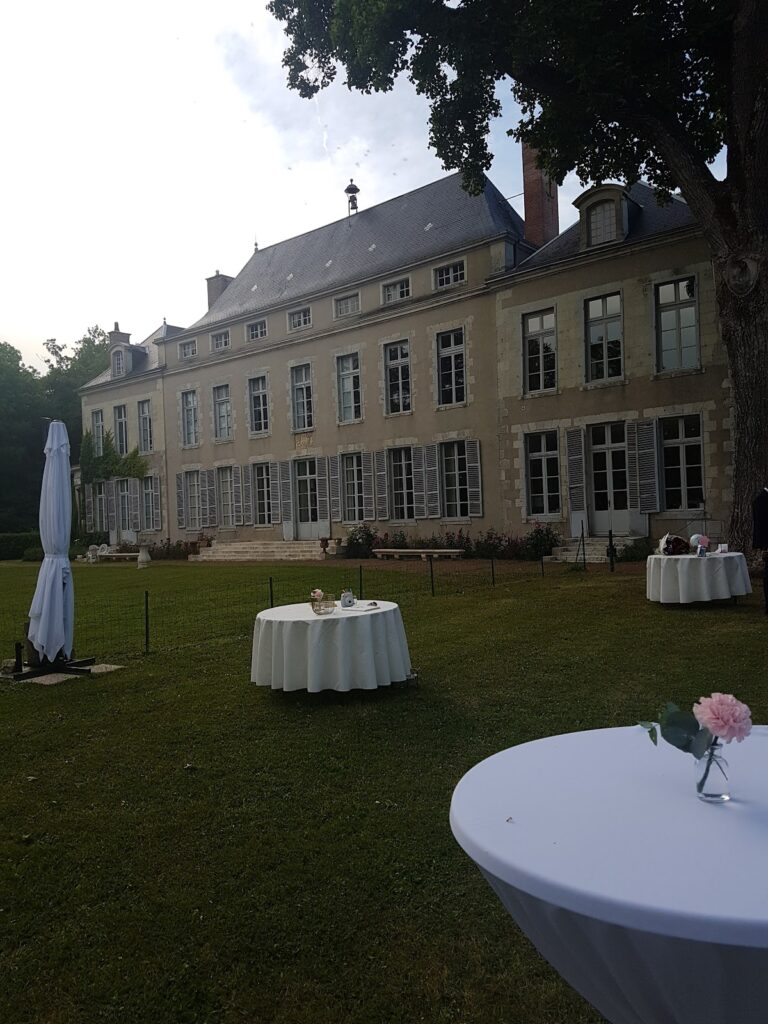
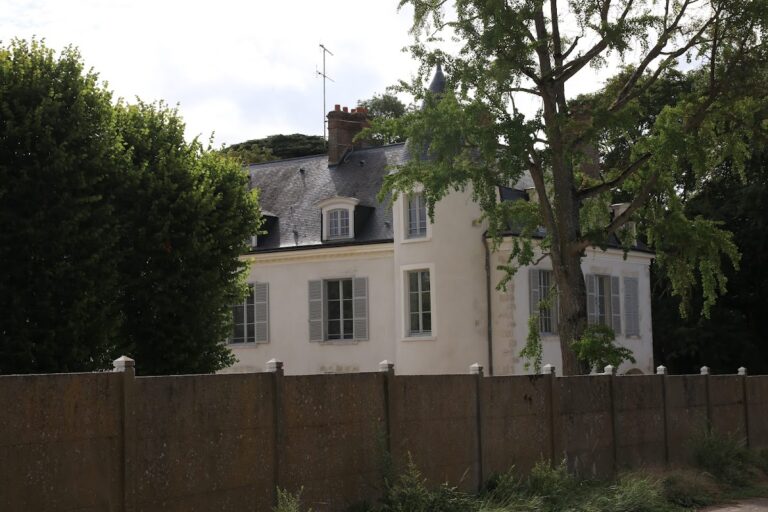
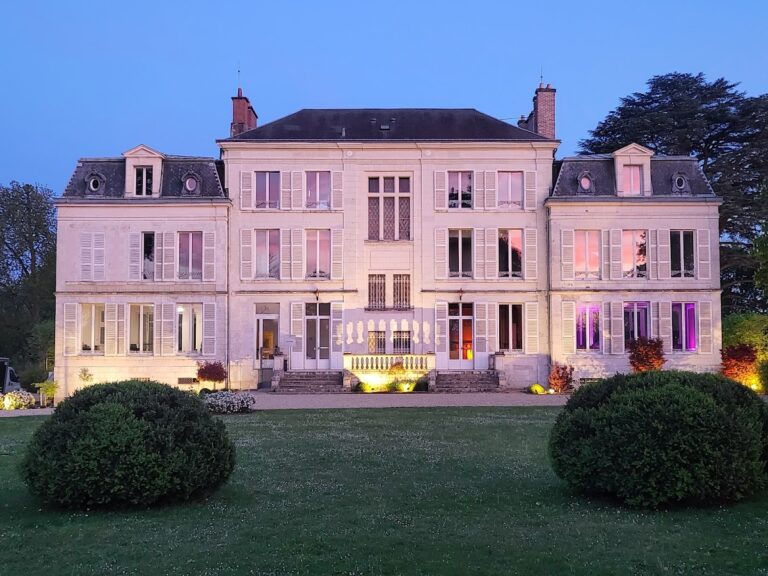
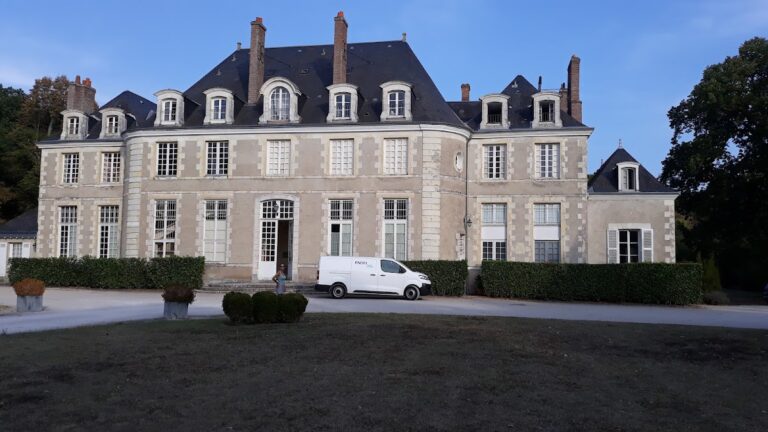
Château de la Source is a seventeenth-century noble residence in Orléans, France, built around 1633 in the architectural context of the period to plans by Charles Turmel. The estate now forms part of the Parc Floral de la Source, whose gardens and collections are arranged around the Loiret River and its spring, Le Bouillon.
From monastic estate to noble residence
The land occupied by the present park was ceded by Clovis I in 510 to the monks of Saint-Mesmin de Micy, a monastic foundation near Orléans. From 1427, the property passed successively among different lords and noble families. The present château was built around 1633 as a residence for the nobility.
The estate later became associated with several prominent figures. Henry St John, first Viscount Bolingbroke, an English statesman and writer who lived in exile in France between 1710 and 1723, rented the property. Voltaire, the eighteenth-century French writer and philosopher, gave the first reading of La Henriade there. The epic poem concerns the French king Henry IV. Napoleon I is also said to have stayed at the château.
Gardens and political upheaval
The first major garden works took place in the early eighteenth century, when the grounds were organized as a formal French garden. During the 1720s, an icehouse, a library gallery, statues, and bas-reliefs were added to a garden terrace, extending the estate beyond the residential building into a more elaborate designed landscape.
The château acquired a military role after the Battle of Waterloo in 1815, the defeat that ended Napoleon’s rule. Marshal of the Empire Louis Nicolas Davout and his staff established themselves at the estate. From there, they coordinated the dismantling of the Army of the Loire, a remnant of the Grande Armée.
Creation of the modern park
In 1959, the city of Orléans and the department of Loiret acquired 410 hectares of land. Thirty-five hectares were reserved for a floral park, while the remaining land supported the creation of the La Source district and the revitalization of the University of Orléans. The park was created in 1963 by the French architect and urban planner Louis Arretche as a recreational park and a showcase for horticulture in Loiret. The château now houses administrative services of the University of Orléans.
In 1967, the park hosted the International Floral Exhibition of Orléans from April to October. It attracted 2.3 million visitors and brought together 330 exhibitors and 700 producers from 11 countries. The event included 13 successive exhibitions and 13,000 square metres of specially built greenhouses. Reconstructions of a Gallic village and an ancient temple were also installed for the exhibition and later destroyed.
Château de la Source was listed as a historic monument in 1947. The estate lies within the Loire Valley World Heritage area, a UNESCO cultural landscape inscribed in 2000 for its historic settlements, monuments, river environment, and designed landscapes. The park received the French Jardin Remarquable label in 1963, while its iris collection became a specialized national plant collection in 1996. The estate is also associated with national collections of irises and clematis.
Remains
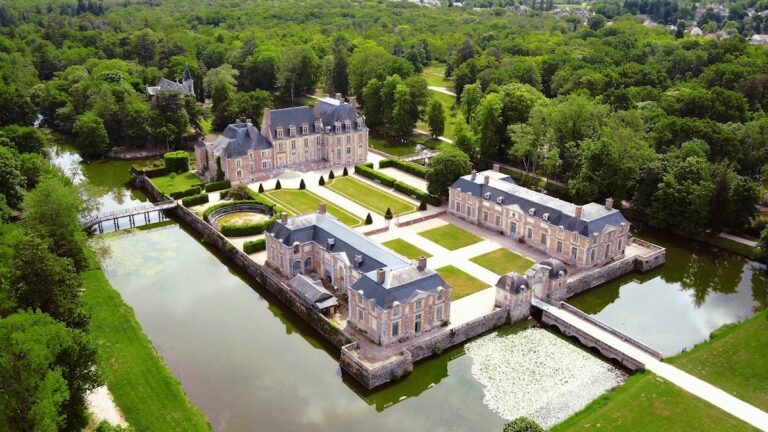
Château de la Source stands in the La Source district of Orléans, along the Loiret River and above the Miroir d’eau, about 250 metres from Le Bouillon, the river’s source. The Parc Floral de la Source covers 35 hectares and is divided into the Sologne plateau and the Loire Valley plain. Together, these areas combine woodland, water, formal gardens, horticultural collections, animal enclosures, and exhibition structures.
Landscape divisions
Sologne plateau
The Sologne plateau consists of semi-natural woodland dominated by hornbeams and oaks. It meets the lower plain at a hill corresponding to an ancient fluvial terrace of the Loire. Animal enclosures in this part of the park contain alpacas and Ouessant sheep.
Loire Valley plain
The Loire Valley plain has a horticultural and floral character. Its principal areas include the iris garden, the Miroir rose garden, the perennial-plant valley, the Source garden, a butterfly greenhouse, an orchard, a dahlia garden, a rockery, and the Loiret spring. The arrangement places the château within a wider landscape whose features combine cultivated plant displays with the natural emergence of the river.
Gardens and plant collections
Formal and informal gardens
A formal French garden lies in front of the château. Elsewhere, an English garden is surrounded by wooded parkland, while paths are bordered by box and fruit trees. Large lime trees, cedars, beeches, ash trees, oaks, and hornbeams form part of the park’s mature planting. The undergrowth includes seasonal plants such as daffodils, Primula elatior, Anemone ranunculoides, Scilla bifolia, cyclamens, and crocuses.
Horticultural collections
The park contains collections of pelargoniums, fuchsias, and dahlias. An extraordinary kitchen garden displays plants used in cooking, while the perennial-plant valley is formed by a meadow with seasonal flowers. The iris garden contains approximately 900 varieties and was classified as a specialized national plant collection in 1996.
Loiret spring
Le Bouillon, the Loiret spring, is the principal natural feature of the park. It is a karstic resurgence, meaning a spring where underground water returns to the surface after passing through soluble rock formations. The spring is described as one of only two such features in France, the other being in Vaucluse, and it gives its name to the department of Loiret. Ferns and rhododendrons grow around the emergence.
Park structures and exhibition spaces
Butterfly greenhouse
The butterfly greenhouse contains a tropical garden whose flowers provide food for exotic butterflies from Madagascar, the Philippines, Indonesia, and other regions. Its operation is seasonal, from April to October, and its planting forms a controlled environment for the butterflies within the wider floral park.
Grand Aviary
The Grand Aviary stands on the park’s main axis. Its structure uses two inclined masts positioned behind a metal mesh, creating an innovative enclosure for parrots and exotic birds from different continents.
Bouillon greenhouse-restaurant
The Bouillon is a greenhouse-restaurant built in a clearing overlooking the present emergence of the Loiret. It was intended for large floral exhibitions and included a two-level restaurant called La Serre, with an independent entrance from the avenue of the floral park.
The building consists of two transparent volumes placed together. Completely glazed façades stand beneath a broad roof with two unequal slopes, supported by a central exposed-concrete beam. The first pavilion was built before the end of summer 1964, followed by a second pavilion of the same design positioned at a right angle to it.
Nearby sites