Château de Varzy: An Episcopal Residence in France


Site at a Glance
- Rating
- 4.3
- Popularity
- Low
- Country
- France
- Primary era
- Early Modern
- Eras represented
- Medieval, Early Modern
- Civilizations
- French
- Site type
- Religious
- Remains
- Palace
On this page11 sections
History
Château de Varzy is a historic episcopal residence in France, developed by the bishops of Auxerre from the tenth century onward. An episcopal château served as both a bishop’s residence and an administrative centre for the surrounding bishopric. The site became a fortified ecclesiastical centre, was repeatedly damaged and rebuilt, and later adapted for manufacturing, institutional holidays, and public events.
A Tenth-Century Episcopal Residence
The earliest recorded building at the site is associated with Gaudry, bishop of Auxerre from 918 to 933. After returning from Rome in 923 with relics of Saint Lawrence and Saint Eugenia, Gaudry rebuilt Varzy’s pilgrimage church of Sainte-Eugenia and established a residence beside it. This residence occupied the site on which the château was later constructed.
The site also became connected with the relics of Saint Regnobert of Bayeux and his deacon Saint Zeno. During attacks by the Normans in the ninth or tenth century, their sacred remains were entrusted to the bishop of Auxerre and placed in a stone coffin at the château. Part of the relics stayed at Varzy, while another portion was sent to Franche-Comté.
Fortification and Episcopal Authority
Varzy was contested repeatedly during the eleventh and twelfth centuries. In the late eleventh century, the lord of Saint-Vérain seized the town and château and held them for seven years. The Diocese of Auxerre later fortified Varzy with enclosing walls, initially without towers. Geoffroy III de Donzy captured the town and château again in 1085. Bishop Humbaud excommunicated him, and Geoffroy did not return the property until he came back from a crusade in Palestine about twenty years later.
During the twelfth century, Guillaume IV, count of Auxerre, seized Varzy while fighting the counts of Joigny and Sancerre. His forces ravaged both church property and lay property. A royal judgment of 1164 ordered Varzy’s restoration to the bishopric.
Bishop Guillaume de Toucy strengthened the bishopric’s position in the area during the 1170s. He acquired land, vineyards, and meadows, as well as a large tract for part of the episcopal residence and for defensive ditches. He also held episcopal courts several times in the cloister of his Varzy residence.
Bishop Hugues de Noyers then expanded the town’s defensive system with large towers and deep ditches and built the episcopal château in the late twelfth century. The new residence stood less than 100 metres south of Sainte-Eugenia Church. Its construction established the principal form of the fortified episcopal complex that later bishops continued to alter.
Fire, War, and Episcopal Residence
A fire destroyed the château’s halls and other buildings in the thirteenth century. Bishop Guy de Mello rebuilt them, repaired the enclosing walls, and arranged housing along those walls. The complex therefore served not only as a residence but also as part of the wider organization of the episcopal estate.
Varzy escaped damage during the campaigns of the English commander Robert Knolles in the region in 1358 and 1359. Knolles’s forces operated from nearby Malicorne and raided widely, but the town and château remained unharmed.
Toward the end of his life, Bishop Pierre de Longueil made Varzy his principal residence, probably because of unrest in the Auxerrois. He died at the château on 16 February 1473. He was probably first buried in Sainte-Eugenia Church, before his tomb was transferred to Auxerre Cathedral.
Alterations from the Sixteenth to the Eighteenth Century
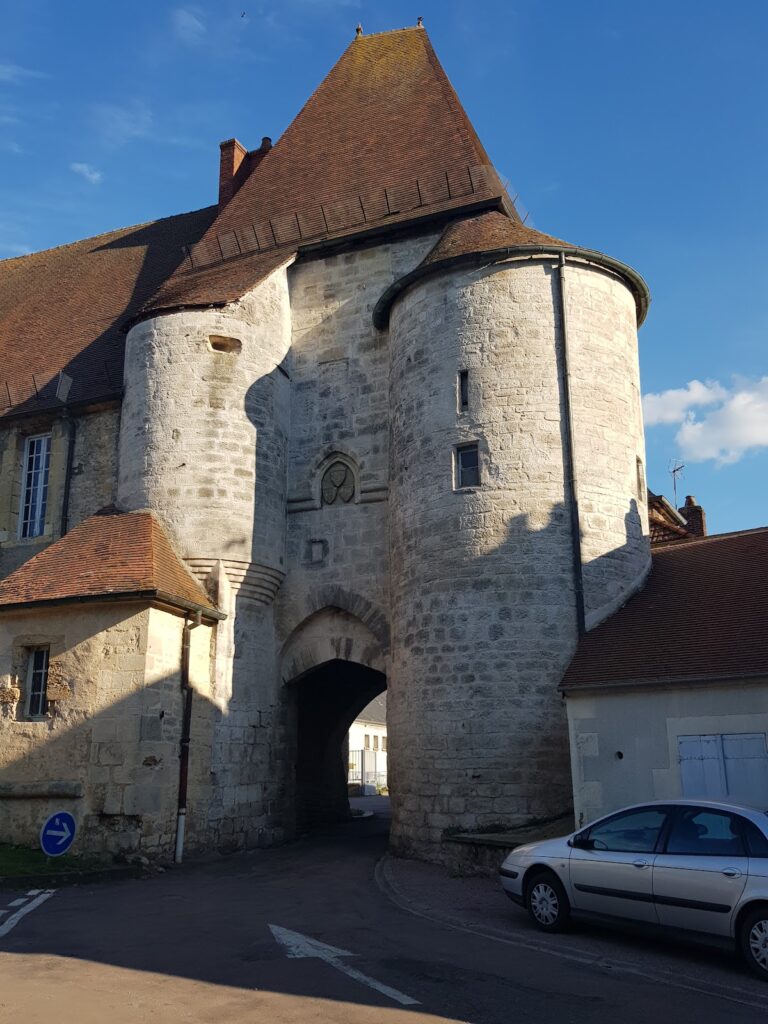
In the sixteenth century, Bishop Robert de Lenoncourt arranged for the château’s unfinished entrance portal to be completed. The portal had been begun under his predecessor, François II de Dinteville, and the work was paid for from Dinteville’s estate.
Bishop Dominique Séguier intended to keep Varzy and the château of Régennes habitable alongside the episcopal palace at Auxerre. He stayed at Varzy in 1633. During the episcopate of Bishop Pierre de Broc, neglected land registers and account records concerning the barony of Donzy were found at Varzy in 1649. These papers helped establish the bishop of Auxerre’s position as suzerain, or superior lord, of Donzy in 1651. Pierre de Broc also added numerous nearby properties to the Varzy episcopal domain.
Bishop Nicolas Colbert had the ditches filled and laid out promenades by the Porte de Marcy. The property then included a chapel dedicated to Saint Regnobert. Colbert died at the château on 5 September 1676.
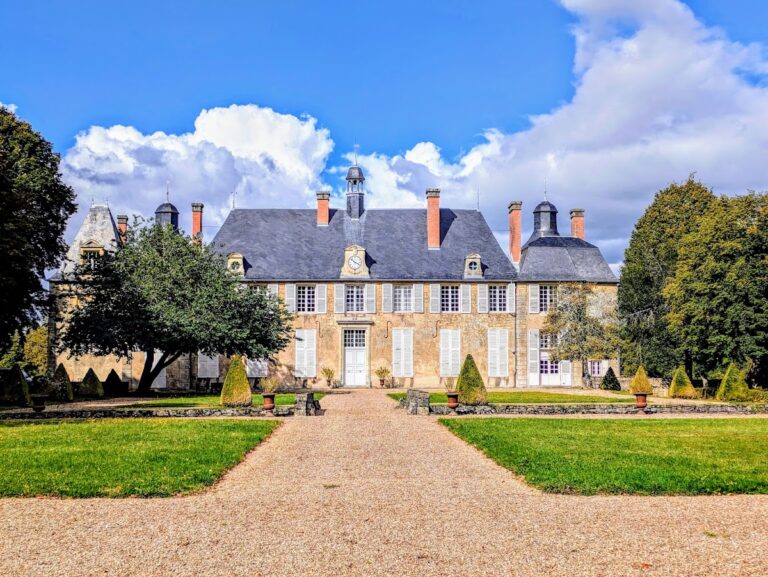
In 1764, the last bishop of Auxerre, Champion de Cicé, undertook major alterations. One wing was demolished, the entrance portal was rebuilt, and the present central building was constructed. The fifteenth-century buildings that had been intended for demolition were retained for the tenant farmer of the Varzy episcopal estate.
Revolutionary Industry and Modern Ownership
During the French Revolution, the château was sold as national property for 18,000 francs to Thoulet Vauvardin and Edme Rollin. In 1794, Rollin, by then the sole owner and supported by the revolutionary representative Joseph Fouché, established a faience manufactory there. Faience was tin-glazed earthenware. The enterprise employed 26 people at its height and closed in 1803.
The château passed to the Givry family in 1823 and to the Petit family in 1867. By about 1900, it had seriously deteriorated, and a wine merchant established a business there. Gilles and Pointeau bought the property in 1929, carried out urgent repairs, and opened the Jacques Amyot holiday colony.
The municipality of Clichy leased the château from 1938, purchased it in 1946, and had it restored by Jean Avarre, an architect from Clamecy. The property continued to accommodate holidays for young and older residents of Clichy until 2005. Château de Varzy has been registered as a Historic Monument since 1946, a French legal designation for buildings and sites protected for their historical or architectural importance.
The municipality of Varzy decided to purchase the château in 2007, and the sale was completed on 31 January 2008. The property is now rented for public and private events. From 31 May to 2 June 2014, it hosted the first European Biennial of Forges and Arts and Crafts. A hammer-and-anvil statue in the garden commemorates that event and Varzy’s training in artistic metalworking.
Remains
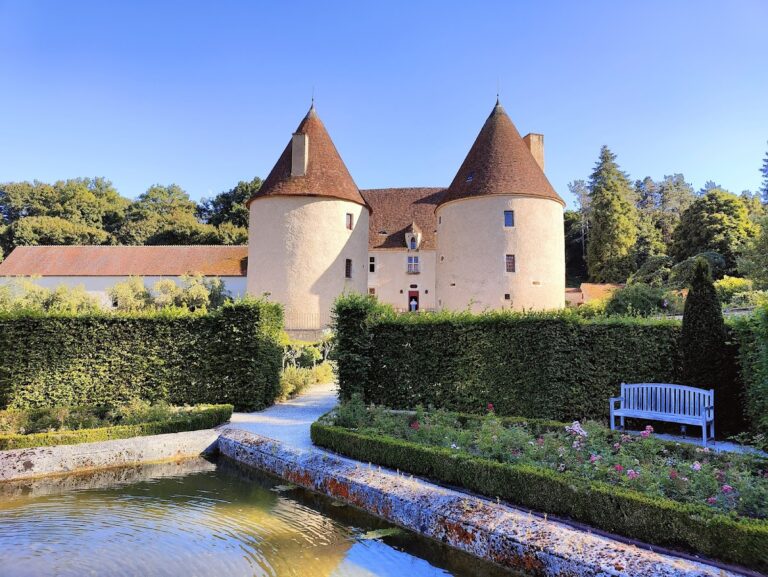
Château de Varzy stands near the centre of Varzy, on the south-west side of the town, on the left bank of the Cœurs stream. The stream is a small tributary of the Sauzay and crosses western Varzy from south to north before becoming the Sainte-Eugenia stream downstream from the church. The present complex occupies the site of the tenth-century residence, which has disappeared, while the late twelfth-century episcopal château lies less than 100 metres south of Sainte-Eugenia Church.
Fortified Episcopal Complex
The château belongs to a layered complex shaped by medieval fortification and later rebuilding. Varzy’s early defensive works consisted of enclosing walls without towers. Hugues de Noyers added large towers and deep ditches to the town’s defenses in the late twelfth century, when he also built the episcopal château. After the thirteenth-century fire, Bishop Guy de Mello rebuilt the halls and other buildings, repaired the enclosing walls, and arranged housing along them.
Surviving Buildings and Chapel
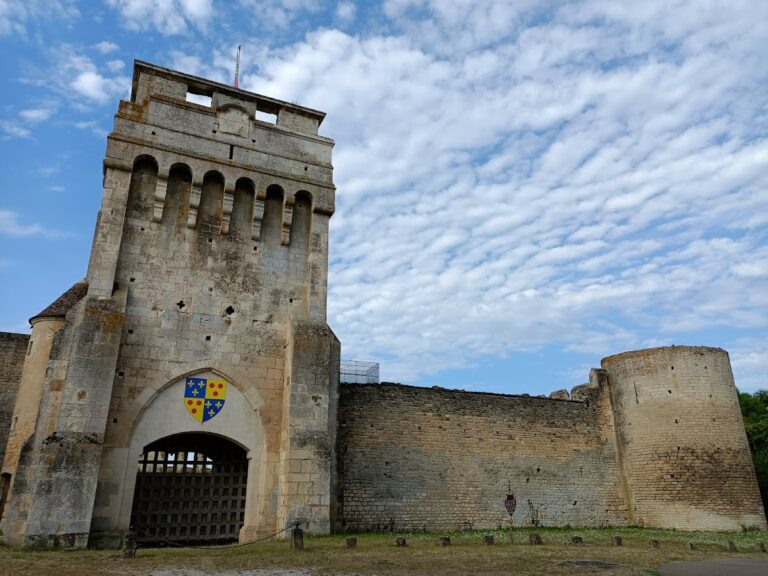
The surviving complex includes a fifteenth-century wing, an entrance portal, and a central building constructed in the eighteenth century. The portal was rebuilt in 1764, when one wing was demolished. The fifteenth-century buildings were retained for the estate’s tenant farmer, giving the later château a combination of older service buildings and a newer central structure. A chapel dedicated to Saint Regnobert formed part of the property in the seventeenth century.
Faience Manufacturing Spaces
The Revolution-era faience manufactory adapted different parts of the château to the stages of production. The workshop for grinding materials occupied the fifteenth-century wing, while the kilns were installed in the Irouard Tower. Drying rooms were placed in the wing along Boulevard Saint-Germain. Several pieces made by the manufactory are held by the Auguste Grasset Museum in Varzy.
Garden Monument
A statue showing a hammer striking an anvil stands in the garden. Installed as a commemoration of the 2014 European Biennial of Forges and Arts and Crafts, it also recalls Varzy’s artistic metalworking training.
Nearby sites