Serre Castle: A French Residence of the 15th to 17th Centuries
Site at a Glance
- Popularity
- Very Low
- Country
- France
- Primary era
- Early Modern
- Eras represented
- Medieval, Early Modern
- Civilizations
- French
- Site type
- Domestic
- Remains
- Elite Residence
On this page7 sections
History
Origins and family succession
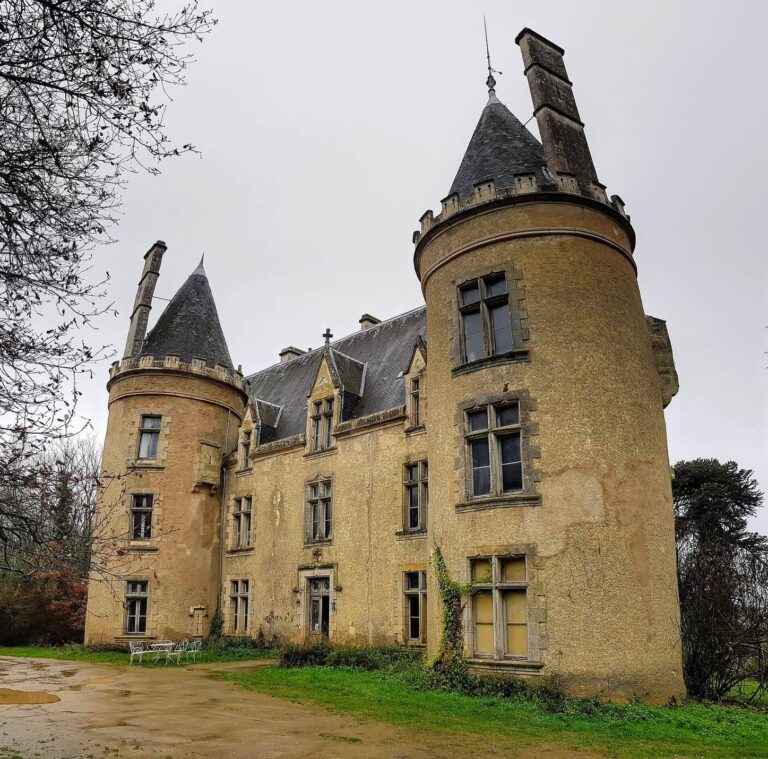
Serre Castle is a French castle whose construction developed over the 15th to 17th centuries, although its beginnings remain uncertain. The Archiac family came from Saintonge and had served as castellans of Availles-Limouzine since the 13th century. The castle’s origins are placed in the 15th century, while Odet d’Archiac is credited with beginning work in the early 16th century.
Through marriage, the property passed to the Béraudière family and then to the Grandseigne family. Diane de Grandseigne inherited it and married the first Duke of Mortemart. Their daughter Françoise became known as the Marquise de Montespan, a prominent figure at the court of Louis XIV, king of France from 1643 to 1715. The Rochechouart de Mortemart family retained the château and estate until the French Revolution, when they entered state ownership and were sold as national property.
Chapel and relic tradition
An exterior chapel was said to have housed relics of Saints Lucius and Emeritus, described as young Roman martyrs. The pope gave the relics to the Duke of Vivonne, Montespan’s brother. Their presence at Abzac gave rise to public displays of relics every seven years, a religious observance that became notable in Charente limousine.
Later ownership and protection
The Prévost-Maisonnais family owned the château during the first half of the 19th century. In 1860, the Pichon de Vendeuil family, originally from Indre, bought it and repaired its roof. They sold it in 1976 to Jacques Guttin and his wife, who remain its owners; the château is in private use.
On 26 July 1988, the château was listed as a historic monument. Its interior and exterior were also entered in the supplementary inventory, and three rooms were classified as historic monuments, a stronger level of protection.
Remains
Buildings and exterior
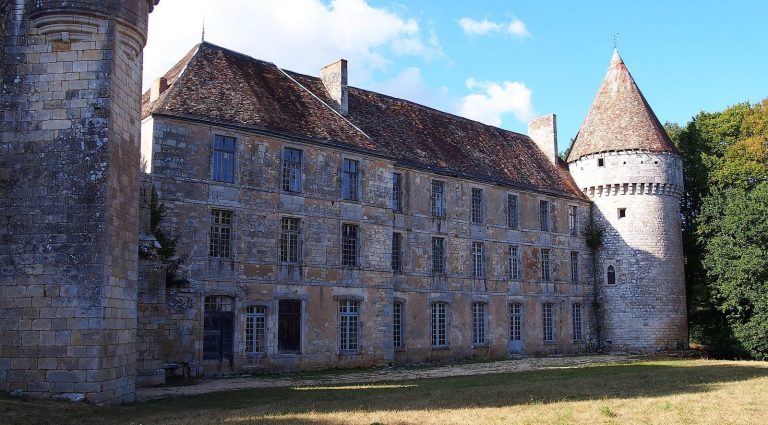
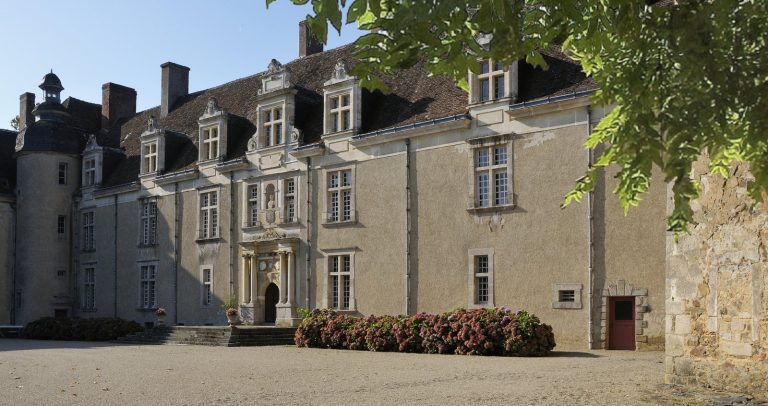
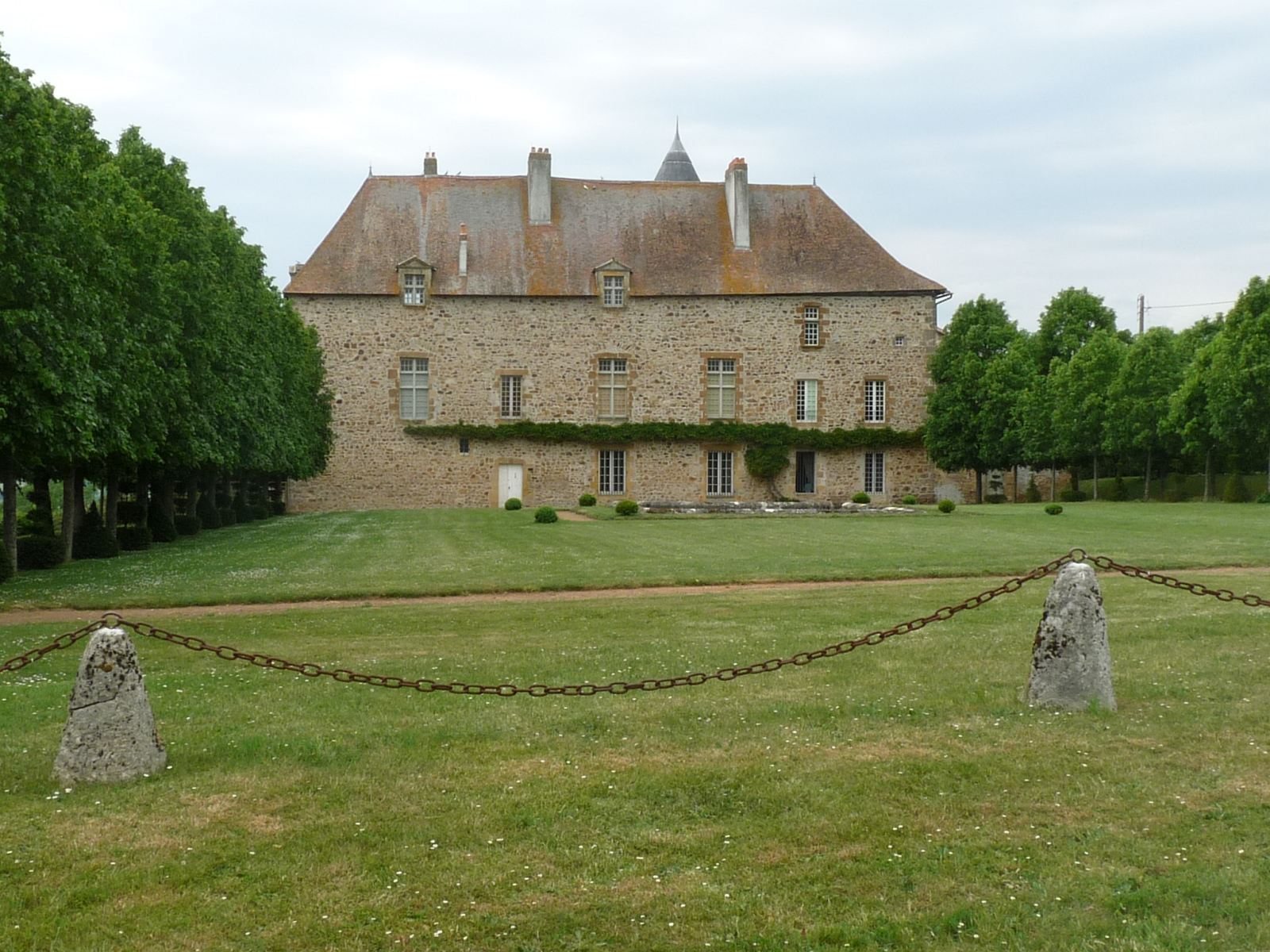
The château comprises two buildings of equal height, one dating to the 16th century and the other to the 17th. They meet at right angles, with a stair tower in the inside corner. Their roofs are covered with flat tiles, and parts of the façades were altered in the 17th century. The eastern façade and entrance are also identifiable parts of the complex.
Interior rooms and wall paintings
A second-floor room retains its 15th-century state. Its wall paintings show processions of figures, including a fool and Death, alongside inscriptions and maxims. The texts include the Psalms of David and sacred scripture in Latin and Greek, painted in black and red. The paintings may express Diane de Grandseigne’s nostalgia after the Duke of Vivonne died in 1688. The three protected rooms comprise this painted room, an antechamber (a small room before a principal chamber), and a bedroom traditionally called Montespan’s. The bedroom is also associated with her father, the Duke of Mortemart, and with the Duke of Vivonne, though its precise identification is uncertain. It contains a painted alcove.