Château de Saint-Point: A Historic Castle in Saint-Point, France
Visitor Information
Google Rating: 4.5
Popularity: Low
Official Website: chateaudelamartine.fr
Country: France
Civilization: Medieval European, Modern
Site type: Domestic
Remains: Palace
History
The Château de Saint-Point is situated in the commune of Saint-Point, France. This castle originated in the medieval period and was constructed by the feudal lords who controlled the area from the late 11th century onward. Its early purpose was closely tied to the protection of important religious centers nearby.
From its earliest days, the château was connected with the Abbey of Cluny, one of the most influential monastic institutions in medieval Europe. Historical records from the abbey identify the castle as part of a network of fortifications meant to safeguard the abbey’s territories. A local legend from this time speaks of a tunnel that once linked the castle directly with the abbey, although this remains part of oral tradition rather than confirmed fact.
In the turbulent years of the 15th century, the château underwent a significant military episode. In 1471, French forces laid siege to the fortress and eventually captured it, marking a shift in control that would see the property pass through several noble families. Among these were the Rochefort d’Ailly and later the Castellane lineage. The region also experienced moments of unrest, including a notable event in 1789 when the castle suffered damage at the hands of local inhabitants amid the upheavals of the French Revolution.
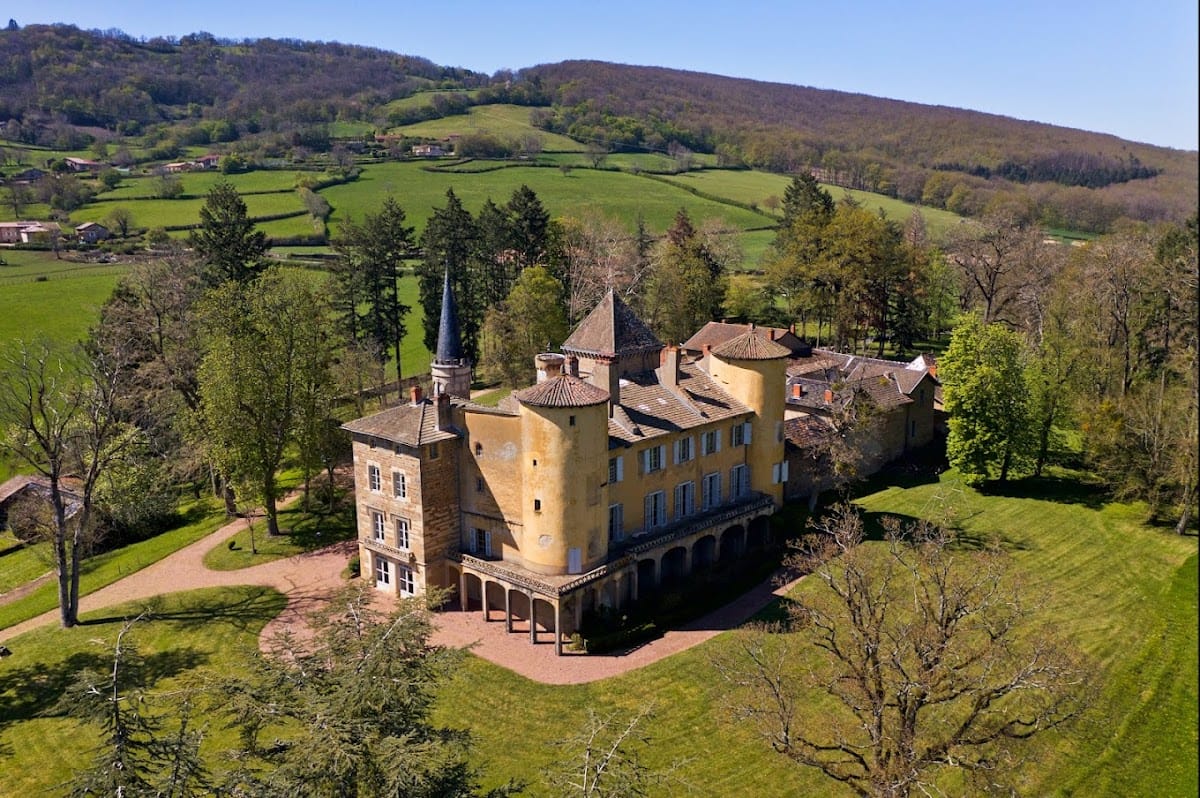
The early 19th century brought a new chapter when Pierre de Lamartine acquired the château in 1802. His son, Alphonse de Lamartine, a celebrated poet and politician, inherited it in 1820. Alphonse undertook considerable restoration efforts and, between 1852 and 1855, transformed the château with additions in the Gothic Revival style. These enhancements included a tower or donjon, a gallery, and battlements, all set within a large English-style garden, aligning with contemporary tastes of romanticism.
After Lamartine’s death in 1869, the château passed to his niece, Valentine de Cessiat, then on to her heirs. By 1894, ownership transferred to Pierre-Jean-Charles de Montherot. In the 20th century, the property came under the care of the comte de Noblet d’Anglure before being acquired in 2006 by Philippe Mignot, who undertook its maintenance and preservation. Since 1972, the château has been officially protected as a historic monument with multiple parts—including its façades, roofs, dining room, and annex buildings—recognized for their heritage value. The château is part of a collection of notable sites grouped under the “Route des châteaux en Bourgogne du Sud,” highlighting its cultural importance within southern Burgundy.
Remains
The château comprises a central rectangular main building, featuring two sizable square pavilions that project slightly on the west side. These structures exhibit a coherent architectural plan that reflects layers of development, particularly from the 19th century remodeling. On the façade facing east, large windows installed during the 1800s are adorned with wrought iron balconettes placed below the lower panels, adding ornamental detail consistent with the Gothic Revival style embraced by the Lamartine family.
One of the prominent features introduced during the 19th-century renovations is a passage door on the west façade, designed with a curved pediment above it and an external staircase connecting the ground floor to the first floor. This addition enhanced accessibility and complemented the château’s new stylistic elements.
Facing the east side, a spacious rectangular courtyard opens up, enclosed on three sides by auxiliary buildings. The courtyard is secured by a metal grate and a carriage gate notable for its simplicity, lacking ornate crowning. This arrangement allows for a functional entrance directly from the adjacent road.
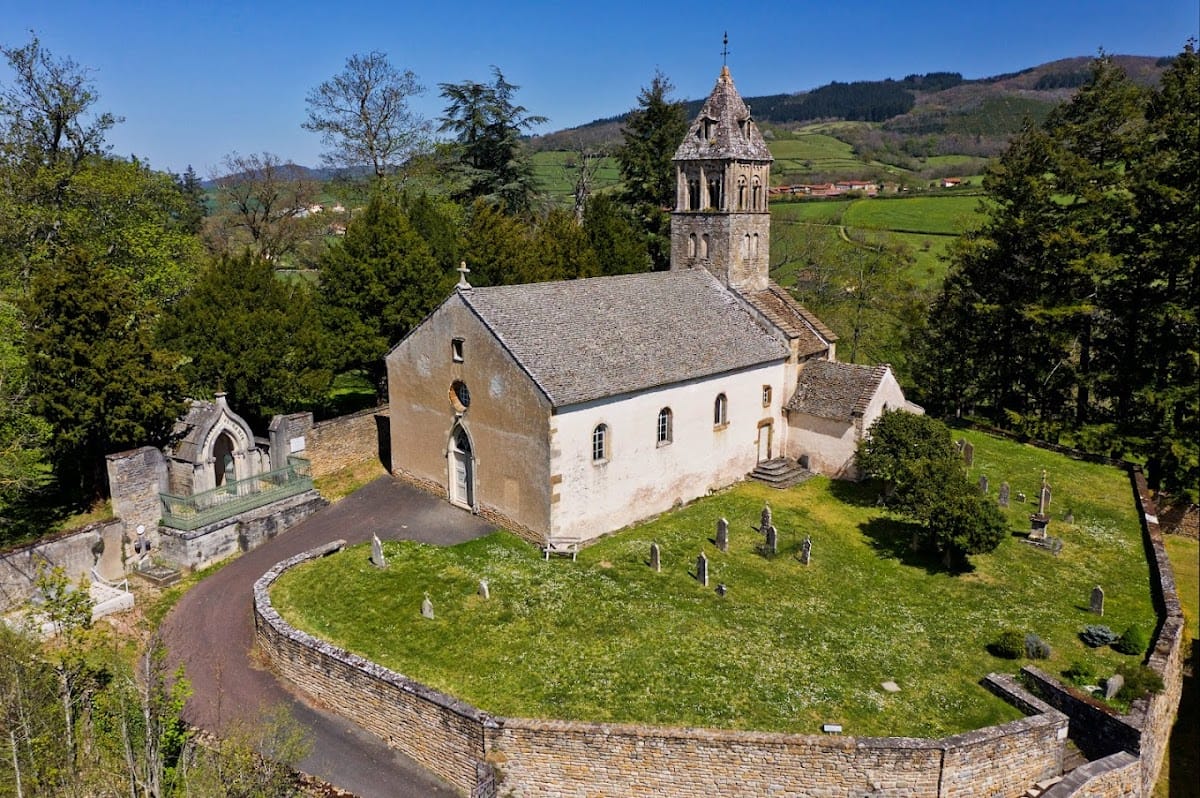
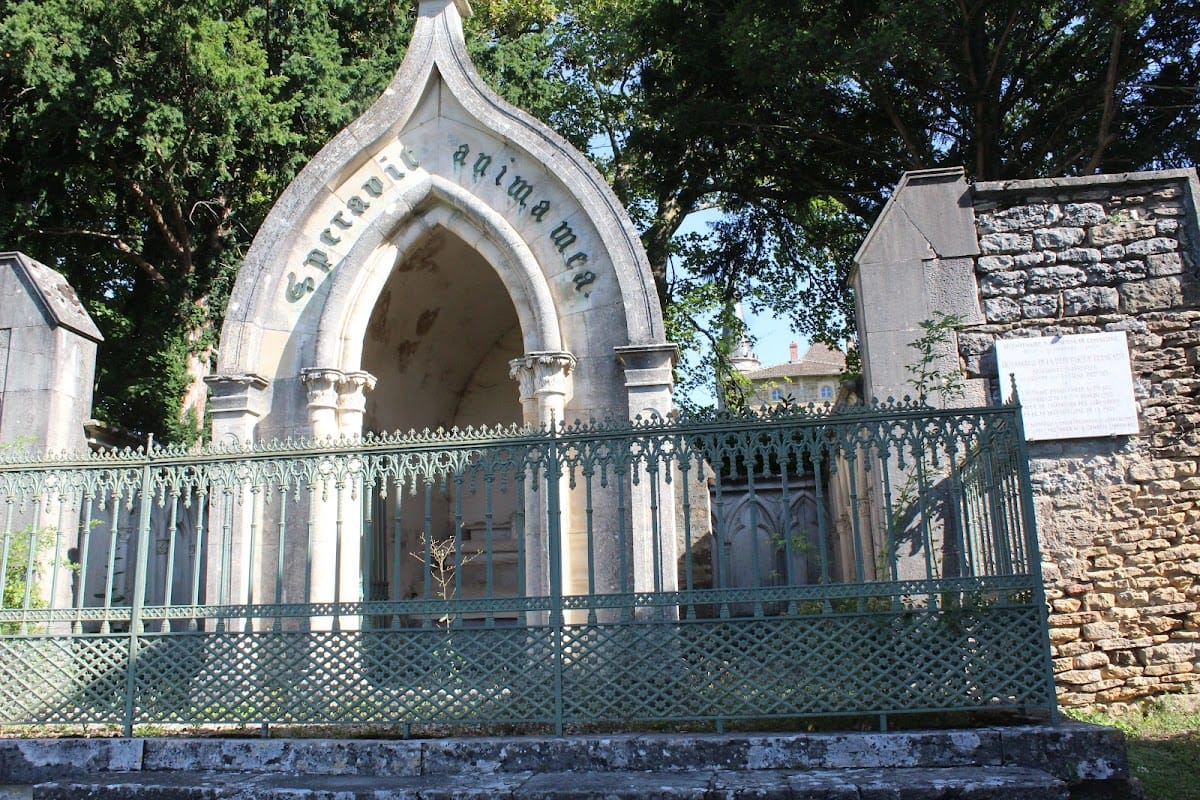
Geographically, the château sits on the slope of a hillside and is separated from the local communal cemetery by a boundary wall. Of historical significance within this nearby cemetery is the family vault of Alphonse de Lamartine, linking the site intimately to its most famous occupant.
The 19th-century additions—most notably the donjon, gallery, and battlements—exemplify the Gothic Revival style that shaped the château’s current appearance. These structures are surrounded by an extensive English-style garden, emphasizing landscape design typical of the period. Despite being privately owned, the château preserves the architectural character established during this era, maintaining both structural integrity and historical ambiance from Lamartine’s time.
Nearby sites