Château de Chasselas: Historic Castle and Wine Estate in France


Site at a Glance
- Rating
- 4.7
- Popularity
- Low
- Country
- France
- Primary era
- Early Modern
- External website
- Open
- Eras represented
- Early Modern
- Civilizations
- French
- Site type
- Domestic
- Remains
- Castle
On this page7 sections
History
Château de Chasselas is a historic castle in Chasselas, France, whose recorded history reaches back to the early thirteenth century. The estate was held by the Chasselas family, and Guillaume de Chasselas was lord of Chasselas in 1325. Its later history was shaped by successive noble families, financial difficulties, violence, abandonment, and restoration.
The Chasselas and du Roux families
The property passed to the du Roux family during the fifteenth century. Members of the family are associated with Chasselas from 1485 to 1591, beginning with Benoît du Roux in 1485 and followed by Judith du Roux, who was lady of Chasselas and Pouilly in 1564. Judith married Lyonnet de Challes, a Huguenot, meaning a member of the Reformed Protestant tradition in early-modern France. He was beheaded at Trévoux for banditry. She later married Philibert de Bellecombe, lord of Vinzelles.
The Bellecombe succession
The Bellecombe family inherited a troubled estate. Jacques de Bellecombe and his wife died of plague in 1629, while their son Claude de Bellecombe was murdered in 1654. The succession nevertheless continued through Jean de Bellecombe in 1677 and Honoré Gaspard de Bellecombe in 1705.
In 1706, the Bellecombes sold the château, then in poor condition, to Thomas Paisseaud, receiver for the Mâconnais, the historic area around Mâcon. Paisseaud was later ruined and sold the property to Laurent Fayard in 1727. Fayard, a general treasurer of finances, transferred it in 1756 to Laurent de la Font de la Rolle, a royal bodyguard. In 1774, the estate passed to a creditor, Étienne Cellard d’Estours, a royal secretary whose coat of arms showed three towers.
Damage, restoration, and later use
In 1789, Étienne Cellard d’Estours’s son was unable to prevent the château from being looted. One tower was demolished, but the remainder of the property was preserved. Later owners included the Grandjean-Fouchy family from 1797, the Reme family from 1971, and Jean-Marc Veyron la Croix and Jacky Martinon from 1999.
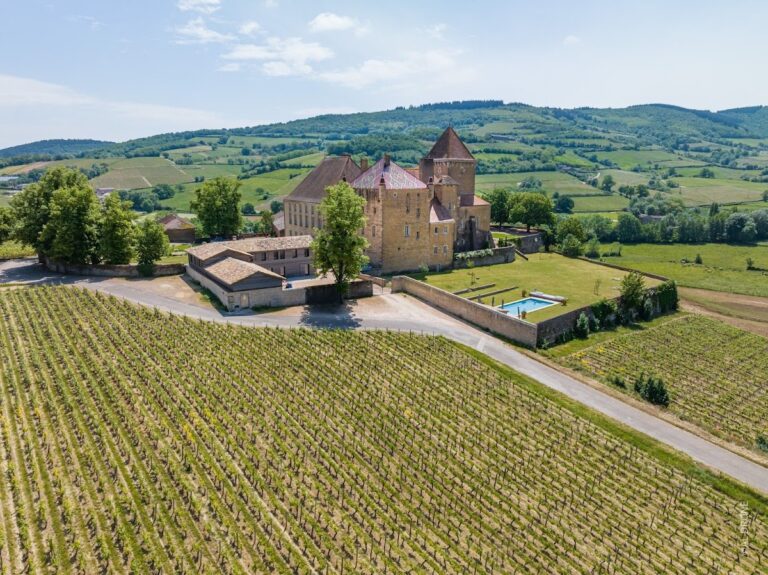
The château had been abandoned before the Reme couple acquired it in 1971. The couple, whose wife was born into the de Cuverville family, undertook its restoration. The estate subsequently operated as a winery, with its agricultural land and buildings connected to wine production. The hotel group Millésime later purchased the property, and conversion into a hotel began in October 2023. Château de Chasselas has been registered as a French historic monument since 5 July 1979, a legal heritage designation that places it under historic-monument protection. It is listed in the Mérimée architectural-heritage database under reference PA00113204. The property is associated with the Société civile agricole de Chasselas, a French civil company for holding or operating agricultural property, and includes a twelve-hectare wine estate.
Remains
Courtyard and towers
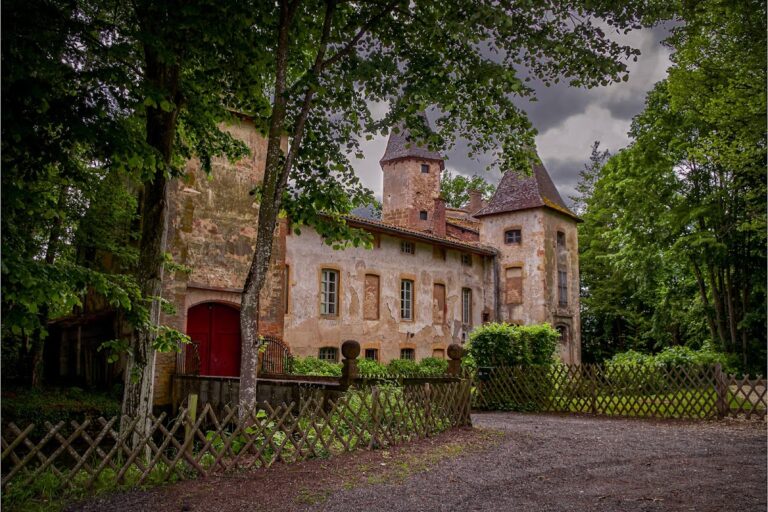
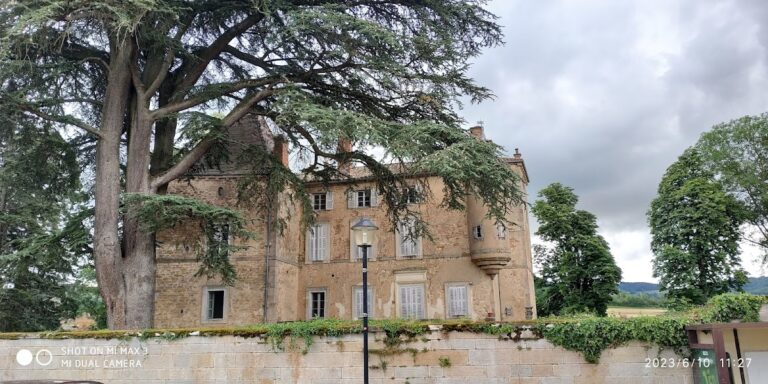
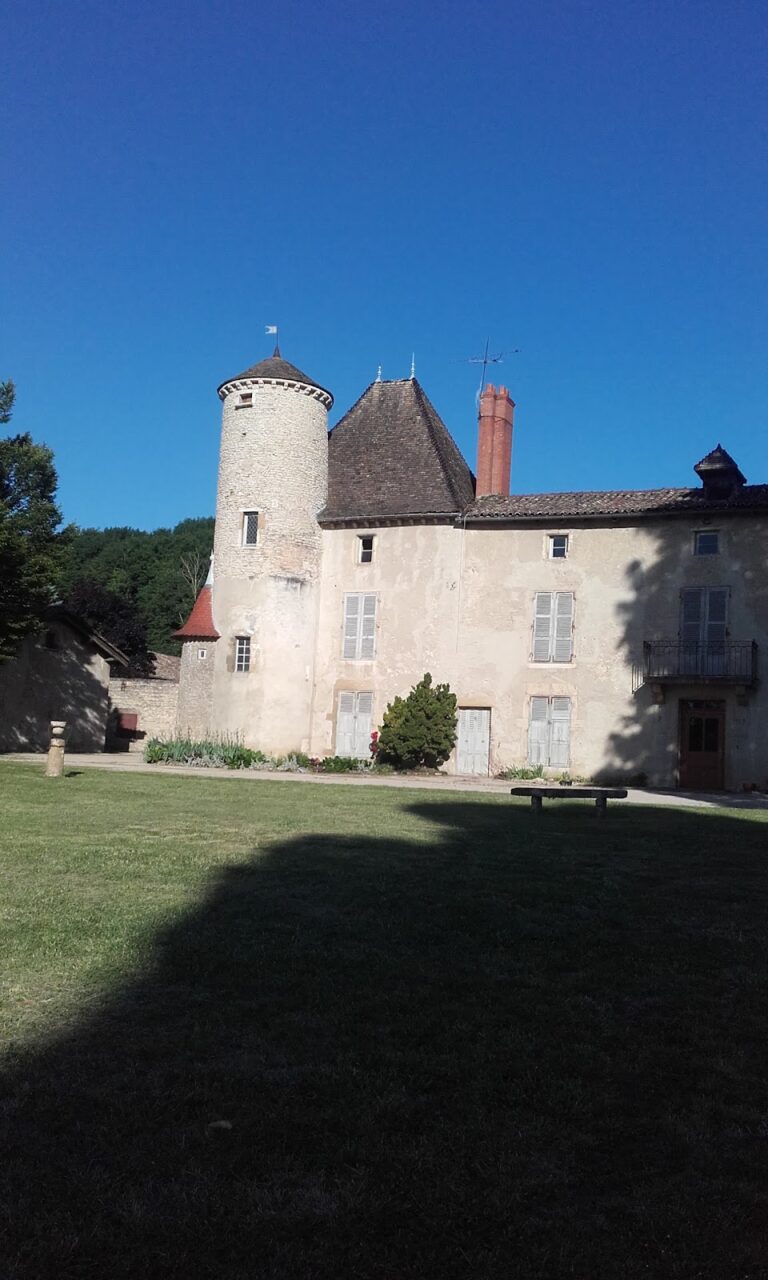
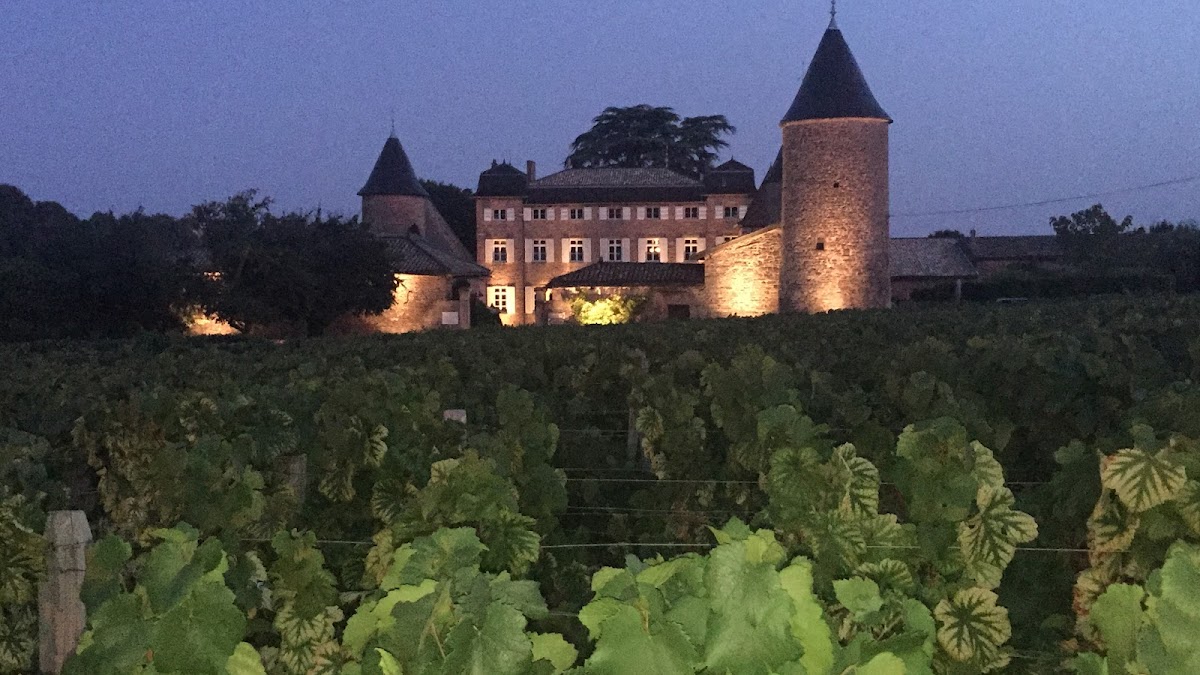
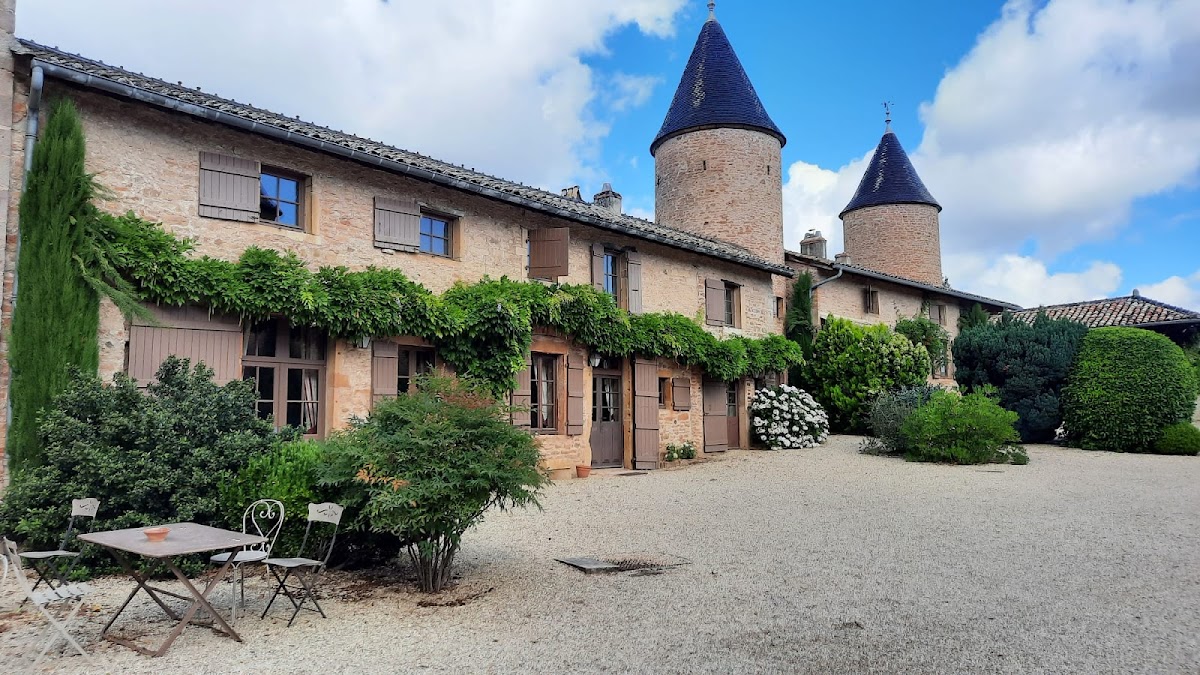
Château de Chasselas stands on a slope around a large formal courtyard. The buildings form a rectangular enclosure that opens northward through a narrow passage between the service buildings. Three round pepper-pot towers flank the complex, and their roofs are covered with glazed tiles. One circular tower stands near the corner of the kitchen garden, while another occupies the northwestern corner. The northwestern tower is joined to a third tower by agricultural buildings.
Residential and agricultural buildings
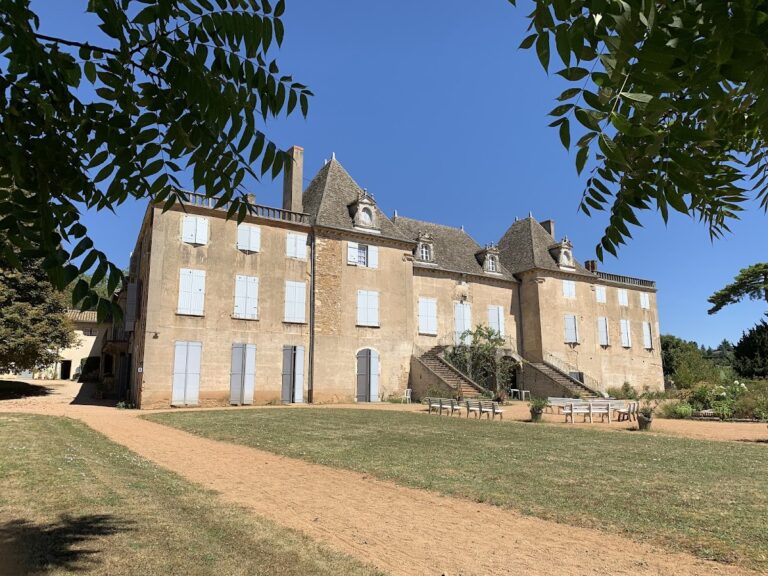
The eastern residential building dates from the sixteenth century. On the southern side of the complex, the principal residence dates from the end of the eighteenth century and consists of a central body with two wings set at right angles. Agricultural buildings form part of the estate, together with a wine-tasting cellar associated with its later winery function.