Saint-Agil Castle: A Fortified Residence in France

Site at a Glance
- Popularity
- Medium
- Country
- France
- Primary era
- Medieval
- Eras represented
- Medieval, Early Modern
- Civilizations
- French
- Site type
- Military
- Remains
- Castle
On this page9 sections
History
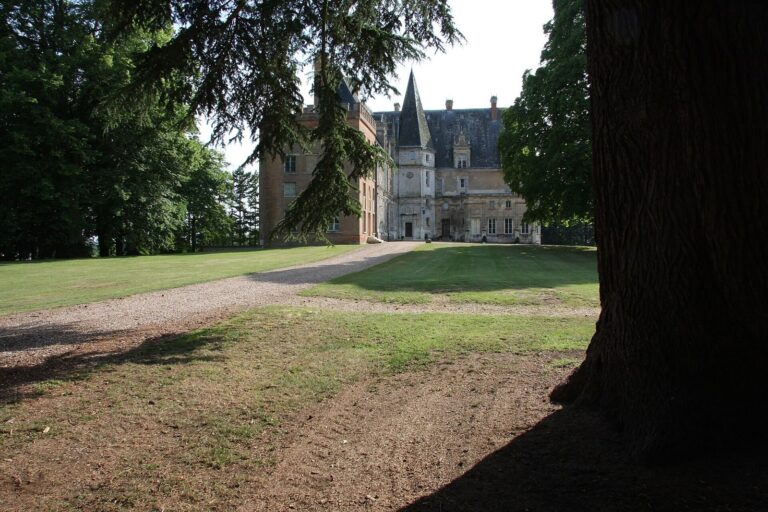
Saint-Agil Castle is a fortified residence in Saint-Agil, Loir-et-Cher, France, built chiefly in the late 15th century.
Lordship and medieval fortress
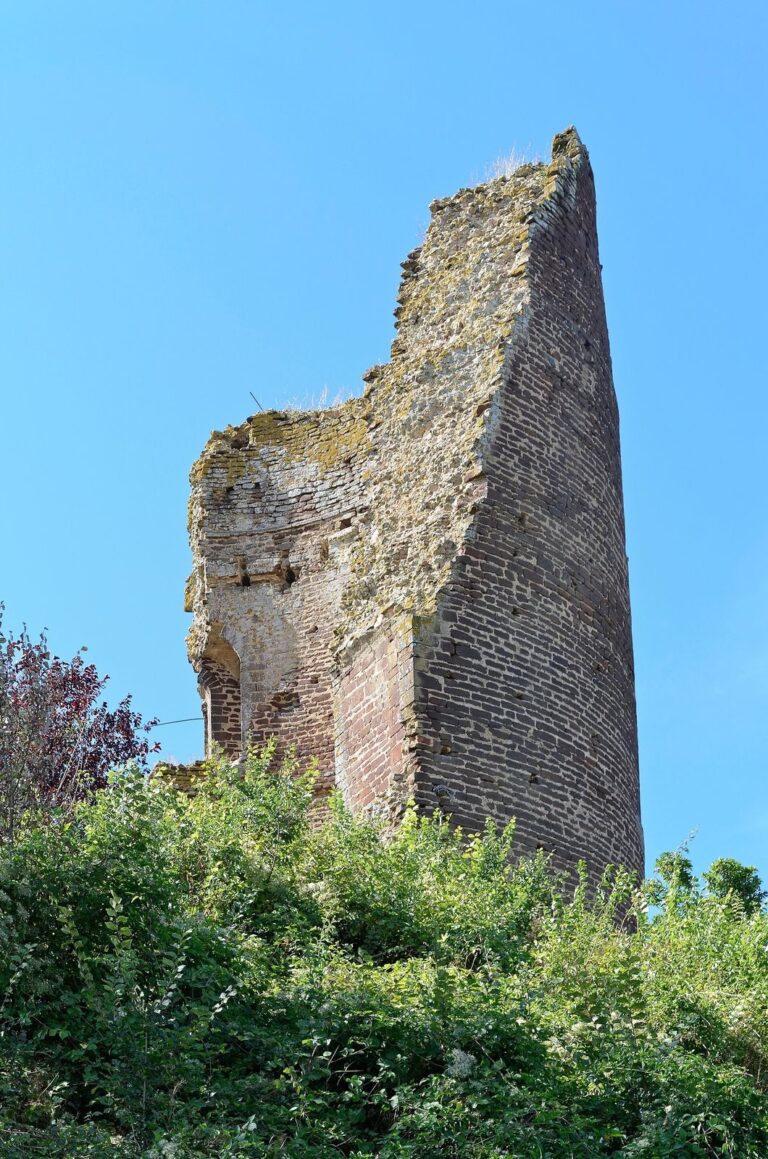
Around AD 1000, Saint-Agil was the seat of a landed lordship under the authority of the lord of Mondoubleau. A medieval fortress dating to the 13th century stood on the site before the present château.
The La Vove family and the château
In the 14th century, the Le Gallais family transferred the estate to the La Vove family through marriage. The La Voves held it in succession during the 15th and 16th centuries. Antoine de La Vove commissioned most of the château’s construction in the late 15th century, establishing much of its present appearance.
The château is also dated as completed in 1720 and attributed to Jules Hardouin-Mansart, a prominent French architect of the 17th century.
Later ownership and preservation
The Count of Saint-Maixent acquired the château in 1818. It was listed as a French historic monument on 13 February 1926. Restoration has been underway since 2023 under its current owner, businessman Hugo Brugiere.
Remains
Layout and principal buildings
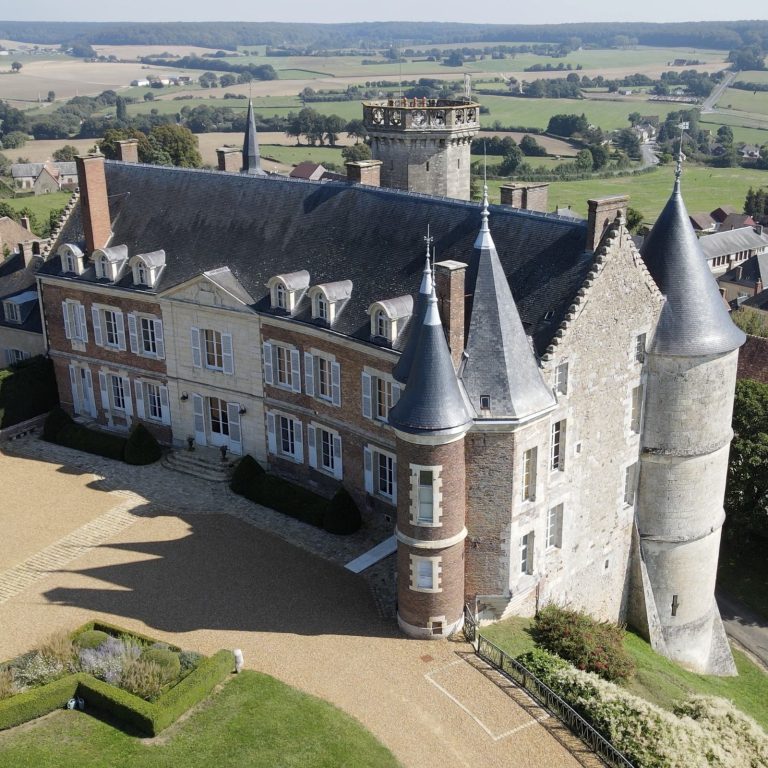
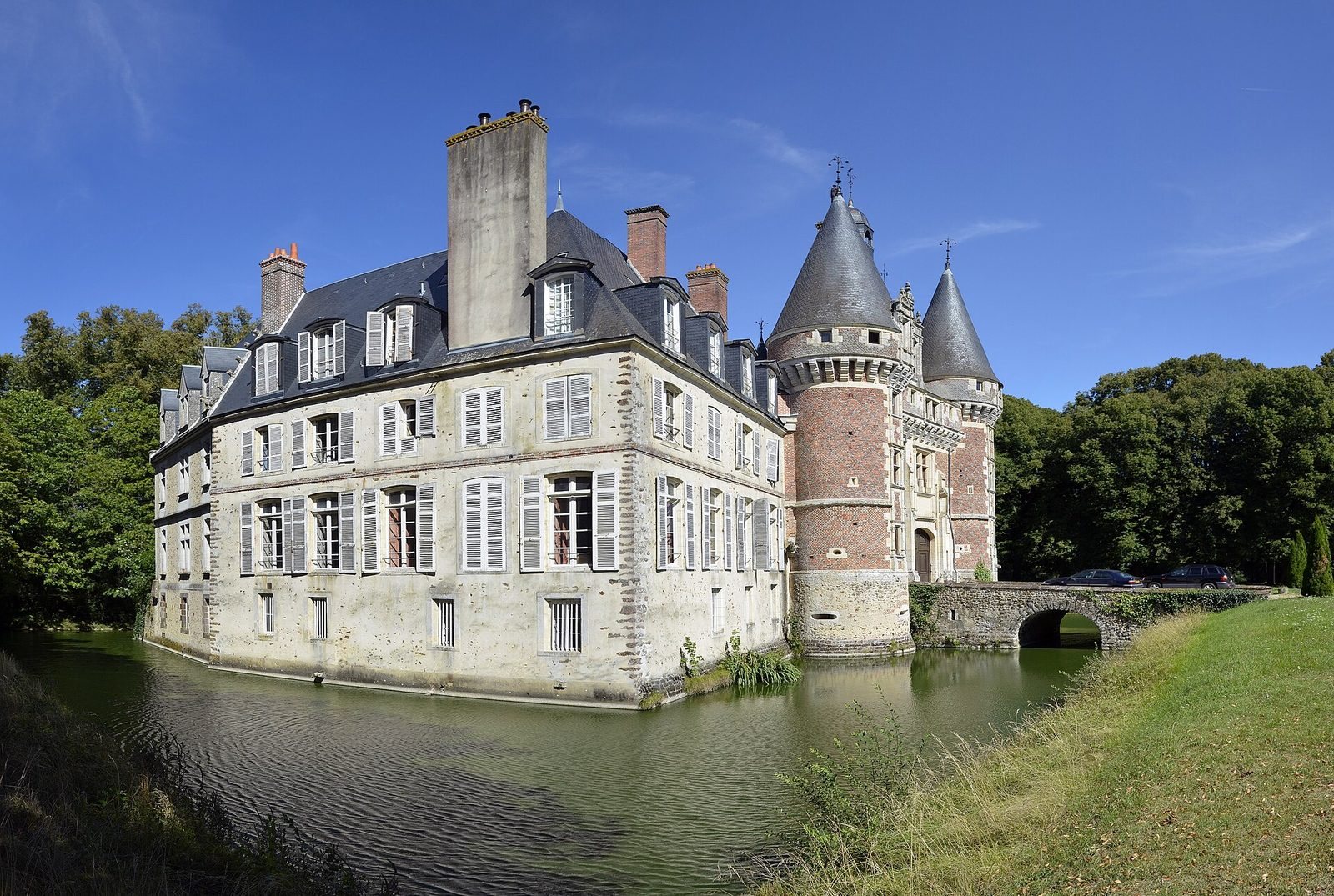
The château has a square plan and is enclosed by moats about 15 metres wide. Its entrance and adjoining residential block form the main described architectural features.
Square plan and moats
The moats, approximately 15 metres across, surround the square-plan château and define its fortified layout.
Entrance pavilion
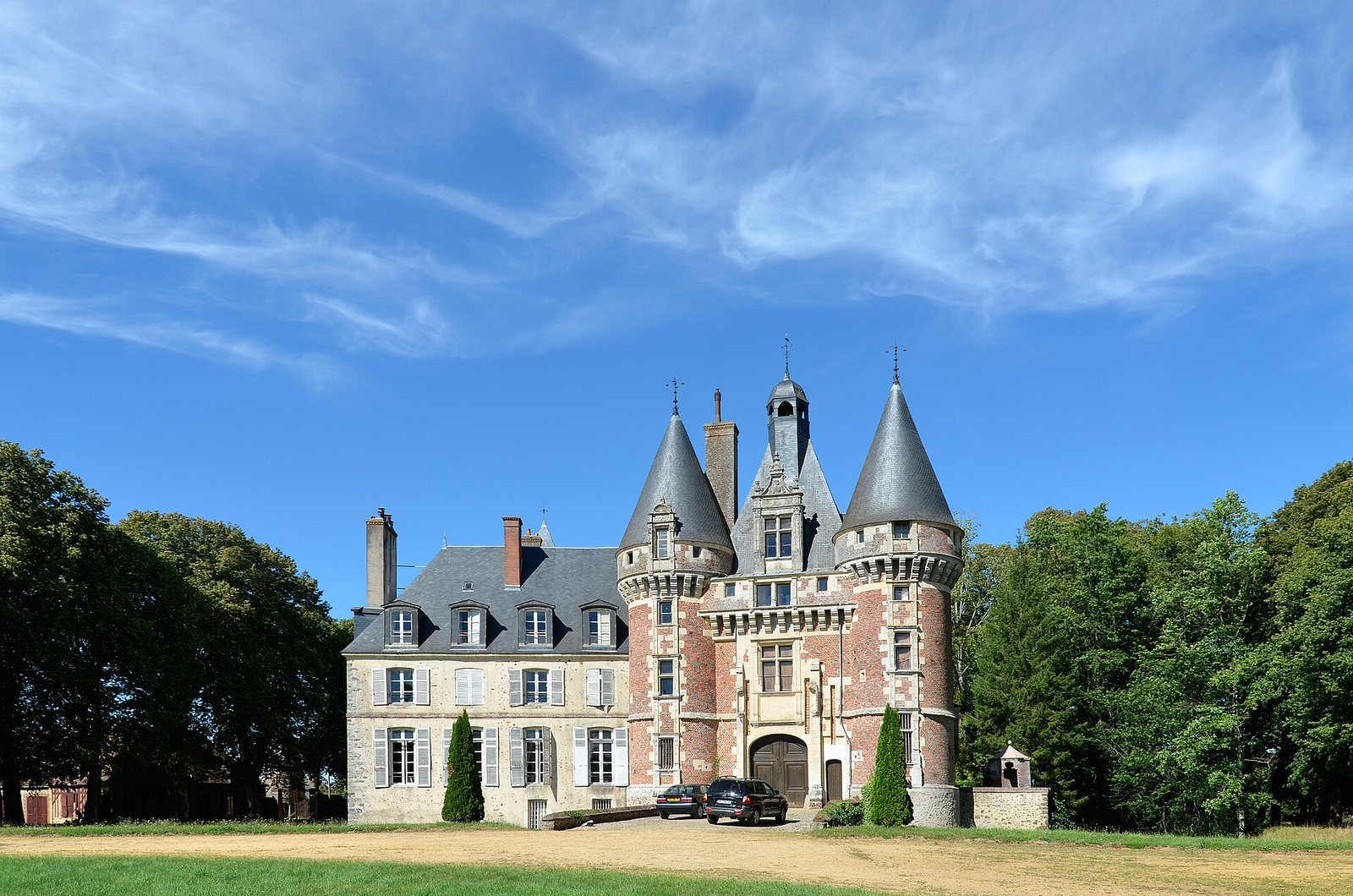
The entrance is a smaller secondary gateway built by Antoine de La Vove in 1510. Its brick-and-stone pavilion stands between two towers topped with machicolations, projecting structures with openings through which defenders could attack those below. The tall roof has a dormer with a sculpted pediment and is capped by a small lantern.
Adjoining residential block
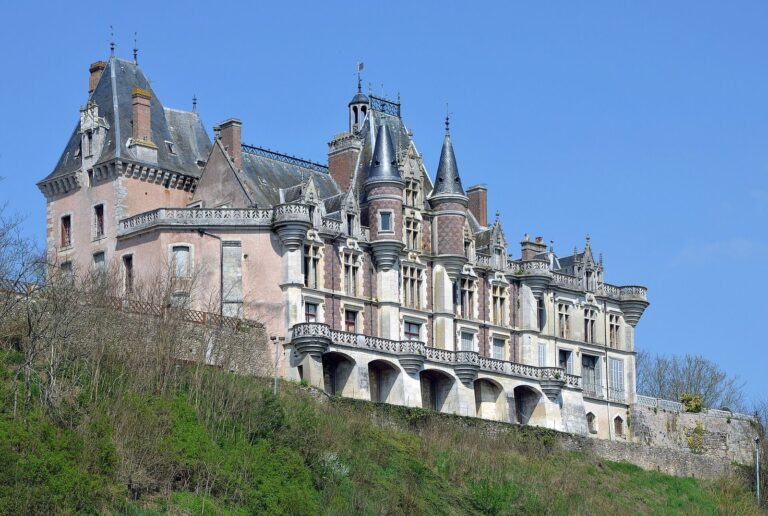
A residential block adjoins the entrance. It is of considerable age and underwent substantial alteration in the 18th century.