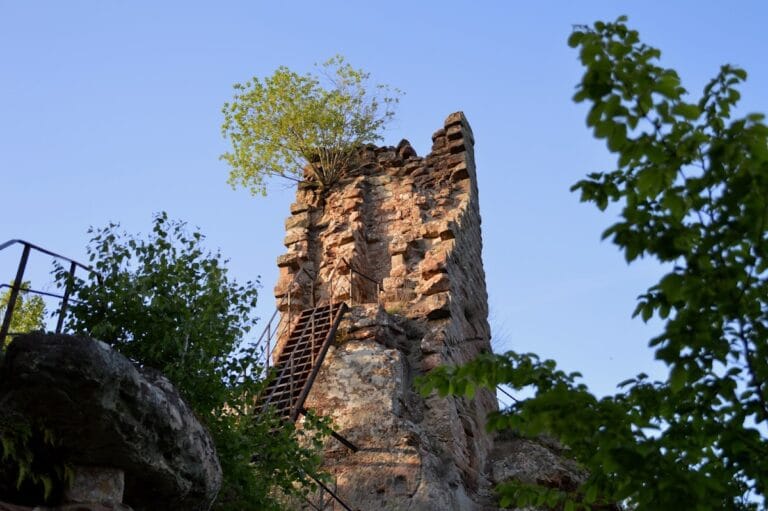
Château de Rothenbourg: A Medieval Fortress in France


Site at a Glance
- Rating
- 3.9
- Popularity
- Very Low
- Country
- France
- Primary era
- Medieval
- External website
- Open
- Eras represented
- Medieval
- Civilizations
- Duchy of Lorraine, Holy Roman Empire
- Site type
- Military
- Remains
- Castle
On this page4 sections
History
Château de Rothenbourg is a ruined medieval fortress in France, near Philippsbourg, traditionally said to have been built at the beginning of the tenth century, possibly in 906. Also known as Rothenburg or Rotes Schlössel, meaning “Red Little Castle,” it served as a fortified stronghold before its destruction in the fourteenth century.
Origins and Medieval Lords
The castle’s early history is connected by tradition with Otbert, or Albert, the thirty-seventh bishop of Strasbourg. Otbert supported Charles the Simple, a West Frankish king, in a dispute over the succession of Louis III. Strasbourg backed Conrad of Franconia, whose competing claim was supported in the same conflict. After excommunicating his subjects, Otbert fled during a general uprising and may have taken refuge around 912 or 913 at Rathburg, possibly the site later known as Rothenburg. He was soon assassinated.
Rothenburg enters firm documentary history in the twelfth century as a fief of the bishop of Strasbourg. A fief was a territorial holding granted by a superior lord in return for service and allegiance. The castle later became associated with Lorraine and the County of Zweibrücken-Bitsch. A major building phase is attributed to the Duke of Lorraine, the territorial ruler of the Duchy of Lorraine, during the thirteenth century. By the end of that century, the castle had passed to the Counts of Zweibrücken-Bitsch, a regional noble dynasty with territories and feudal rights in parts of present-day northeastern France and southwestern Germany.
Conflict and Destruction
In the fourteenth century, part of Rothenburg belonged to Count Walram of Zweibrücken-Bitsch. In 1353, he granted half of it as a fief to Gerhard Harnasch of Weisskirchen. Harnasch was probably a robber knight, a medieval noble or mounted warrior accused of using a fortified residence for raiding, coercion, or attacks on commerce. His activities brought him into conflict with the citizens of Strasbourg.
Strasbourg forces seized the castle and probably destroyed or dismantled it around 1368 or 1369. Rothenburg was not rebuilt and has remained a ruin since that time. At the end of the sixteenth century, it was still part of the lordship of Bitche, and the fief may have passed with Falkenstein to the Hanau-Lichtenberg family at the beginning of the seventeenth century. The castle may also have given its name to the Blick de Rothenburg family, which held several fiefs from the lords of Bitche and became extinct in 1749.
The name appears in several historical forms: Rothenburg in 912, Rothemburg in 1353, Rotenburg in 1369, and Retenburg in 1698. The ruined castle is now state property.
Remains
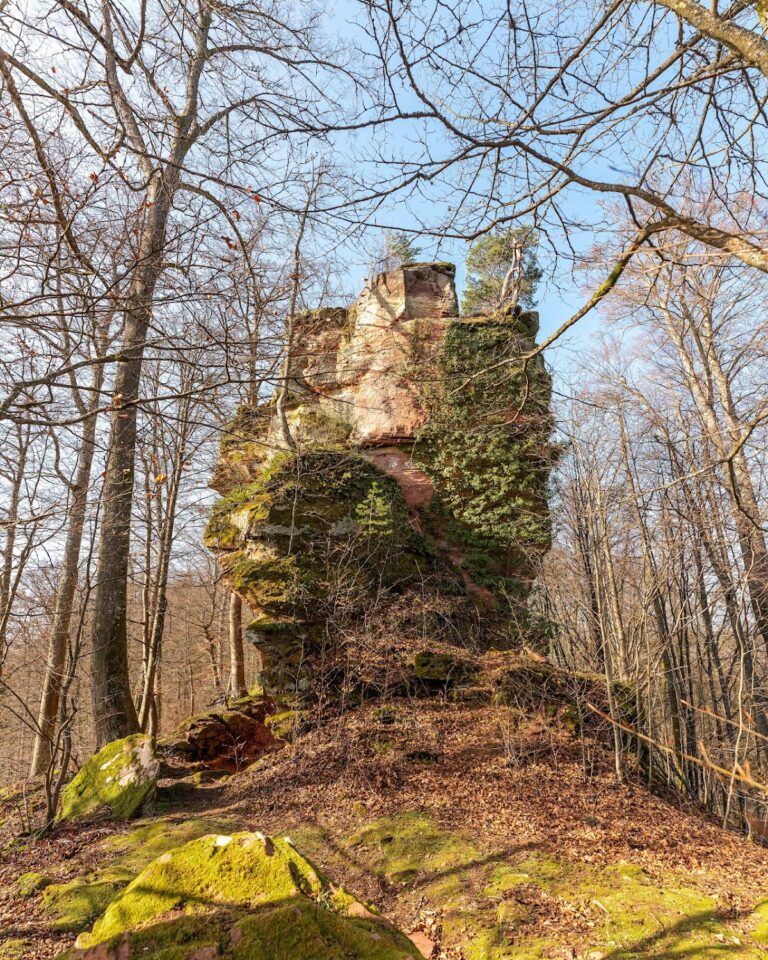
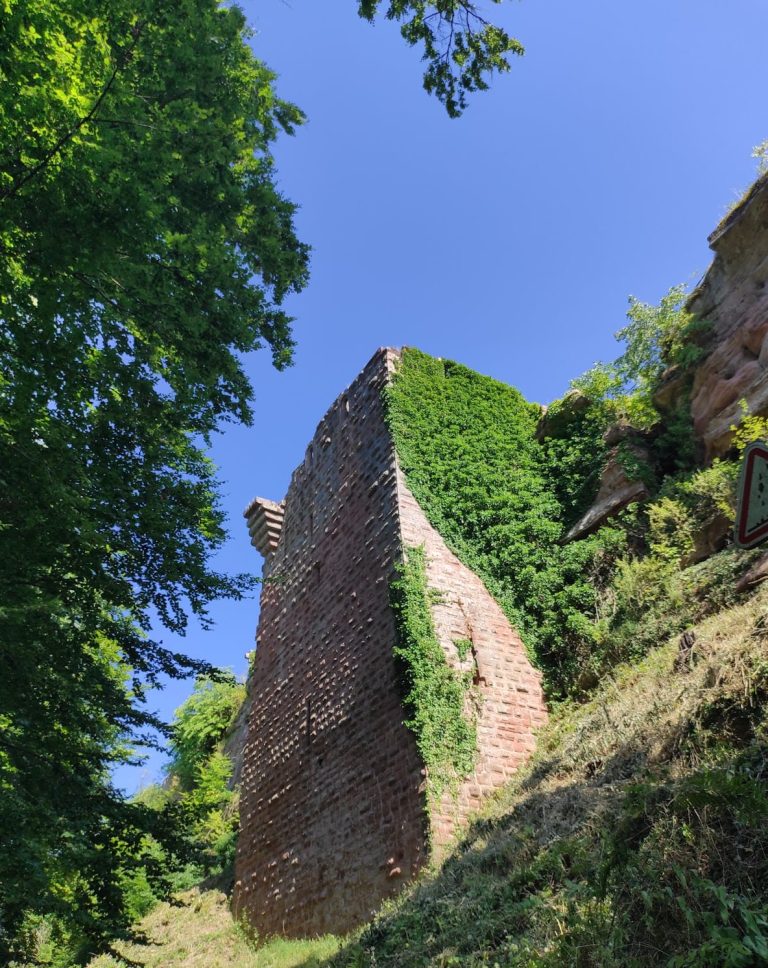
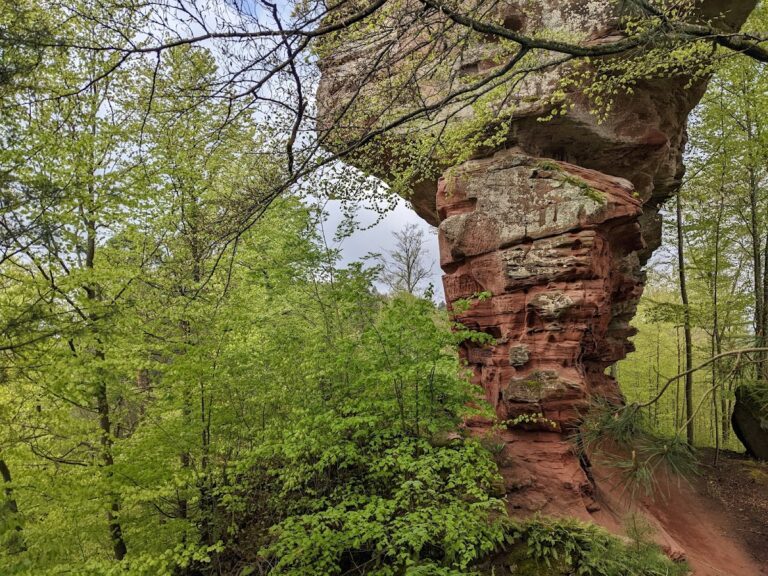
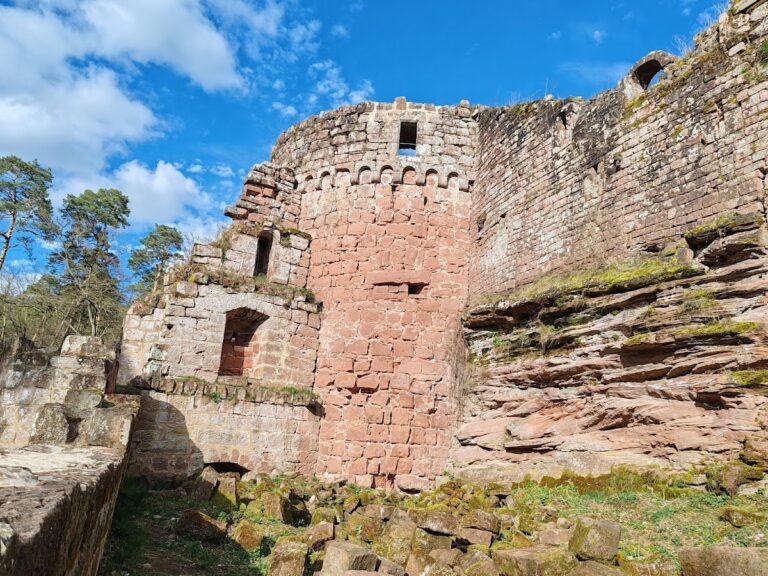
Château de Rothenbourg is a medieval hilltop rock castle set on a sandstone outcrop at about 400 metres above sea level, on an offshoot of the Rothenberg or Rodenberg. It lies north of Château du Falkenstein and Helfenstein and overlooks the Rothenbach valley. Dressed sandstone formed the castle’s principal building material.
The surviving remains comprise small sections of wall, chambers, a cistern, and a castle ditch. Traces of the former stronghold can also be followed in the terrain, where the ruinous fragments preserve evidence of the castle’s position and defensive layout.
Nearby sites