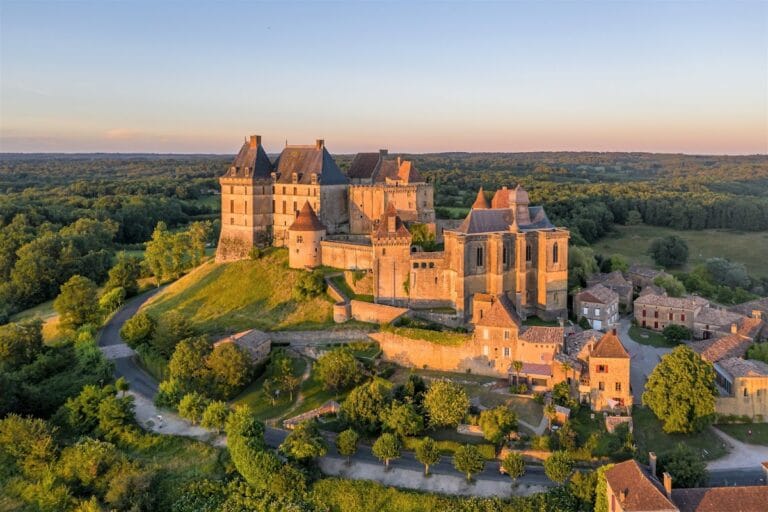
Château de Cuzorn: A Fortified Castle in France


Site at a Glance
- Rating
- 3.8
- Popularity
- Very Low
- Country
- France
- Primary era
- Medieval
- Eras represented
- Medieval, Early Modern
- Civilizations
- French
- Site type
- Military
- Remains
- Castle
On this page9 sections
History
Château de Cuzorn is a fortified castle in France, built by medieval lords at a strategic passage above the village of Cuzorn and the Lémance valley. Its precise origin is unknown, but the castrum, meaning a fortified settlement or castle site, was probably constructed between 1260 and 1270. The castle controlled access through a narrow part of the valley and became the centre of a seigneury, a lordship whose holder exercised rights over land and inhabitants.
Origins and medieval lordship
Cuzorn is first mentioned in an inscription dated 1242, discovered among the ruins of Belleperche Abbey. The inscription refers to B. de Cuzorn. In 1259, the brothers Gaubert, Pons, Guillaume, and Gaillard de Fumel rendered homage for possessions at Cuzorn, although the surviving reference does not name a castle or seigneury. Documents dated 3 January and 20 February 1270 refer to the lords of Cuzorn Castle and to Amalvinus de Cuzorn, who was in conflict with the Bishop of Agen. These references place the probable construction of the castle between 1260 and 1270, although its building history is also broadly dated from the thirteenth to the fifteenth century.
On 12 November 1271, Guillaume de Cohardon took possession of the Agenais for Philip III of France. Hélias and Bernard de Cuzorn, acting as the castle’s consuls, swore allegiance with the local community and acknowledged that the castle belonged to the bailiwick and honor of Tournon Castle. A bailiwick was an administrative and judicial district, while an honor was a territorial lordship or estate. Pierre de Cuzorn, described as a mounted warrior, also swore fidelity. During the thirteenth and fourteenth centuries, numerous co-seigneurs held the lordship. In 1293, the king confirmed through the Seneschal of the Agenais that Auger de Cuzorn possessed the castle’s high and low judicial rights, the major powers of justice attached to a seigneury.
English occupation and the 1442 siege
Control of the Agenais, Quercy, and Périgord shifted between the French and English crowns during the later Middle Ages. After the Treaty of Brétigny returned the Agenais to the English crown in 1360, Aymeric de Cuzorn and other local nobles rendered homage to Edward of Woodstock, known as the Black Prince, at Bergerac on 4 August 1363. Cuzorn was probably occupied at this time by an English armed company that pillaged the surrounding countryside.
Hugues Renot, captain of Cuzorn, joined the French campaign led by the Duke of Anjou and Bertrand du Guesclin to reconquer the Agenais in 1374. An English company nevertheless continued to hold the castle and used it as a base from which to threaten Quercy and Périgord as far as Sarlat. Sarlat paid a ransom to secure relief from the threat, while negotiations for a similar payment by Puy-l’Évêque failed.
In August 1442, the Seneschal of Quercy proposed that the States of Quercy besiege Cuzorn, which was then the last English garrison in the area. The besieging force advanced with war machines from the end of August. After the siege, the castle’s defensive works were dismantled. The later history of the residential part is less certain, since it is not known whether the residence was rebuilt after the siege or whether only the defences were taken down.
Seigneurial residence and changing ownership
After the siege, several members of the Lézergues family appear to have held the seigneury. Jacques de Fumel married Hélène de Lézergues, daughter of the co-seigneur Folquet de Lézergues, in 1500. The Luzech family held property at Cuzorn, including the Pombié mill, from at least 1504 until 1560. Antoine de Luzech was called lord of Cuzorn in 1569.
By 1583, Étienne de Gontaut de Saint-Geniès appears to have consolidated the whole seigneury. He was a Protestant who fought with Henri de Navarre, the French Protestant prince who later became King Henry IV, and died before 4 August 1597. His widow, Philippe d’Aydie de Ribérac, made her will at Cuzorn Castle on 18 December 1597 while ill but mentally competent. Her act shows that the castle remained habitable at that date.
Étienne’s son, Jean de Gontaut de Saint-Geniès, inherited the seigneury and married Jeanne de Pierrebussière de Châteauneuf on 19 June 1603. He undertook to furnish and build a residence at Cuzorn Castle, but died without issue in 1635, leaving Jeanne as his universal heir. The seigneury subsequently passed through the Pierrebussière and Chambret families. Anne de Pierrebussière, Lady of Cuzorn, married Charles de Moureaux in 1673, and the couple were living at the castle when Bishop Claude Joli of Agen visited them on 9 September that year. Anne rendered homage for the barony of Cuzorn to the Duke of Aiguillon on 5 September 1675.
Blaise d’Aydie held the barony for about twenty-five years and rendered homage for it on 7 January 1687. His heir, Charles Antoine Arnaud d’Aydie, appointed Philippe Bel judge of Cuzorn in 1710. In 1734, the Marquis de Nadaillac renewed a five-year lease of the seigneury. Jacques Escourre bought Cuzorn in 1744, and his son Pierre inherited it in 1754. When Pierre died in 1767 with debts exceeding 500,000 livres, his property was liquidated. The seigneuries of Cuzorn and Les Homs were sold in 1774 to Louis Baillet Berdolle de Saint Vincent.
Revolution and modern transformations
Jean Marie Berdolle, Louis Baillet Berdolle’s son, inherited Cuzorn in 1779 and resold it around 1780 to Guillaume Léonard de Bellecombe. After Bellecombe’s death in 1792, his sisters Suzanne and Élisabeth Léonard became his universal heirs. In 1790, Pierre Lamarque, the farmer of the seigneury, lived in the castle under a lease renewed in 1788.
During the French Revolution, an order issued on 14 October 1793 required the demolition of fortified castles with bastions, moats, crenellated walls, and drawbridges. On 24 December, the municipal council ordered that demolition at Cuzorn continue until the great tower was reduced to the level of the residential building and the moats had been filled.
The Bellecombe sisters retained the estate’s lands until the period of the Directory and transferred them in life tenancy to Jean Baptiste Frontin on 2 July 1798. In 1804, Jean Baptiste sold his brother Pierre Guillaume Frontin de Bellecombe the Guiraudel farm together with the remains of the former castle. Pierre Guillaume’s widow kept the farm, while the remaining castle property was sold to the blacksmith Jean Sican in 1829. Sican resold it to Henri Sérougne in 1843.
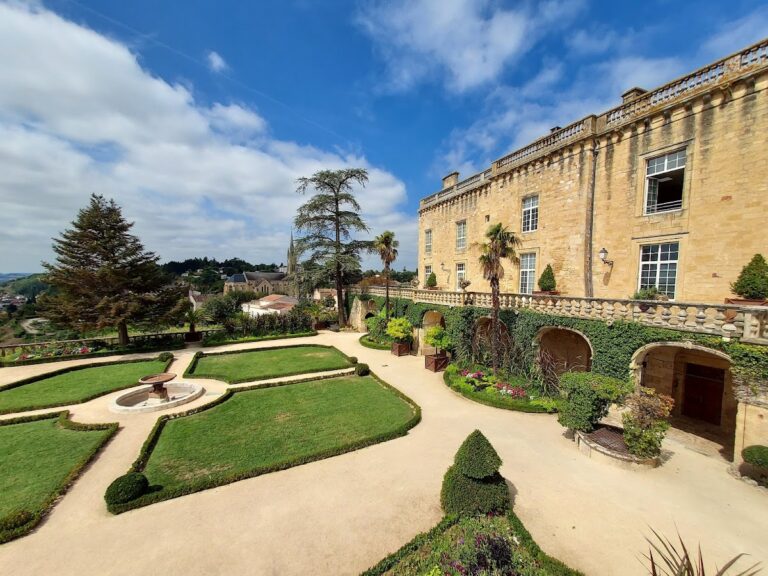
The Congregation of the Daughters of Jesus of Vaylats bought the surviving remains in 1866. The congregation received girls from the village who needed assistance, and a girls’ school became a public school in 1872. Congregational schools were closed under the laws of June 1902, after which the congregation retained the property, usually without occupying it. The congregation decided to sell the castle in March 1949. It was listed as a historic monument in 1950 and purchased in 1953 by Georges Rastel, who carried out major works with his family to transform the site. Thierry Delrieu bought the castle in 1995, while the actual ruins became municipal property in 1996.
Remains
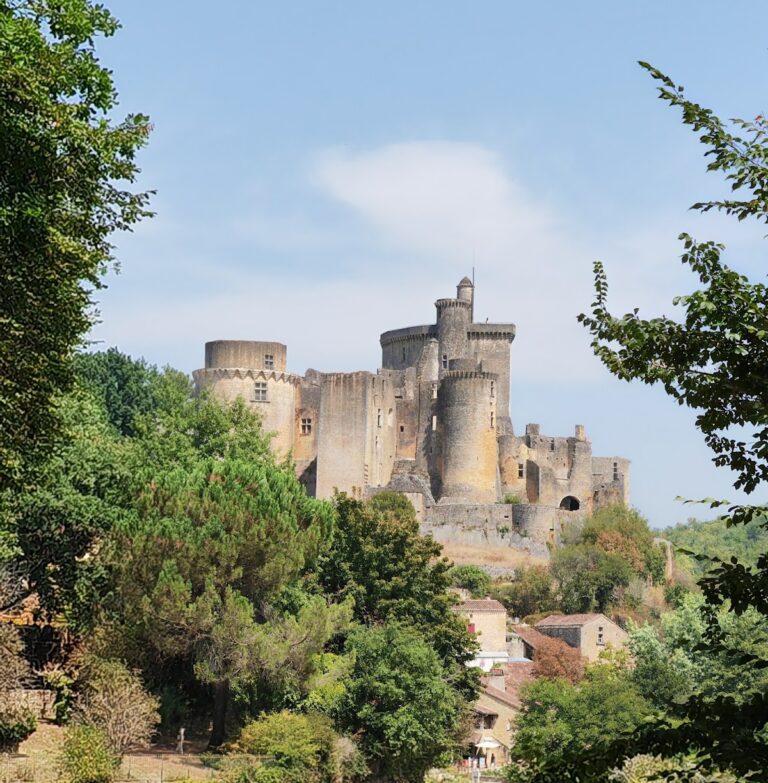
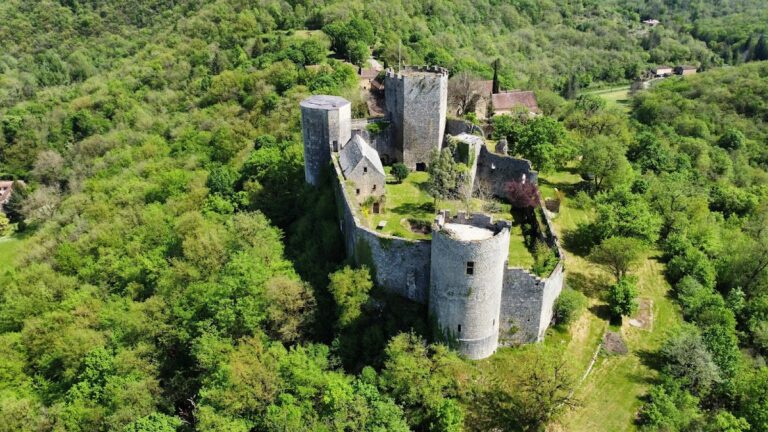
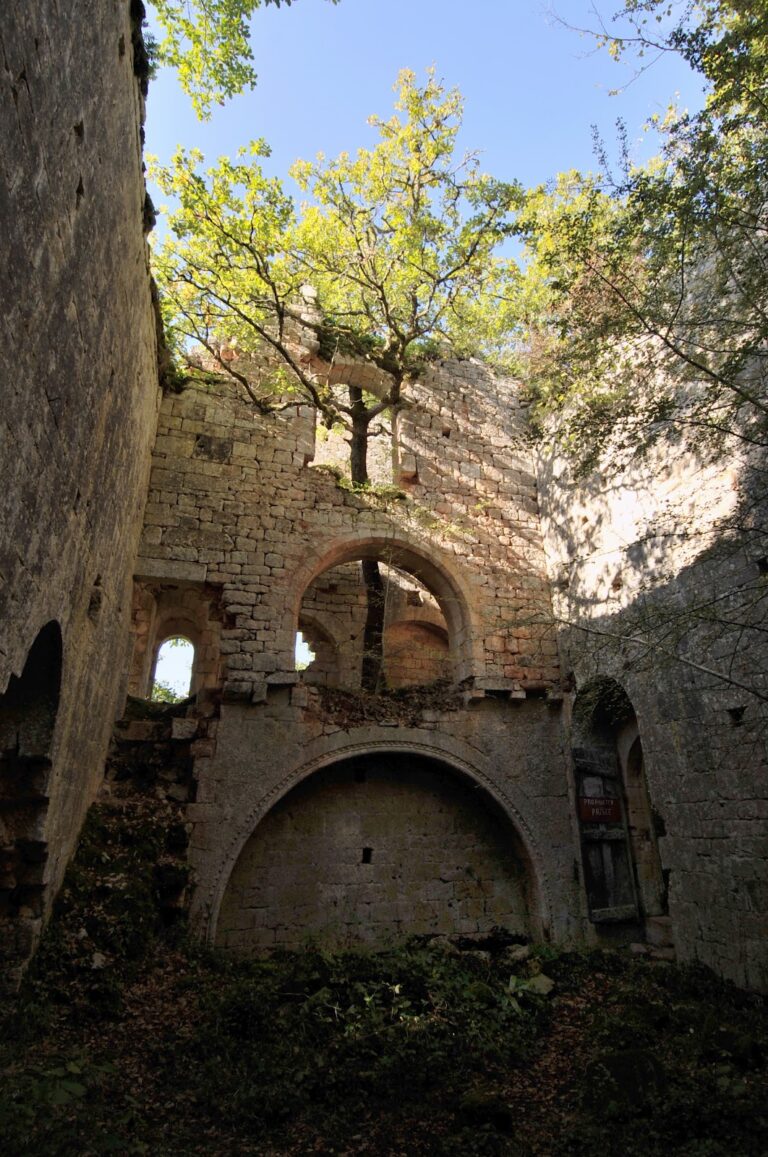
Château de Cuzorn stands above the village and the Lémance valley at a narrow passage in the valley. Its position formed the basis of its defensive purpose, allowing access through the valley to be controlled. The surviving site represents a fortified castle whose principal elements included a great tower, a residential building, and surrounding moats. The defensive works were dismantled after the 1442 siege, and the remains were later described as the ruins of the former castle.
Fortifications and principal buildings
Great tower
The great tower was one of the castle’s principal defensive structures. It was surrounded by machicolations, projecting structures with openings through which defenders could drop or throw missiles onto attackers below. The demolition ordered in 1793 was intended to reduce the tower to the level of the residential building. The tower therefore forms part of the surviving evidence of the castle’s medieval defensive arrangement and its revolutionary dismantling.
Residential building and moats
The castle also contained a residential building, which was still habitable in 1597 when Philippe d’Aydie de Ribérac made her will there. Jean de Gontaut de Saint-Geniès later undertook to furnish and build a residence at the castle in 1603. The site was surrounded by moats, and the municipal demolition order of 1793 required them to be filled. The remaining fabric is associated with the ruins of the former castle and with the later transformations carried out after the Congregation of the Daughters of Jesus of Vaylats acquired the property in 1866.
Nearby sites