Château de Fourchaud: A Medieval Fortress in Besson, France
Visitor Information
Google Rating: 4.3
Popularity: Very Low
Official Website: www.facebook.com
Country: France
Civilization: Medieval European
Site type: Military
Remains: Castle
History
The Château de Fourchaud is situated in the municipality of Besson, France. It originated as a medieval fortress constructed during the Middle Ages, likely to oversee and control important routes in the surrounding region.
The castle’s earliest recorded mention dates back to 1351, when Jean Mareschal recognized his ownership of the castle and its associated lands. The Mareschal family maintained possession throughout the 15th and 16th centuries, with documentation showing Claude Mareschal as the lord in 1560. During this period, the castle functioned as both a defensive stronghold and a noble residence, anchoring the family’s local influence.
In the early 1600s, ownership passed to the Hugon family. Pierre Hugon is identified as the lord of the castle in 1625, and his descendants continued to hold the property well into the mid-18th century, with records confirming their tenure in 1741. This era likely saw the castle adapting to the shifting political and social climate of early modern France, though specific historical events tied to these owners are not detailed.
By 1775, the Marquis de Tilly assumed lordship of Fourchaud. His family had already owned the nearby Château du Vieux-Bost since 1668, linking Fourchaud to an established noble lineage. The castle remained under the influence of this family line and their successors into more recent times. Today, it belongs to descendants of the Bourbon-Parma family, distant heirs connected to the Roussel de Tilly lineage.
The name Fourchaud probably derives from “Fourche,” meaning fork, referencing the site’s proximity to a junction on a Gallo-Roman road linking Bourges with Lyon or Clermont-Ferrand. A smaller nearby fortification, the Petit Fourchaud, may have functioned historically as a watchtower to communicate with other strategic points, including the lost tower of a convent at Besson and the Château de Rochefort. This indicates a role for Fourchaud within a broader network of medieval communication and defense along important routes.
After a long period of neglect that led to structural decay throughout the 19th and 20th centuries, restoration efforts began involving local volunteers and the current owner, Prince Charles-Henri de Lobkowicz. The western curtain wall and a round tower gained official protection as historic monuments in 1932, while the castle’s garden was added to the inventory of historic monuments for its cultural value. More recently, in 2023, the Petit Fourchaud’s restoration was supported by the French Heritage Lottery, emphasizing the site’s ongoing historical significance and potential as a museum dedicated to Anne de France, a prominent regent and duchess from the Bourbon family.
Remains
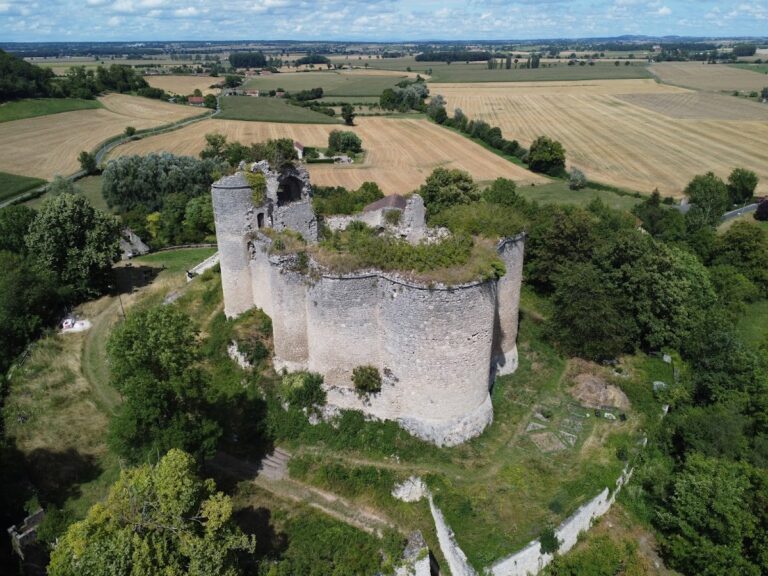
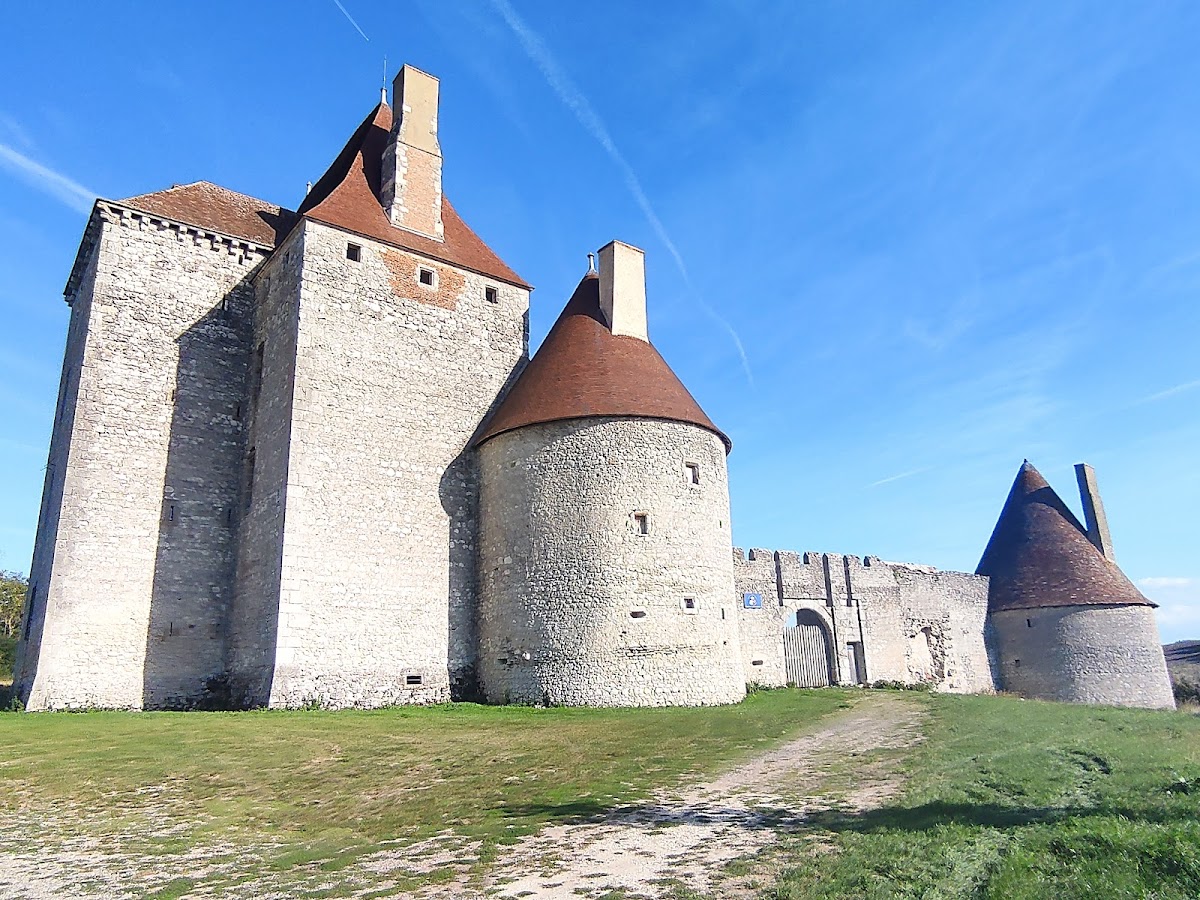
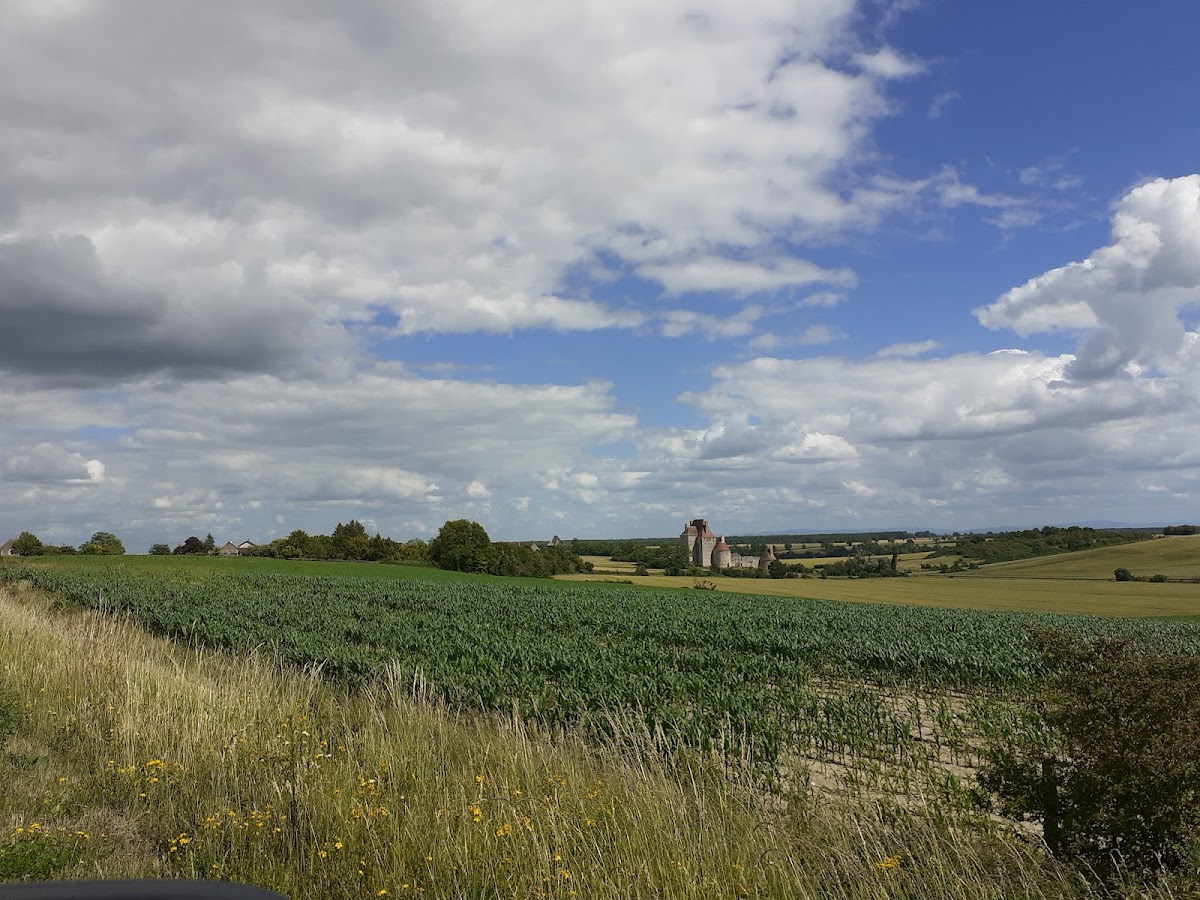
The Château de Fourchaud comprises a main fortress and a smaller nearby donjon known as the Petit Fourchaud. The primary structure dates largely from the 14th and 15th centuries and is located within a hollow beside the Fourchaud stream, reflecting a typical medieval defensive position. The castle was originally protected by dry moats, likely filled in during the 18th century, although water-filled moats around the garden wall were still visible at the start of the 20th century.
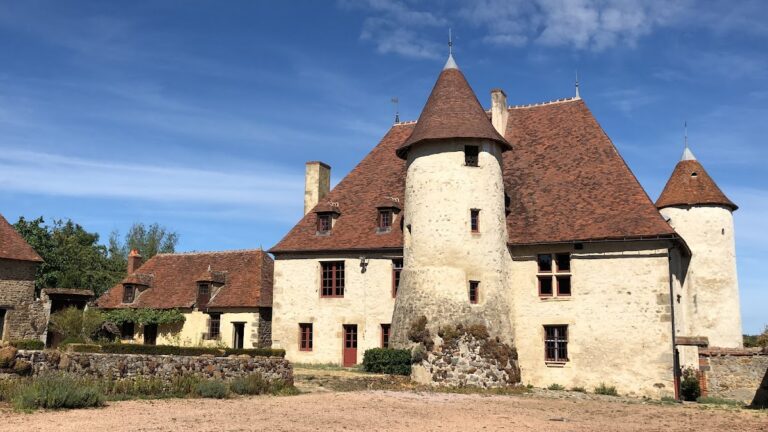
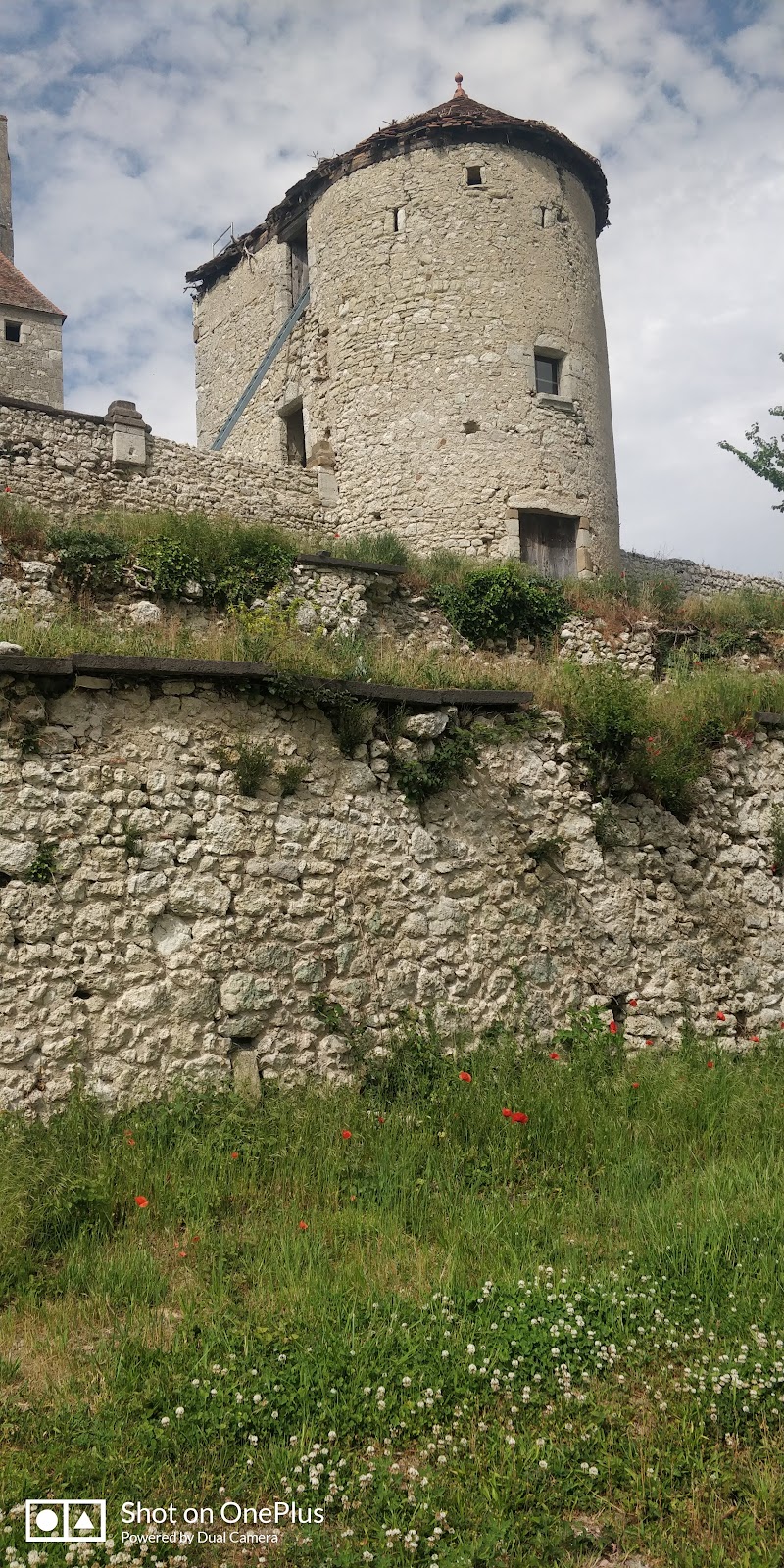
The main castle’s western curtain wall remains noteworthy. It features the original gate, which was once defended by a drawbridge, and it encloses a residential building with two upper floors containing a total of four rooms above a ground floor and vaulted cellars, indicative of its combined defensive and domestic functions. Massive stone walls constructed in the style characteristic of Bourbonnais fortifications continue to stand, including a well-preserved round tower. These elements were officially recognized as historic monuments in 1932, underscoring their architectural and historic importance.
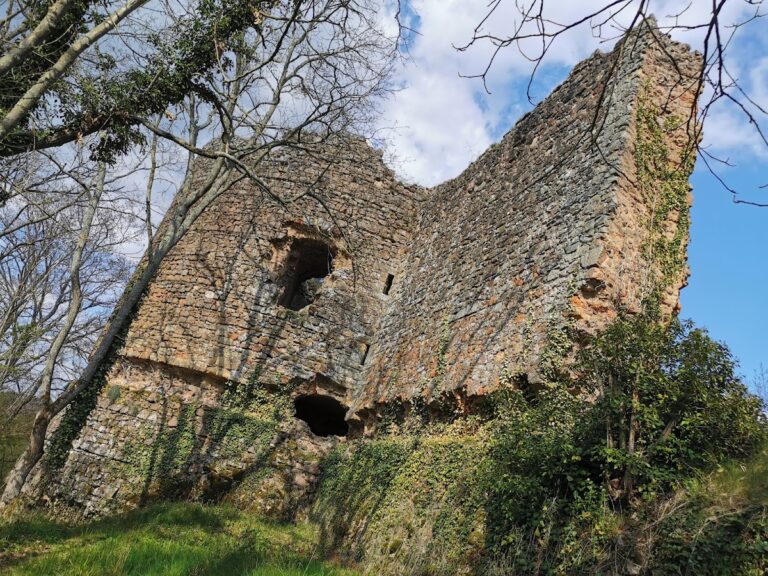
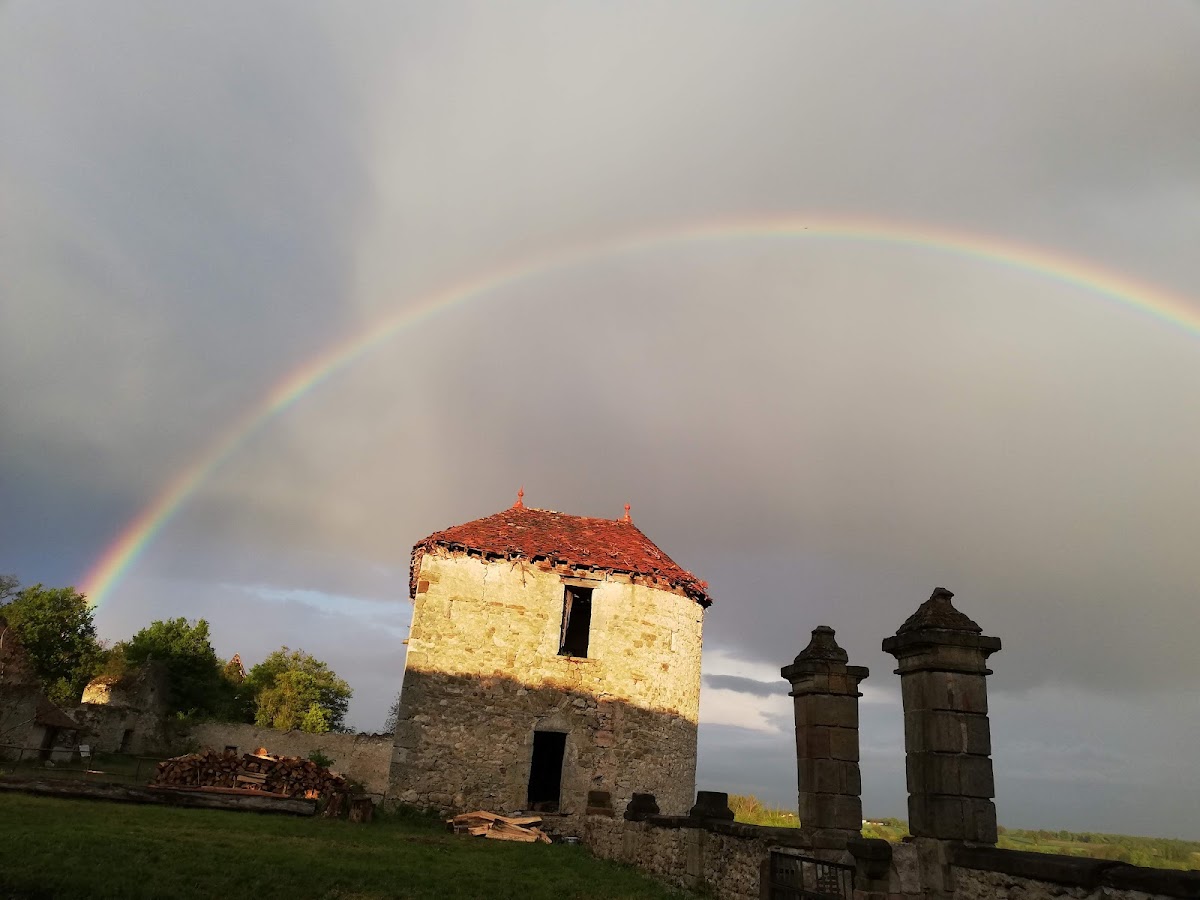
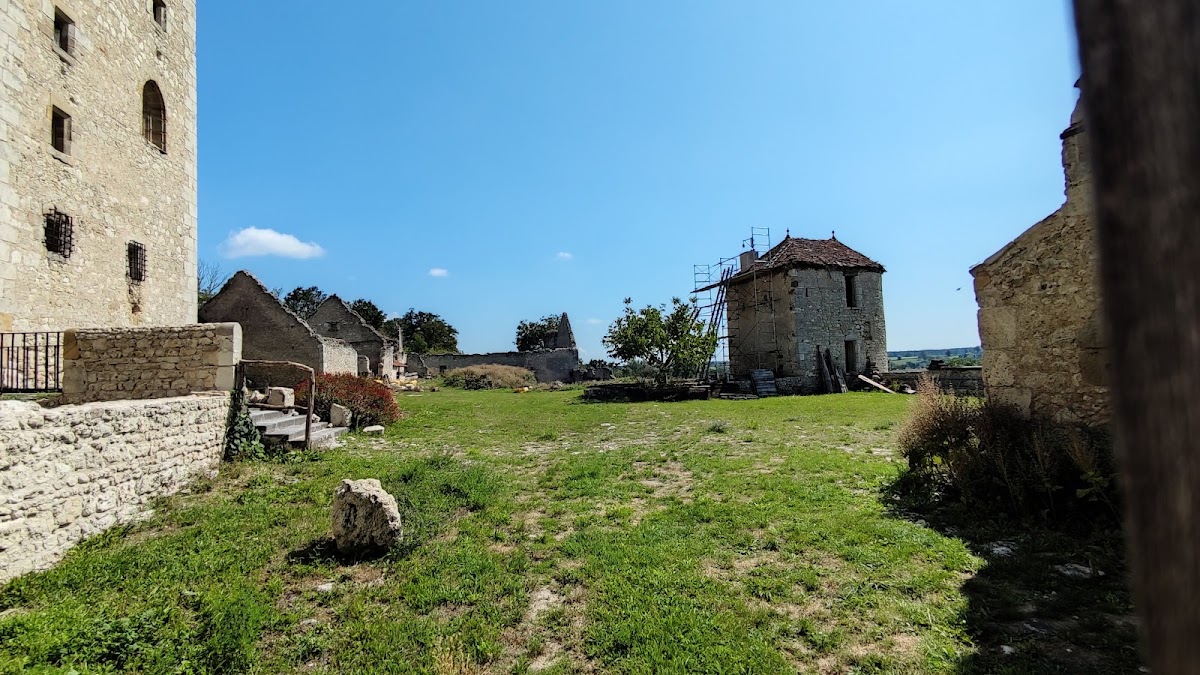
Located less than a hundred meters east of the main fortress, the Petit Fourchaud donjon occupies a rocky outcrop that provides a commanding view of the surrounding landscape. This smaller tower, built with three levels, includes two open-air galleries called loggias on its second and third floors. Its substantial height and numerous openings in the roof suggest it served as a watchtower, possibly facilitating communication with other regional sites such as the former convent towers in Besson and the Château de Rochefort. The Petit Fourchaud’s roof is notably steep but currently deteriorated, necessitating recent efforts to secure its timber frame and prevent further damage.
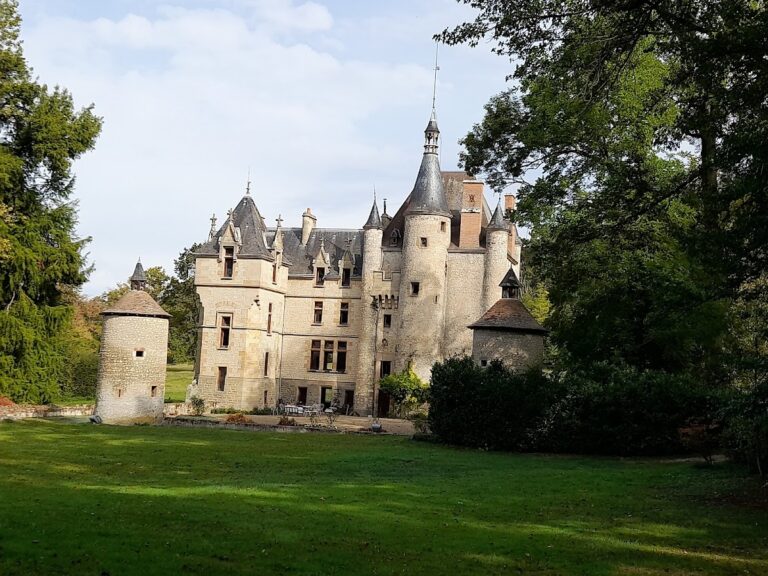
Throughout the 19th century, construction of a new castle elsewhere on the estate led to gradual abandonment of the original fortress. Over time, this caused serious structural problems including roof collapses and deterioration of wooden beams and floors due to water infiltration. By the late 20th century, the buildings were heavily overgrown with dense vegetation. Restoration campaigns in recent decades have focused on reinforcing vulnerable roofs and towers, particularly the northwest and southwest towers, to halt decay and preserve what remains.
The castle grounds include gardens recognized for their historic value and listed in supplementary inventories, reflecting their cultural importance. These features, together with the surviving medieval structures, convey the layered history of Château de Fourchaud as a fortified residence that adapted across centuries yet retains strong physical links to its medieval origins.
Nearby sites