Burg Hemmersbach: A Water Castle in Kerpen, Germany


Site at a Glance
- Rating
- 4.5
- Popularity
- Low
- Country
- Germany
- Primary era
- Modern
- External website
- Open
- Eras represented
- Medieval, Modern
- Civilizations
- German, Holy Roman Empire
- Site type
- Domestic
- Remains
- Castle
On this page10 sections
History
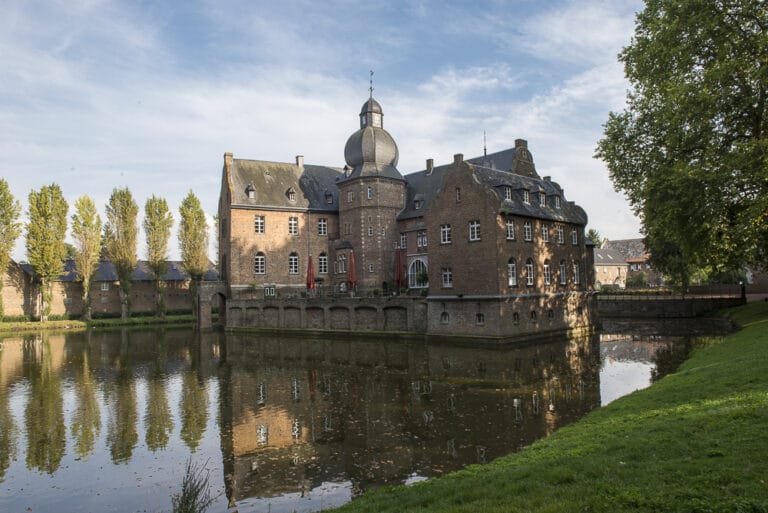
Burg Hemmersbach is a water castle in Horrem, now part of Kerpen, Germany. A water castle is a fortified residence protected wholly or partly by a moat or other water barrier. The site is recognized as an architectural heritage monument in North Rhine-Westphalia and has a history reaching back to the late tenth century.
Early castle and medieval changes
A nobleman named Wigmannus von Heymenbach was living at the castle around 980. His name is associated with the site’s original designation, Heymenbach, which later developed into Hemmersbach. Little is known about this first castle, which eventually deteriorated.
A replacement castle was probably constructed around 1100 and remained inhabited for roughly four centuries. In 1326, the Scheiffart von Merode family acquired it after the Hemmersbach line died out. Another castle was begun during the fourteenth century and is first mentioned in 1483. The earlier structure had been destroyed in 1366 by troops of the Maas-Rhine Land Peace League.
Fiefs, war, and destruction
In 1620, the Count Palatine granted the castle as a fief to Heinrich von Vercken because the Scheiffart von Merode family had no heirs. A fief was property held from a superior lord in return for allegiance or service. During the Thirty Years’ War, the castle was captured and its chapel was burned. The castle and the village of Horrem were both badly damaged in the conflict, which lasted from 1618 to 1648 and involved intertwined religious, dynastic, and political struggles.
After further changes of ownership, Franz Adolph Berghe von Trips received Hemmersbach as a fief in 1751. His family descended from the Scheiffart von Merode line. A major fire on 4 January 1793 reduced the castle house to its walls, leaving little salvageable material. Another fire destroyed the outer bailey in 1797.
Rebuilding and modern use
Descendants of the Berghe von Trips family rebuilt the complex in 1837. Further remodelling in 1899–1900 established the architectural appearance that principally characterizes Burg Hemmersbach today.
In the twentieth century, the racing driver Wolfgang Graf Berghe von Trips, who lived from 1928 to 1961, lived at the castle and was described as the last descendant of the Trips family. His mother later moved from Burg Hemmersbach to the adjacent Villa Trips. From around 1971 until 2016, the Gräflich Berghe von Trips’sche Sportstiftung zu Burg Hemmersbach operated a motor-racing museum there. In March 2018, part of the exhibition was transferred to Loersfeld Castle in Kerpen.
From the late 1980s, Herbert Hillebrand lived at Burg Hemmersbach and used it as his company headquarters. Following his insolvency in 1999, Bernd and Helmut Breuer bought the castle for 17.5 million marks. In 2000, the Byteburg Betreibergesellschaft was established at the initiative of the North Rhine-Westphalia state government to rent the castle and create a business incubator for young start-up companies. A business incubator supports newly founded companies with workspace and related assistance, but the planned facility at Hemmersbach was never established. The French company Châteauform’ reportedly later secured a long-term lease. Since 2017, the privately owned castle has been used for corporate events.
Remains
Castle complex and surviving structures
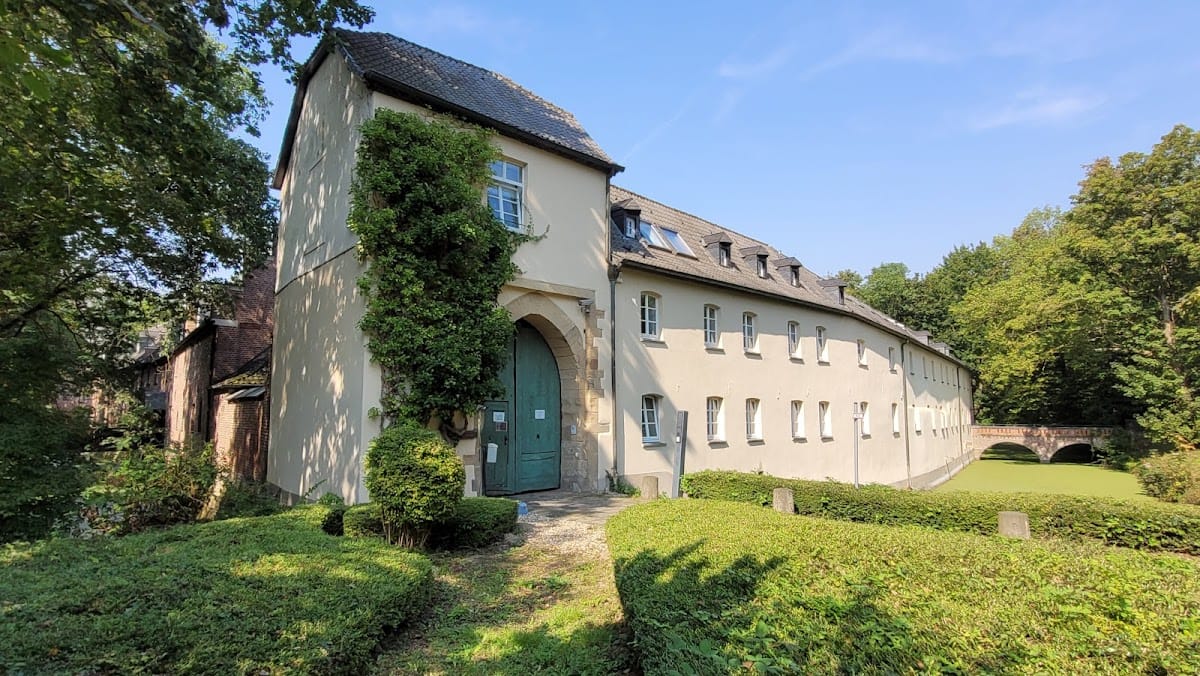
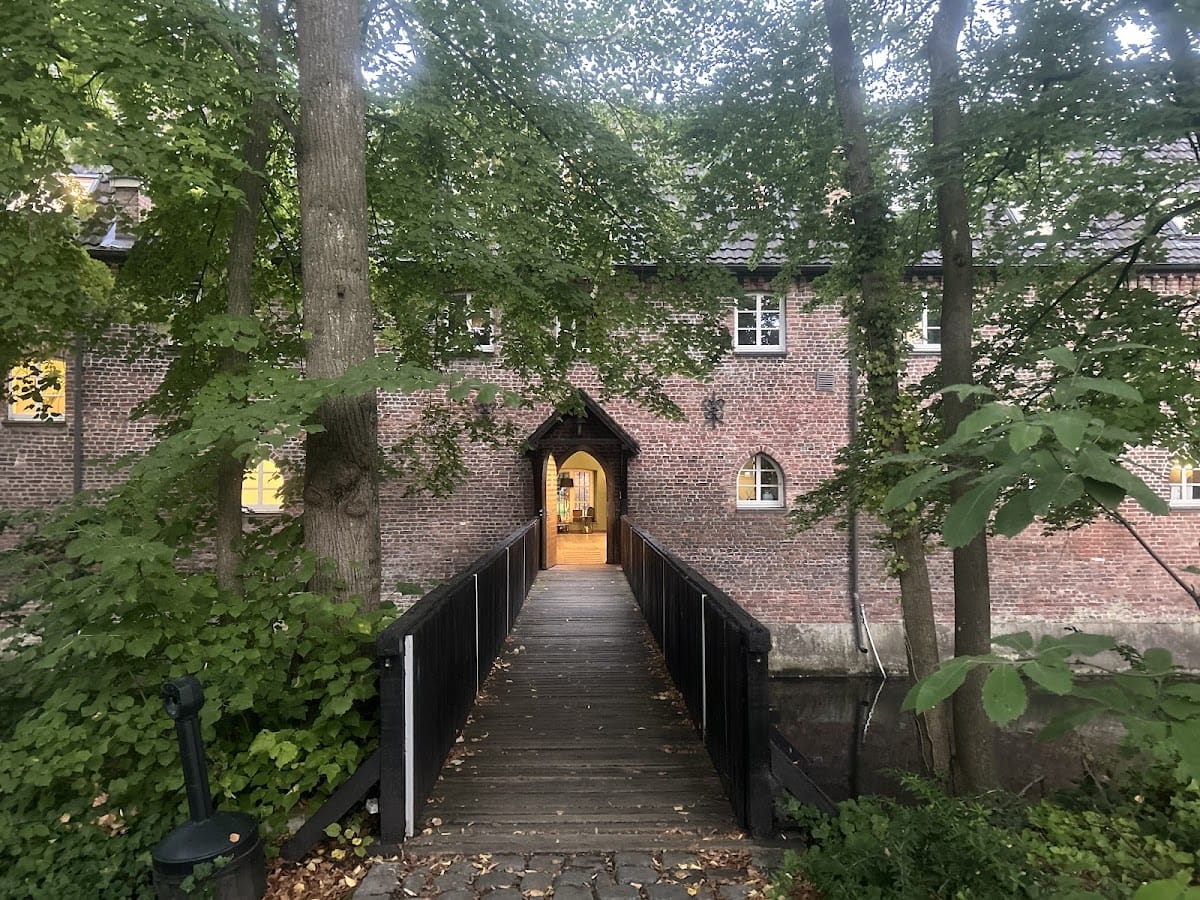
Burg Hemmersbach is a lowland water castle in a village setting on predominantly flat terrain, at approximately 78 metres above sea level. The historic complex comprised a main castle house, an outer bailey, and a chapel. Substantial parts survive, while the present form of the buildings largely reflects the nineteenth-century rebuilding and remodelling that followed the fires of 1793 and 1797.
Earlier castle mound
The remains of the castle associated with the rebuilding around 1100 survive in Horrem as a motte, a raised artificial mound that carried a defensive structure. This earthwork preserves the physical trace of an earlier phase of the site within the later castle complex.
Main castle house
The main castle house was burned in 1793 and was left standing only to wall level. It was subsequently incorporated into the rebuilding of 1837, while the remodelling of 1899–1900 gave the complex much of its current architectural character.
Outer bailey and chapel
The outer bailey, the area surrounding the principal castle buildings, was destroyed by fire in 1797 and formed part of the complex that was later rebuilt. The castle chapel was set on fire during the Thirty Years’ War, an event that contributed to the severe damage suffered by the castle and the surrounding village.
Villa Trips
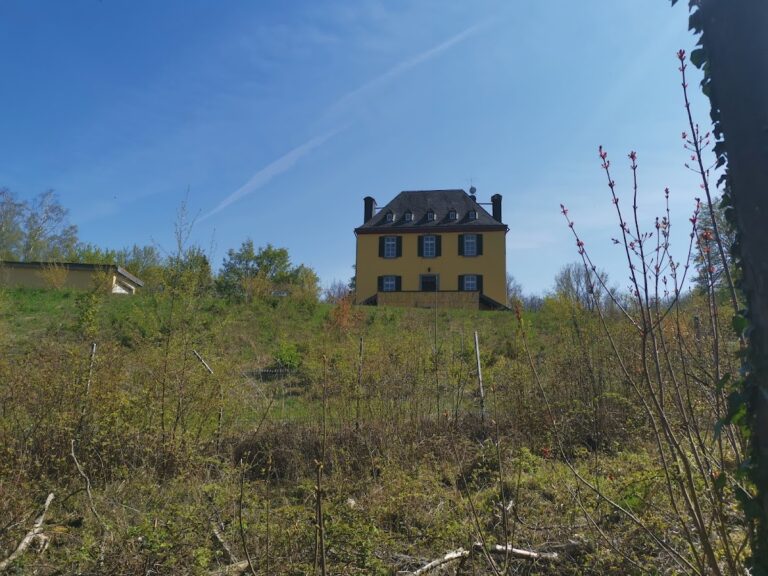
Villa Trips stands beside Burg Hemmersbach. It was used by the Berghe von Trips family and later housed the family’s sports foundation and its motor-racing museum before part of the exhibition moved to Loersfeld Castle.