Château de Villars-Marange: Historic Estate in Mérignac, France

Site at a Glance
- Rating
- 4.6
- Popularity
- Very Low
- Country
- France
- Primary era
- Early Modern
- Eras represented
- Medieval, Early Modern, Modern
- Civilizations
- French
- Site type
- Domestic
- Remains
- Castle
On this page8 sections
History
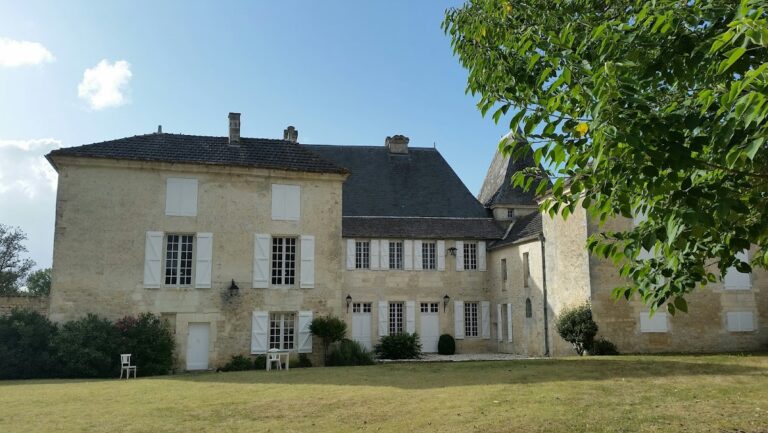
Château de Villars-Marange, also called Château de Villars, is a historic estate in France, located in the hamlet of Villars in Mérignac, near the boundary with Échallat. Its construction developed from the fifteenth century to the beginning of the seventeenth century, and the château was restored in 1890. It has been listed as a Historic Monument since 7 March 2007.
Origins and feudal ownership
The hamlet of Villars-Marange took its name from the Forest of Marange, which once lay between the dioceses of Angoulême and Saintes. The forest belonged to the counts of Angoulême and was largely cleared between the twelfth and fifteenth centuries. As this landscape changed, the small fief of Villars became indirectly dependent on the counts and was held by a family that bore the Villars name.
Guillaume de Villars was the initial owner. In 1520, his granddaughter Marguerite Portier, Lady of Gademoulins, sold the Villars-Marange estate to Jean de Fontenay, a member of the lesser nobility and a royal councillor. Fontenay rendered homage to Catherine de Clermont, Lady of Mareuil, Villebois, Vibrac, and Angeac-Charente.
In 1524, the lordship passed to Hélie Dussault, lord of Birac. His son Girard Dussault, lord of Birac and Villars, married Claire Méhée in 1556. During this period, the estate depended on the castellanies of Vibrac and Angeac-Charente. A castellany was a territorial jurisdiction centred on a castle and administered under its lord or authority.
Later ownership and setting
Antoine Dussault sold the Villars estate to Annet de La Charlonnerie in 1666. The La Charlonnerie family retained the property for approximately two centuries. In 1875, it was sold to Amédée Duclou, a brandy merchant, and the Duclou family held it until 1959. Ownership then passed to the de Brou de Laurière family, whose member Alexandre de Brou de Laurière is the current owner.
The château stands beside the former Postal Road, a seventeenth-century route linking Paris and Bordeaux. The road passed west of Angoulême and crossed the Charente at Châteauneuf, placing the estate beside an established route through the region.
Remains
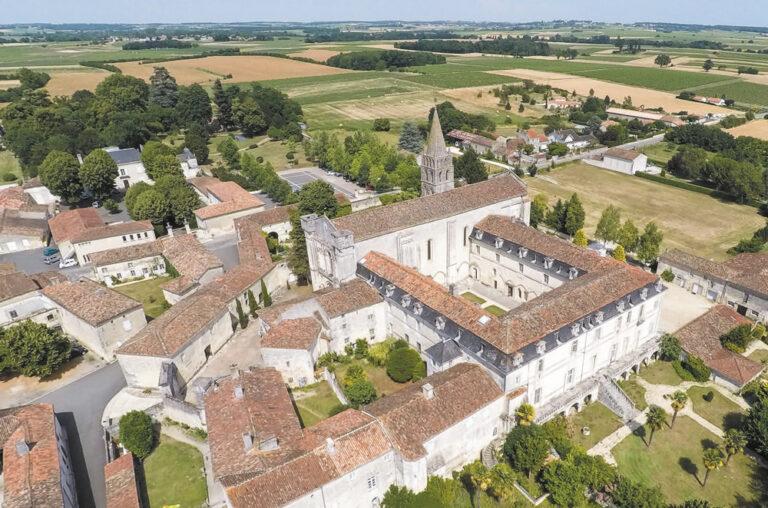
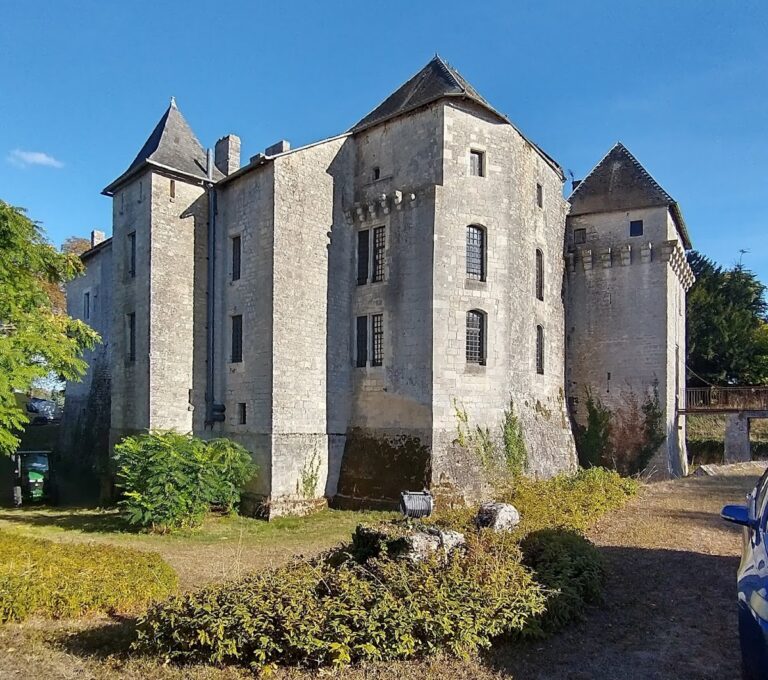
The surviving complex combines an eastern fifteenth-century fortified entrance building with a residential wing added at a right angle in the seventeenth century. Earlier and later elements remain visible together, while the southern part was remodelled in the nineteenth century and the attached chapel was heavily altered for later ancillary use.
Entrance and residential buildings
Eastern entrance châtelet
The eastern entrance châtelet, a fortified gatehouse, belongs to the fifteenth century. It forms the entrance element of the complex and is joined to the later residential wing, which is arranged at a right angle to it.
Residential wing
The oldest residential body contains a bretèche, a projecting defensive structure supported above a wall or entrance, as well as sixteenth-century windows decorated with pinnacles. Its southern section was remodelled in the nineteenth century. The upper part carries crenellations and ornamental parapets, defensive-looking features along the top of a wall or building, of a type produced in Charente during the seventeenth century.
Chapel and ancillary buildings
A chapel is attached to the north side of the first residential building. It has been heavily remodelled and currently serves as ancillary buildings, preserving its place within the château complex while reflecting a later change of use.
Nearby sites