Château de Boulogne-sur-Mer: A Medieval Fortress and Museum in France
Visitor Information
Google Rating: 4.4
Popularity: Medium
Official Website: musee.boulogne-sur-mer.fr
Country: France
Civilization: Early Modern, Medieval European, Roman
Site type: Military
Remains: Castle
History
The Château de Boulogne-sur-Mer is situated in the town of Boulogne-sur-Mer in modern-day France. Its foundations trace back to the city’s Roman past, when the area was part of the Roman castrum known as Bononia. The castle as it now stands was built in the early 13th century by Philippe Hurepel, count of Boulogne and son of King Philip II of France, marking a significant phase in the medieval fortification of the town.
Between 1227 and 1231, Philippe Hurepel undertook the construction of the castle alongside strengthening the defenses of the Haute Ville, or upper town, of Boulogne-sur-Mer. This period was marked by political unrest as Philippe Hurepel participated in a rebellion against Blanche de Castille, who was serving as regent for the young Louis IX. The castle’s establishment served not only defensive purposes but was also a strategic move in Hurepel’s assertion of power during this conflict. Notably, parts of the castle incorporate remnants of the earlier Roman city walls, visible in the fortress’s basement.
During the late 14th and early 15th centuries, the fortress and city walls saw extensive modifications under the direction of the duc de Berry between 1394 and 1416. These works adapted the fortifications to evolving military needs of the time. Further significant developments came in the 16th century when the castle’s defenses were reinforced to withstand artillery advances. This included the construction of thick stone shields and the addition of faussebrayes—low outer walls—surrounding several towers. Around 1567, new buildings such as the horseshoe-shaped barracks and an arsenal were completed, highlighting the castle’s ongoing military role. However, in this century, the castle also suffered partial destruction inflicted by English forces, which altered some of its original medieval elements.
From the 17th century onward, the Château de Boulogne-sur-Mer transitioned from a fortress into a military barracks and later was used as a prison, a function it maintained up until 1974. After this time, ownership passed to the municipality. By 1988, the castle found a new life as a museum, opening as the Château-musée de Boulogne-sur-Mer. Today, it forms part of one of the few remaining intact fortified city ensembles in France, with the castle and surrounding medieval ramparts protected as historic monuments since the early 20th century.
Remains
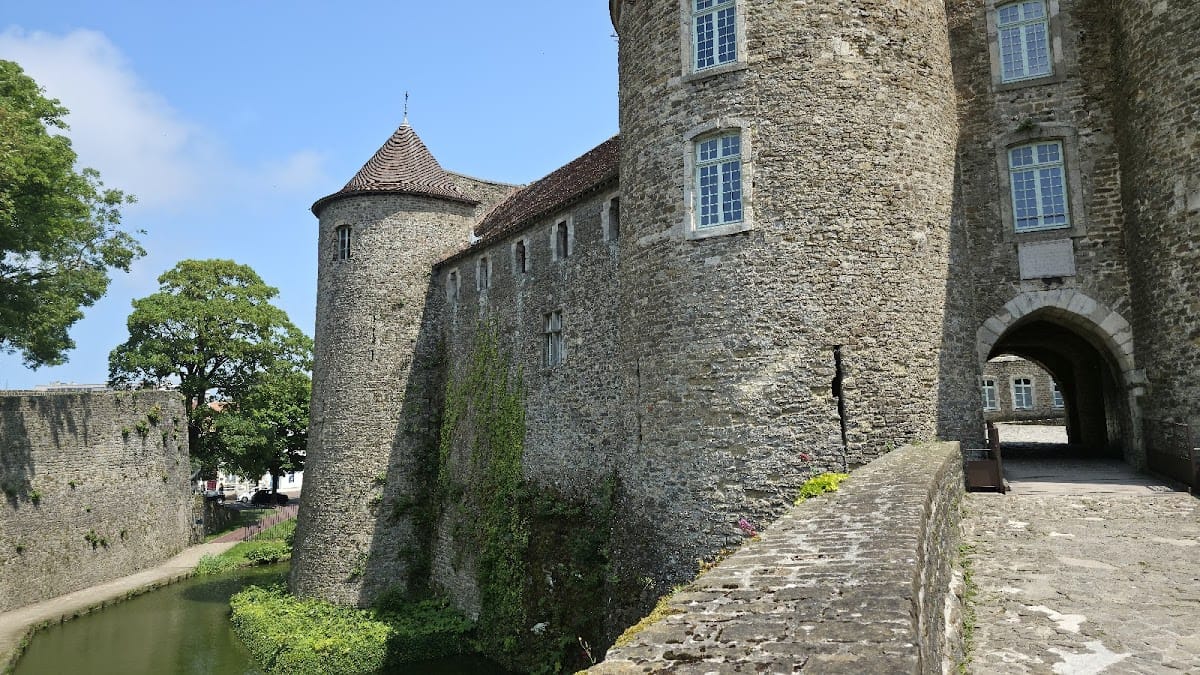
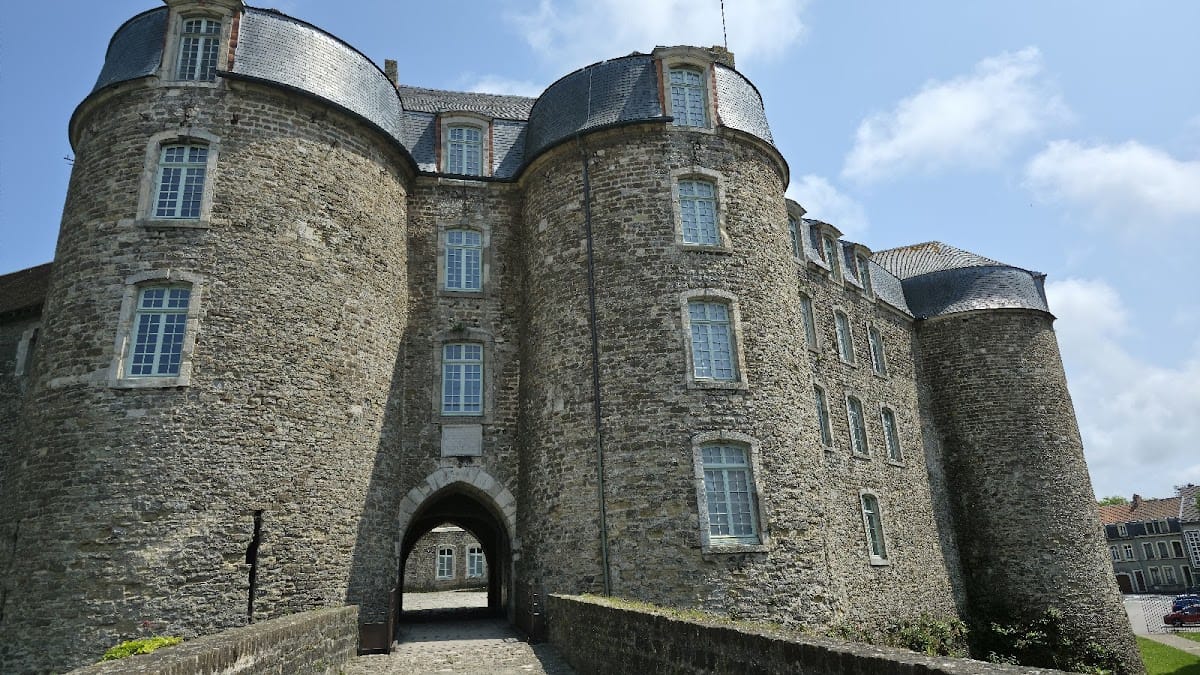
The castle presents a compact, polygonal layout integrated into the rectangular plan of Boulogne-sur-Mer’s urban walls. Built on flat terrain, it occupies the city’s eastern corner and is isolated from the rest of the defensive walls by its own moat, which was historically filled with water. The ensemble includes nine cylindrical towers linked by straight curtain walls that create an irregular polygonal shape, with evidence suggesting that these fortifications were originally equipped with wooden hoardings—platforms projecting from the tops of the walls for defensive purposes.
The main city entrance features a large gate flanked by two round towers, designed to control access effectively. Opposite this gate lies a smaller postern gate, providing a more discreet passage to the surrounding agricultural lands. Notably, the castle does not have a keep, or donjon, which was a common feature in many medieval castles. This absence echoes the design seen in Philippe Hurepel’s other fortresses, such as the Château de Hardelot.
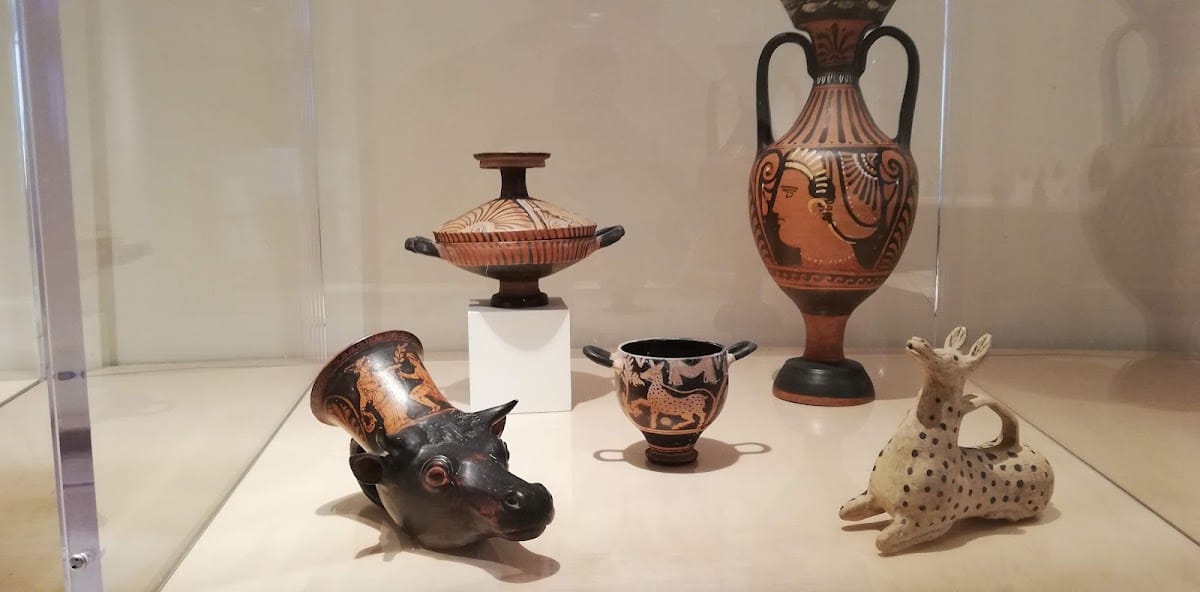
Inside, buildings are arranged along the curtain walls and towers, enclosing a central courtyard. Upon entering, visitors encounter a sequence of rooms on the left side including a state chamber distinguished by four colonnaded windows that face the courtyard, a chapel, an armory, residential quarters, and kitchen spaces. These rooms have been adapted to serve the castle’s current function as a museum.
The 16th century brought considerable changes to the castle’s eastern defenses. Thick stone masonry was added as a protective shielding plate, and faussebrayes were built to encompass five of the cylindrical towers beneath a nearly continuous roof, all measures intended to resist artillery fire. Of all the towers, only the first on the left side of the entrance retains its original medieval appearance, featuring three staggered levels of arrow slits and topped with a conical roof reminiscent of a pepperpot.
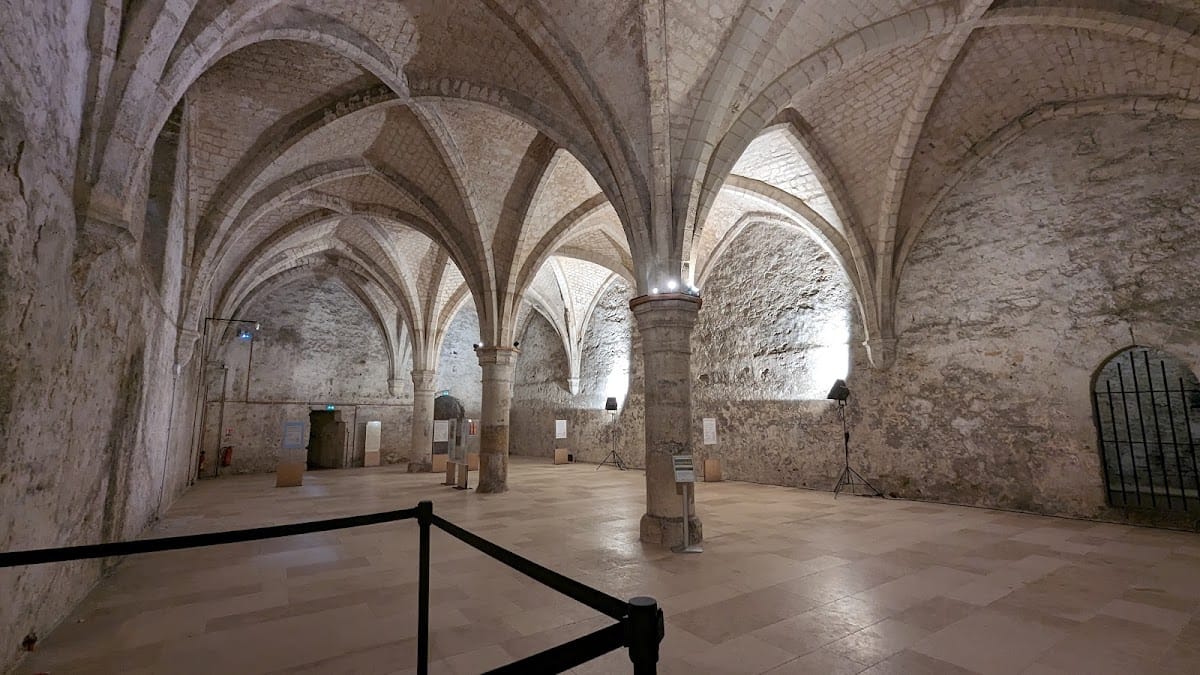
Within the structure, the tower next to the chapel houses a vaulted treasure chamber, notable for its ogival (pointed) vault and a keystone adorned with foliage motifs. Below ground, the castle’s basements create a continuous barrel-vaulted passage encircling the fortress. The most remarkable underground space is the “Barbière” hall, dating from the early 13th century. This large chamber measures roughly 20 meters long and is divided into two parallel aisles by three columns, one of which features a capital carved with an arum leaf design. Historically, this hall served as a magazine for gunpowder and is believed to be named in honor of Saint Barbara, the patron saint of artillerymen.
Certain original defensive features have been lost over time, including the castle’s drawbridge. From the late 17th century onward, parts of the double city walls and other fortifications were destroyed, with further damage occurring during World War II. Nevertheless, the existing structure remains a valuable record of Boulogne-sur-Mer’s medieval and early modern military architecture.
Nearby sites