Château de Crémimil: A Moated Castle in Estrée-Blanche


Site at a Glance
- Rating
- 4.4
- Popularity
- Low
- Country
- France
- Primary era
- Medieval
- External website
- Open
- Eras represented
- Medieval, Early Modern
- Civilizations
- Duchy of Burgundy, French
- Site type
- Domestic
- Remains
- Castle
On this page7 sections
History
Medieval Origins
Château de Crémimil is a historic castle in Estrée-Blanche, France, built by the Le May family in 1443. The site is documented from 1329, and its name is understood as meaning “chalk manor,” referring to foundations made from limestone. The commune is identified as the château’s initial owner in the site description.
The castle was later occupied by several families and individuals. Hugues de Buleux was recorded there in 1540, followed by Antoine de Vignacourt in 1670. The Le Merchier family held it from 1687 until the French Revolution.
Damage, Restoration, and War
Troops inflicted damage on the château during the sixteenth century, after which the building was restored. Its military setting again became relevant during the War of the Spanish Succession, an early-eighteenth-century European conflict over the Spanish throne. In connection with the 1708 Siege of Lille, Prince Eugene of Savoy-Carignan led two army columns toward Estrée-Blanche on 2 September 1708, while a third column under the Duke of Marlborough moved toward Divion. Marlborough is also said to have camped at Estrée-Blanche on 21 July 1708.
Heritage Protection
The château, its moats, wooded park, and lime-tree avenue were listed as historic monuments on 27 September 1946 and classified as historic monuments on 19 April 2005. The monument bears the designation number PA00108271. The park, including the avenue, surrounding grounds, and wooded area bounded by the Laquette River, is also classified as a historic monument and entered in the preliminary inventory of remarkable gardens.
Remains
Castle and Defensive Layout
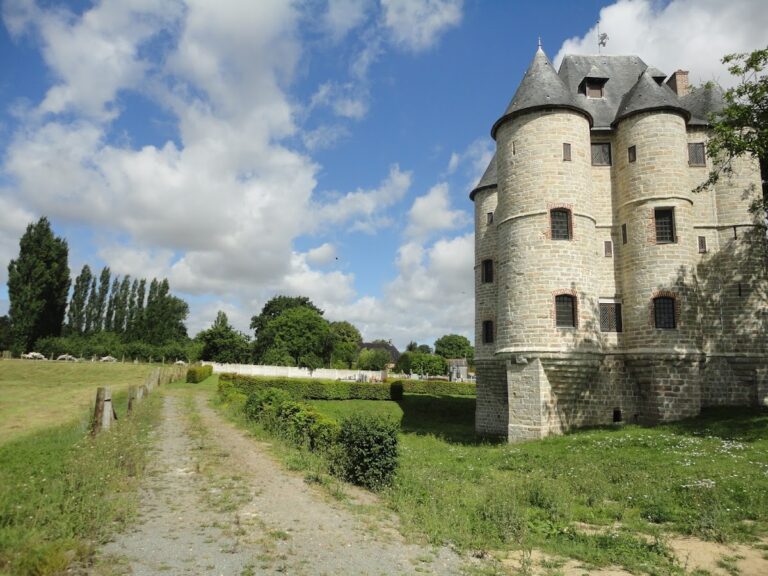
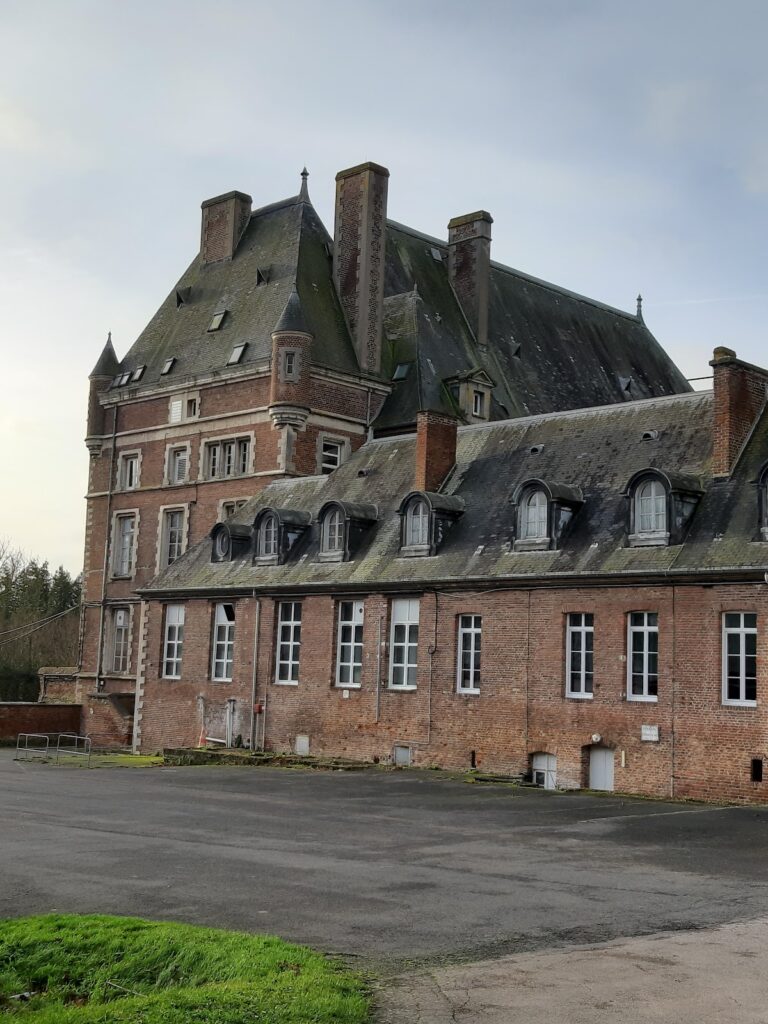
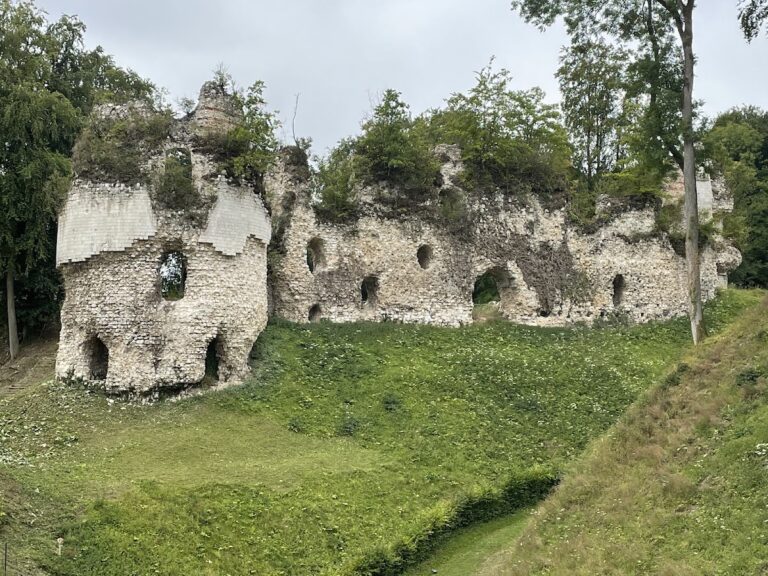
Château de Crémimil follows a circular plan arranged around an inner courtyard. Towers, turrets, and buttresses flank the building, which is enclosed by a double water-filled moat. A drawbridge provides the approach across the defensive ditch.
An eighteenth-century terrace overlooks the moat. Openings were later pierced through the structure, altering its defensive character. The surviving defensive elements are the loopholes of the north tower, narrow openings through which weapons could be used.
Park and Avenue
The surviving site extends beyond the castle and moats into a wooded park. A lime-tree avenue leads toward the château, while the wooded part of the grounds is bounded by the Laquette River. Together, these elements form the landscaped setting associated with the building.