Château d’Ormesson: A Historic Estate in Ormesson-sur-Marne
Site at a Glance
- Rating
- 4.6
- Popularity
- Low
- Country
- France
- Primary era
- Early Modern
- External website
- Open
- Eras represented
- Early Modern
- Civilizations
- French
- Site type
- Domestic
- Remains
- Castle
On this page7 sections
History
Château d’Ormesson is a French château in Ormesson-sur-Marne, France, built from 1578 for Louis Picot, seigneur de Santeny, on the site of an earlier nearby building. It stood in the settlement then known as Amboile and later became the centre of the Lefèvre d’Ormesson estate.
From Amboile to the Lefèvre d’Ormesson estate
The estate briefly belonged to Cardinal René de Birague, who died in 1583. The Marquis de Malespine then acquired it, before Louis II Picot purchased the lands of Amboile from him in 1598. In 1619, Picot sold them permanently to Nicolas Le Prévost, a royal counsellor at the bailiwick and presidial court of Amiens.
After Nicolas Le Prévost died in 1630, the estate passed to his widow, Marie Le Mairat. It came to their son-in-law André Lefèvre d’Ormesson in 1632. André had married their only daughter, Anne Le Prévost, on 10 July 1604. Their eldest child, Olivier Lefèvre d’Ormesson, received the estate when he married Marie de Fourcy on 2 July 1640.
Around 1660, Olivier Lefèvre d’Ormesson commissioned André Le Nôtre, a leading French landscape gardener known for formal garden design, to reorganize the grounds. In 1758, Marie François de Paule Lefèvre d’Ormesson obtained from Louis XV the elevation of his lands into a marquisate, a territorial lordship whose holder ranked as a marquis. This change led to the replacement of Amboile with Ormesson as the commune’s name. The family name came from an earlier château north of Épinay-sur-Seine, which the family had abandoned in favour of Amboile.
Eighteenth-century enlargement and the Revolution
Marie François de Paule Lefèvre d’Ormesson commissioned the architect Antoine Matthieu Le Carpentier to enlarge and modify the residence. Le Carpentier also planned to replace the old service buildings and outbuildings with structures suited to contemporary taste, but this second phase was not completed.
During this period, part of the service buildings was occupied by Matthieu de Montmorency-Laval, a friend of Madame de Staël and Benjamin Constant. He was elected the nobility’s deputy to the Estates-General, the representative assembly of the three orders of pre-revolutionary France, and played an important part in preparing the new constitution.
The owner was then Henri Lefèvre d’Ormesson. He served as Louis XVI’s controller general of finances until 1783 and became an ordinary councillor of state in 1785. He helped draft the electoral regulations for the 1789 Estates-General. His popularity enabled him to pass through the Revolution relatively safely, although he was imprisoned for just under seven months during the Reign of Terror, the period of intense revolutionary repression in France in 1793 and 1794.
Nineteenth and twentieth centuries
Throughout the nineteenth century, the estate passed through several generations of councillors of state, magistrates, diplomats, and writers. At the beginning of the twentieth century, Wladimir d’Ormesson bought it from his uncle, General-Marquess Emmanuel d’Ormesson, and restored the property.
Wladimir d’Ormesson served as mayor of Ormesson-sur-Marne from 1919 to 1925 and created the Ormesson golf course in 1925. His son André reconstructed the course from 1964. Wladimir was the last person to live permanently in the château. He retired there in 1973, after which André inherited the estate and lived in the outbuildings. André died in 2014. His widow occupied the estate until her death in 2020, and their daughters continued to occupy it.
Since 1962, the château has belonged to a société civile, a French private-law entity used to hold and manage property, which manages the Ormesson estate. One of its managers is Charles Peugeot. The château received historic-monument protection through a first classification in 1889 and a second classification by order of 25 March 1993.
Remains
The château
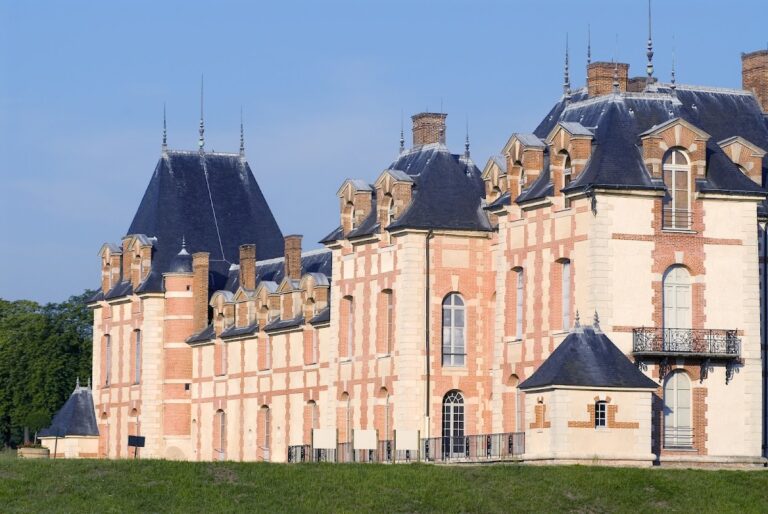
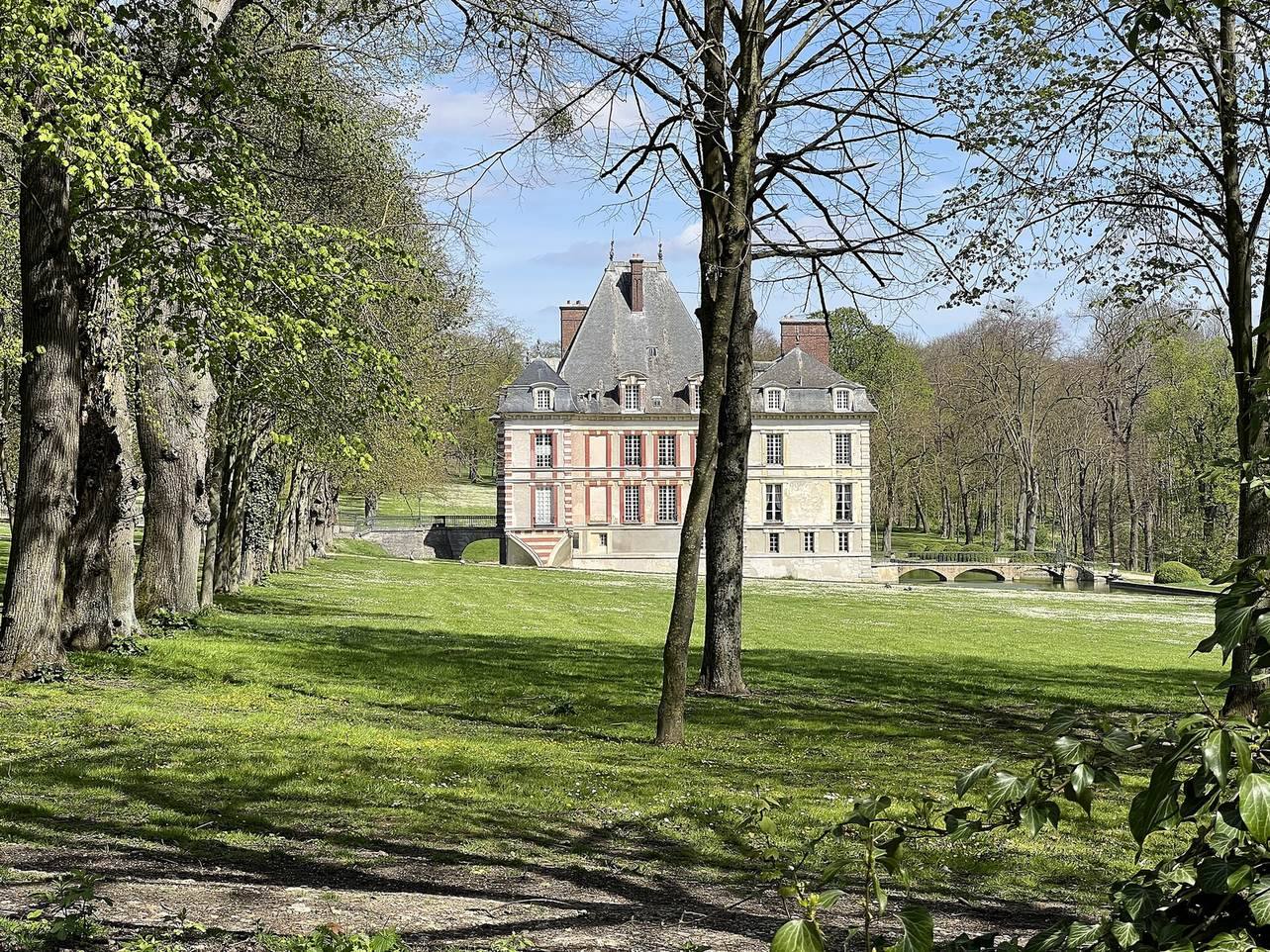
The late-sixteenth-century residence is built of dressed stone and brick and appears to have been influenced by the architectural work of Jacques Androuet du Cerceau, a major sixteenth-century French architectural designer and publisher whose work shaped Renaissance château design. Its original layout was a square plan rising through three levels, with four corner towers supported on squinches, arched or corbelled structures that carry a tower over a differently shaped space.
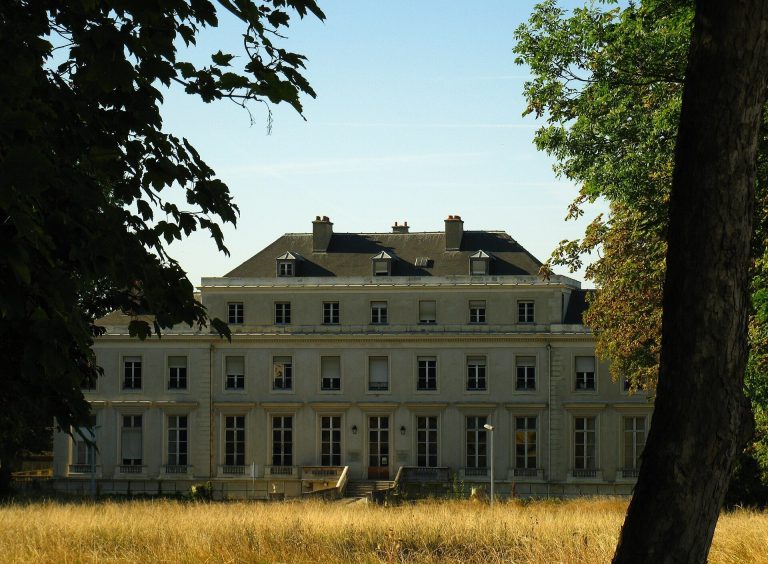
Around 1760, Le Carpentier added a second building structure on the garden side. The extension has a classical design and four levels, including one beneath mansard roofs. He also altered the principal entrance and replaced the towers’ possible imperial-style roofs, which were domed or bulbous in form, with mansards. These changes brought the older towers into greater accord with the eighteenth-century addition.
Estate and water features
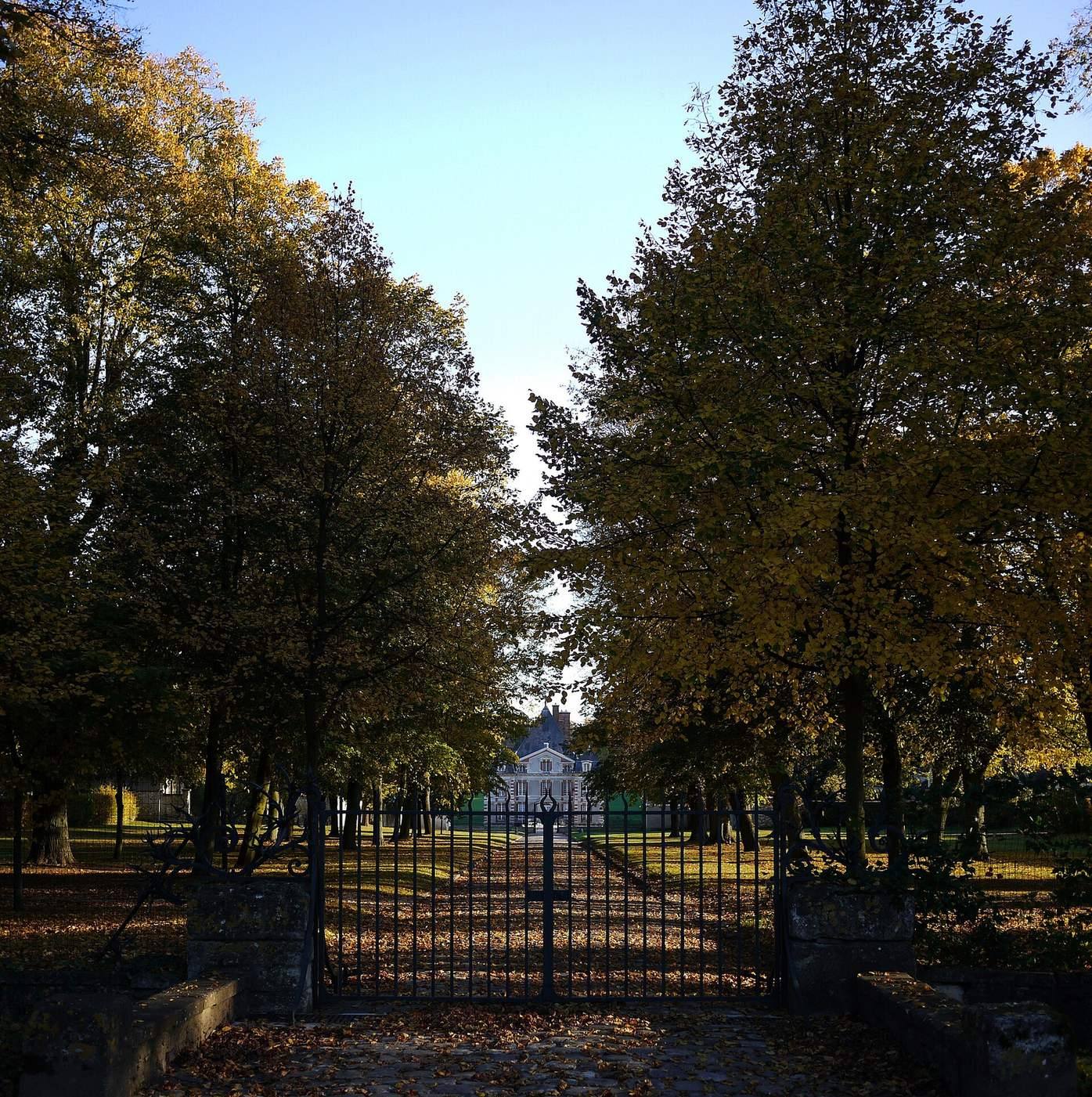
Château d’Ormesson forms part of a 140-hectare estate. The grounds include a 54-hectare golf course and 66 hectares of classified parkland. A body of water surrounds the château and is fed by the Morbras.