Fort de Champigny: A Séré de Rivières Fort in France’s Paris Defenses


Site at a Glance
- Rating
- 4.4
- Popularity
- Very Low
- Country
- France
- Primary era
- Modern
- Eras represented
- Modern
- Civilizations
- French
- Site type
- Military
- Remains
- Fort
On this page8 sections
History
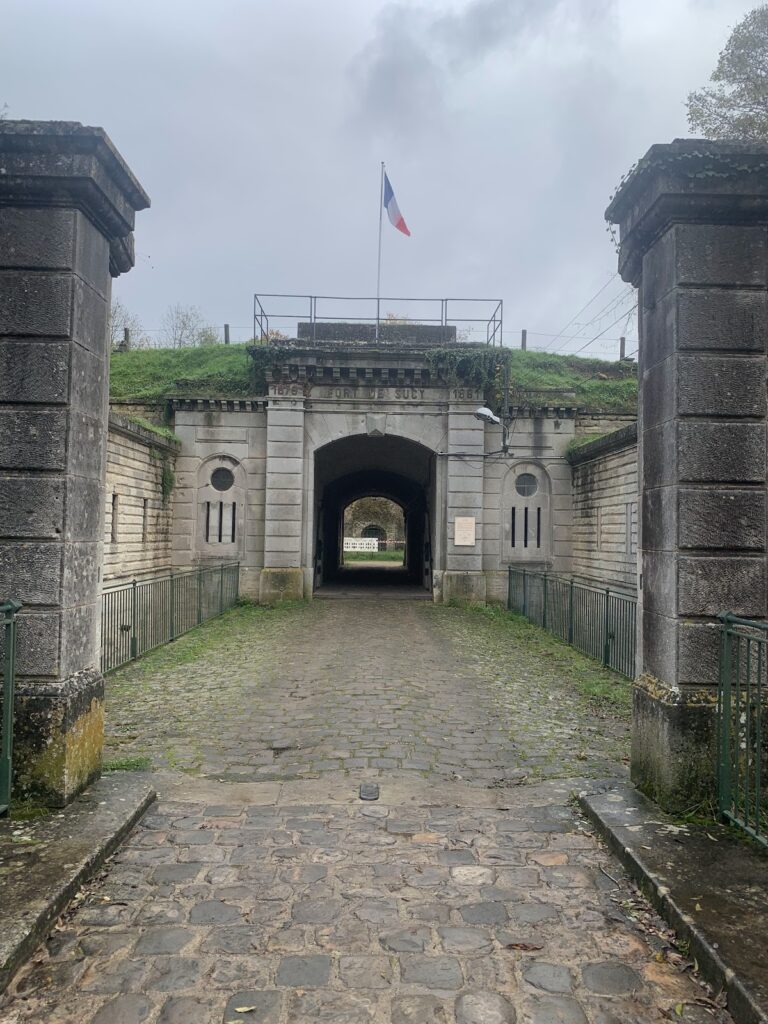
Fort de Champigny is a former French fort in Chennevières-sur-Marne, France, built between 1878 and 1880 as part of the second fortified belt protecting Paris. It followed the Séré de Rivières system, a network of forts and fortified positions developed after the Franco-Prussian War to defend major cities and strategic routes. The fort took its name from neighboring Champigny-sur-Marne and controlled movement along the Paris–Troyes railway.
Construction after the Franco-Prussian War
The fort was built in response to improvements in artillery range and effectiveness. Its position had previously been used by Prussian forces to bombard Paris during the 1870 war, making the location relevant to the reorganization of the capital’s defenses. When completed, Fort de Champigny carried 34 guns.
Modernization and the world wars
In 1911, the fort received additional concrete defenses, including two observation turrets equipped with machine guns in the caponiers. By 1914, its armament had been reduced to 20 guns, with 10 placed on the rampart and 10 in the caponiers. During the First World War, ten guns of 12- and 15-centimetre calibre fired against the Plateau d’Avron, an elevated strategic position in the eastern Paris region.
In 1939 and 1940, Fort de Champigny served as a base for anti-aircraft artillery. Its barracks were burned in July 1944, damaging an important part of the garrison accommodation.
Decommissioning and later uses
The fort left military service in 1965 and passed to the state property administration in 1974. A ministerial order placed it on the Supplementary Inventory of Historic Monuments on 16 May 1979. Restoration began in 1984.
On 28 September 1990, the fort hosted an event described as France’s first “real” rave party. Its civilian role continued when it housed the municipal police offices of Chennevières-sur-Marne until 2018. The animal-protection association Apac occupied the site from 2018 until 2022. Redevelopment works began in 2019, and consultation for creating the Fort development zone began in April 2023. The commune of Chennevières-sur-Marne now owns the fort, which is used by associations.
Remains
Defensive layout
Fort de Champigny occupies 50,554 square metres and has a central massif within a four-sided defensive plan. The plan consists of one face, two flanks, and a gorge. A ditch surrounds the fort, with an escarp, the inner slope or wall, on the fort side and a counterscarp, the outer slope or wall, beyond it. A double caponier, a fortified structure projecting into the ditch for fire along its length, reinforced the ditch defenses.
Rampart and underground defenses
Thirteen traverses divided the crest of the rampart. A traverse is a raised defensive partition crossing a rampart, often providing shelter or storage. Six of the fort’s traverses served as shelters, while one of the northern traverses contained a powder magazine. These elements formed part of the fort’s arrangements for protecting personnel, ammunition, and artillery positions.
Central compound and barracks
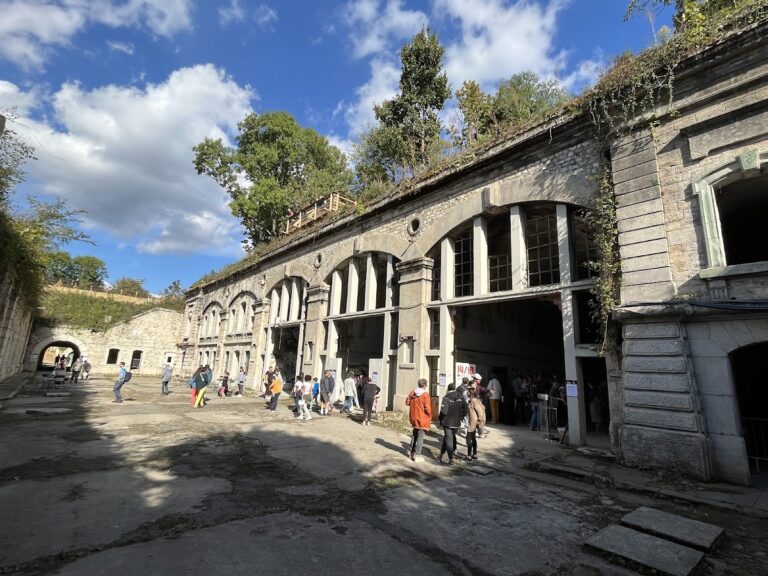
The central area enclosed a paved courtyard surrounded by quarters for a garrison of 388 men. Water was supplied by cisterns. The caserne, or military barracks, also provided accommodation for 388 men and was burned in July 1944. The fort has remained under restoration since 1984.
Nearby sites