Brévannes Castle: From Medieval Stronghold to Émile-Roux Hospital


Site at a Glance
- Rating
- 4.7
- Popularity
- Very Low
- Country
- France
- Primary era
- Early Modern
- Eras represented
- Early Modern, Modern
- Civilizations
- French
- Site type
- Domestic
- Remains
- Castle
On this page8 sections
History
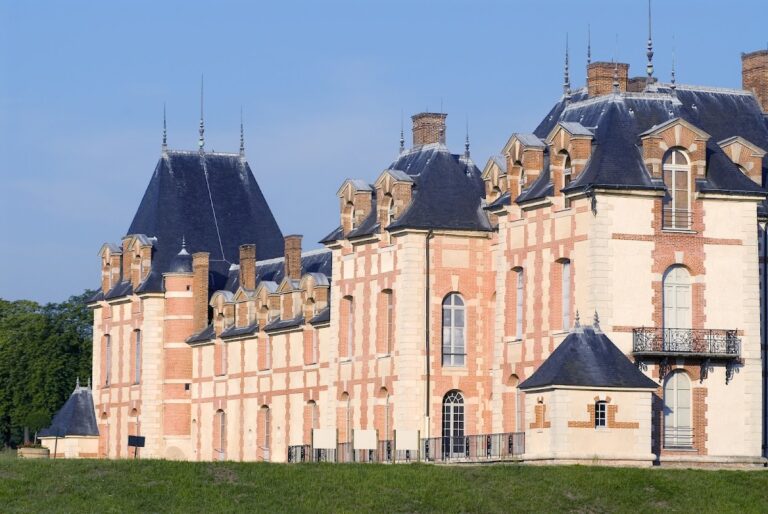
Brévannes Castle is a historic estate in Limeil-Brévannes, France, whose present residence belongs to the Neoclassical period. A medieval castle stood here from the beginning of the fourteenth century, and the estate later became a Louis XVI-style residence before being transformed into the medical complex now known as Émile-Roux Hospital.
Medieval origins and royal-era gardens
A fortified castle belonging to the Corbie family was established at Brévannes by the early fourteenth century. Its defenses included towers, moats, and watch turrets. During the reign of Louis XIV, the estate’s gardens were laid out by André Le Nôtre, the principal garden designer of the French royal court, who was known for formal geometric designs and long visual axes.
The eighteenth-century rebuilding
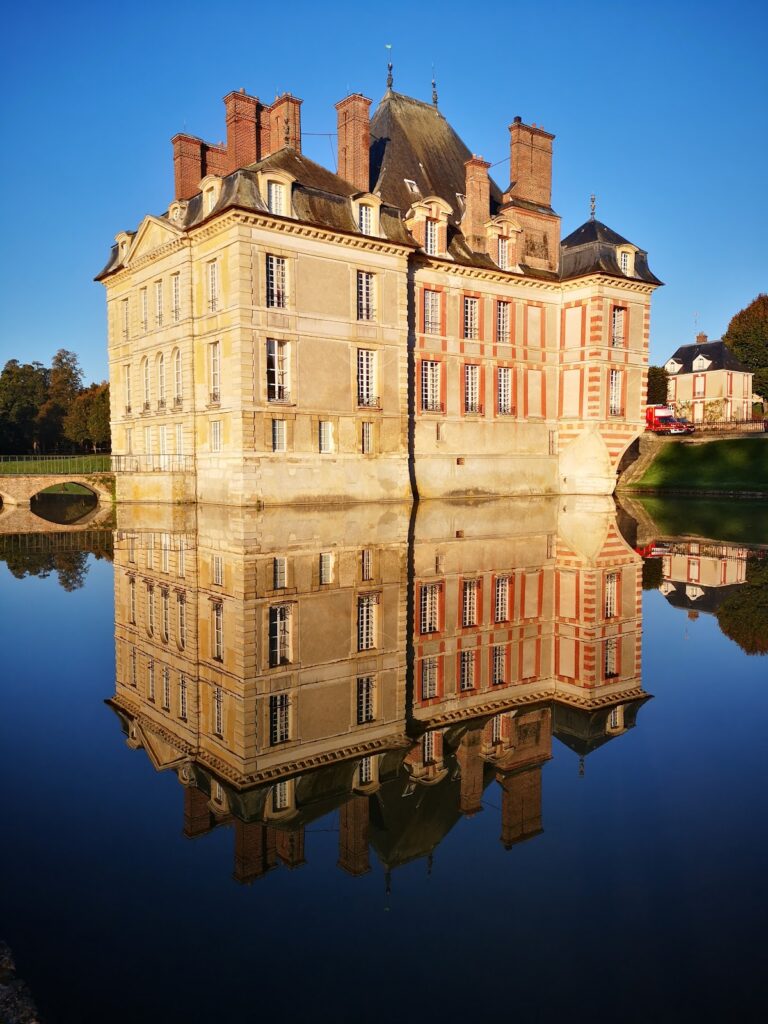
In 1786, Marc Henri Le Pileur de Brévannes purchased the old castle in poor condition. A royal councillor and president of the Chamber of Accounts of Paris, the institution that supervised the monarchy’s finances, he ordered the medieval building demolished and commissioned a new residence in the Louis XVI style. This late-eighteenth-century French Neoclassical style was associated with the reign of Louis XVI.
At the beginning of the French Revolution, the overthrow of the French monarchy, Le Pileur de Brévannes fled abroad to avoid arrest. After returning from exile, he sold the estate. Pierre-Marie Muguet de Varange acquired it in 1803 and later became receiver-general, a regent of the Bank of France, and a baron in 1810. He also served as mayor of Limeil-Brévannes from 1806 to 1817.
Nineteenth-century owners and occupations
Austrian troops occupied the residence in 1814. Jean-Charles Clarmont, a banker, bought it in 1823. The following year, ownership passed to the Hebrew philologist Philippe Sarchi, then to his son, the stockbroker Philippe Benoit Sarchi. Sarchi’s widow subsequently held the property and lived there until 1870. After the Franco-Prussian War, a conflict between France and Prussia, Prussian troops occupied the estate.
Prince Achille Murat purchased Brévannes in 1874 and arranged for its restoration. He is said to have lost the property in a card game to Baron Rodolphe Hottinguer, a wealthy Parisian banker who showed little interest in the estate.
Conversion into a hospital
In 1883, the Assistance Publique acquired the estate to establish a hospice for elderly people with a dispensary, where patients could receive medical consultations and treatment without residential admission. The institution expanded in 1886 with a ward for married couples and in 1891 with a ward for chronic patients.
Buildings for patients with tuberculosis were added in 1907 by the architect Paul-Louis Renaud. A ward for sick children, the Léon Bernard Pavilion, followed, and a sanatorium, an institution for long-term treatment and recuperation, was built around 1915. These successive additions changed the former residential estate into a specialized medical complex.
The pigeon loft has been listed as a French historic monument since 25 January 1980. The residence and its surroundings have held the same heritage designation since 3 September 2002. In France, listing as a historic monument formally recognizes a structure or site for its historical or architectural importance.
Remains
Castle grounds and surviving historic fabric
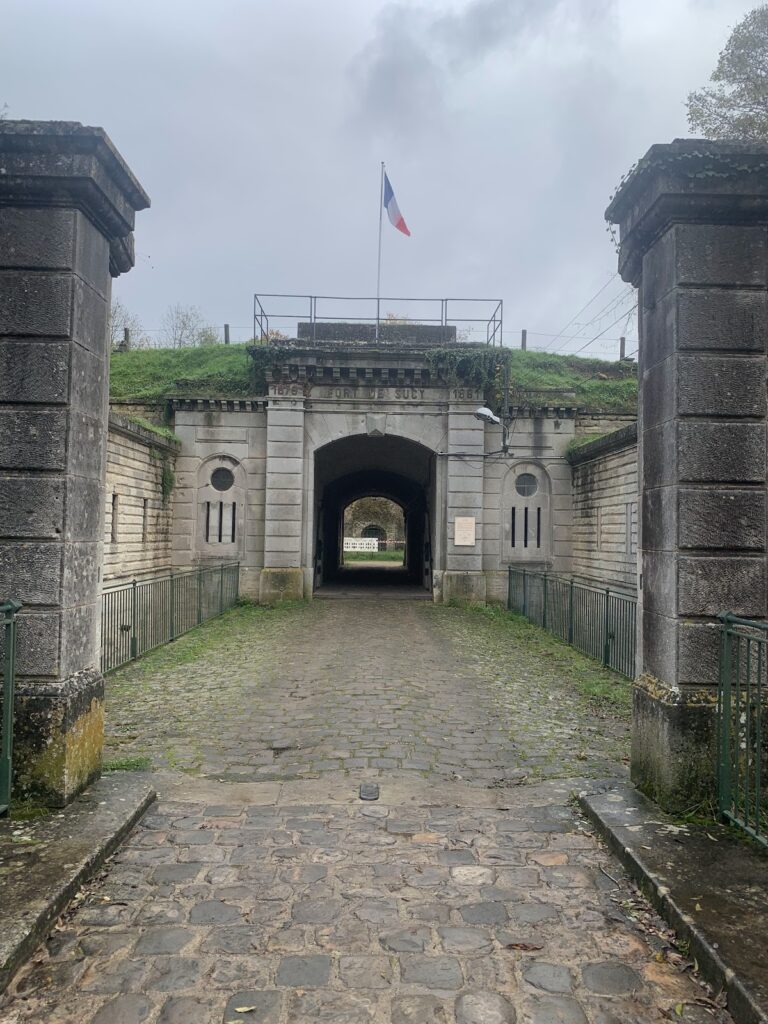
The estate combines the eighteenth-century Louis XVI-style residence with the grounds of the earlier fortified site. The medieval phase is represented in the historical layout by its former towers, moats, and watch turrets, while the later residence reflects the rebuilding ordered after 1786. The gardens associated with André Le Nôtre form part of the estate’s historic landscape. A pigeon loft also survives as a protected element of the historic fabric.
Medical buildings
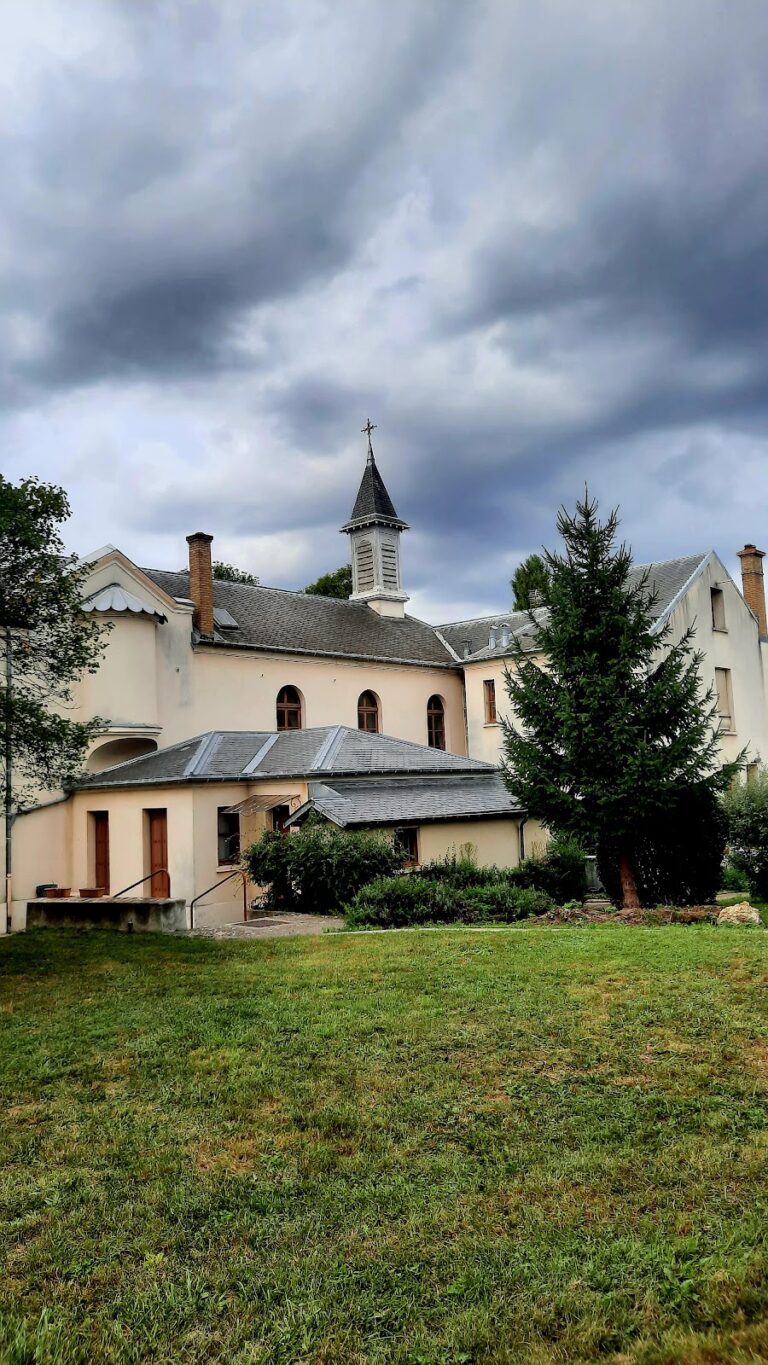
The former castle estate is now organized as a hospital complex shaped by successive medical additions. Its surviving institutional fabric includes the elderly-care hospice and dispensary, the ward for married couples, the chronic-care ward, buildings for tuberculosis patients, the Léon Bernard Pavilion for sick children, and the sanatorium built around 1915. The complex currently functions as Émile-Roux Hospital and is owned by Assistance Publique–Hôpitaux de Paris, the public hospital system serving Paris and the surrounding region.