Château de la Hille: A Wartime Refuge for Jewish Children in France


Site at a Glance
- Rating
- 4.7
- Popularity
- Very Low
- Country
- France
- Primary era
- Early Modern
- External website
- Open
- Eras represented
- Early Modern
- Civilizations
- French
- Site type
- Military
- Remains
- Castle
On this page10 sections
History
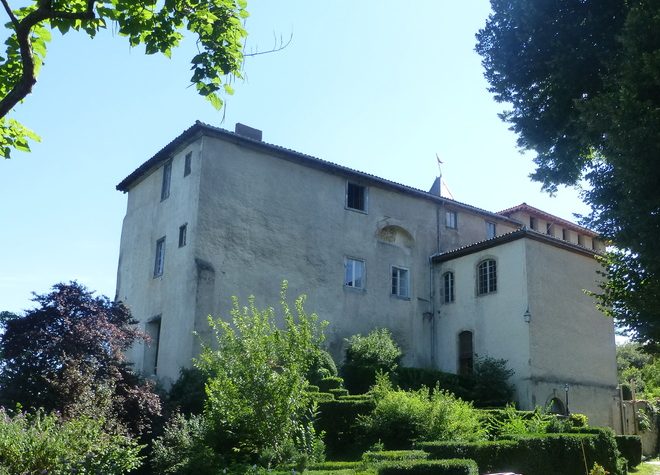
Château de la Hille is a French castle in Montégut-Plantaurel, France, built at the beginning of the sixteenth century. During the Second World War, it became the site of a children’s and youth home that sheltered Jewish children fleeing Nazi persecution, along with children affected by the wars in Spain and France.
Refugees in Southern France
From 1933, Jewish parents placed children in foreign care to protect them from persecution under Nazi rule. The children later associated with La Hille came from Germany, Austria, and Poland. Before reaching France, they had lived in two homes in Belgium. They fled south after Germany invaded Belgium in May 1940 and were first housed in a deteriorating building at Seyre.
The château had stood unoccupied for about twenty years when the Swiss Working Association for War-Damaged Children rented it in September 1940. This Swiss humanitarian organization initially operated the home. From 1 January 1942, its work continued under the Children’s Aid of the Swiss Red Cross. With assistance from older Jewish youths, the organization established Colony La Hille, which the Jewish children entered in June 1941.
Life at Colony La Hille
Rösli Näf became director in May 1941. She was appointed by Rodolfo Olgiati, head of the Swiss relief organization, while Maurice Dubois represented it in southern France. Dubois gave her only limited instructions, leaving Näf to organize the home with considerable independence. During the first phase, Swiss staff accepted board and lodging in place of their modest wages.
La Hille was organized as a largely self-sufficient home. Its routine brought together schooling, household tasks, agricultural work, and crafts. Older youths taught younger children, while Swiss supervisors and teachers provided further instruction. Many children received no news from their parents, but most obtained Swiss sponsors who helped support them. Before August 1942, a Quaker relief organization took 22 children to the United States.
Arrests and the Le Vernet Crisis
The Vichy regime was the collaborationist French government established after France’s defeat by Germany in 1940. At the request of Nazi Germany, it approved the deportation of 10,000 foreign Jews. On 26 August 1942, French police arrested 45 people from La Hille, including Jewish youths over sixteen and employees. Several people from the Saint-Cergues-les-Voirons colony were arrested at the same time. The detainees were sent to Le Vernet, an internment camp in southern France, for planned deportation.
Näf went to Le Vernet and secured permission to enter the camp and stay with the children. Maurice Dubois, with assistance from the Swiss legation, obtained the intervention of René Bousquet, the Vichy secretary-general of police. The detainees were eventually authorized to return to La Hille and Saint-Cergues-les-Voirons, although they remained in the camp until 2 September. During that period, they witnessed the deportation of 400 people.
After the arrests, Näf asked Hugo Remund, head of Swiss Red Cross Children’s Aid, to bring the endangered Jewish children to Switzerland. The organization repeatedly asked the Swiss authorities to admit all 168 Jewish residents of its homes, or at least the 80 residents over sixteen. The plan became impossible after Germany occupied the French southern zone on 11 November 1942, following the Allied landings in North Africa on 8 November.
Flight and Deportation
When Jewish people were ordered to report to the authorities in December 1942, several older youths decided to flee abroad. Näf could not persuade them to remain and supplied money and food for their journeys. Some tried to cross through Haute-Savoie with the assistance of Germaine Hommel and Renée Farny, who were connected with the Saint-Cergues colony.
During the night of 6 to 7 January 1943, German and French border guards intercepted five youths about 50 metres from the Swiss border. Inge Joseph escaped, while Walter Strauss was allowed to return to the château. Two others were deported. Four youths who paid a smuggler to take them to Spain were betrayed, arrested, and deported to Auschwitz, the Nazi concentration and extermination camp complex. One survived.
The Swiss Red Cross Children’s Aid committee judged that Näf, Hommel, and Farny had violated the organization’s neutrality by assisting illegal escapes and had placed its work in France at risk. It decided to transfer them. Näf returned to Switzerland in May 1943 and became deputy director of the Centre Henri-Dunant in Geneva in November that year.
In February 1943, four Jewish youths from La Hille were arrested during a new wave of deportations. Two were permitted to return to the château, while two were deported. Both had previously been turned back during an attempt to reach Switzerland. Other endangered youths hid at La Hille before police inspections or were placed with farmers and worked as domestic servants outside the château.
Rescue Journeys and Closure
Emma Ott became director of the La Hille colony in October 1943, when most of the older youths had already escaped. Despite the Swiss Red Cross prohibition, further escapes continued. From May 1943 until her final rescue journey in May 1944, Anne-Marie Im Hof-Piguet worked at the château and organized or accompanied the clandestine escape of twelve Jewish children.
Her route led from La Hille through Toulouse, Lyon, the Montluel children’s colony, Champagnole, and Chapelle-des-Bois to Switzerland. At Chapelle-des-Bois, the guides and Resistance members Victoria and Madeleine Cordier helped the fugitives. The children crossed the Risoux by the rock-cut Gy de l’Echelle path to the Hôtel d’Italie, a forestry workers’ hut on the Swiss side. Henri-Joseph Piguet collected them there and arranged their transfer to Zurich and then to the refugee pastor Vogt.
In May 1944, Ott accompanied four Jewish girls to Pamiers. They were hidden in an orphanage run by a Franciscan convent before being taken through Spain to Palestine. Ott left La Hille in March 1945 to direct a maternity facility at Montagnac.
Among the older Jewish youths who left La Hille, twelve crossed the Pyrenees, partly with help from the American Jewish Joint Distribution Committee, a Jewish relief organization assisting refugees and persecuted Jewish people. Twenty-four reached Switzerland, while nineteen found shelter with French farmers or employment as domestic workers. Seven were protected in monasteries, and several joined the French Resistance, the networks that opposed German occupation and Vichy authorities. Eight had previously been turned back while trying to reach Switzerland. This group included the two youths later deported after the betrayed attempt to reach Spain and the two arrested and deported from La Hille in February 1943.
Nine older Jewish youths remained at the château in autumn 1944. La Hille closed in 1945. Children who had homes returned to them, while the others moved to different Swiss Red Cross colonies.
Remains
Adaptation of the Château
The physical character of Château de la Hille is that of a sixteenth-century French castle adapted for communal residence and wartime relief. Its use as Colony La Hille required domestic, educational, agricultural, and craft facilities. Winter conditions were difficult because the building’s water, heating, and electrical systems were inadequate when the Swiss organization took possession.
Communal and Working Facilities
The château contained a kitchen, a carpentry workshop, and spaces for household and farm work. Children and youths helped repair and equip the building under the direction of Swiss carers and teachers. These changes made the old castle workable as a home in which residents lived, studied, carried out practical tasks, and supported its daily operation.
Electrical Work and Concealment
Edward Nussbaum, a 17-year-old Jewish resident, wired the château’s electrical system and also taught mathematics. The building included a hiding place used by endangered Jewish youths before police inspections. Other residents were concealed away from the château, with farmers or in domestic service, as the danger of arrest increased.
Nearby sites