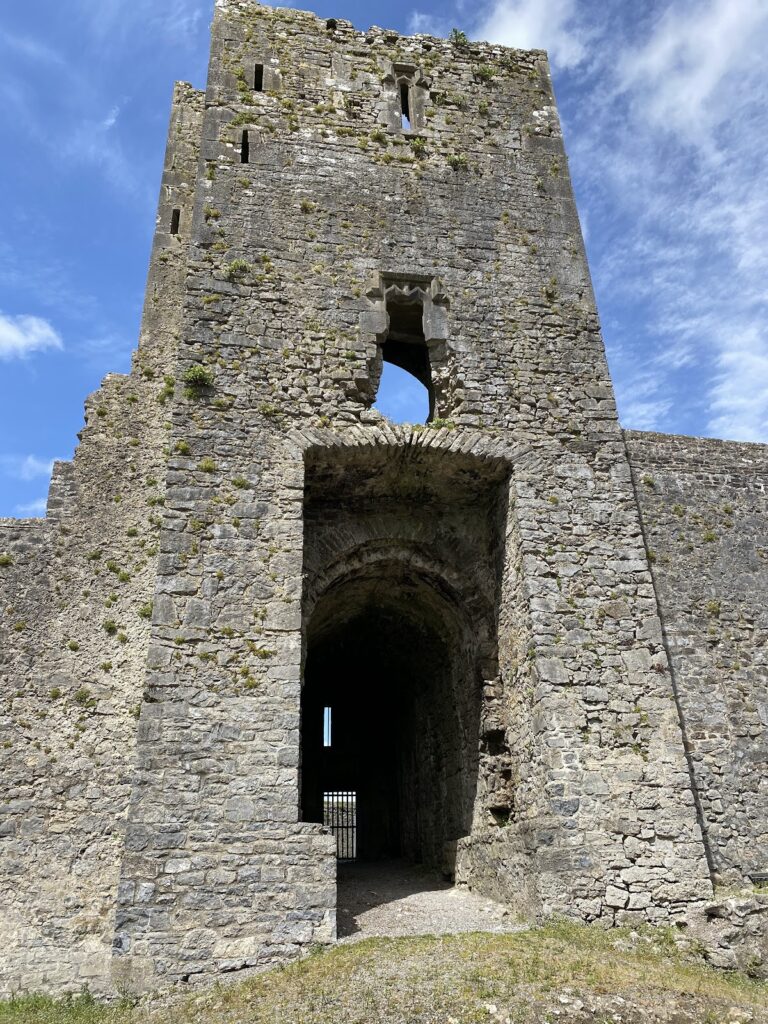
Castlepook: A Norman-Style Castle in County Cork

Site at a Glance
- Rating
- 4.2
- Popularity
- Very Low
- Country
- Ireland
- Primary era
- Medieval
- Eras represented
- Medieval
- Civilizations
- English, Norman
- Site type
- Military
- Remains
- Castle
On this page7 sections
History
Castlepook is a ruined Norman-style castle in Ireland, built around 1380 for the Synan family, an Irish aristocratic lineage. It stands in the foothills of the Ballyhoura Mountains, about 4 kilometres north of Doneraile in County Cork. Its Irish name, Caisleán an Phúca, means “Castle of the Púca” or “Castle of the Fairy Horse.”
Origins of the Synan Family
The castle’s construction is attributed to Geoffrey the Red, a knight of Norman origin. His father was called Gaugan, while an earlier ancestor, Sinada, was said to have reached Ireland with Strongbow in 1171. Strongbow was the title used by Richard de Clare, an Anglo-Norman nobleman whose arrival formed part of the Anglo-Norman conquest of Ireland.
Another ancestor, Fitz Adam Synan, reached the Doneraile area in the thirteenth century, probably in 1251. He leased land at Kempok for an annual rent of one pound of pepper, and that rent remained unchanged until 1541. The Synans were a medieval Irish family whose name is also represented by the form O Sionain.
Landholding and Political Change
The family faced financial difficulties during the sixteenth century. Ames Reg Synan accumulated substantial debts to the English Crown but received a pardon in 1573. Patrick of Castle Fowk received a similar pardon in 1601.
In 1636, Michael Synan sold extensive tracts of land to the aristocrat St Leger for £300. St Leger received money from King Charles I in 1639 to organize the lands. A document from that period stated that St Leger held ancient rights to the property, although the Synan family had possessed the lands for more than 400 years.
The Lords Roche had been the area’s principal landlords under charters issued by King James I in 1611. They lost their lands in 1641, after which the holdings passed to the St Leger aristocratic family.
Later Residents and Local Tradition
Richard Morgan died at Castlepook in 1748 at the age of 106. He had served as a clerk of the county court of justices of the peace during the reign of King James II. He was buried at the monastery of Buttevant. Philip Morgan, who lived at the castle in 1750, was its last recorded resident. In 1814, Richard Andrews described the building as “Pooky Castle.” The last member of the Synan family mentioned in the historical record was Shinan Fitz-Robert of Castle Pook.
Local legends connect Castlepook with a nearby cave, now called Mammoth Cave. Tradition held that the cave was inhabited by a Púca, a supernatural shapeshifting being portrayed here as a benevolent but elusive creature. It was said to leave grain secretly at night for starving peasants. After a peasant hid to observe it and disappeared without trace, the castle’s lord left clothing as a gift. The Púca then stopped helping the people, becoming absorbed in admiring its appearance in the clothing before a mirror.
Remains
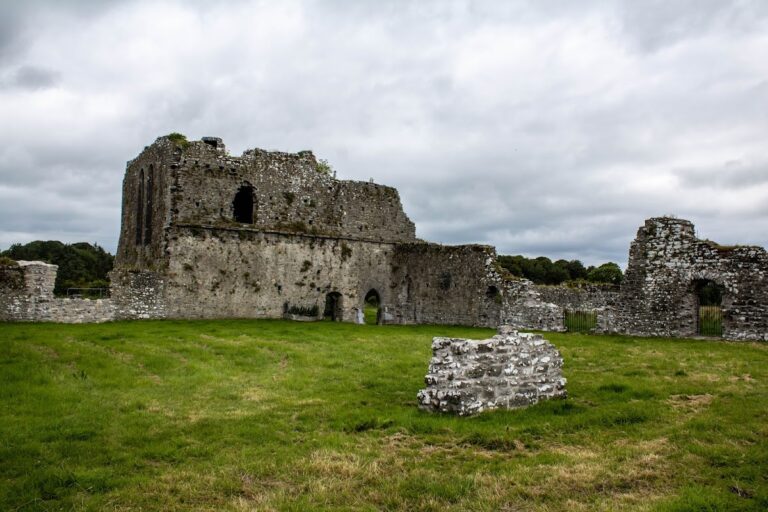
Castlepook survives as a lowland ruined castle or knight’s tower of Irish aristocratic type. Its rough limestone masonry forms the principal surviving fabric, while much of the building has deteriorated. A stone vaulted roof remains intact or relatively well preserved. A vaulted roof is formed by a curved masonry vault rather than a flat ceiling or conventional timber framing.
Castle Structure
A stone spiral staircase formerly occupied the southwest corner of the castle. The staircase has disappeared, and vandals removed a large quantity of the smooth stone used for it and for the reveals around the windows and doors. These losses contribute to the ruined condition of the structure, while the surviving masonry and vaulted roof preserve important elements of its original construction.
Mammoth Cave
Mammoth Cave lies near the castle and is physically associated with the traditions surrounding Castlepook. Its connection with the Púca legend gives the cave a place in the site’s historical and folkloric identity.
Nearby sites