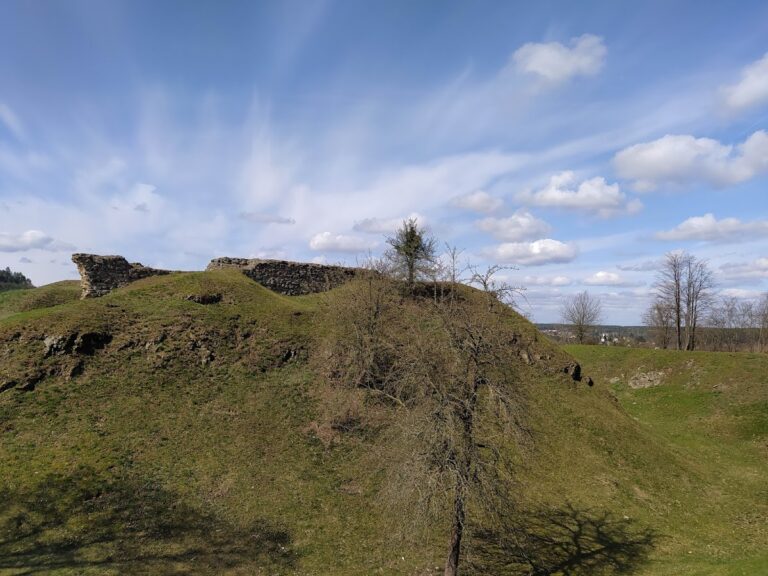
Castle Skála: A Medieval Fortress in the Czech Republic
Visitor Information
Google Rating: 4.7
Popularity: Low
Country: Czechia
Civilization: Medieval European
Site type: Military
Remains: Castle
History
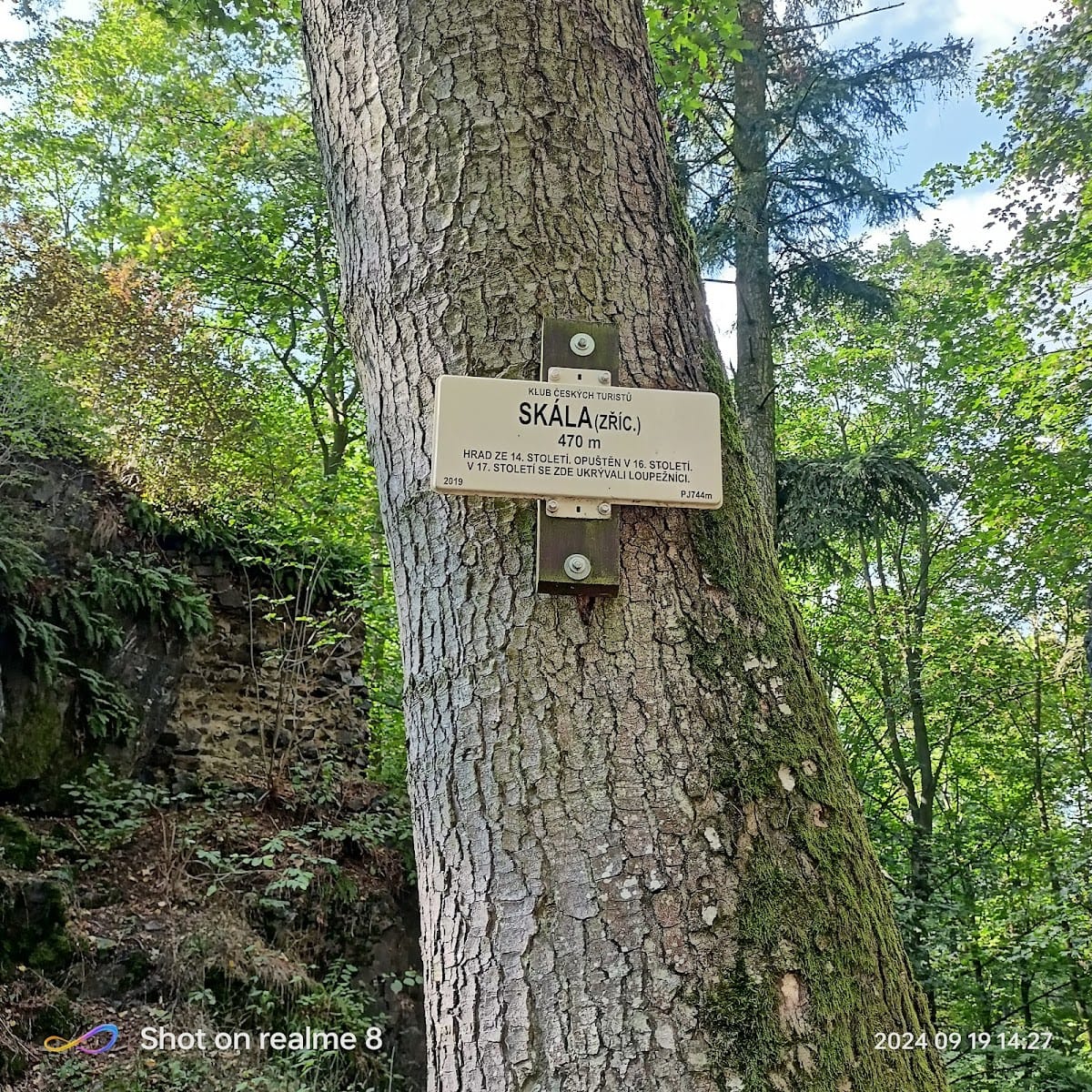
Castle Skála is situated in the municipality of Příchovice-Přeštice in the modern-day Czech Republic. It was established during the early 14th century by members of the Švihovský family from Rýzmberk, a noble line tracing back to Vilém of Rýzmberk, who held possession of the castle around 1318. Whether Vilém founded the fortress or acquired it from earlier owners is not definitively known.
At the turn of the 14th to the 15th century, Castle Skála gained military significance. It served as a stronghold for armed groups loyal to King Sigismund during his conflicts with King Wenceslaus IV. These forces, sometimes described as combatants mixed with bandits, used the castle as a base from which to operate. Throughout this period, the fortress was subjected to several sieges. Notably, in 1399, one of these attacks reportedly featured the first use of firearms in Bohemia, marking a historic moment in military technology.
The castle experienced a serious setback in 1441 when it was seized and set ablaze by troops led by Hynek Krušina of Švamberk and Hanuš of Kolovrat. After capturing the fortress, they executed its defending garrison. Despite this violent episode, the Švihovský family later restored the stronghold. They assigned it to Vilém the Younger of Rýzmberk, who managed its affairs thereafter.
Following the Hussite Wars, the strategic importance of Castle Skála faded. Although it remained maintained for some time, the castle was gradually abandoned during the first half of the 16th century. Records indicate it was still habitable around the mid-1500s, but by 1568 it was described as deserted. More than a century later, in 1658, Emperor Leopold I ordered the deliberate demolition of the castle. This measure was intended to prevent its reuse by hostile forces or local bandits.
Throughout its history, Castle Skála was associated with notable figures such as Vilém II. of Skála, Břeňek Švihovský, and Půta of Skála. These individuals appear in contemporary chronicled accounts and military records, confirming the fortress’s role in regional power struggles during the late 14th and early 15th centuries. Since 1963, the site has been protected as a cultural monument, reflecting its historical significance despite its ruined state.
Remains
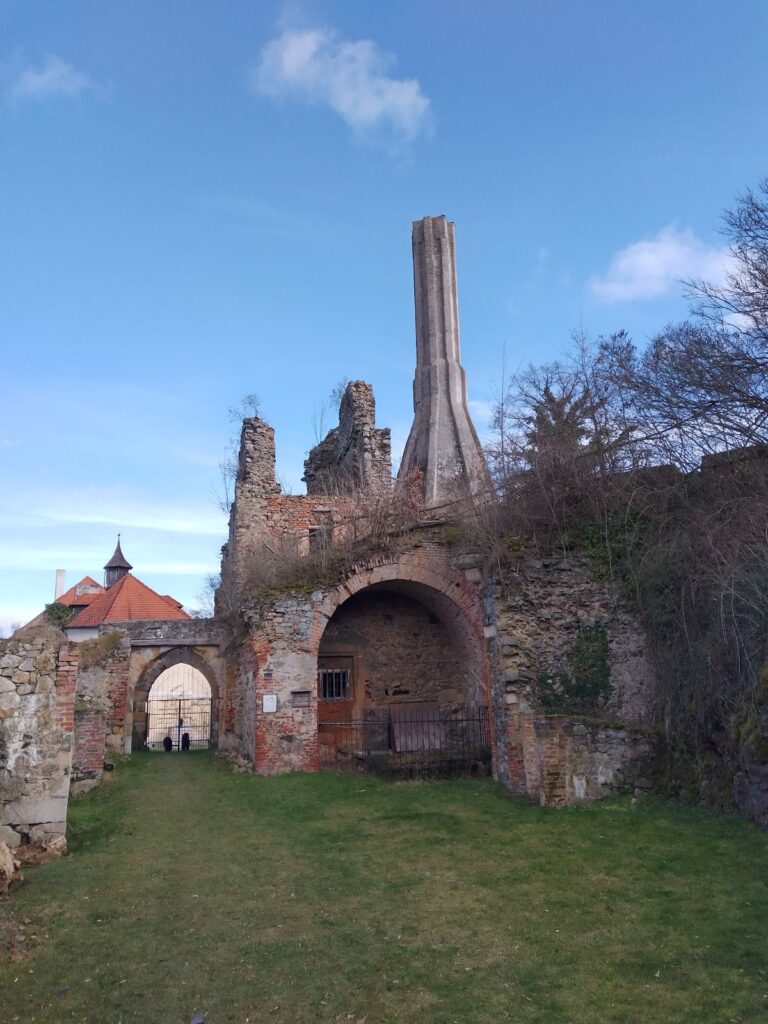
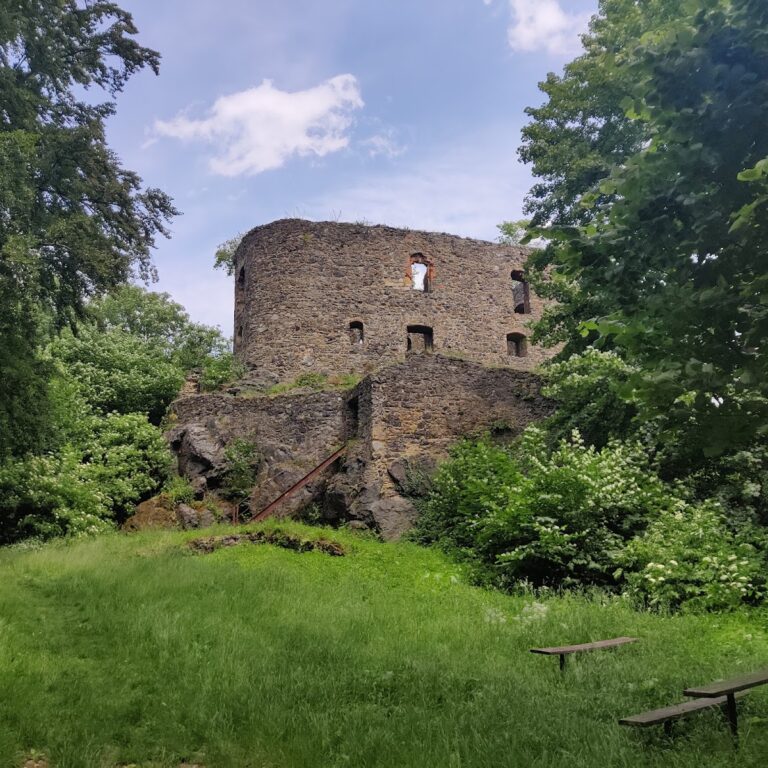
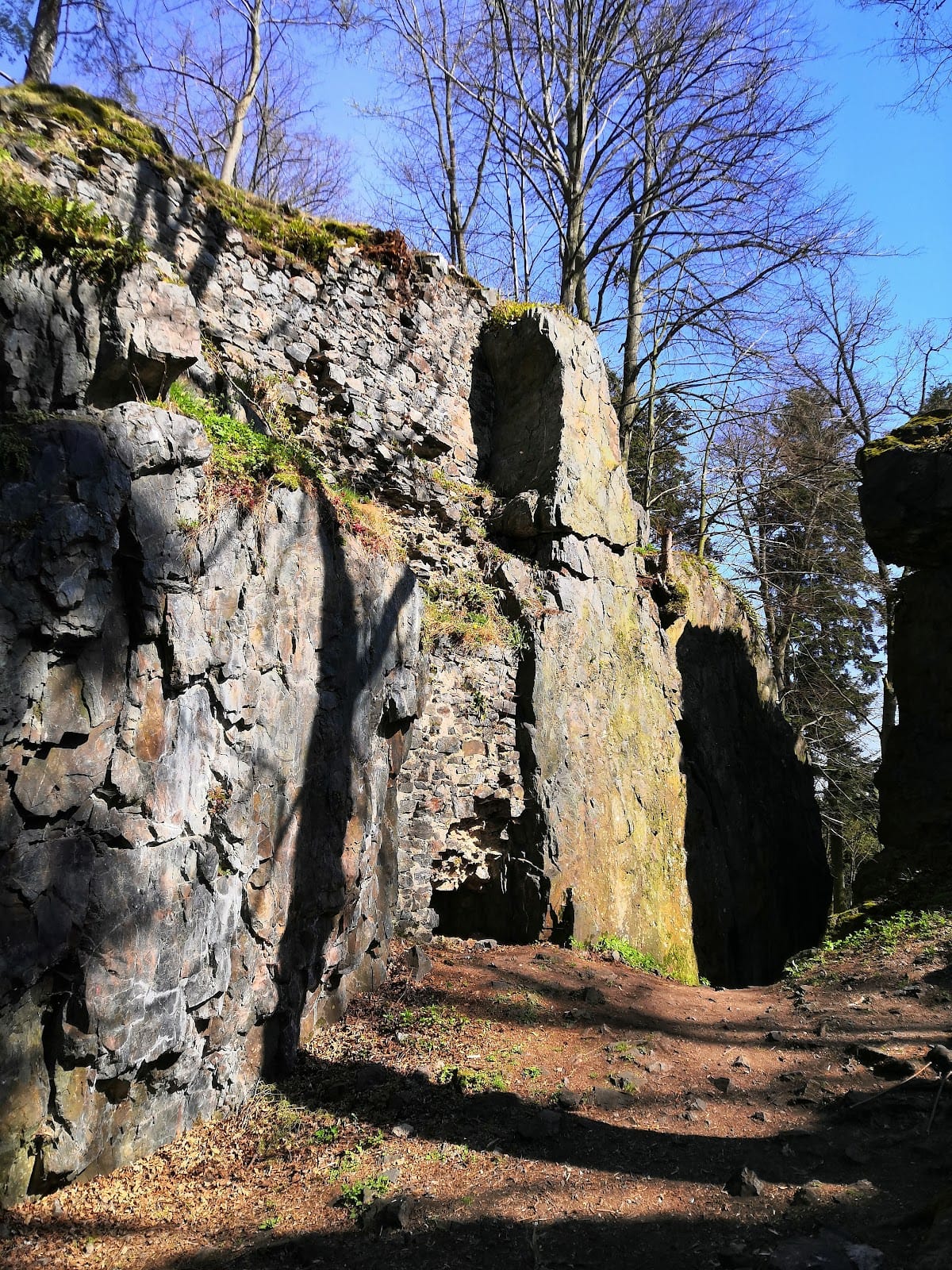
The remains of Castle Skála cover a broad site measuring roughly 200 by 400 meters. The complex consists of two principal sections: the upper castle positioned on higher ground to the west, and the lower castle located northeast of the upper part. The fortress was arranged with defensive and residential elements typical of medieval central European castles.
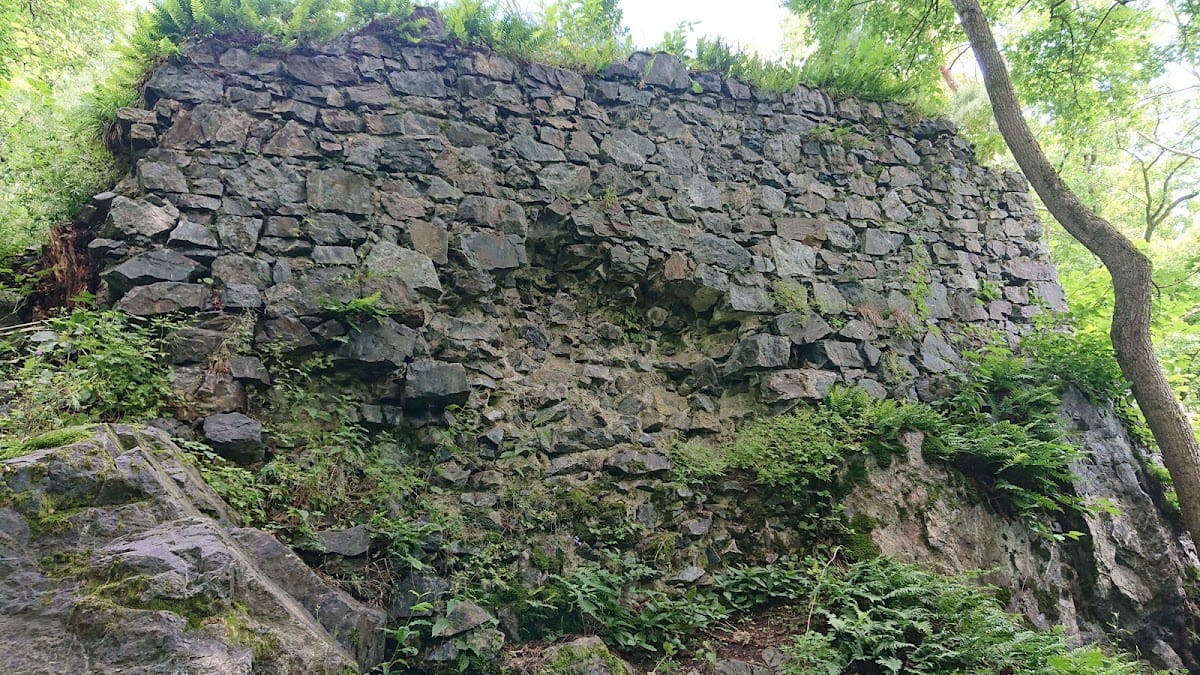
Access to the upper castle was granted by a bridge spanning a moat, leading to a fortified tower gate. Behind this entrance, a staircase or steep ramp ascended to the main courtyard, parts of which, including one wall, survive up to the height of the battlement walkway. A curtain wall extends northeast from this area, following the contour of the rock edge, and remains partially intact. Within this upper domain, a fortified yard known as a parkán—likely used to stable horses—was enclosed by defensive walls.
One significant building in the upper castle, often referred to as the “rear gate,” featured a double moat and may have served as a late addition for fortification rather than a traditional gatehouse. On the west side of the central area, a structure accessible via a ramp shows evidence of timber construction, with holes where wooden beams once supported galleries or balconies. This building connected directly to the battlemented walkway and a bridge over a rock crevice, which led to the southern side of the palace core.
The palace core of the upper castle comprised two separate palaces flanking a small courtyard. Entrance to the core was through the southeast side of the western palace building and included access to a basement area secured by a small gate barred for protection. Scholars interpret the arrangement of two palaces as a typical layout for castles of the period, though some suggest that a courtyard chamber in the northeast palace may be the remains of an original tower.
The lower castle corresponded to the donjon type, centered around a roughly square tower. This tower likely fulfilled both residential and defensive roles. A narrow entrance connected the tower to the courtyard’s outer wall. Positioned behind the tower was a palace featuring a rectangular northern corner, while the western curtain wall contained an opening identified as a later gateway, reachable by stairs from the outer bailey.
Surrounding the courtyard on the northeast side, a polygonal curtain wall enclosed an area probably designated for economic buildings or another structure. A fresco from the chapel of Švihov castle has been interpreted by some as portraying Castle Skála, possibly reflecting this enclosed space. Two small postern gates pierced the curtain wall, leading along paths toward nearby Radkovice and to a small earthwork fortification situated on an eastern promontory. One of these posterns was securely barred with three crossbars, while only a partial jamb and slot remain of the other.
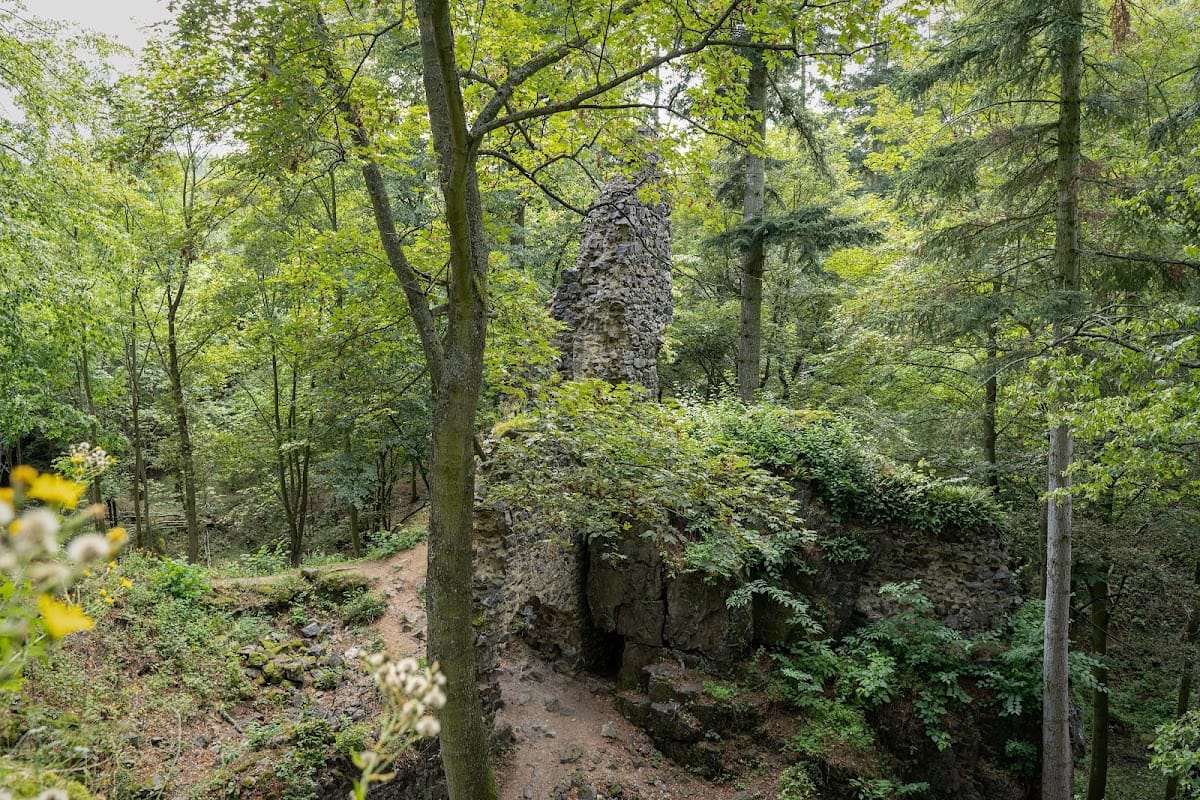
Additional defensive features included moats and ramparts located in the northeast sector of the site. These earthworks may represent an outer bailey or served as a military camp area, though the exact period of their construction is uncertain. Today, the site preserves parts of walls, moats, and earthworks, with some castle walls standing to the height of their original battlement walkways, offering insight into the fortress’s former defensive capabilities and layout.
Nearby sites