Castle of Hostoles: A Medieval Fortress in Catalonia, Spain
Visitor Information
Google Rating: 4.3
Popularity: Very Low
Official Website: www.lesplanes.cat
Country: Spain
Civilization: Medieval European
Site type: Military
Remains: Castle
History
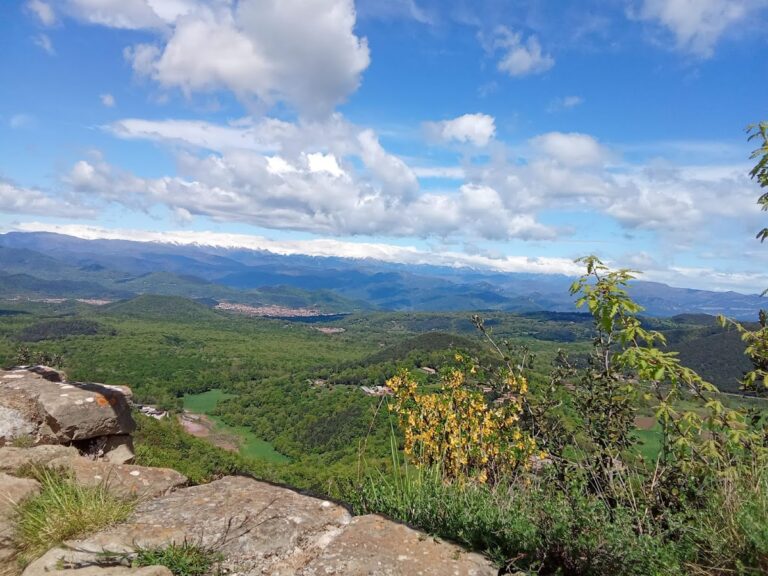
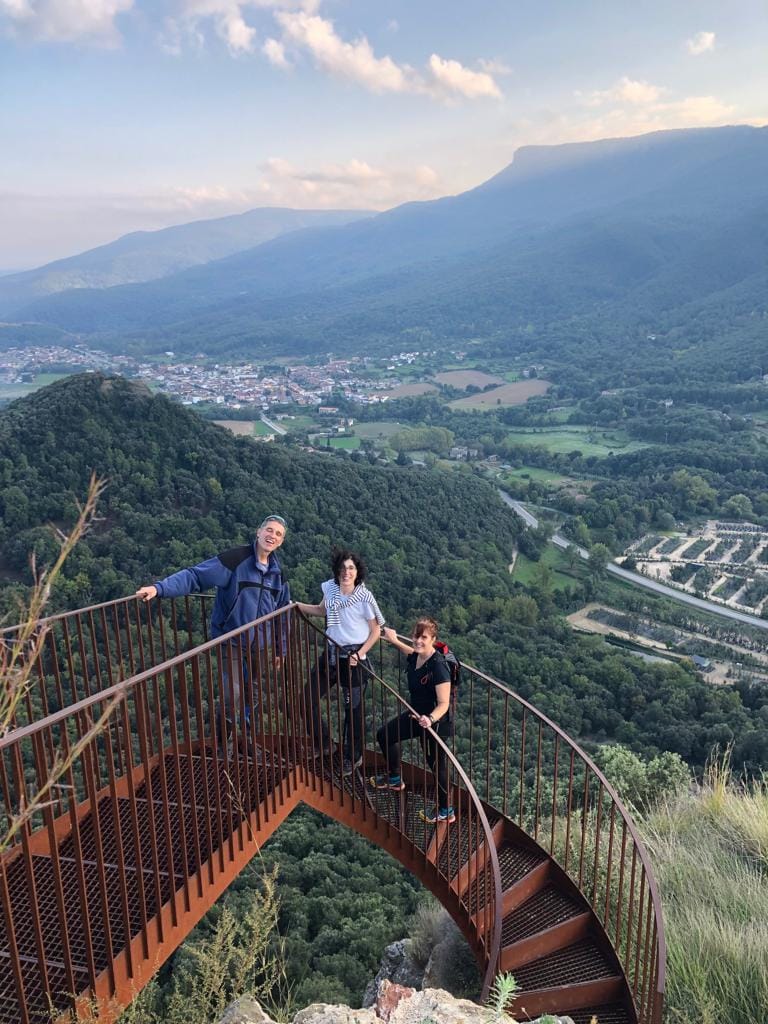
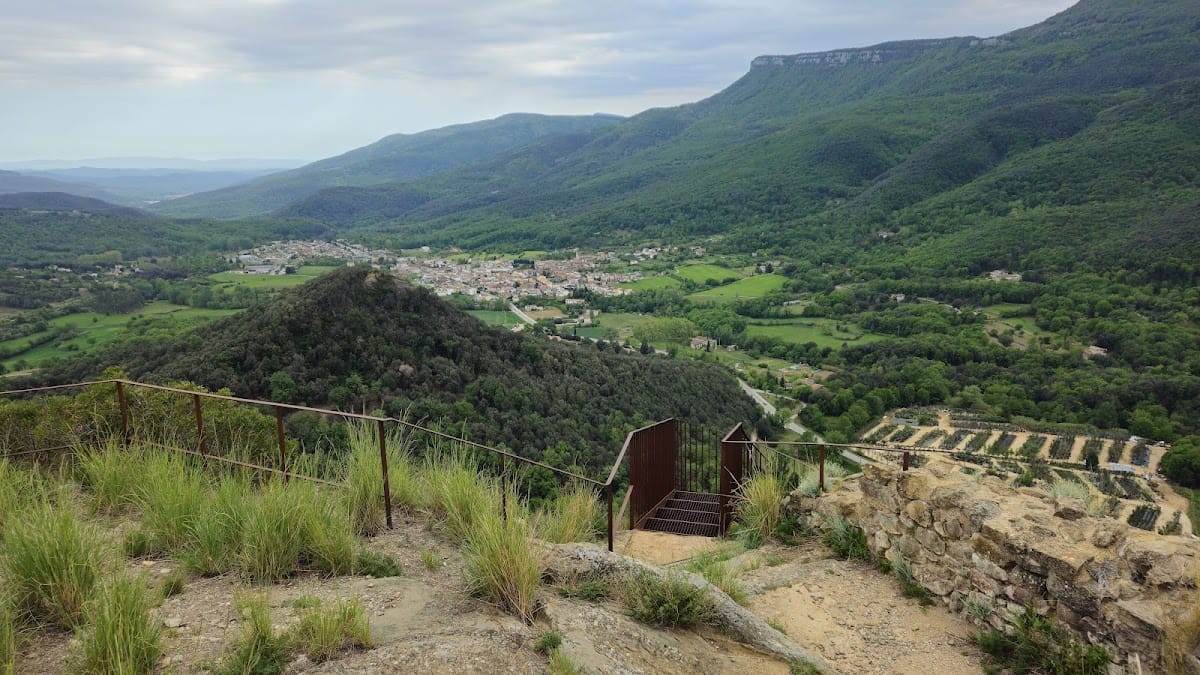
The castle of Hostoles, located in the municipality of Les Planes d’Hostoles in Spain, is a medieval rock fortress constructed by early medieval Catalan builders between the 9th and 10th centuries. It occupies a strategic position overlooking the Hostoles valley along the Brugent river.
During the early 11th century, the castle was situated within the County of Girona but occasionally fell under the influence of Bernard Taillefer, Count of Besalú. Historical records show that in 1017 the castellan Mir d’Hostoles pledged homage to the Count of Barcelona. His son, Enees Mir, later affirmed loyalty to Count Ramon Berenguer I and Countess Almodis, as documented in the Liber feudorum maior, a medieval collection of feudal contracts. Throughout this century, members of the Hostoles lineage appear repeatedly in documents, including Galceran d’Hostoles who swore fealty to Bernard II, Count of Besalú. By the 12th century, the lordship had transferred to dapifer Guillem Ramon I and then to his son Ot around 1120, while descendants of Mir d’Hostoles continued managing the castle’s defenses.
In the 13th century, ownership shifted through marriage when Dolça d’Hostoles united with Galceran de Cartellà, a prominent noble from Girona’s county. Their son Guillem Galceran held the lordship until roughly 1290. The castle became a center of local conflict; for instance, in 1259, it experienced assaults that involved the young Pere, a minor at the time. The lords of Hostoles developed a reputation for harsh rule, resulting in punishments including excommunication and the revocation of privileges related to peace and truce. Despite this, in 1285, a lord of the castle fought alongside the Catalan king against invading French crusaders. By 1313, the castle’s control passed with marriage into the Rocabertí family.
Religious life at the castle is known through the dedication of its chapel to Saint Guerau as of 1319. The castle’s strategic importance persisted into the 15th century, notably during the Catalan civil war between 1462 and 1472. In 1463, remences peasants—rebellious serfs in Catalonia—occupied the fortress. It was eventually absorbed into royal possession in 1471. Following this, in 1474, the crown granted the castle to Francesc de Verntallat, recognized leader of the remences. However, legal reforms embodied in the Sentencia de Guadalupe of 1486 returned ownership permanently to the crown. After this period, the castle declined, losing its military role and gradually falling into ruin. Over subsequent centuries, it served as shelter for shepherds and smugglers until archaeological interest and restoration work began in 2011 under the Girona provincial government.
Remains
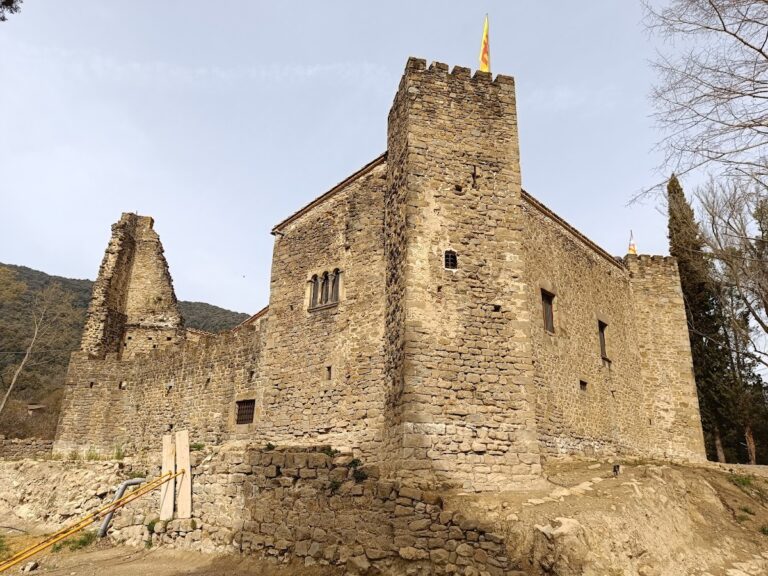
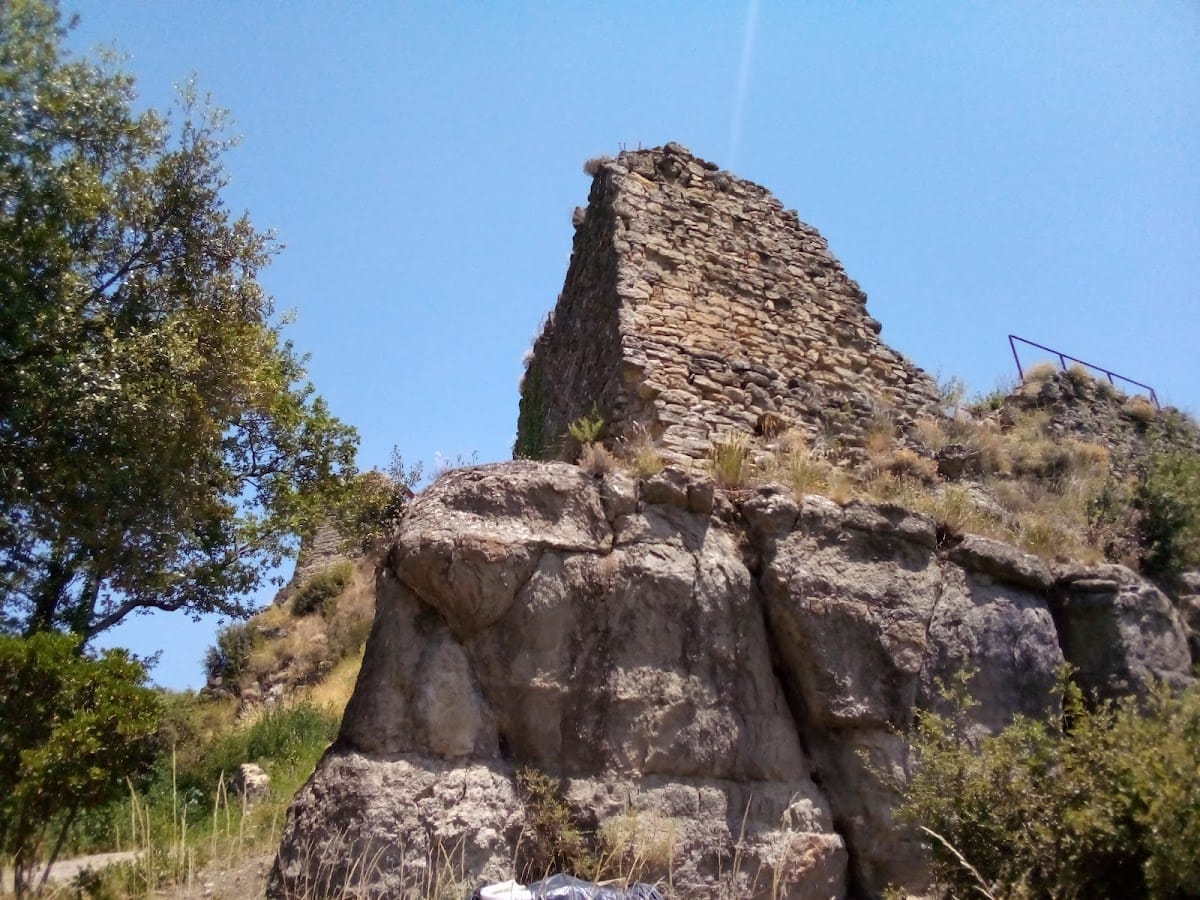
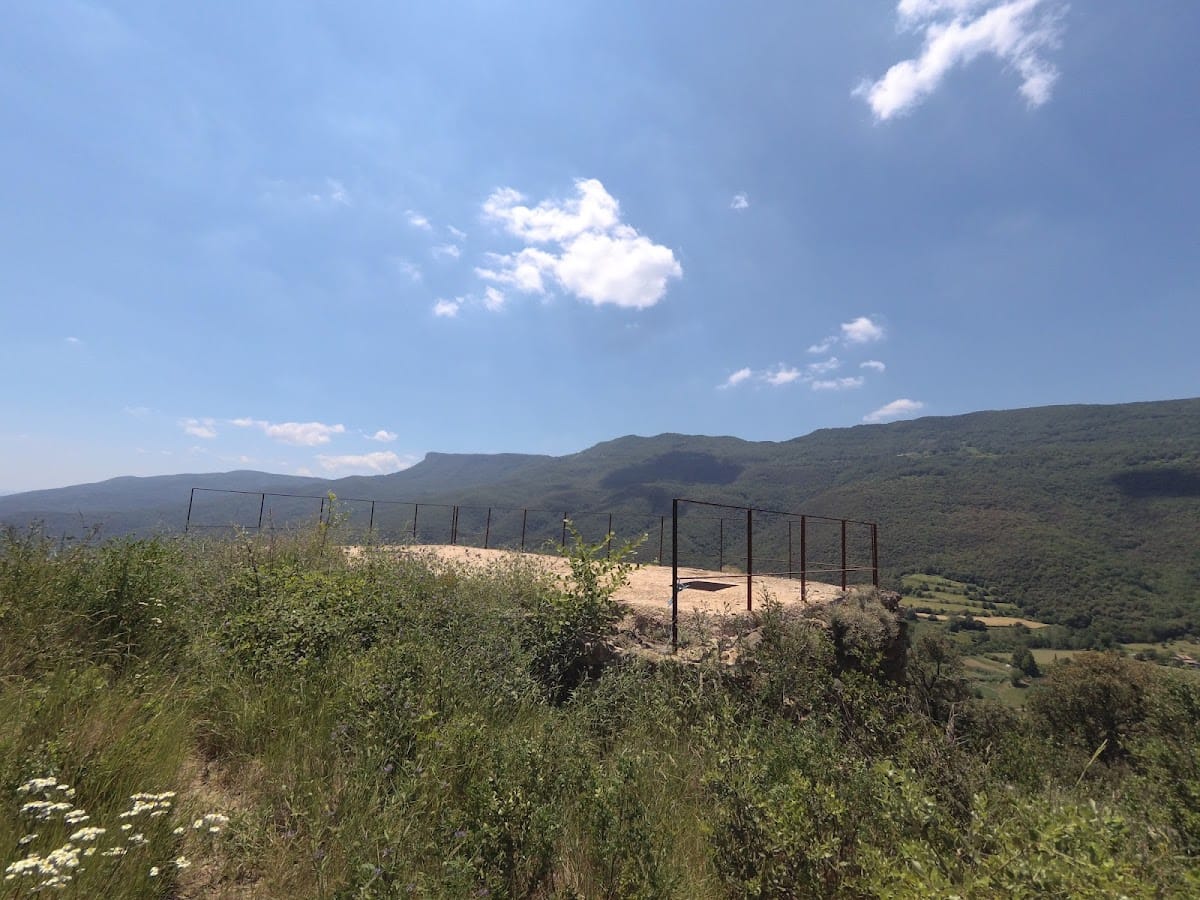
The castle of Hostoles is perched atop Puig de les Forques, a rocky outcrop that offers natural protection on nearly all sides, with its sole access point from the south heavily fortified. The fortress’s layout comprises three distinct enclosures constructed during different historical periods, reflecting its evolving defensive needs and architectural adaptations.
The oldest section dates from the 11th century through the 15th century, featuring a keep that was initially circular but now appears semicircular, a shape change likely caused by earthquakes in the 15th century. At the keep’s base lies a rectangular cistern originally covered by a stone vault and sealed with opus signinum, a waterproof mortar made from crushed tiles and lime, designed to preserve water supplies. Nearby are the remnants of a rectangular building, accessed by semicircular stairs, which probably served as the lord’s residence. This structure likely contained one or two upper floors, providing living quarters within the fortified area. To the north of this enclosure, archaeologists uncovered a long, rectangular hall with signs of productive activity such as a millstone. This space was enclosed by large defensive walls, some lower sections of which predate the 11th century, indicating earlier construction phases incorporated into later fortifications.
Connected to the first enclosure by a stone staircase carved directly into the bedrock, the second enclosure is a rectangular courtyard that includes a rectangular tower or hall on its western side. This tower is equipped with arrow slits, narrow vertical openings allowing defenders to shoot while remaining protected. The defensive design of this enclosure forced attackers to navigate a narrow, zigzag path that exposed their unshielded right side as they advanced, enhancing the defenders’ tactical advantage. The oldest parts of the second enclosure’s walls belong to the 12th and 13th centuries, while the upper portions were reconstructed in the 14th and 15th centuries using stone quarried directly from the rocky base, integrating the fortress with its natural foundation.
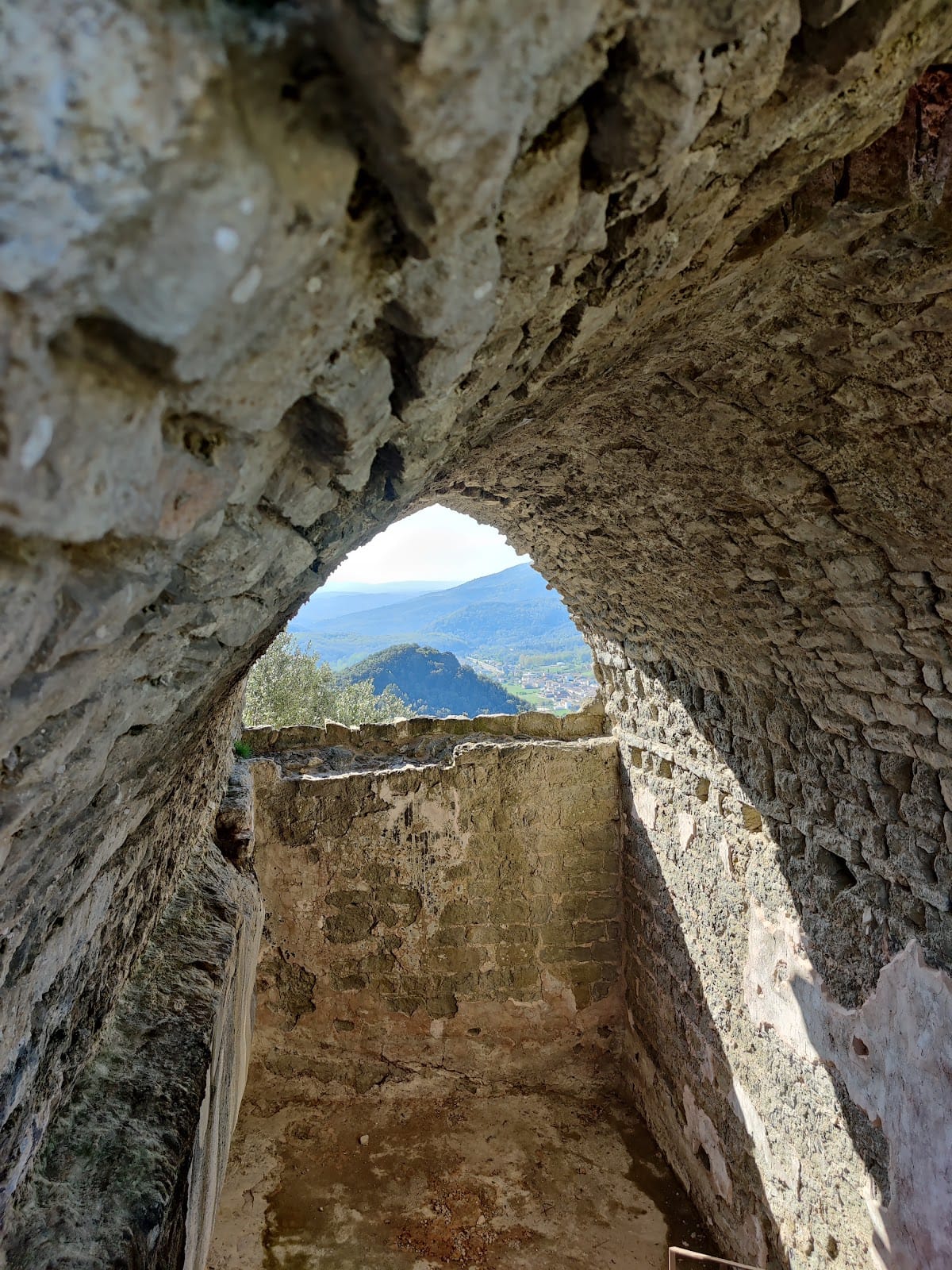
Below the main fortress, approximately ten meters downhill, lies the third enclosure dating to the 14th or 15th centuries. This section was built to block passage, effectively controlling access through the area, and formed a courtyard. Adjacent to this enclosure is a large cistern with a pointed stone vault that remains partially preserved despite some ruin. Ingeniously, the cistern’s water supply depended on the natural slope, allowing water to enter through a side opening and fill the reservoir by gravity, ensuring the castle’s inhabitants had a dependable source of water even during sieges.
While historical records mention a chapel dedicated to Saint Guerau within the castle grounds, its remains have not yet been identified through archaeological efforts. The combination of natural defensive advantages, evolving architectural features, and evidence of prolonged occupation reflects the castle of Hostoles’ significant role in the medieval landscape of Catalonia.
Nearby sites