Castello di Villincino: A Medieval Castle in Erba, Italy


Site at a Glance
- Rating
- 4.5
- Popularity
- Low
- Country
- Italy
- Primary era
- Medieval
- Eras represented
- Medieval
- Civilizations
- Holy Roman Empire
- Site type
- Military
- Remains
- Castle
On this page10 sections
History
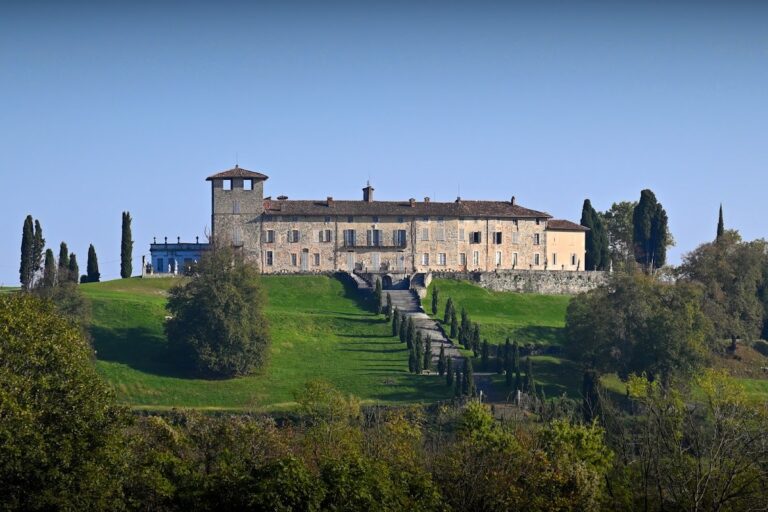
Castello di Villincino is a medieval castle in Italy, in the center of Erba. In the tenth century, it functioned as a military castellum, a fortified stronghold, defending the territory against Hungarian raids. Its surviving remains belong mainly to the thirteenth and fourteenth centuries.
Early and Communal Periods
During the communal period, when northern Italian cities governed themselves through communes and competed for regional political and military influence, the castle may have served as a logistical base in disputes between Como and Milan. It may also have played such a role during the Battle of Carcano.
The castle originally belonged to the Carpani family. The family’s last descendant lived in a nearby house that remains known as the Stallazzo.
Abandonment and Later Use
Castello di Villincino was abandoned after the Battle of Desio. In the sixteenth century, the former castle became a religious residence. In 1810, it was sold at auction to a member of the Casati family.
Remains
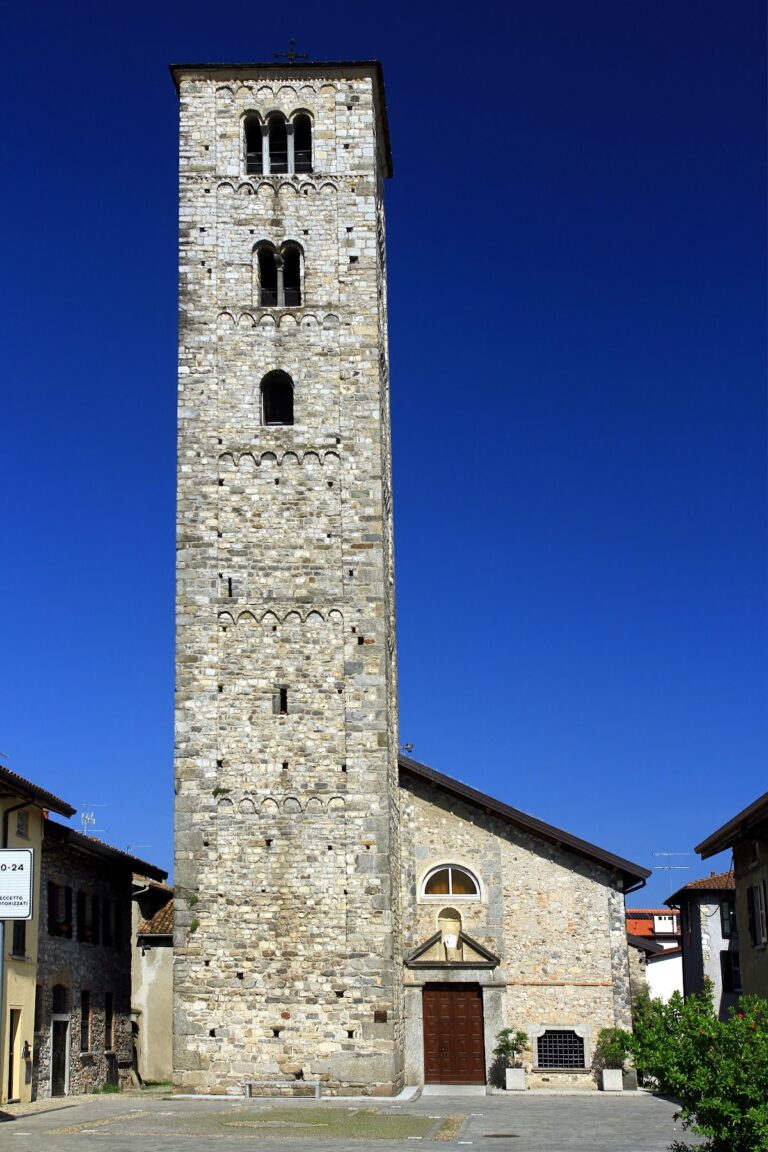
The surviving portions of Castello di Villincino are arranged around medieval structures and features built in exposed stone and other durable materials. They include an ancient entrance, the tower called the Pusterla, a former tax collector’s house, and a late fourteenth-century portico near the Stallazzo.
Castle Structures
Ancient Portal
An ancient portal with a closed vault survives among the castle remains. Above it is a bifora, a two-part window divided by a small central column. The column is made of Candoglia marble, a distinctive marble quarried in northern Italy.
The Pusterla Tower
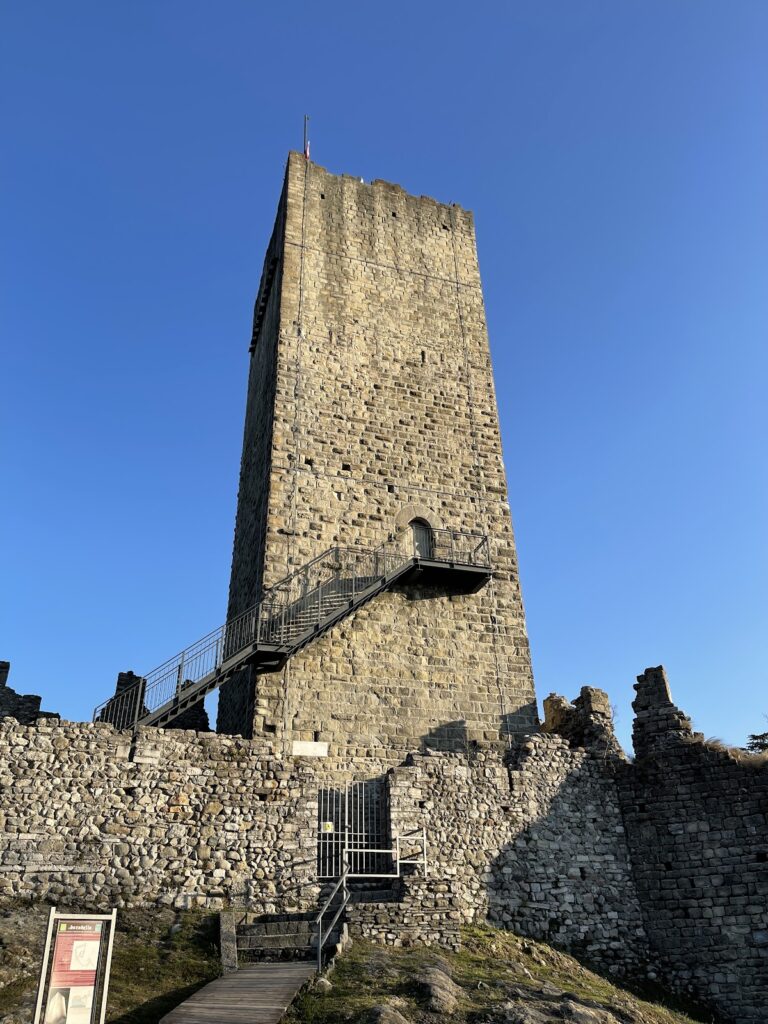
The Pusterla, a name associated with a small secondary or postern gate, is a well-preserved tower built of exposed stone. It has small pointed-arch windows, whose two curves meet at an apex, together with a granite portal and a rustic loggia, a roofed open-sided gallery or balcony.
Former Tax Collector’s House
A building that formerly served as the tax collector’s house stands near the Pusterla. Its position forms part of the surviving group of structures associated with the medieval castle.
Portico near the Stallazzo
Near the Stallazzo is a portico with pointed arches dating from the end of the fourteenth century. The structure preserves a later medieval architectural feature within the area historically connected with the castle and the Carpani family.
Archaeological Find
A fork dating from the Early Middle Ages was found near the Pusterla. It is preserved in the Civic Museum of Erba, where it provides material evidence connected with the early history of the site.