Alessandro Volta Classical and Scientific Lyceum: A State School in Como
Site at a Glance
- Popularity
- Medium
- Country
- Italy
- Primary era
- Modern
- Eras represented
- Medieval, Early Modern, Modern
- Civilizations
- Austrian Empire, Duchy of Milan, Habsburg, Spanish
- Site type
- Civic
- Remains
- School
On this page13 sections
History
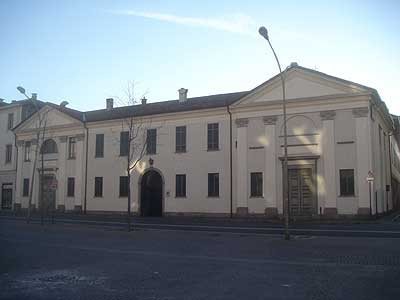
The Alessandro Volta Classical and Scientific Lyceum is a state school in Como, Italy, whose institutional history dates to 1773. It occupies a neoclassical complex that began as a monastery around 1250, and today offers classical and scientific courses. The school is also associated with the physicist Alessandro Volta, who taught in Como from 1774 to 1778.
Monastery and church
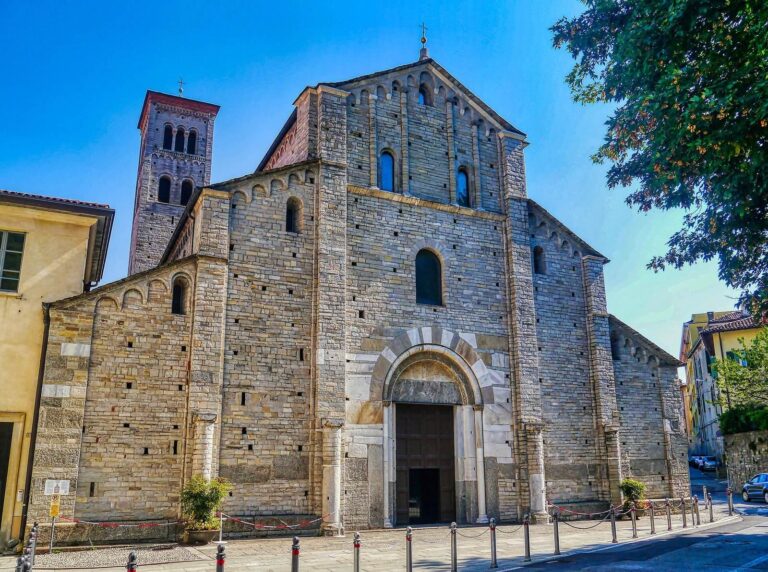
The original building was a monastery of Augustinian nuns, whose religious life followed the Rule of Saint Augustine. Dedicated to Saint Cecilia, it included a cloister, a secluded religious enclosure and its covered walkway. By about 1270, the monastery had reached its greatest extent, with support from the Lucini family of Como and Bishop Leone Lambertenghi. The community was associated with a purported relic of the Holy Cross, an object revered for its connection to a sacred event. The relic was especially venerated by residents of Viggiù.
A Jesuit-run college had operated in Como since 1561 at the site now numbered 12 Via Lambertenghi. The monastery itself remained largely unchanged until alterations began in the late sixteenth century. In 1573, its church was rebuilt north of the medieval church. The new building took five years to complete under Bernardo Folla of Osteno, and the painter Giovanni Battista Recchi worked on its façade during the seventeenth century.
From convent to school
The Jesuit order was suppressed in 1773. Volta served as professor of physics and regent of all the city’s schools from 1774 to 1778. In 1798, the convent of Santa Cecilia was suppressed, and its former premises became the Royal Gymnasium of Como, a school for classical secondary education. A lyceum, an academically oriented secondary school preparing pupils for further study, opened in 1803. From 1810 it was called the Lario Departmental Lyceum and was headed by Professor Giuseppe Abbiati.
Plans to adapt the former monastery began in 1804 under the direction of Simone Cantoni, a Ticinese neoclassical architect. The planned expenditure was cut in 1805 because of wartime needs. In 1809, Cantoni was commissioned to convert the complex for a school and cultural institutions. A library for the Major Seminary followed in 1811, bringing together the collections of the College of Doctors and the College of the Gesù. Cantoni designed a new façade in 1816 or 1817. After his death in 1818, Biagio Magistretti took over the unfinished work, which was completed in 1824. Cantoni had begun alterations to the western part of the inner cloister, and Magistretti changed its northern section in 1820.
Reorganization and the Volta name
After Lombardy returned to Austrian rule, the gymnasium was reorganized in 1818 and the lyceum in 1824–25. Together, the courses lasted eight years. Greek was taught for three or four years in the gymnasium and was optional in the lyceum. Each school initially had its own head, a prefect for the gymnasium and a director for the lyceum.
The two schools were united under one director in 1851. The institution had previously been named for Pliny the Elder; in 1865 it took the name of Volta. The 1923 Gentile reform, an Italian education reform, doubled the number of gymnasium classes. In the late twentieth century, a fire in the church disabled the mechanism that operated its bells.
Remains
The complex brings together a neoclassical school building, the Church of Santa Cecilia, school rooms and a small museum. Its layout includes an entrance atrium, a passage through the cloister portico and a church entered from the portico along its façade.
School building
Façade
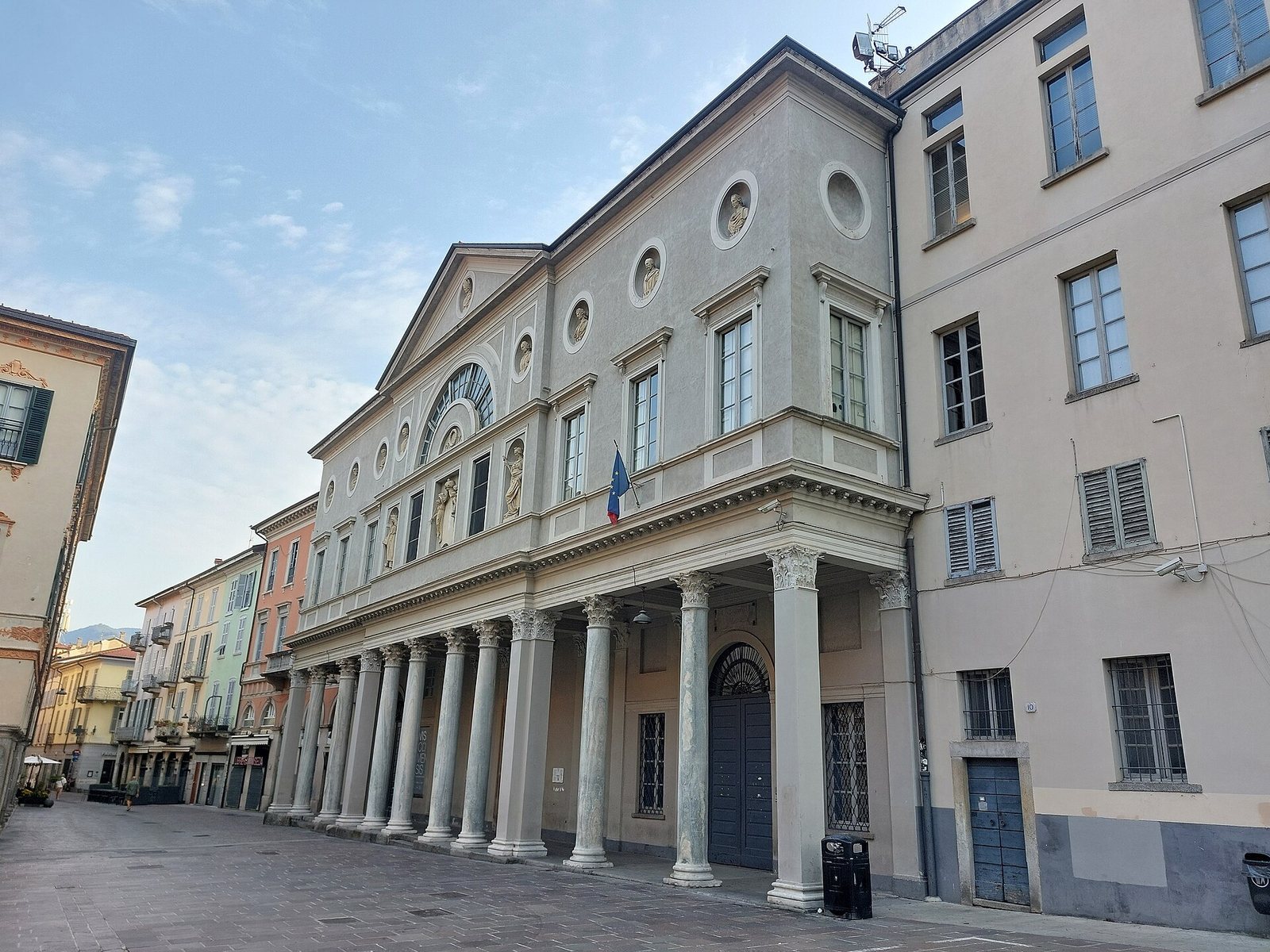
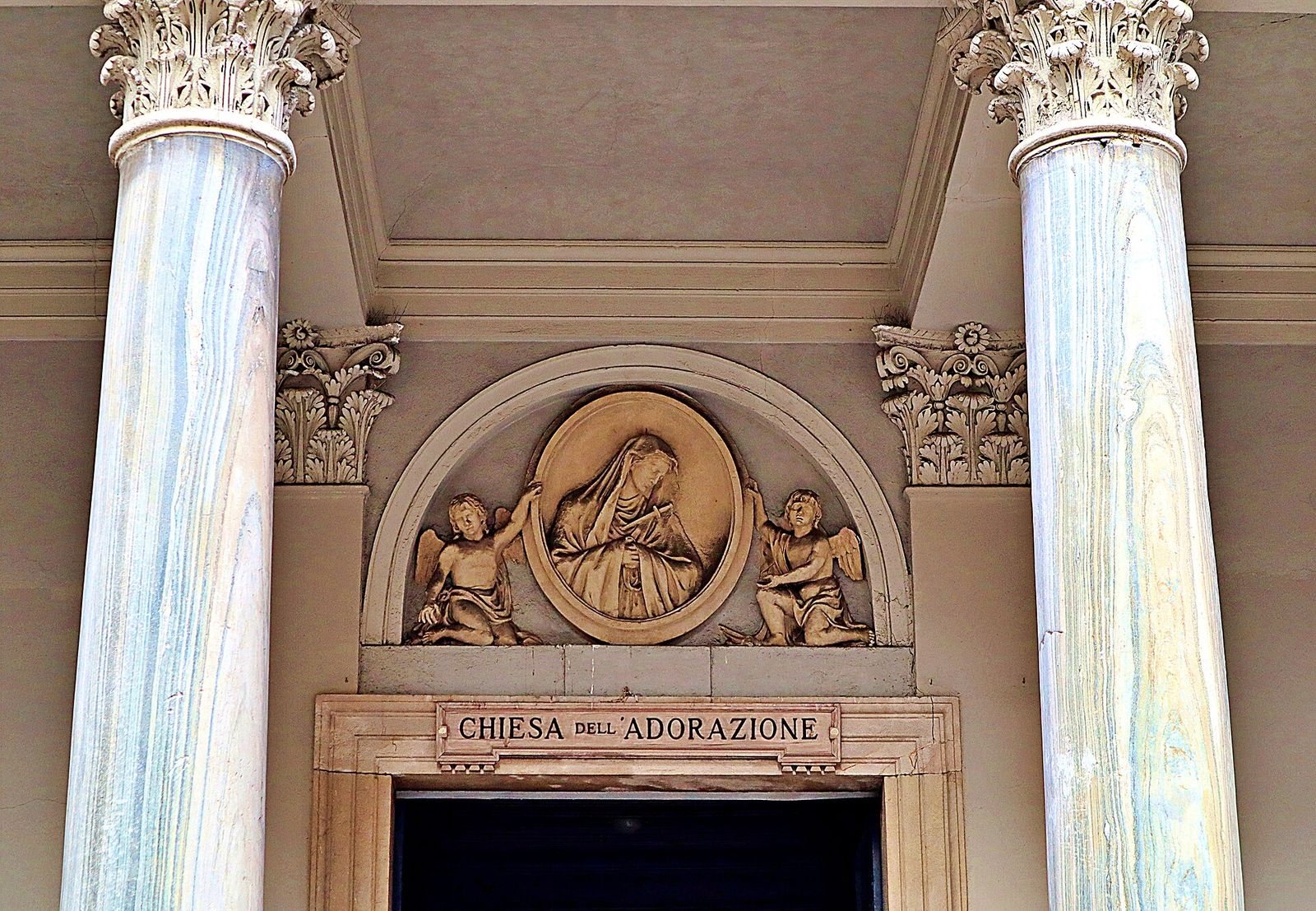
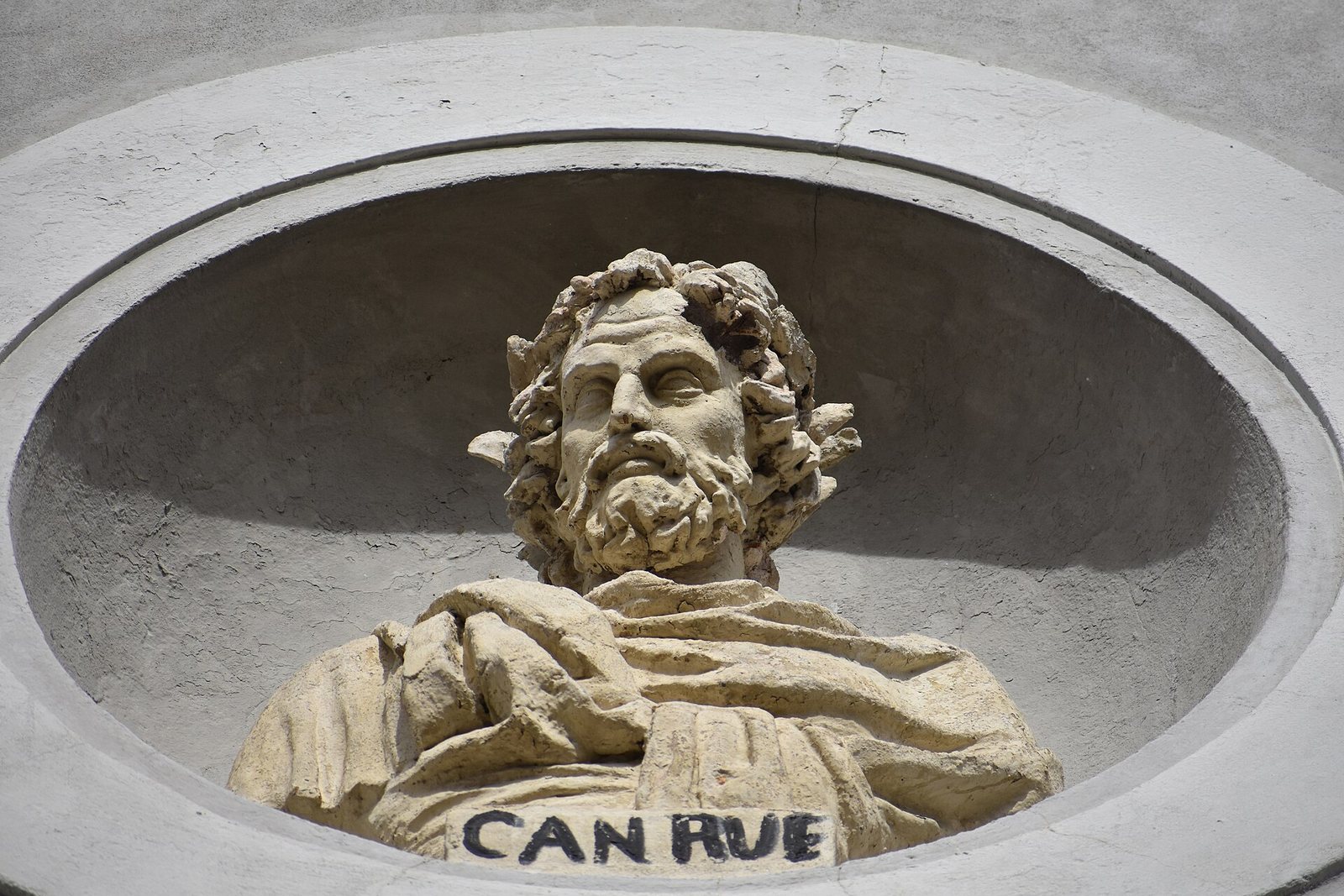
The neoclassical façade revives forms associated with ancient Greek and Roman architecture. Its eight cipollino marble columns, a veined stone, have bases and capitals in the Corinthian style. The columns were taken from the Baptistery of San Giovanni in Atrio. Busts on the upper façade represent Caecilius, Caninius Rufus and Gaius Plinius Secundus, known as Pliny the Elder, on the left; on the right are Gaius Plinius Caecilius, known as Pliny the Younger, Paolo Giovio and Carlo Castone della Torre di Rezzonico. Saint Abundius appears in the central pediment. Below are figures of Popes Innocent XI and Clement XIII, alongside full-length personifications of Religion and Philosophy.
Atrium and circulation
In the atrium, a Carrara-marble bust of Volta stands on a fluted column drum above a tall rectangular plinth. Gaetano Monti sculpted it in 1834 to Magistretti’s design. It occupies a panel in the church’s outer wall, where the original plan called for a niche. Opposite, a bronze group installed in 1923 commemorates former pupils killed in the First World War. A glazed door aligned with the entrance frames the continuation through the cloister portico. Cantoni conceived the passage as a sightline toward a further exit onto the botanical garden.
Staircase and library
On the atrium’s left, a staircase rises beneath a barrel vault, a continuous tunnel-shaped ceiling. A granite column introduces the stair, while a short grey Viggiù-stone balustrade runs beside the steps, which are made of the same stone. The stair is enclosed by a wall and the church’s retaining wall. Its design uses a column below, a landing midway and a window above. Cantoni placed the window in line with the staircase rather than the courtyard bay; Magistretti later shifted it out of that alignment to regularize the courtyard elevation. On the first floor, a former physics classroom near the principal’s office serves as the school library.
Church of Santa Cecilia
Interior and altars
Also known as the Church of the Holy Cross, the church occupies the part of the convent set aside for worshippers from outside the enclosure. Two small niches beside the present altar allowed the nuns to receive communion. The high altar carries an altarpiece transferred from the former Church of Saint Mary of the Seven Sorrows, once located at the nearby outer fortification of Porta Torre. It replaced a 1606 painting by Orazio Gentileschi of Saint Cecilia with Saints Valerian and Tiburtius. That painting is now in the Brera Art Gallery in Milan.
Paintings and decoration
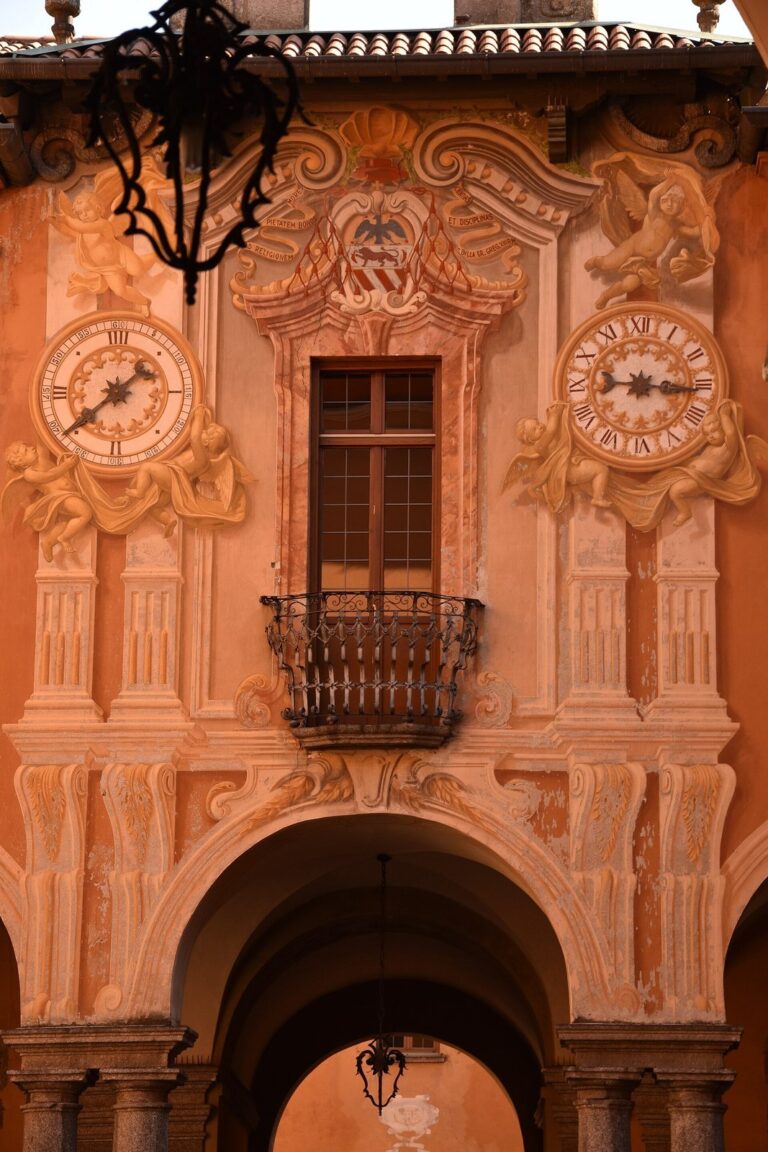
The church contains a Baroque painting of Saint Ambrose and a sixteenth-century crucifix made of papier-mâché. Filippo Abbiati’s Presentation at the Temple, painted around 1690, is also kept here; he made a series of paintings on Marian subjects. Francesco Innocenzo Torriani painted a Crucifixion around 1690 and also created an Annunciation. Frescoes by Andrea Lanzani and stuccoes made by Gian Battista Barberini in 1688 decorate the interior. Lanzani’s Triumph of the Cross and Triumph of Saint Cecilia are on the vault. A bronze Pietà, made in 1968 by the sculptor Tavani, is set into the front of the altar table.
Bell tower
The bell tower stands behind the church. Its bells have been housed there since 1950.