Castello di Arco: A Medieval Fortress in Italy
Site at a Glance
- Rating
- 4.6
- Popularity
- Medium
- Country
- Italy
- Primary era
- Medieval
- External website
- Open
- Eras represented
- Medieval
- Civilizations
- Holy Roman Empire
- Site type
- Military
- Remains
- Castle
On this page16 sections
History
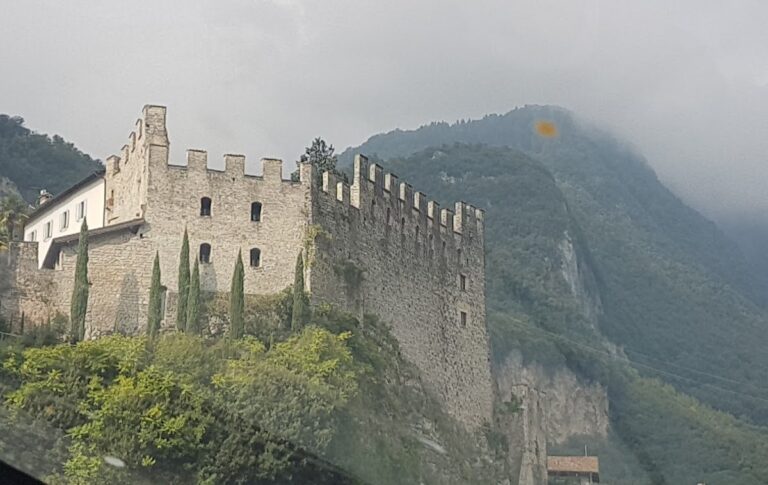
Castello di Arco is a medieval fortress in Italy, standing above the town of Arco on a steep rocky spur. Local free nobles established it as a fortress around 1000, although the rock had already served as a refuge for tribes from about 300 BC. The castle controlled the narrow Sarca valley, one of the land approaches to the northern shore of Lake Garda, and helped shape the settlement that developed below it.
Origins and noble rule
The first written references to the castle date from the twelfth century. A settlement grew west and south of the rock, forming the origin of the later town of Arco. The noble family of Arco eventually became the castle’s sole proprietor, while the fortress developed as both a defensive stronghold and the centre of local lordship.
In 1196, Federico d’Arco declared the castle an allodial possession, meaning that it was held as free property rather than as a fief dependent on a superior lord, for the inhabitants of Arco. In 1253, Riprando d’Arco transferred the upper section, called the Old Castle, to Ezzelino III da Romano, a powerful Ghibelline lord. The Ghibellines supported the imperial faction in the political struggles between the Holy Roman Emperor and the papacy. Ezzelino later passed the upper castle to Sodigerio da Tito, the podesta of Trento, a medieval civic official appointed to govern a town.
After the Arco family recognized the feudal authority of Meinhard II, the ruling lord of Tyrol, in 1272, the Counts of Arco recovered the castle. During later medieval conflicts, the lords of Seiano and Lodron and troops of the Republic of Venice besieged the fortress. Attacks and temporary conquests affected the settlement below, but the castle remained in the hands of its defenders and gained a reputation for being impregnable.
Conflict and transformation
In 1349, the bishop of Trento expelled the Arco family and granted the castle as a fief to the Scaligeri, the ruling dynasty of Verona during much of the thirteenth and fourteenth centuries. An uprising drove out the Veronese garrison, allowing Count Niccolò d’Arco to regain control.
Albrecht Dürer painted Castello di Arco in a watercolor in 1495. The image presents the complex as a small fortified village, reflecting the combination of defensive works and inhabited buildings that occupied the summit. A major fire caused serious damage in 1542. In July 1579, Ferdinand II, the Habsburg Archduke of Tyrol, occupied Castello di Arco and Castel Penede at Nago with his troops. The burgraves of Arco returned in 1614, after the feud ended and they accepted the archduke’s overlordship.
From 1665 to 1675, Stefano Voltolino directed extensive restoration and alteration works. In 1680, Emperor Leopold I deprived the Counts of Arco of their authority. The family later divided into branches based in Bavaria and in Arco and Mantua, while ownership of the castle remained shared between them.
Decline and preservation
During the War of the Spanish Succession, a conflict over the Spanish monarchy that involved several European powers, the French army commanded by Louis Joseph de Bourbon, Duke of Vendôme, occupied the lower Sarca valley and besieged Arco. After heavy bombardment, the garrison surrendered in August 1703. The castle then entered a rapid decline. Residents of the settlement below partly quarried it for stone to repair houses damaged by the bombardment and to construct new ones.
In 1927, Countess Giovanna d’Arco, Marchesa Guidi di Bagno and the last member of the Italian line of the Arco family, bought the castle and became its sole owner. Ownership later passed to the Arco family foundation in Mantua. The Municipality of Arco acquired the castle and other foundation properties in 1982, after which the ruins became a municipal museum.
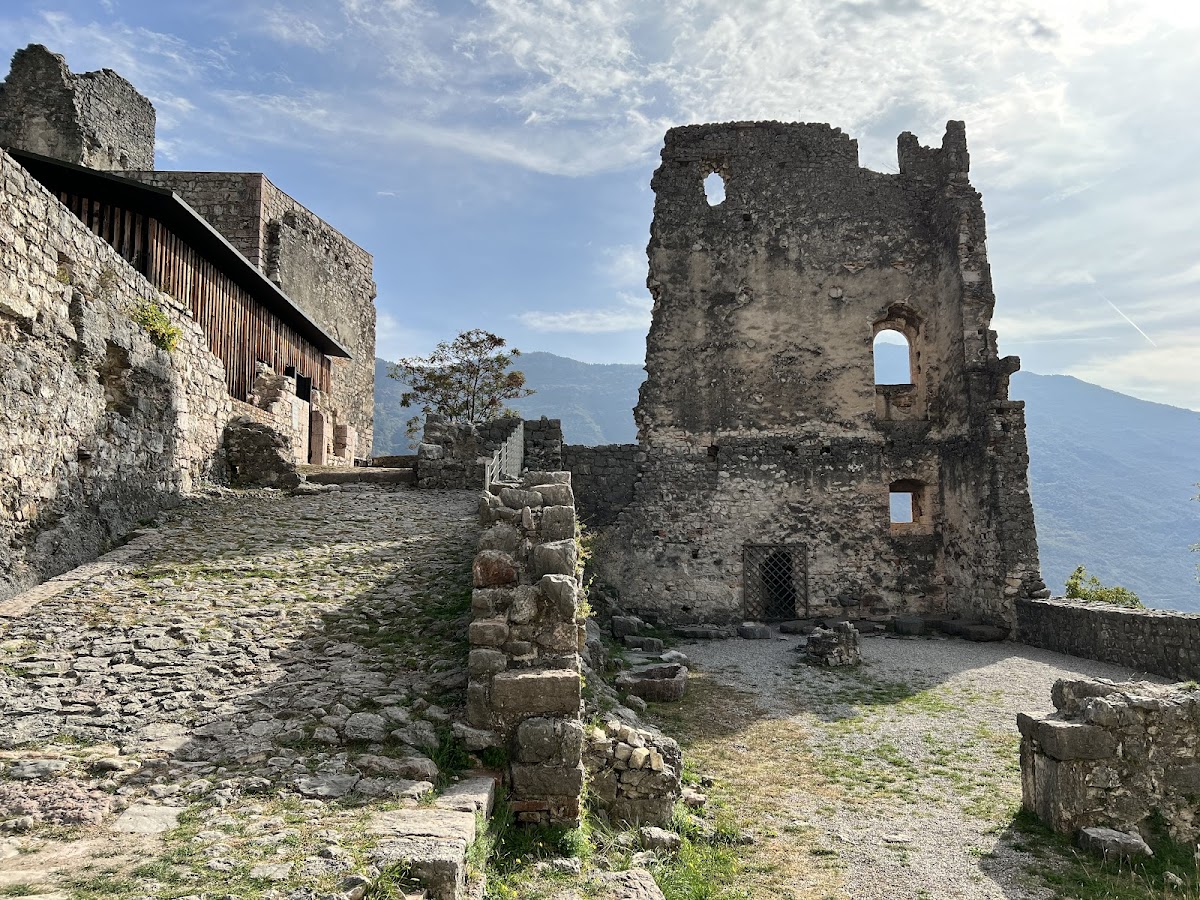
Beginning in 1986, the cultural-heritage authority of the Province of Trento undertook extensive stabilization and restoration. The work secured the principal towers, consolidated the circuit of walls, exposed the old tournament ground and castle road, and revealed the remains of two former buildings and two cisterns. Frescoes in one of the buildings were uncovered and restored, adding evidence of the castle’s courtly life to the surviving military remains.
Remains
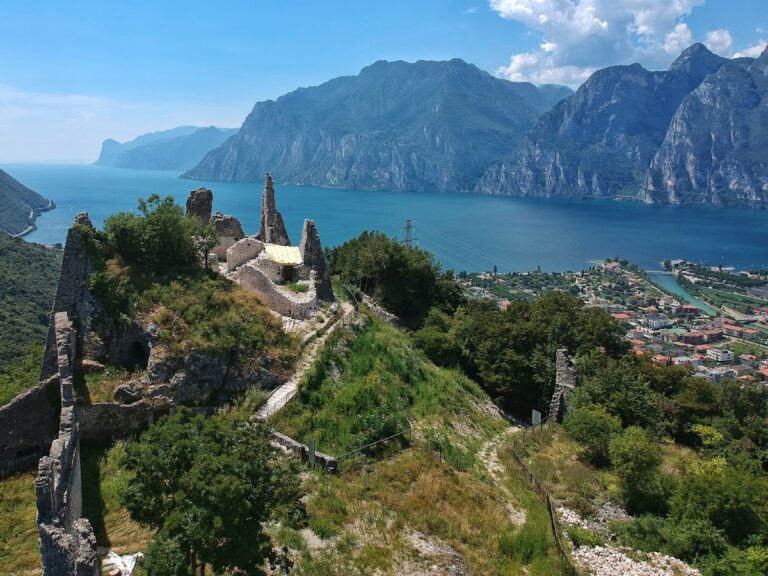
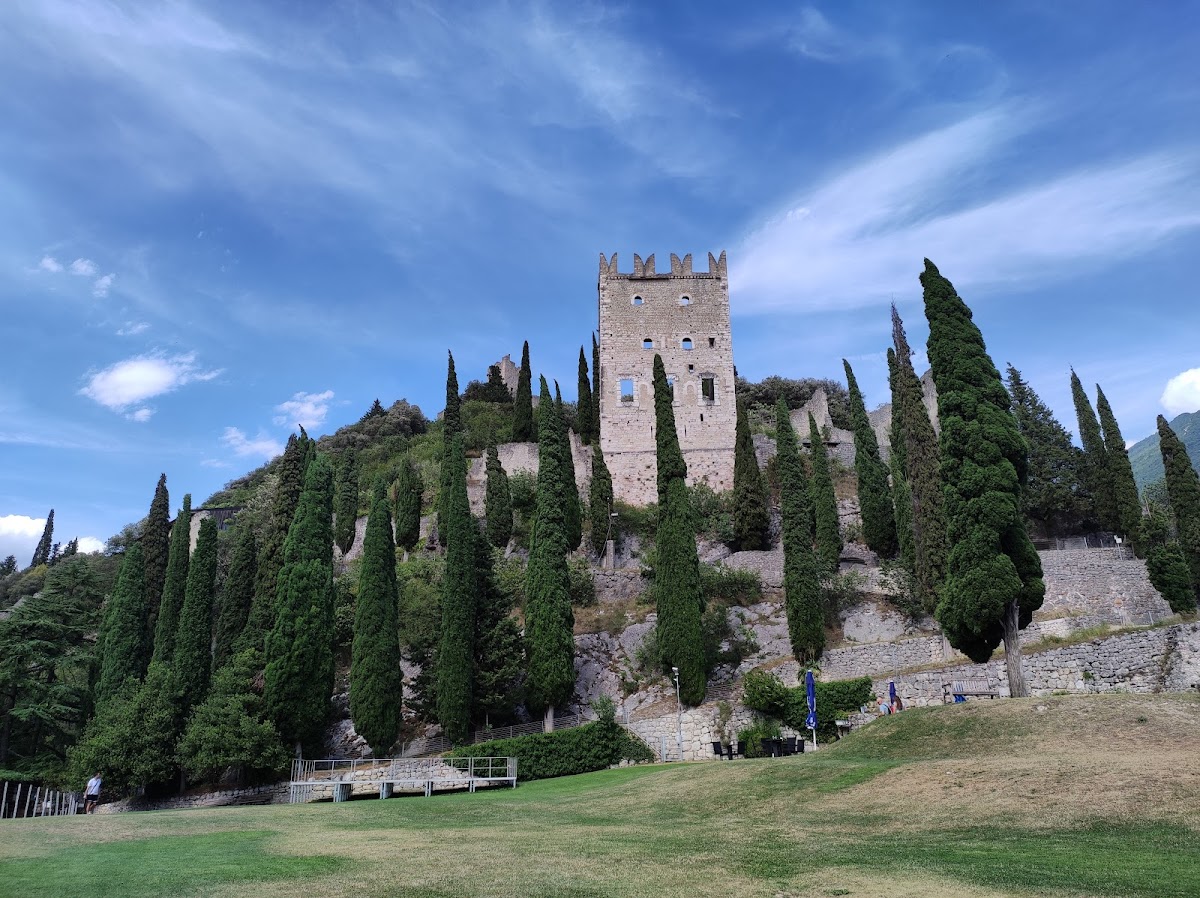
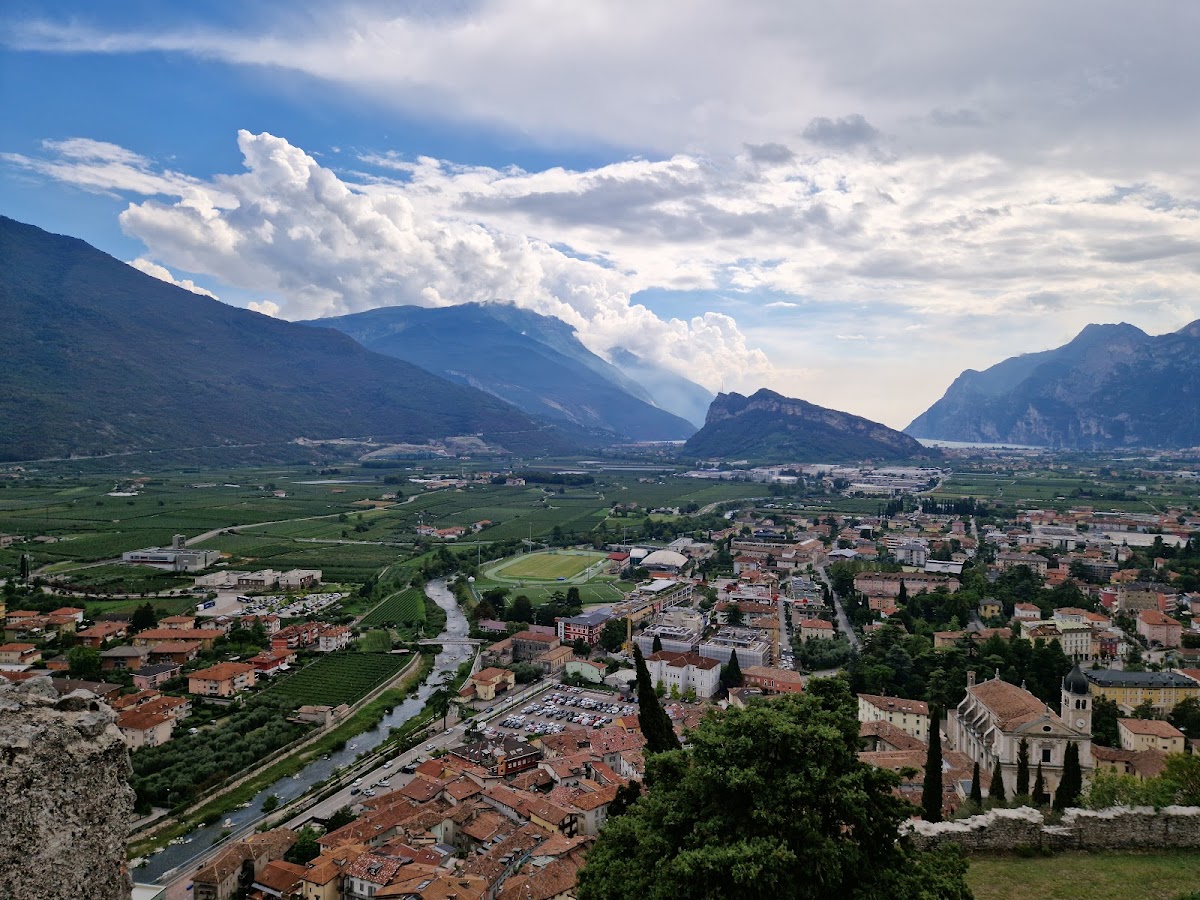
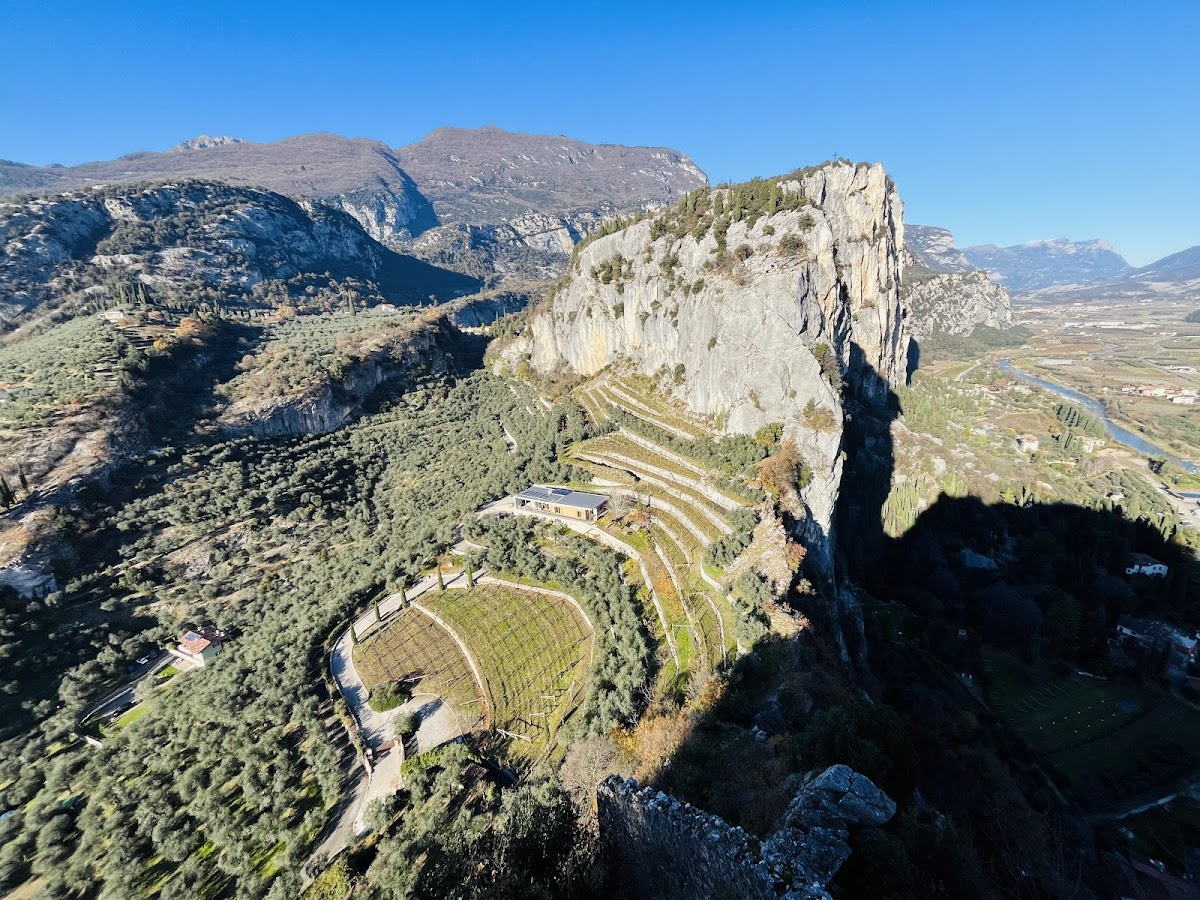
Castello di Arco occupies the summit of a steep rocky spur above the Sarca plain and the town of Arco. The complex of buildings and fortifications covers more than 23,000 square metres. The rock rises above the valley and drops more than 100 metres almost vertically toward it, while a lower saddle separates it from Mount Colodri to the north. The historic town lies at the foot of the rock, and the castle walls may formerly have formed one defensive system with the fortifications of the settlement.
Walls and defensive works
The Rivellino
The southern and western sides contain the principal artificial defenses, because the other slopes were protected by the natural steepness of the rock. Walls up to 10 metres high and 2 metres thick descend toward the south in two defensive lines, guarding the castle against attacks from the west and south. This fortified system is also known as the Rivellino, a detached or projecting defensive work associated with a fortification.
Guarda di Mezzo
The western corner of the fortifications was occupied by the Guarda di Mezzo, a larger observation tower. The northwestern side of the castle is associated with a small holm-oak woodland, which forms part of the surviving setting of the ruin.
Towers and prison
The Main Tower
The Main Tower is probably a Romanesque building dating from around 1300. Romanesque architecture is a medieval European style marked by heavy masonry, rounded arches, and massive forms. The tower’s surviving battlements reflect a building tradition characteristic of northern Italy. It had three storeys and probably served as a residential tower. Its outer walls survive apart from the northern wall.
The Renghera Tower
The Renghera Tower is the oldest tower in the castle and served as its keep, the principal fortified tower. It stands at the highest point of the rock, with the remains of an earlier structure visible at its base. The entrance is about 7 metres above ground and could be reached only by a wooden ladder. A bell called the Renga warned both the castle and the town when danger approached.
The Laghel Watchtower
The square masonry Laghel Watchtower marks the northernmost point of the castle. Built for practical defensive purposes, it remains relatively well preserved.
The Rock Prison
The Rock Prison occupies an artificially enlarged cave in the lower part of the castle. Its lower side was created by filling a fissure in the rock. A small window provided the opening, while two doors once closed the prison. The final door included a hatch through which food or other necessities could be passed to the prisoner.
Excavated buildings and water supply
Cisterns and castle road
Two large cisterns supplied water during sieges, avoiding the more difficult construction of a well. Archaeological work exposed these reservoirs together with the old castle road and the former tournament ground, helping clarify how the fortified summit was organized.
Frescoed building
Excavations also revealed the remains of two former buildings. One contains a restored fourteenth-century fresco cycle with courtly scenes. The paintings show ladies and knights playing dice and chess, Saint George killing the dragon, the investiture of a knight, and a woman weaving garlands of roses. Saint George was a Christian martyr traditionally associated with the legend of killing a dragon. The frescoes preserve evidence of the aristocratic activities and religious imagery once present within the castle complex.
Nearby sites