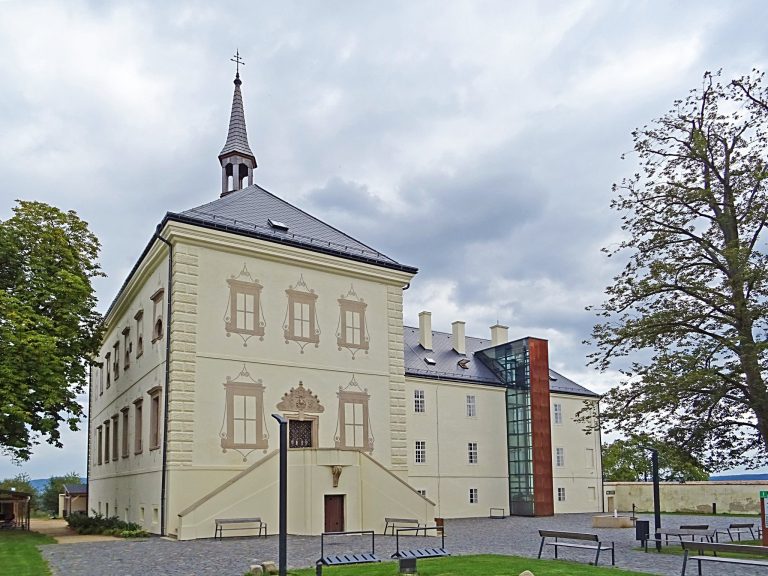
Zásadka Castle: A Medieval and Renaissance Noble Residence in Czechia


Site at a Glance
- Rating
- 4.8
- Popularity
- Low
- Country
- Czechia
- Primary era
- Early Modern
- Eras represented
- Medieval, Early Modern
- Civilizations
- Holy Roman Empire, Kingdom of Bohemia
- Site type
- Domestic
- Remains
- Castle
On this page6 sections
History
Zásadka Castle is a ruined noble residence in Czechia, established in the second half of the fourteenth century on the site of an earlier medieval fortress. Its development combined a medieval Gothic phase, characterized by forms such as pointed arches, with later Renaissance rebuilding based on the revival of classical architectural forms.
Medieval Fortress and Castle
The original small lordly fortress was probably built by one of the knights of Zásadka, either Ješek Ocas of Zásadka or his brother Ješek. The first written reference dates to 1406, when Matěj Pomazánka of Zliv purchased the seat. During the fifteenth century, it belonged to the Čuch family of Navarov and Zásada. After the family fell into debt, the property was sold to Jiří of Poděbrady, the fifteenth-century king of Bohemia, in 1452.
In the late fifteenth century, under Frycek of Daliměřice, the residence was recorded as Nová Zásadka. It had apparently been rebuilt after a change of ownership and was then identified as a castle. By 1520, under Jan Hrzán of Harasov, the seat was described as dilapidated. A similar condition was noted in 1539 under Petr Samšinský of Samšina.
Renaissance Rebuilding and Decline
Zikmund Vančura of Řehnice purchased Zásadka in 1560 and subsequently rebuilt it as a Renaissance chateau. Václav Budovec of Budov acquired the seat in 1604 and carried out further building alterations in the early seventeenth century.
After a rapid succession of owners, the Valdštejn family acquired Zásadka permanently at the end of the seventeenth century and incorporated it into the Mnichovo Hradiště estate. The Valdštejns were a prominent Bohemian noble family whose estates included this domain. Under their ownership, the local economy gradually declined.
The chateau remained in use until the beginning of the nineteenth century, when only the estate gamekeeper lived there. A fire damaged the building in 1790, although it still had a roof in 1820. It deteriorated progressively and became a ruin during the second half of the nineteenth century. Zásadka remained in Valdštejn ownership until 1945 and has been designated a cultural monument of the Czech Republic since 1967.
Remains
Promontory and Medieval Defences
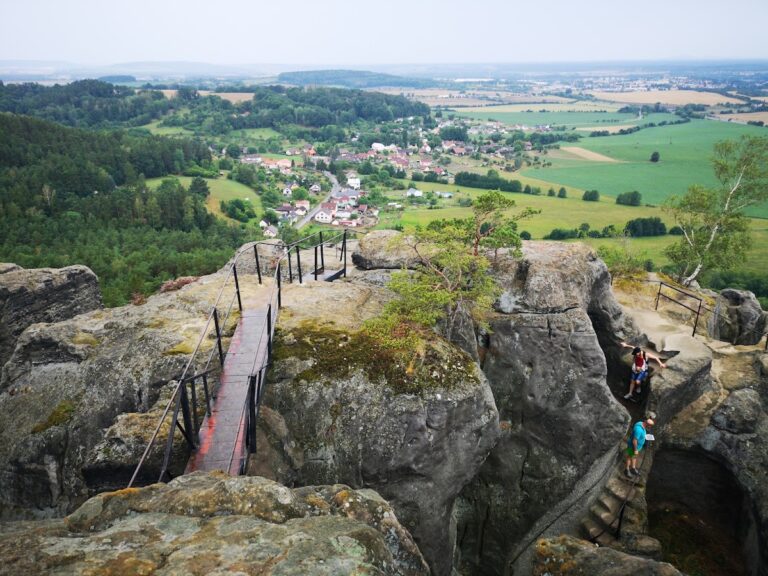
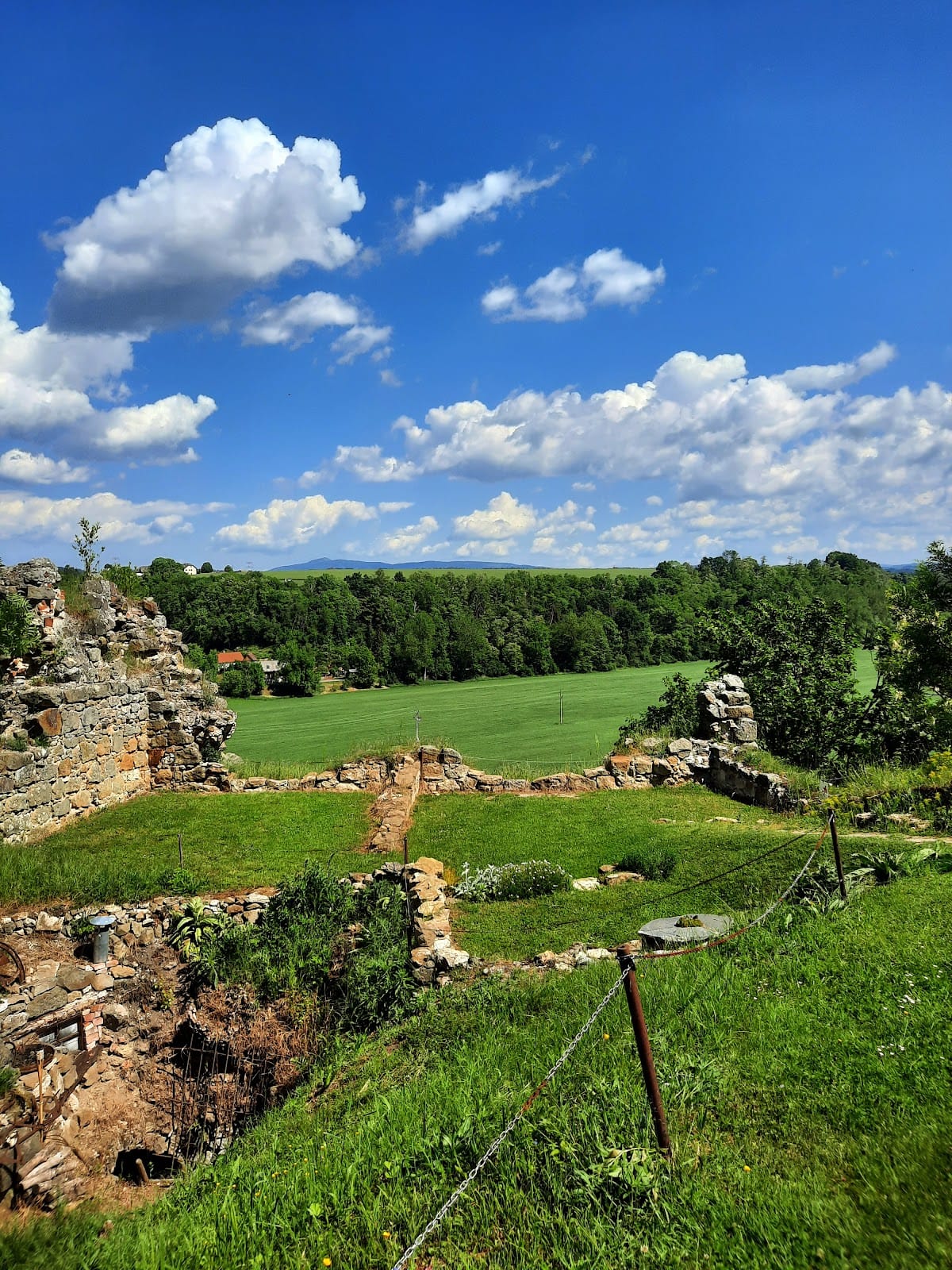
The ruin stands on a promontory on the left bank of the Jizera, above its confluence with the Mohelka, at an elevation of approximately 260 metres. The ground falls steeply toward the river, while ditches protected the front of the later castle. The form of the original Gothic fortress is known through a surviving remnant in the terrain, probably representing a square tower near the southwest corner.
Palaces and Construction Phases
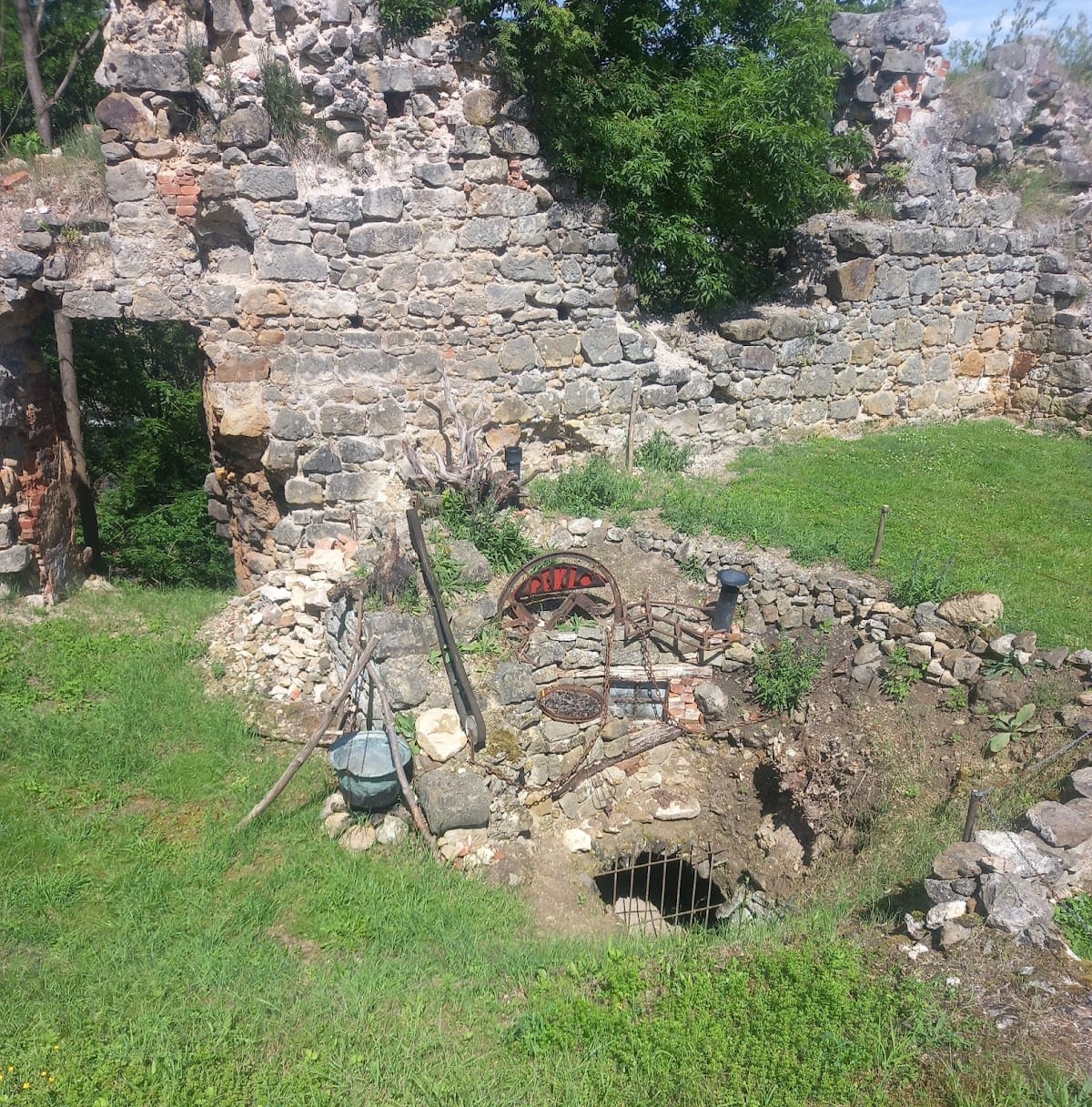
The oldest recognized part of the present ruin is a partly filled-in, two-range palace on the northern side. Its basement rooms have barrel vaults, which are continuous curved vaults covering interior spaces. A large Renaissance palace later occupied the northwest and southwest sides of the complex and adjoined the older perimeter wall. Together, these remains show a noble residence shaped by successive medieval and Renaissance rebuilding.