Castello d’Altaguardia: A Medieval Fortress in Bresimo, Italy
Visitor Information
Google Rating: 4.5
Popularity: Low
Official Website: www.comune.bresimo.tn.it
Country: Italy
Civilization: Medieval European
Site type: Military
Remains: Castle
History
Castello d’Altaguardia is situated in the municipality of Bresimo, in present-day Italy. The site occupies a strategic hilltop position and has roots that trace back to prehistoric times, with evidence of early fortifications later followed by use as a Roman watchtower. The castle itself likely emerged in the 13th century, constructed by a branch of the Livo family, notable landowners in the region who also held the nearby Castello di Livo. The Altaguardia family, descendants of Boninsegna di Livo, were aligned with the Ghibelline faction that supported the Holy Roman Emperor and maintained connections to the Hohenstaufen dynasty.
The first written record of the fortress appears in 1272 under the name “castrum Altavarde.” During this period, the castle played a vital role overseeing travel routes linking the Valle di Bresimo to Ultental and Val di Rabbi, areas important for regional control and defense. Over time, Castello d’Altaguardia became embroiled in the territorial conflicts characteristic of the late medieval period, particularly those involving the Prince-Bishopric of Trento and the Counts of Tyrol.
The Altaguardia lineage presided over the castle until their extinction in 1372. Subsequently, ownership transferred to Antonio di Sant’Ippolito, and by 1420, the Thun family assumed control. The Thun used the fortress primarily to assert authority over the local population. It also served occasionally as a summer residence and provided refuge during plague outbreaks. In 1407, the castle came under attack during an uprising led by Rodolfo Belenzani. It was set on fire but was rebuilt despite imperial commands forbidding reconstruction, signaling its continued strategic and symbolic importance.
In 1461, Emperor Frederick III elevated Simon von Thun with the authority of high jurisdiction, enabling him to establish a court and even an execution site within the castle grounds. However, the castle suffered a significant destructive fire around the mid-17th century. Efforts to restore it proceeded slowly and were still incomplete by 1708. The chapel dedicated to Saints Fabian and Sebastian remained in use until 1780. Afterward, the castle went into decline and was fully abandoned by 1852.
Ownership eventually passed from the Thun family to the municipality of Bresimo in the late 19th century. In recent years, restoration projects undertaken by the Province of Trento have focused on stabilizing the remaining walls to protect the site from further deterioration.
Remains
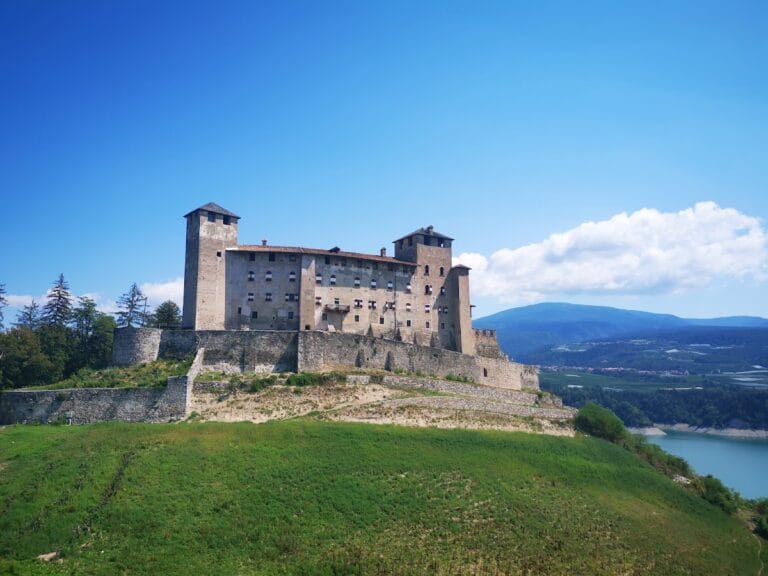
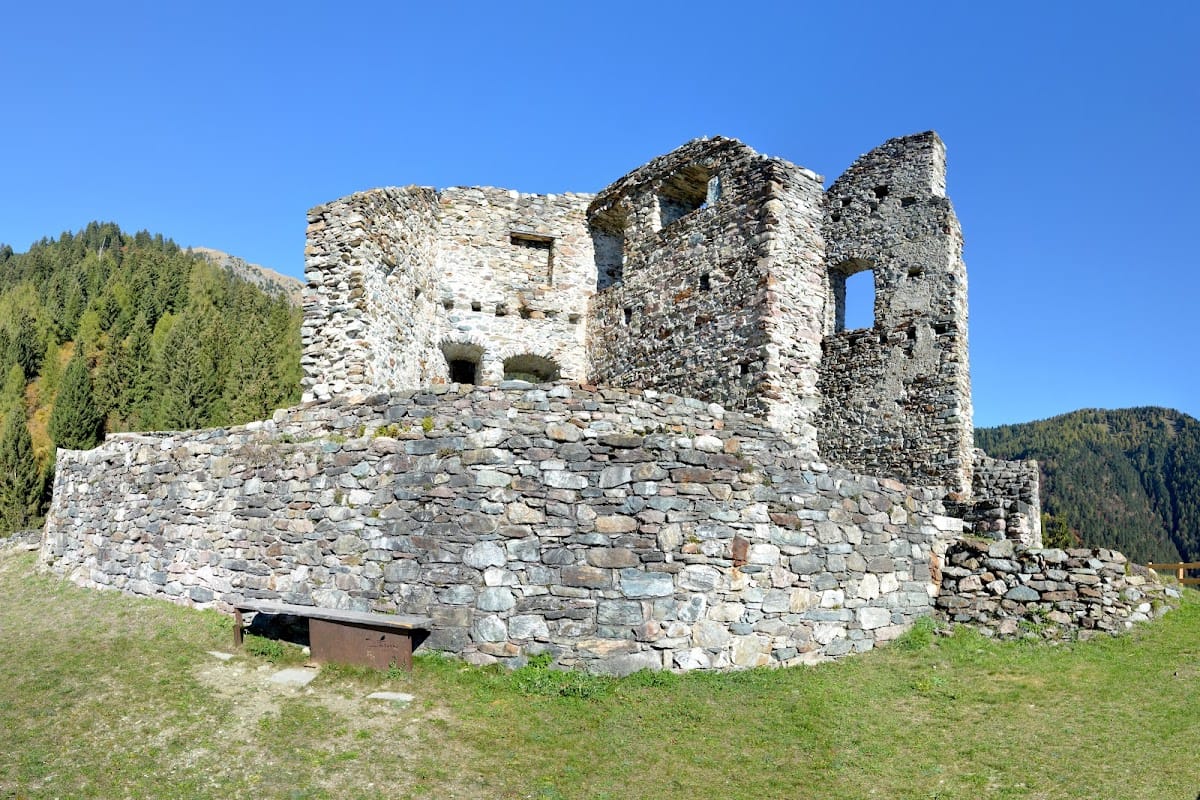
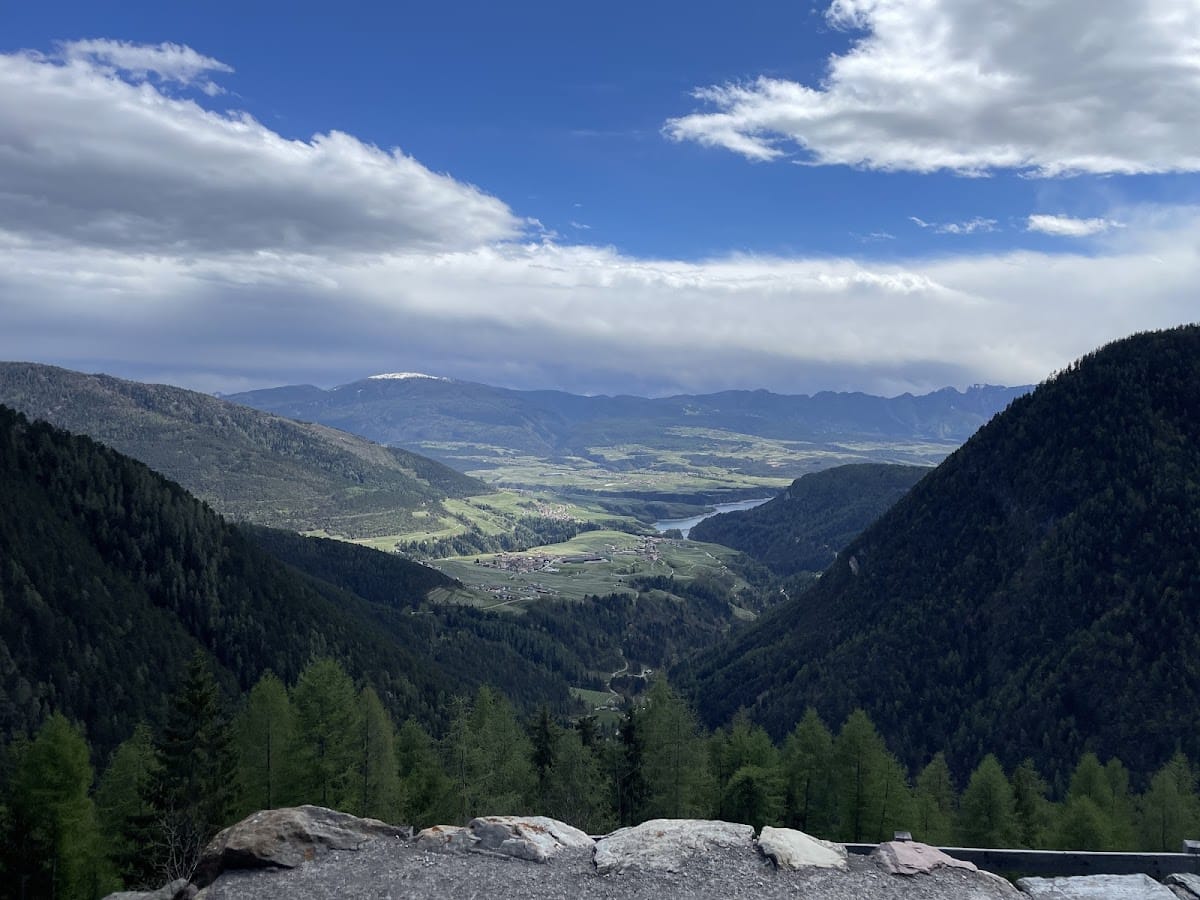
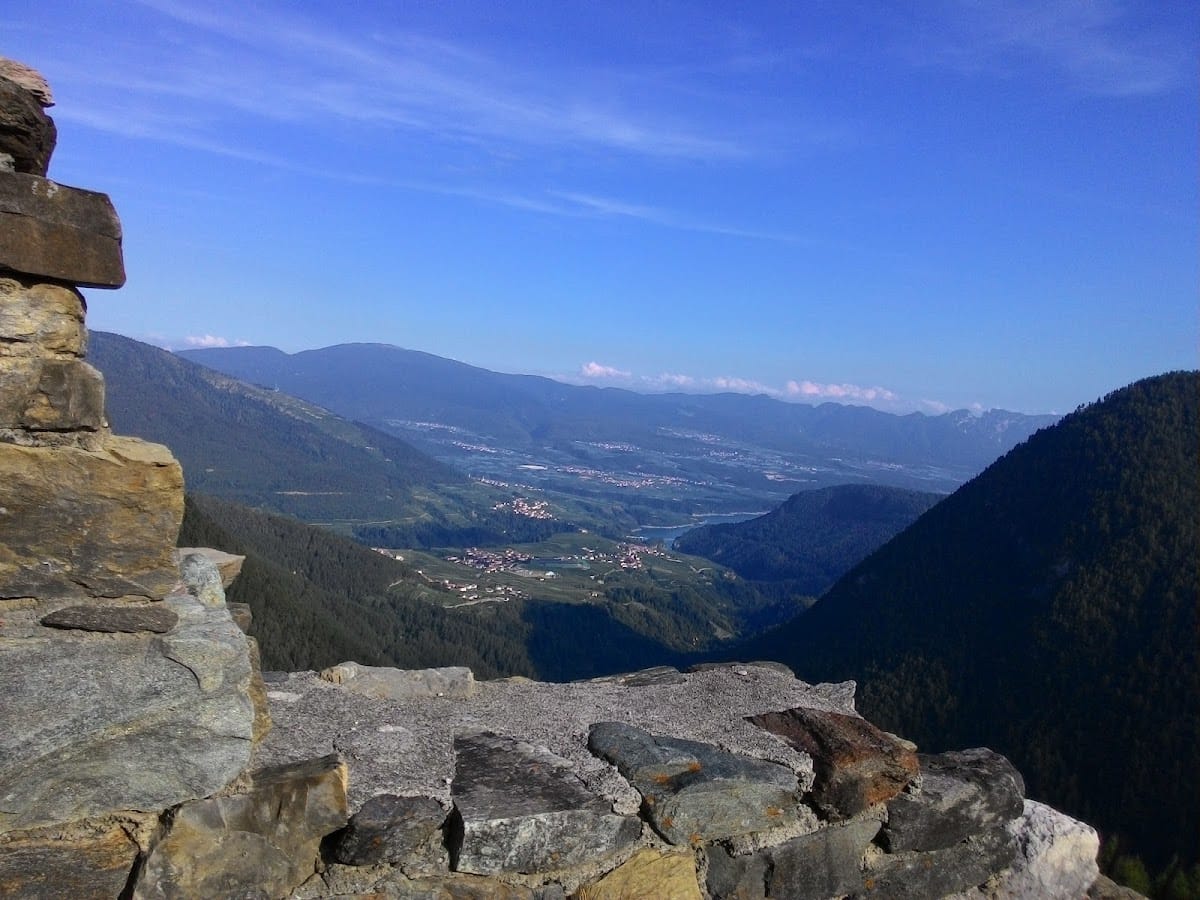
Castello d’Altaguardia is arranged as an elliptical ringwork, an enclosed defensive area roughly oriented from north to south. The entire complex covers about 2,250 square meters and includes two additional outbuildings set outside the main enclosure. The position atop a hill provides commanding views over the lower Valle di Bresimo and the Nonstal, reflecting its historic purpose of monitoring key transit routes.
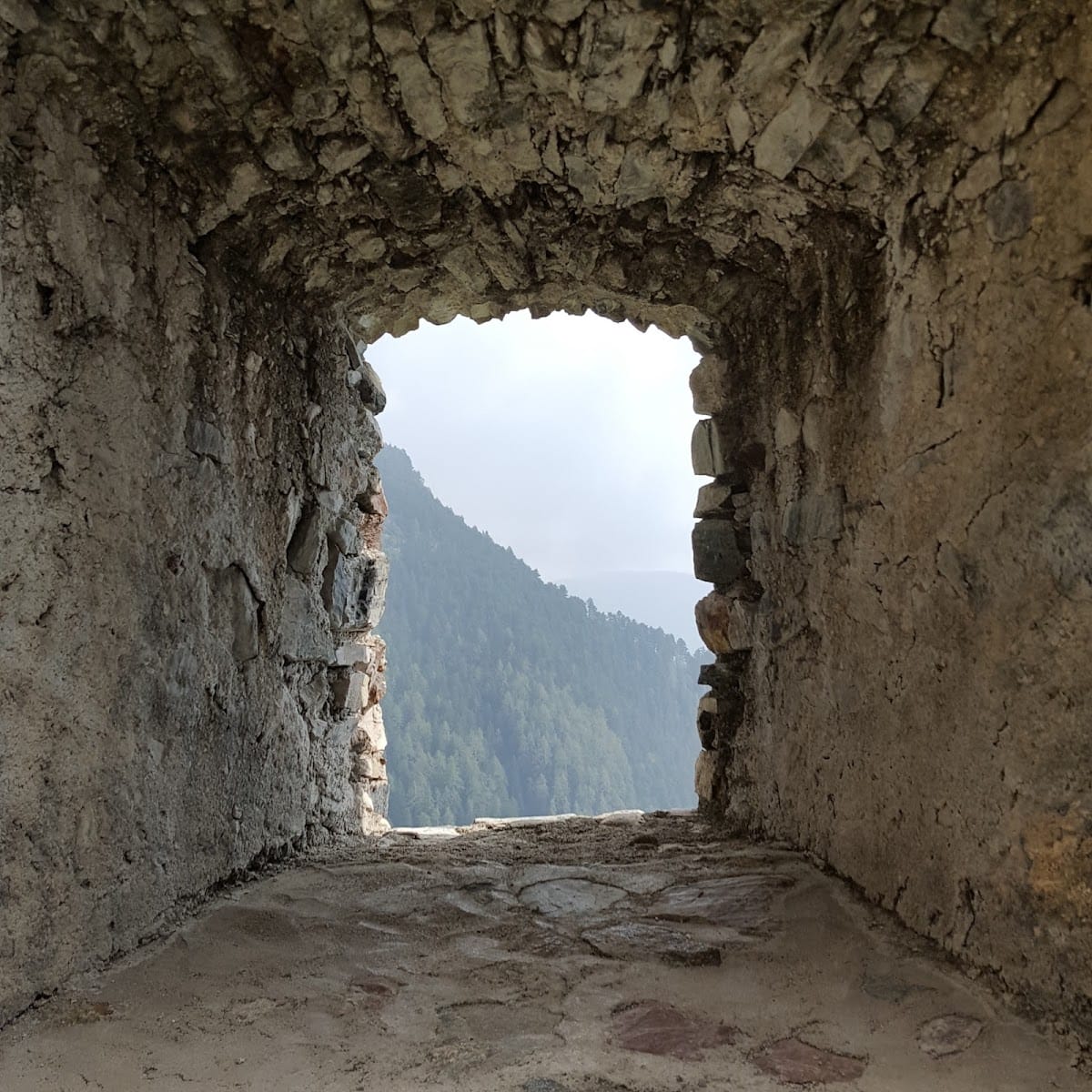
The fortress’s primary defensive structure is a bergfried, a tall tower used chiefly for defense rather than habitation, located on the northern side of the ringwork. It was built using local rubble stone, a method involving roughly shaped stones set in mortar. The bergfried’s walls are notably thick—2.3 meters—and parts of the tower have survived up to a height of seven meters. Its entrance faces south, and it is equipped with embrasures, openings designed for shooting weapons at attackers.
Encircling the bergfried is an inner courtyard that once contained residential and service buildings. On the south side, near the main gate to the ringwork, there is evidence of a probable two-story palas, or great hall, identifiable by square holes once used to hold the beams supporting intermediate floors. Adjacent to this palas, archaeological remains show outlines of economic buildings, including traces of a fireplace, which would have supported cooking and heating functions.
Between the bergfried and the outer ring walls lie rooms that most likely served as storage spaces for supplies or provisions. At the southwest corner of the bergfried, an underground cistern survives in the form of a grated shaft, which would have been used to collect and store water, an essential resource during sieges or dry spells.
The castle is further encircled by several concentric outer walls that are thinner, measuring up to 80 centimeters in thickness, arranged in terraces that step down the hillside. Foundations remain of two square towers on the southern outer wall, and a third tower stands at the zwinger, an enclosed killing ground or defensive courtyard, situated at the northeast section of the fortress.
Construction throughout the castle utilized different types of local rubble stone, reflecting available resources and building techniques of the medieval period. Although the castle contained a chapel dedicated to Saints Fabian and Sebastian, no physical traces of this structure have survived, and its precise location within the complex remains unknown. Recent conservation work has concentrated on strengthening the surviving walls to prevent further loss of this historically significant site.
Nearby sites