Castell de Voltregà: A Medieval Castle in Spain
Site at a Glance
- Rating
- 4.4
- Popularity
- Very Low
- Country
- Spain
- Primary era
- Medieval
- Eras represented
- Medieval
- Civilizations
- Unclassified
- Site type
- Military
- Remains
- Castle
On this page7 sections
History
Castell de Voltregà is a medieval castle in Spain, located in the municipality of Les Masies de Voltregà in Barcelona province. Classified as a Romanesque monument, it was part of the political and feudal landscape governed initially by the counts of Barcelona, the medieval ruling dynasty whose comital domain shaped the castle’s early lordship. Its earliest recorded reference dates to 902, while later evidence places its guard or watch there in 944 and 969.
Early lordship and the counts of Barcelona
In 902, Sabrosa sold Bel·ló and Eguisanna one-seventh of a house with a courtyard in the castle’s appendage, within the territory of Orriols. The record places habitation around the castle at an early stage, while the references to its guard in the tenth century indicate its defensive importance.
The counts of Barcelona retained the castle’s eminent lordship. Count Ramon Borrell granted it to his wife, Ermessenda of Carcassonne, as part of her marriage endowment. In 1023, she pledged it to their son, Berenguer Ramon I. In 1107, Count Ramon Berenguer III granted Voltregà to Bernat III, Count of Besalú. When Bernat died without descendants, the castle returned to the patrimony of the counts of Barcelona.
Feudal transfers and changing holders
Control of Voltregà involved several powerful figures during the eleventh and twelfth centuries. In 1055, the counts of Barcelona, the bishop of Vic, the counts’ seneschal, Sal·la de Voltregà, and Arnau Argemir were associated with its control. A seneschal was a senior official responsible for a ruler’s household and administration. The bishops of Vic and the seneschal Amat Elderic of Orís became principal feudal holders, and Amat later passed the castle to his son, Pere Amat.
The Gurb-Queralt family subsequently held Voltregà. In 1121, Berenguer Bernat de Queralt rendered homage to Ramon Berenguer III for Voltregà and other castles. Feudal homage was a formal act through which a subordinate lord acknowledged allegiance and obligations to a superior. In 1196, Sibila de Queralt bequeathed Voltregà to her son, Berenguer III de Queralt. After the family line ended, the bishops of Vic recovered control.
The Montcada family later acquired the castle. In 1291, the Infante Peter recognized that his future wife, Guilleuma de Montcada, was bringing Voltregà to him as part of her dowry. In 1294, Bishop Ramon de Anglesola of Vic demanded Peter’s homage for the castles of Orís, Solterra, and Voltregà.
Jurisdiction, war, and ruin
After Guilleuma died without descendants, the castle entered the barony of Montcada, which was later incorporated into the Crown. The viscounts of Cabrera then acquired high jurisdiction over Voltregà and sold it in 1329 to a citizen of Vic. By 1351, it had returned to Viscount Bernat III of Cabrera. In 1358, he stated that he held Voltregà with full high and low jurisdiction, meaning judicial and governmental authority over the territory, together with powers involving peace, war, military summons, and mounted expeditions.
In 1370, the castle was sold to the bishopric of Vic, an institution and territory governed by a bishop. The bishopric remained its lord until the abolition of seigneurial jurisdictions in the nineteenth century. The former jurisdiction of Voltregà covered the territories of the present-day municipalities of Les Masies de Voltregà, Sant Hipòlit de Voltregà, Santa Cecília de Voltregà, and Sobremunt.
During the War of the Catalan Generalitat against King John II of Aragon, a conflict fought from 1462 to 1472 between Catalonia’s representative governing institution and the fifteenth-century king of Aragon, the castle was held by Generalitat forces. By the end of the war, Castell de Voltregà lay in ruins and was probably never rebuilt. It was declared a Cultural Asset of National Interest in 1988 and is listed in the Catalan architectural heritage inventory as IPAC 1135 and in the Spanish heritage register under code RI-51-0005534.
Remains
Castle enclosure
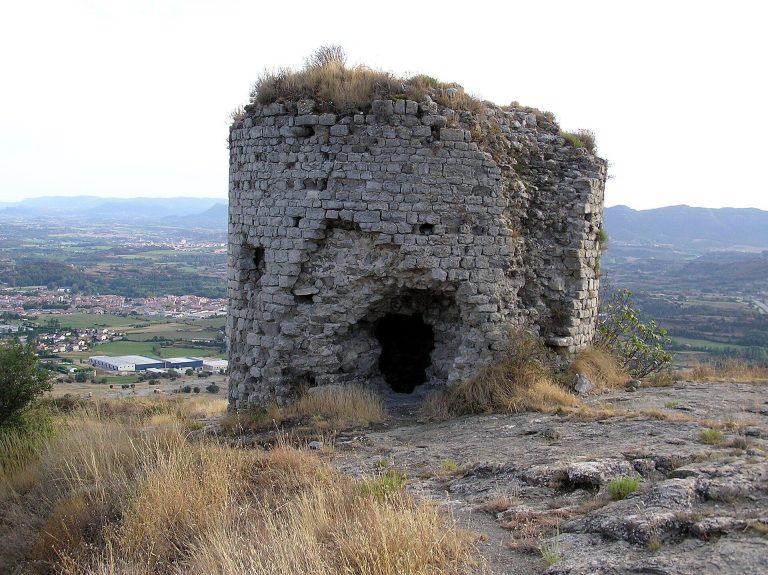
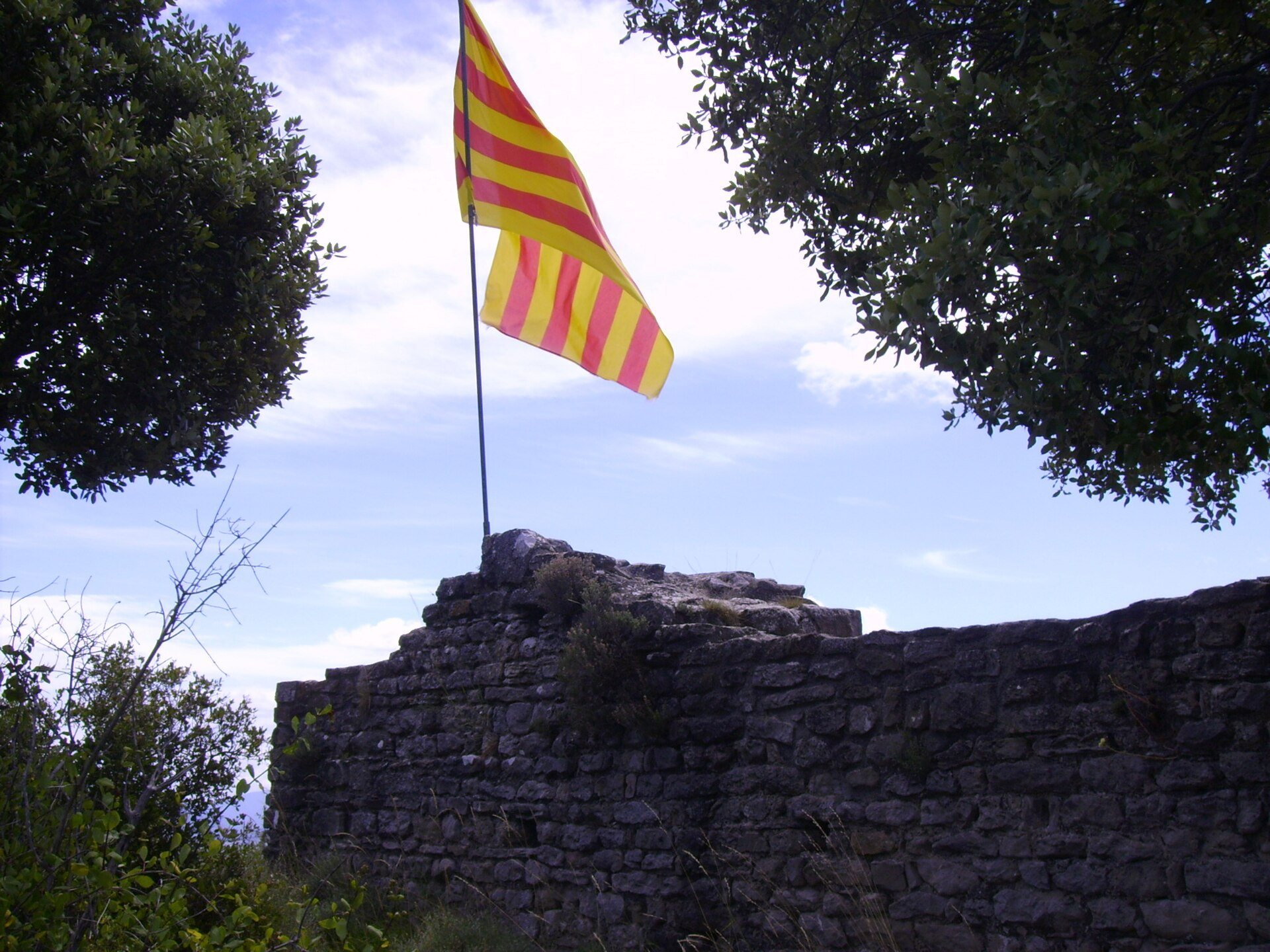
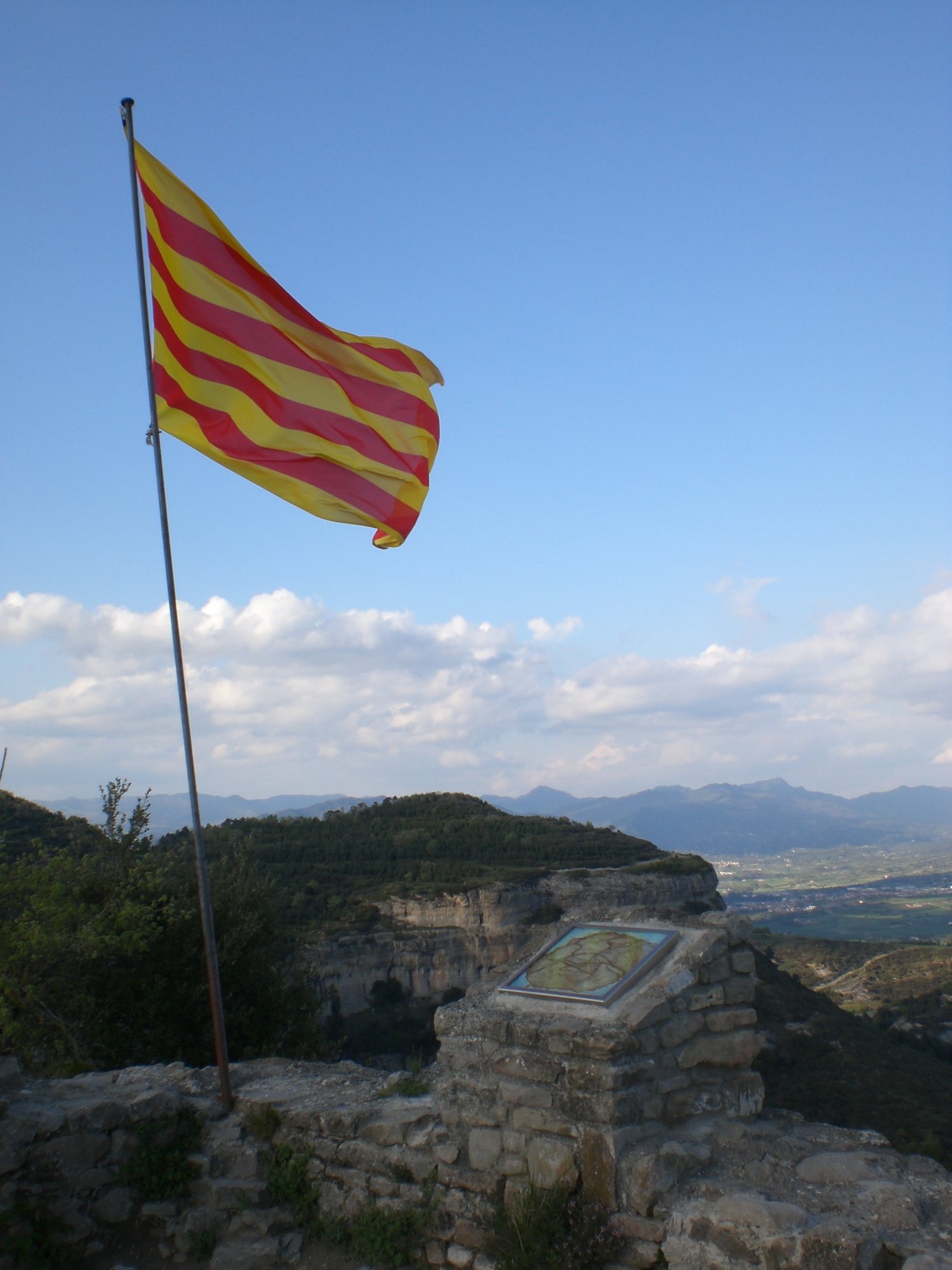
The surviving castle remains occupy the summit of a hill at approximately 858 metres above sea level, south of the chapel of Sant Martí Xic, in the area extending toward the Grau de Sobremunt, la Miranda, and the Serratosa farmhouse. The plan follows the hill’s exceptionally irregular topography and includes a projection toward the southwest. The site formed an enclosed compound that was probably bounded by walls.
A rectangular room stood at the centre of the enclosure, on the highest point of the hill. It marked the entrance to a passage or underground route that tradition says led to Sorreigs. The walls were built from roughly dressed stone blocks bonded with lime mortar and arranged in irregular courses. Root growth has severely damaged the masonry, although the upper enclosure preserves somewhat more regular construction.
Church of Sant Martí Xic
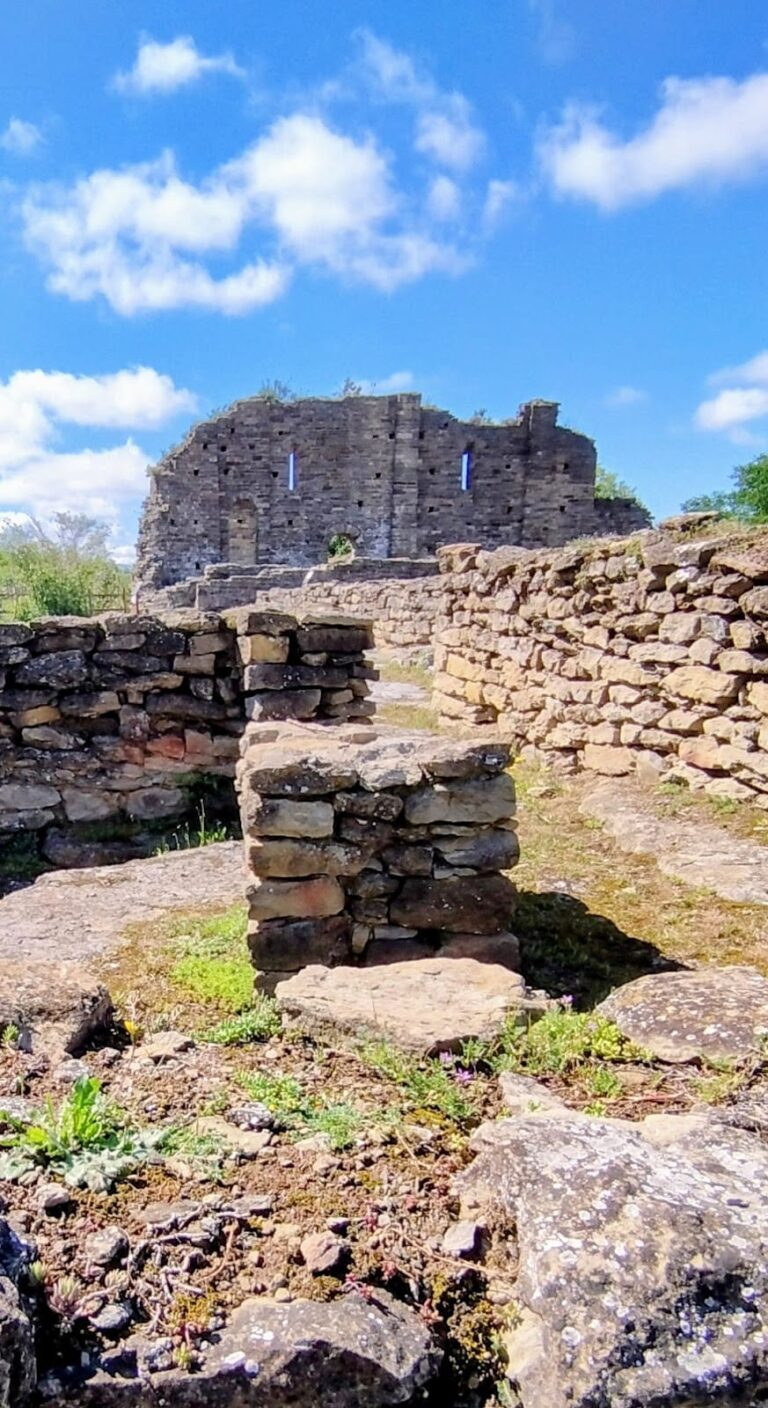
At the foot of the castle enclosure stands Sant Martí Xic, a single-nave Romanesque church. Romanesque architecture is a medieval style characterized by heavy masonry, rounded arches, compact forms, and relatively simple structural and decorative treatment. The church has a semicircular apse, the curved end of the building, a voussoired portal framed by wedge-shaped stones, and a splayed window in the south wall. Inside, a transverse arch crosses the centre of the nave, while another separates the nave from the presbytery, the area around the main altar.
Before the church was restored in 1984, a large opening affected the north wall and another affected the apse. The roof and bell gable, a wall structure with openings for bells, had also been lost. The restoration repaired the walls and recovered these missing elements.