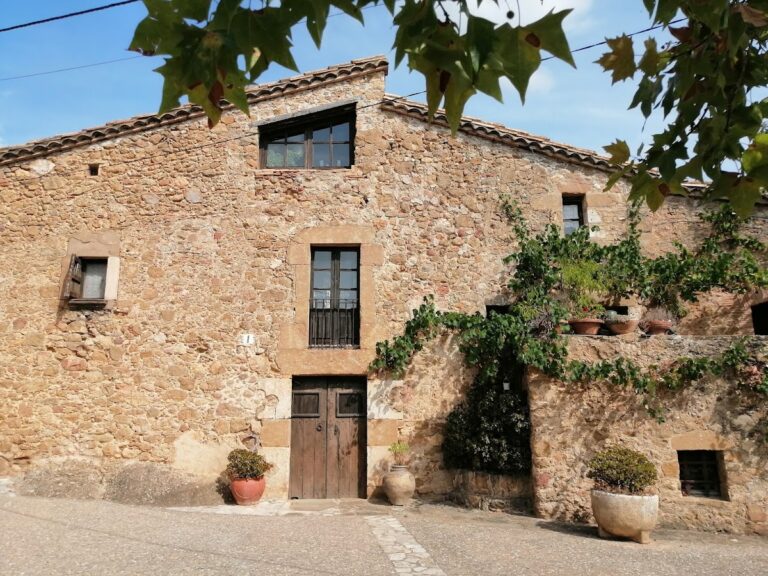
Castell de Sales: A Medieval Fortified Stronghold in Catalonia, Spain
Visitor Information
Google Rating: 3.9
Popularity: Very Low
Official Website: www.salesdellierca.cat
Country: Spain
Civilization: Early Modern, Medieval European
Site type: Military
Remains: Castle
History
Castell de Sales is situated in the municipality of Sales de Llierca, Spain. It was originally constructed during the medieval period by local Catalan nobility as a fortified stronghold.
The origins of the barony of Sales date to the late 10th century when Miró Bonfill, the count of Besalú and bishop of Girona, granted the territory in 979 to his vassal Oriol, marking the foundation of its feudal lordship. The first written mention of the castle itself appears in 1029, naming Bernat Arnau de Sales as its lord. Over the 12th and 13th centuries, the castle passed through various lines of inheritance, marriage alliances, and sales. Notable figures during this period include Ermessenda, daughter of Arnau de Sales, the counts of Empúries, and local nobles such as Beatriu de Messano and Guillem Seixà, reflecting the complex network of noble relations in the region.
In 1297, the castle and its associated baronial rights were sold by Galceran d’Empúries to Dalmau de Rocabertí. Following this acquisition, the Rocabertí family used the title baron of Sales. During their tenure, portions of the lordship were sold to other parties, including the bishop of Girona and Pere de Cornellà, indicating a fragmented ownership. By 1359, census records note the presence of 75 households within the castle’s domain, illustrating its significance as a local center of habitation and control.
Around 1360, Ramón Malart gained possession of the castle, and his son Roger later caused unrest by imprisoning peasants who refused to repair the castle’s defenses. This act drew the attention of King Martí I of Catalonia-Aragon, who intervened to resolve the conflict. In the turbulent period of the Catalan civil war in 1469, the castle became strategically important when the duke of Lorraine, aligned with the Generalitat, signed a capitulation treaty with its defenders, marking a documented military negotiation at the site.
The Malart family retained control of Castell de Sales through the 16th century. In the following century, ownership passed to the Alemany de Bellpuig family, who presumably oversaw further changes to the estate. Although political and military dynamics shifted over the centuries, the castle remained a notable feudal holding within Catalonia.
Remains
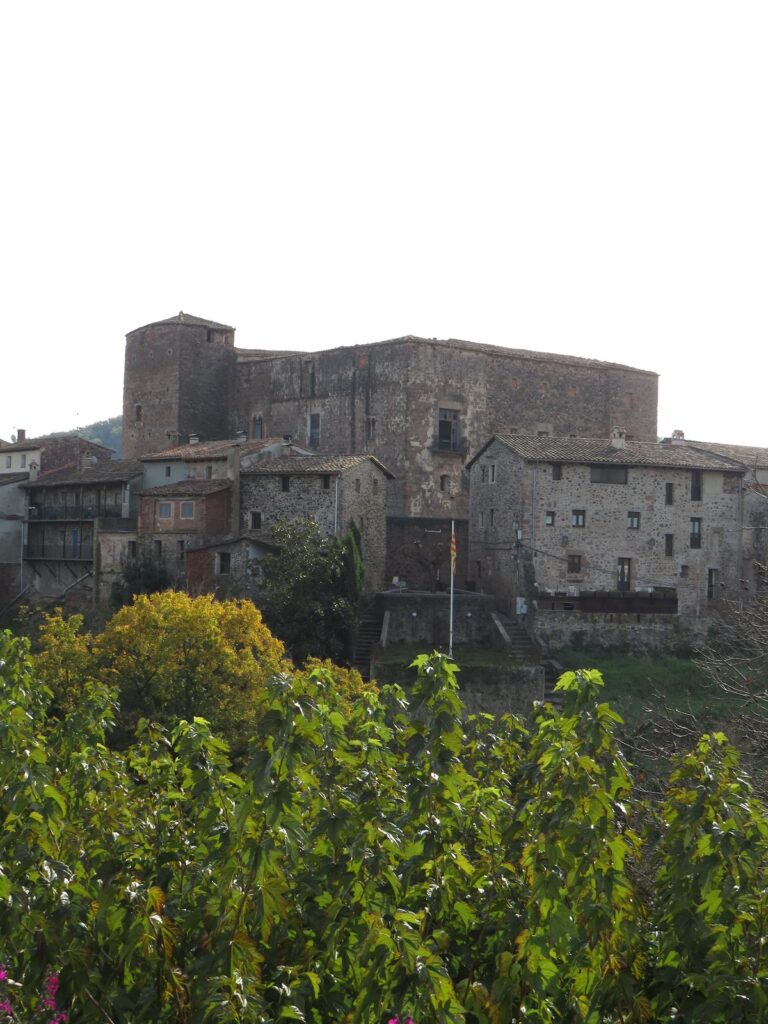
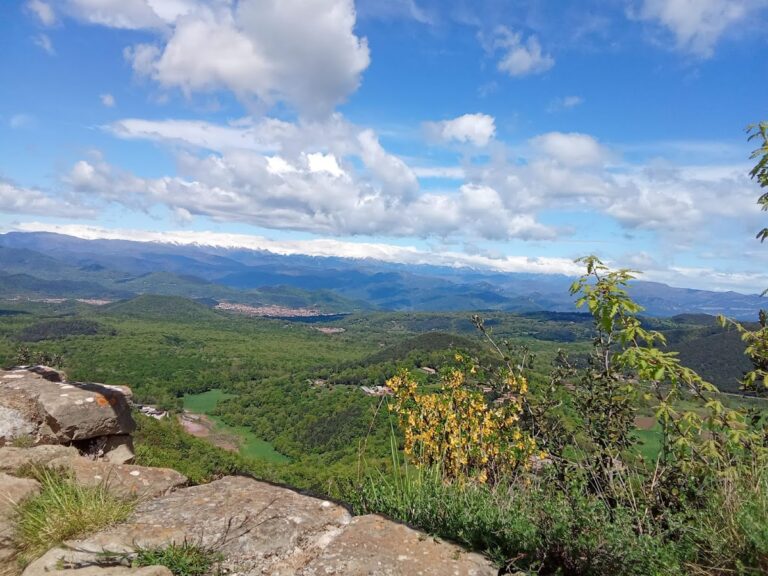
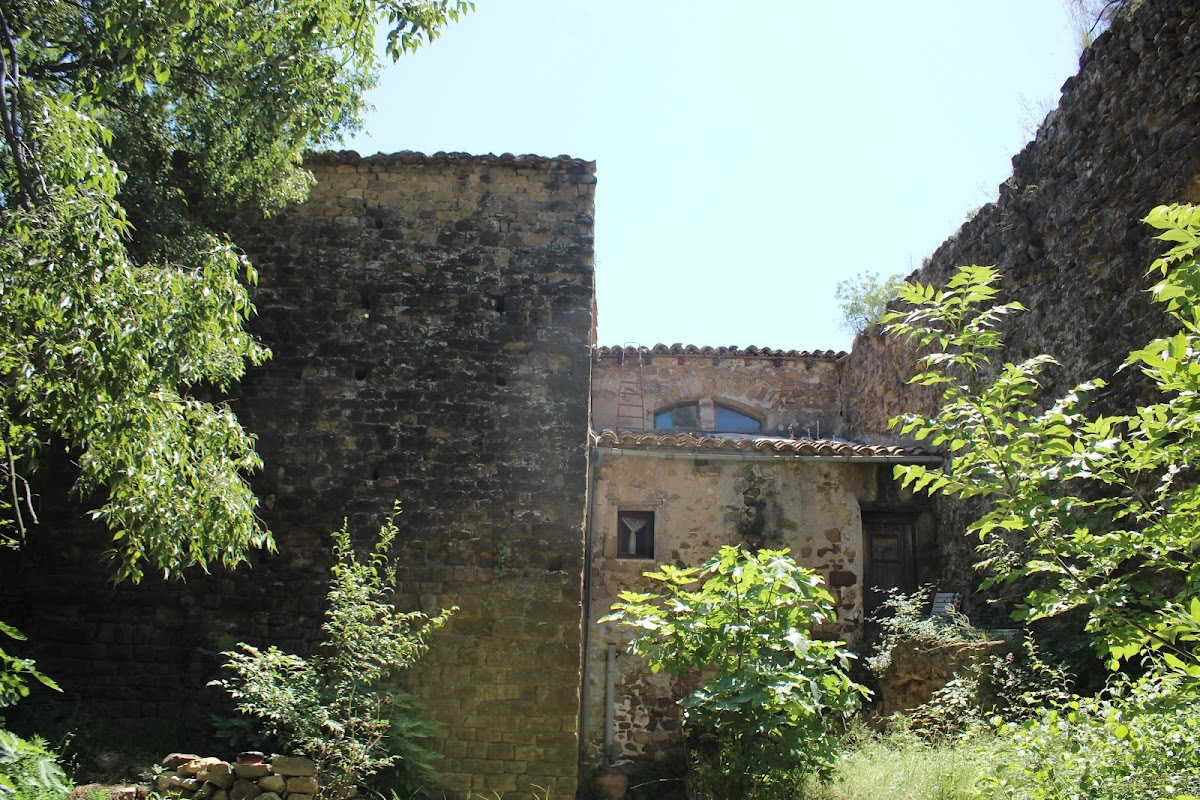
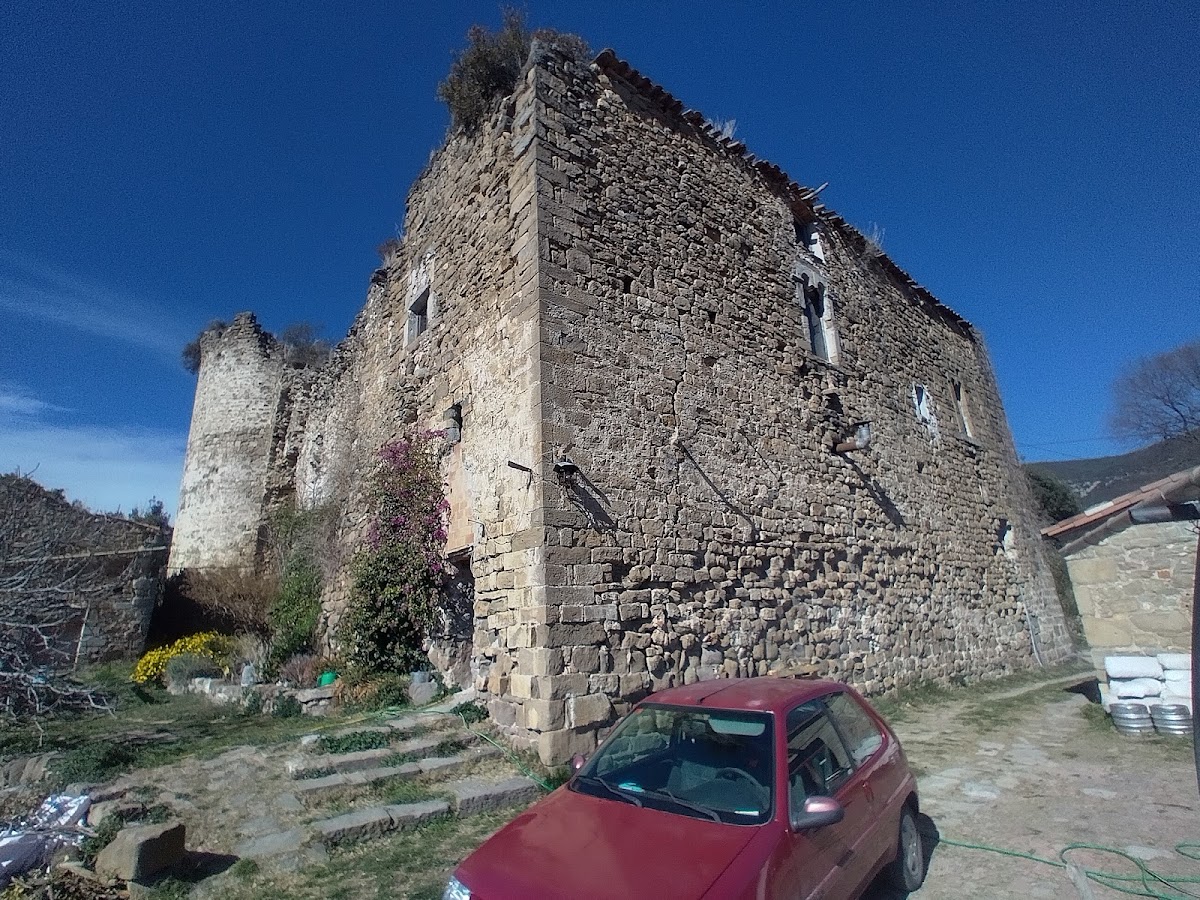
The ruin of Castell de Sales occupies a hill overlooking the Fluvià river valley, forming a roughly four-sided, irregular enclosure. The layout is typical of medieval defensive architecture later modified for agricultural purposes. Its walls encircle a central area dominated by what is believed to have been the keep, or main tower, alongside various adjoining rooms within the enclosure.
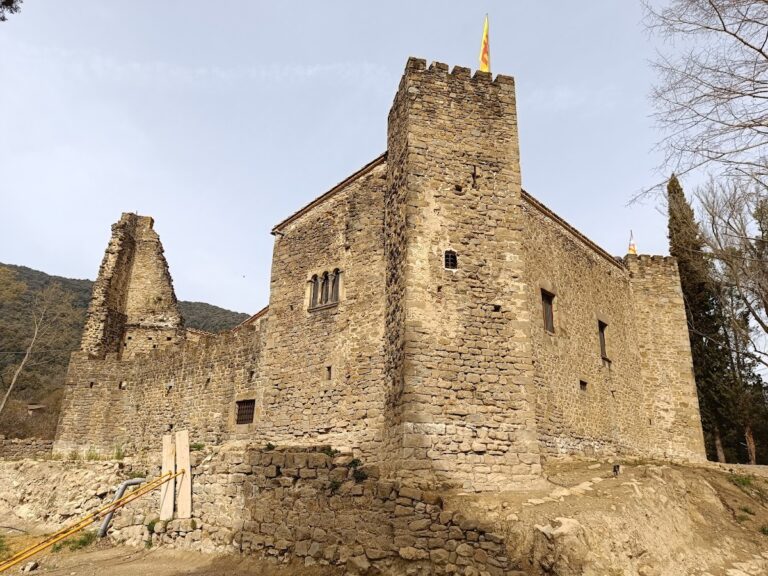
The central keep stands approximately seven meters high today but was originally closer to twelve meters tall. Constructed with elongated, partially worked ashlar stones common in the 11th century, it features a prominent western window with a rounded, semicircular arch built of wedge-shaped stones called voussoirs. This window highlights the medieval masonry techniques employed during the initial construction phase. Surrounding this tower, the inner walls formed a protected compound containing living and utility spaces.
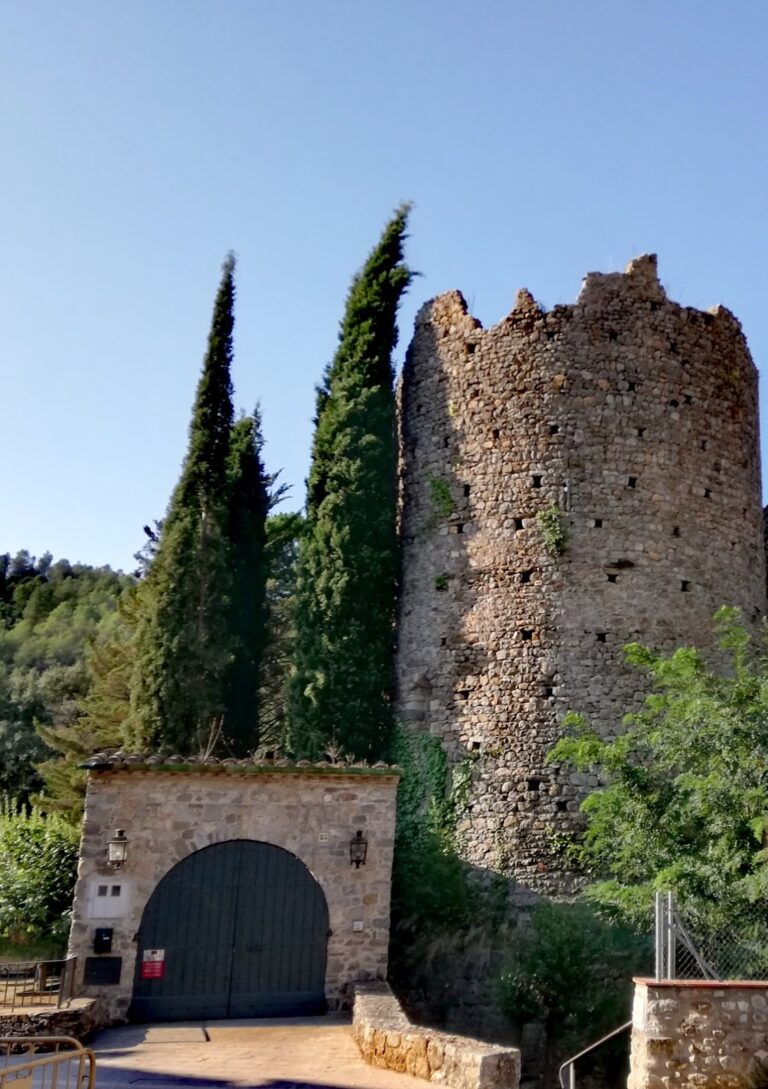
At the southwest corner stands a round tower dating to the 13th century, measuring around five meters across internally, with walls approximately 1.4 meters thick. Its current height reaches about ten meters. Documentary evidence from 1303 confirms the presence of this circular tower, which provided a defensive vantage point within the complex. The substantial wall thickness reflects its military purpose.
Encircling the inner ward, an outer enclosure follows uneven distances ranging from six to fourteen meters away from the inner walls. At the southwestern edge of this secondary perimeter lies a rectangular chamber measuring roughly five by nine meters. This space likely served as the castle’s chapel, dedicated to Santa Maria. Architecturally, it comprises a single nave and was repurposed in later centuries as a charcoal storage area, indicating a shift in the building’s function over time.
The remnants of a gate within the second enclosure, situated on the northern wall, remain visible, marking an access point to the compound. On the western side, a moat once defended the castle, enhancing its defensive capacity against attackers. Local tradition speaks of tunnels connecting the castle’s interior to the outside, though these passageways have since been sealed.
In the 15th and 16th centuries, the castle underwent several renovations. Though much of this later work is now obscured by subsequent additions, traces remain within the surviving structures, illustrating the site’s continuous adaptation to changing needs across centuries. The current ruins offer a layered glimpse into the site’s long history as a military fortification and later agricultural holding.
Nearby sites