Owain Glyndŵr’s Mount: A Medieval Castle and Site of Welsh Rebellion


Site at a Glance
- Rating
- 4.5
- Popularity
- Very Low
- Country
- United Kingdom
- Primary era
- Medieval
- Eras represented
- Medieval
- Civilizations
- Norman
- Site type
- Military
- Remains
- Castle
On this page5 sections
History
Norman Origins and Welsh Lordship
Owain Glyndŵr’s Mount is a former castle in Wales, United Kingdom, probably established during the Norman conquest of Wales as a medieval fortification securing the road along the River Dee. Its construction date is uncertain, although it is also placed in the twelfth century.
By 1283, the site formed part of the lordship of Glyndyfrdwy. After the English conquest of Wales, Gruffydd Fychan, a descendant of the medieval princes of Powys, was allowed to retain it as landed property. By the late fourteenth century, his descendant Owain Glyndŵr owned a comfortable wooden manor beside the castle mound.
Owain Glyndŵr’s Proclamation
On 16 September 1400, Owain Glyndŵr proclaimed himself Prince of Wales at the site before his family and closest friends. Local inhabitants also attended, bringing the estimated audience to about 300 people. Owain then began a raid through North Wales, an action that marked the start of his rebellion against English rule.
Destruction in 1403
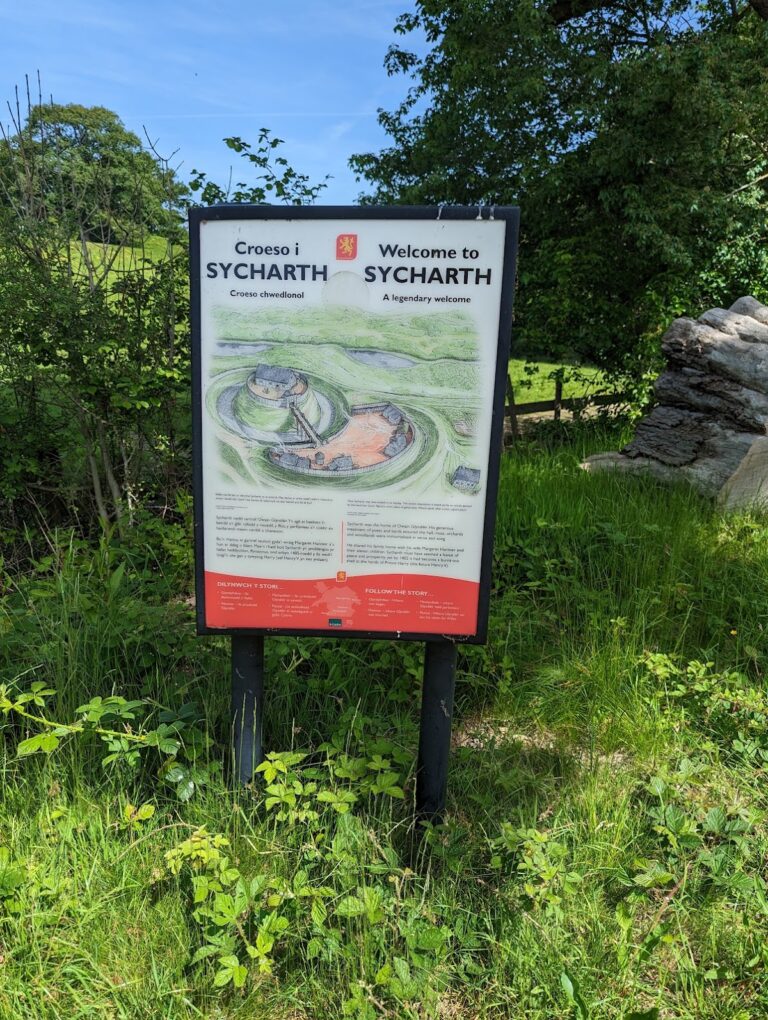
In May 1403, the English prince Harry of Monmouth destroyed Glyndŵr’s manor at Glyndyfrdwy during a punitive expedition in North Wales. Harry, who later became King Henry V, had previously burned Glyndŵr’s principal residence at Sycharth.
The castle site is protected as a Scheduled Monument, a legally protected archaeological or historic site designated for its national importance.
Remains
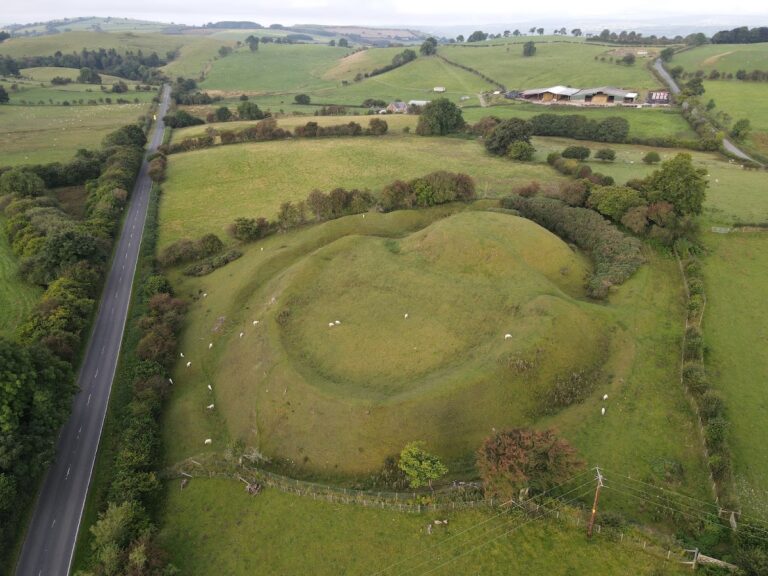
The surviving physical feature is a tree-covered motte, a raised artificial mound that formed the main defensive element of a medieval castle. It stands in a valley at approximately 151 metres above sea level, within predominantly mixed woodland and hilly terrain. The ground becomes flatter to the northwest, while nearby land rises to about 344 metres around 1 kilometre south of the site.
The mound is surrounded by a ditch that is partly filled with water. It rises approximately 6.5 metres above the surrounding ground, measures about 36 metres across at its base, and narrows to roughly 12 metres at its summit. Ditch remains are visible east of the mound, where the feature probably marked the boundary of Owain Glyndŵr’s estate. The castle’s former bailey, the enclosed area where buildings and daily activity were concentrated, is not represented among the surviving features described at the site.