Rocafort de Queralt Castle: A Medieval Barony Seat in Spain

Site at a Glance
- Rating
- 3.5
- Popularity
- Very Low
- Country
- Spain
- Primary era
- Medieval
- External website
- Open
- Eras represented
- Medieval
- Civilizations
- Crown of Aragon
- Site type
- Military
- Remains
- Castle
On this page7 sections
History
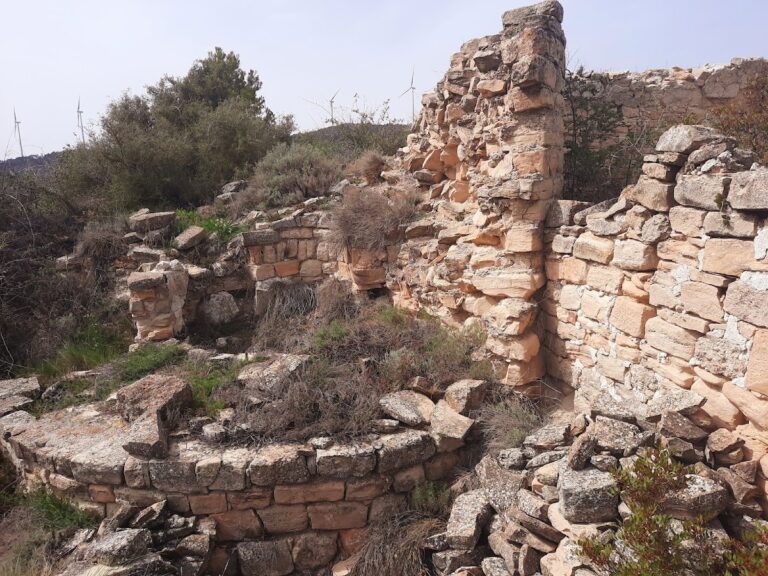
Rocafort de Queralt Castle is an ancient castle in Rocafort de Queralt, Spain, built in the eleventh century and later serving as the center of the Barony of Rocafort. Its first recorded mention dates to 1178, when it was cited as a boundary of Torlanda Castle in a donation to Alfonso II of Aragon, the twelfth-century ruler of the Crown of Aragon and count of Barcelona.
Early references and feudal rights
The earliest secure reference to Rocafort itself dates to 1076. In that year, the counts Ramon Berenguer II and Berenguer Ramon II donated the area of Anguera to Bofill Oliba, and the boundary description referred to the mills of Roca. In 1193, Berenguer de Clariana stated in his will that he had inherited rights over Rocafort and other castles from his great-grandfather, Guerau Guitard. He left those rights to his sons, Berenguer and Bernat.
The Barony of Rocafort
The Queralt family held the castle in the thirteenth century, when it became the center of the Barony of Rocafort, a feudal territorial lordship organized around the castle. In the fifteenth century, the barony passed to the Centelles, Counts of Oliva. During the sixteenth century, the castle’s castellany, the jurisdiction associated with administering a castle and its surrounding territory, was sold to Joan d’Armengol, who adopted the title lord of the Barony of Rocafort.
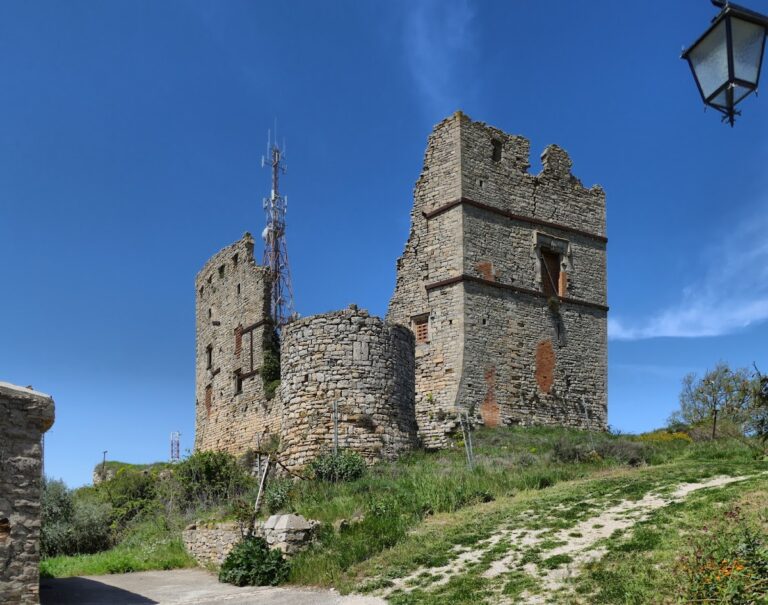
In the nineteenth century, ownership passed to the Peguera family, Marquises of Foix, who retained the property until 1881. In the mid-twentieth century, Juli Bonet i Ninot acquired the castle grounds. A new building was erected or rebuilt there in 1964, using stone from the abandoned village of Torlanda in the municipality of Conesa, where another abandoned castle stood. The intervention is also described as a complete restoration of the castle. Since 1988, the site has been protected as a Cultural Asset of National Interest and as a Spanish cultural-interest property in the category of historic monument.
Remains
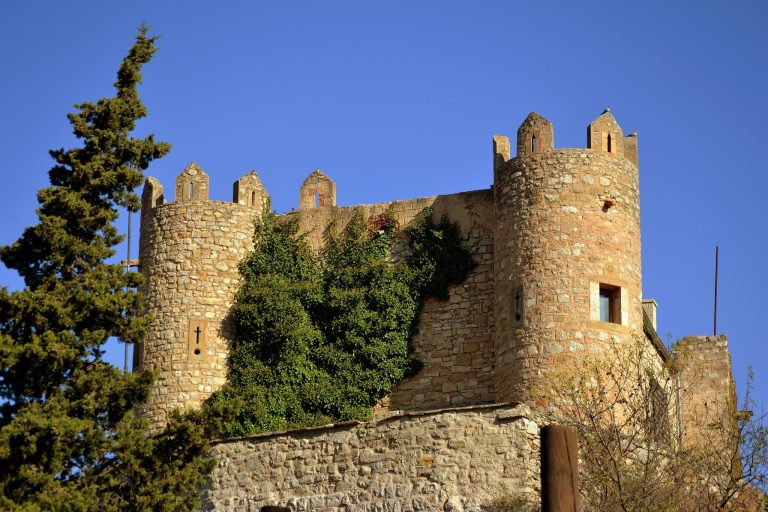
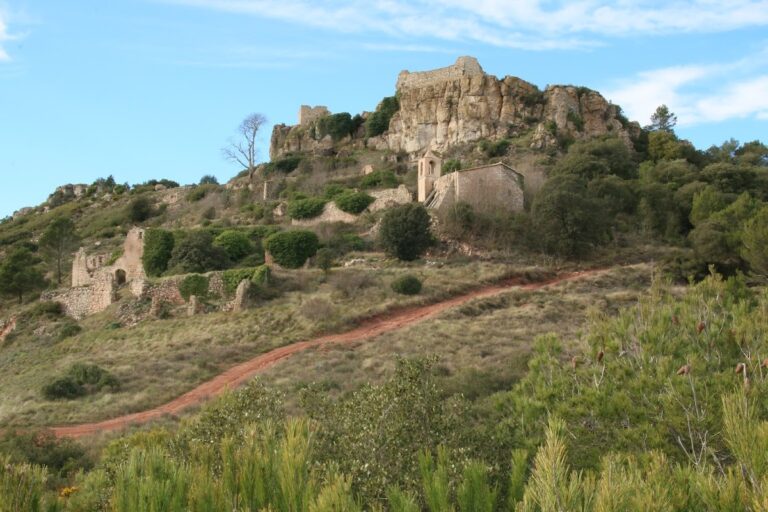
The present complex combines the former castle site with the building erected or rebuilt in 1964 in a vernacular architectural style. Stone taken from Torlanda forms part of the modern structure. The reconstructed complex has two towers crowned with merlons, the raised sections between openings along a fortified wall or tower, and an enclosing wall around the entire precinct.
Former village wall
Sarral or Bonet Portal
The Sarral, or Bonet, Portal survives on Libertad Street as part of the former wall that enclosed the village. It has a semicircular arch built with wedge-shaped stones and retains the remains of a machicolation above it, a projecting defensive structure with openings through which objects or liquids could be dropped onto attackers.
Conesa or Groc Portal
The Conesa, or Groc, Portal stands on Font Street and also belonged to the wall around the village. Its entrance is formed by a segmental arch, whose curve is flatter than a semicircular arch.