Castell de Peguera: A Frontier Castle in Catalonia


Site at a Glance
- Rating
- 4.7
- Popularity
- Low
- Country
- Spain
- Primary era
- Medieval
- Eras represented
- Medieval
- Civilizations
- Unclassified
- Site type
- Military
- Remains
- Castle
On this page6 sections
History
Castell de Peguera is a medieval frontier castle in the municipality of Fígols, Spain. Its earliest surviving documentation dates from the second half of the eleventh century, and the castle is recorded by 1098. It formed part of the political and defensive landscape of Berguedà, a county-level district in Catalonia.
The County of Cerdanya
Between 1068 and 1095, Pere Ramón served as castellan, the official responsible for administering and defending a castle for its lord. He swore loyalty to Count Guillermo Ramón I of Cerdanya for Peguera and several other castles and possessions, including those at Fígols, Vallmanyana, and Berga.
In 1095, Count Guillermo of Cerdanya bequeathed his possessions in Berguedà and its frontier territory, including Castell de Peguera, to his son Bernardo Guillermo. After Pere Ramón failed to honour his agreement, the new count seized his possessions and granted them to Berenguer Ecard in 1098.
The County of Cerdanya, a medieval territorial lordship governed by a count, was incorporated into the County of Barcelona in 1117. Guillermo Ramón of Berga, Ecard’s heir, subsequently paid homage to Ramon Berenguer III for Castell de Peguera and other castles. Paying homage expressed a formal relationship of loyalty and service within medieval feudal society.
Monastic and feudal ownership
In 1171, Guillermo Ramón’s son, Pere de Berga, donated the castle to Santa María de Poblet, a Cistercian monastery in Catalonia that also became an important religious and dynastic institution. Ramón de Peguera held Castell de Peguera as a feudal tenant.
Bernat de Peguera still used the title “lord of Castell de Peguera” in 1305. In 1390, King John I of Aragon sold the castle’s entire jurisdiction to Ramón de Peguera for 34,000 sous, a medieval monetary unit. Ramón then donated the jurisdiction to Galceran Galceran de Pinós, bringing the castle into the Barony of Pinós, a large feudal lordship controlled by the Pinós lineage.
Later history and protection
At the beginning of the seventeenth century, a memorial addressed to the king identified Castell de Peguera as the property of Francisco de Agulló, whose family was connected by descent to the Pinós family. The fortress later collapsed, and local inhabitants apparently reused its stones to build houses in Peguera. The mining village was abandoned around 1970.
Castell de Peguera has been protected since 8 November 1988 as a Cultural Asset of National Interest and as a monument within Spain’s historical heritage. A Cultural Asset of National Interest is a protected heritage designation under Catalan law.
Remains
Hilltop fortification
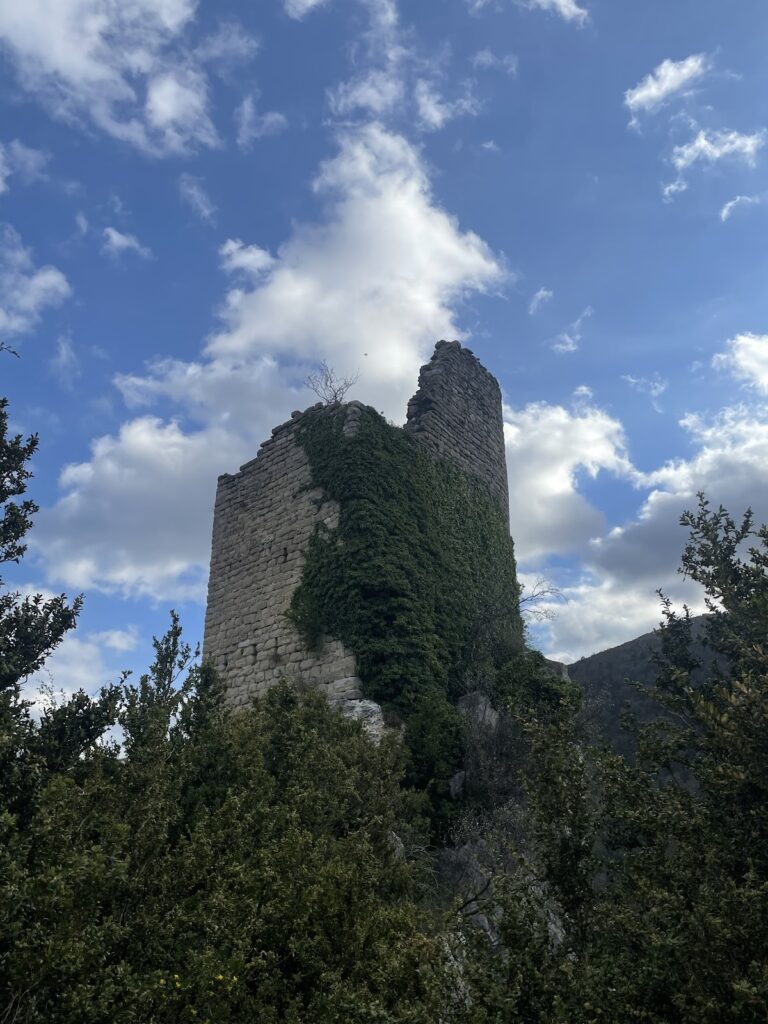
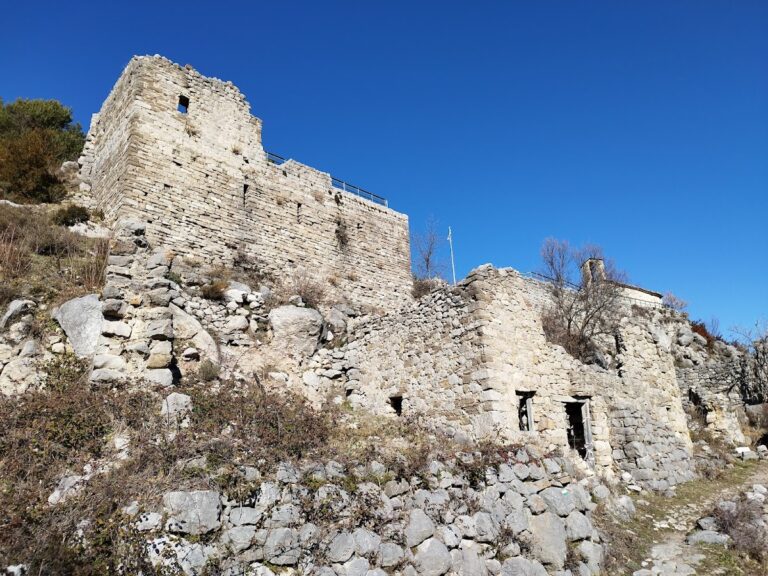
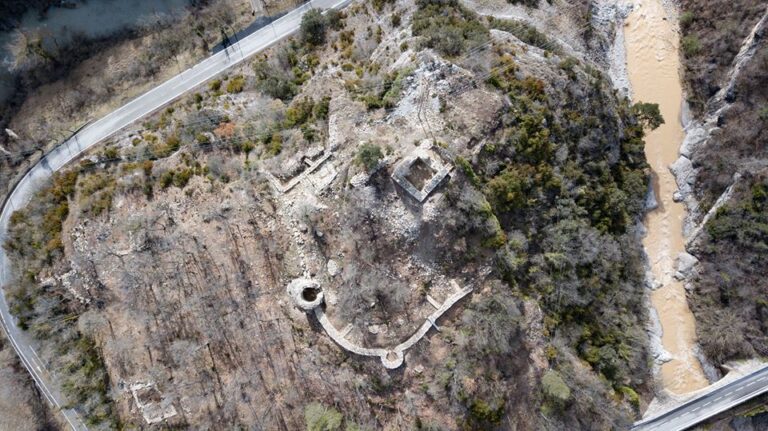
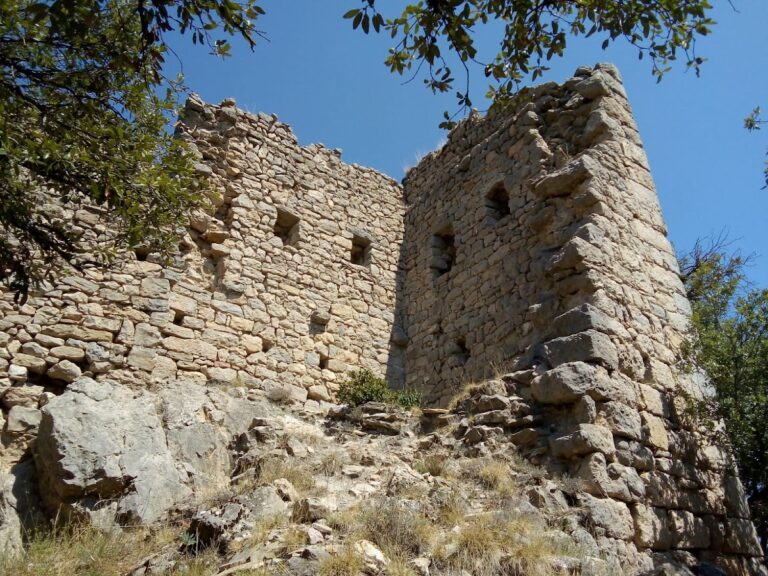
The castle occupies the highest part of Roc de Peguera, above the uninhabited houses of the hamlet of Peguera. Very little of the former structure survives. Fragmentary sections of wall indicate a small fortification, possibly a simple strong tower that served as an advanced defensive position for the nearby Castle of Fígols.
The visible fabric was further reduced when the fortress collapsed and its stones were reused in local houses. The remaining wall fragments preserve the location and limited scale of the former stronghold on the summit of Roc de Peguera.