Castell de Roset: A Medieval Frontier Castle in Spain


Site at a Glance
- Rating
- 4.2
- Popularity
- Very Low
- Country
- Spain
- Primary era
- Medieval
- External website
- Open
- Eras represented
- Medieval
- Civilizations
- Crown of Aragon
- Site type
- Military
- Remains
- Castle
On this page9 sections
History
Castell de Roset is a twelfth-century frontier castle in Spain, in the municipality of Vilada in Berguedà, Barcelona Province. Its position made it part of the network of castles that controlled and connected territories in the region. The castle was later involved in the Catalan Civil War, a conflict fought from 1462 to 1472 between supporters of the monarchy and opposing Catalan political forces.
Early records and feudal lordship
The surrounding parish, called “Roseto,” appears in the consecration act of the Cathedral of Urgell in 839. The place was mentioned again in 945, while a document from 1026 names the castle and its lord, Sunifred. In that year, Sunifred commissioned the priest Borrell to arrange the delivery of agricultural dues to La Portella monastery after his death. These dues consisted of barley, wheat, rye, and wine.
By 1309, Castell de Roset was an important possession of the Berga family. Sibila, Countess of Pallars and Lady of Berga, retained the castle when she transferred numerous castles in Berguedà to King James II of Aragon. Roset was the closest of her holdings to those of her husband, Hugh of Mataplana, lord of the Barony of Mataplana.
Changes of ownership and jurisdiction
Castell de Roset later passed to Bernat Guillem of La Portella, who left it to the king in his will of 1321. In 1336, King Peter IV of Aragon sold Sibila of Fenollet, a relative of the Portella family, several jurisdictions, including those of the castles of Palmerola and Roset.
The medieval censuses provide a measure of the settlement attached to the castle and its jurisdiction. Between 1365 and 1370, Castell de Roset and the local jurisdiction of Roset comprised 39 households. A household in these censuses was a fiscal or residential unit used for counting population, rather than necessarily a single person. By 1381, the number had fallen to 25 households, and the castle was identified as a possession of the Pinós family. Bernat and Galceran of Pinós took possession in 1383, while Bernat de Roset held the castle as a feudatory, a person who held land or authority from a superior lord in return for feudal obligations.
War, abandonment, and heritage status
Castell de Roset played an important role in the Catalan Civil War of 1462–1472. By 1545, Joanot de Roset was lord of the castle but did not live there, indicating that the stronghold had already been abandoned as a residence.
On 8 November 1988, Castell de Roset was declared a National Cultural Asset of Interest and recognized as a monument within Spain’s historical heritage. This status formally acknowledged the importance of the surviving castle and its historical setting.
Remains
Hilltop layout and construction
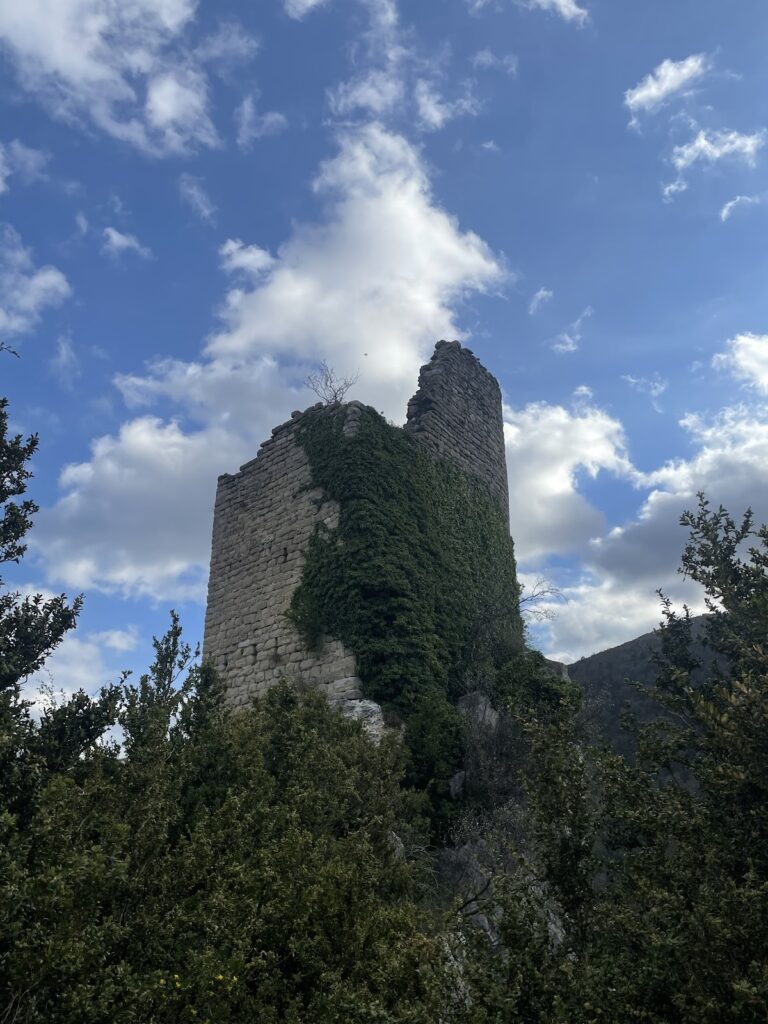
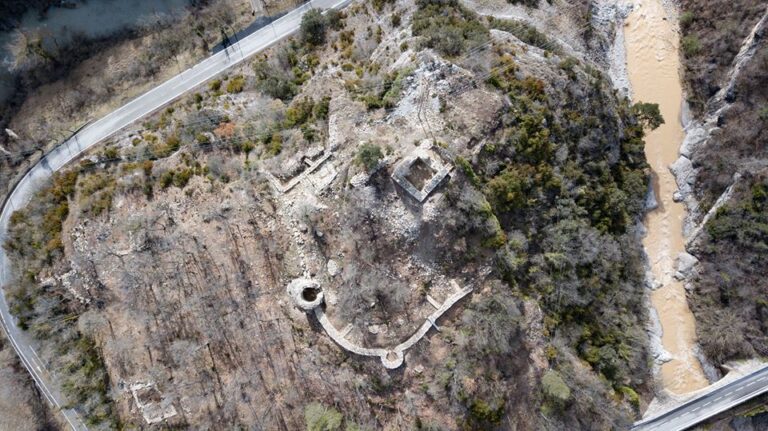
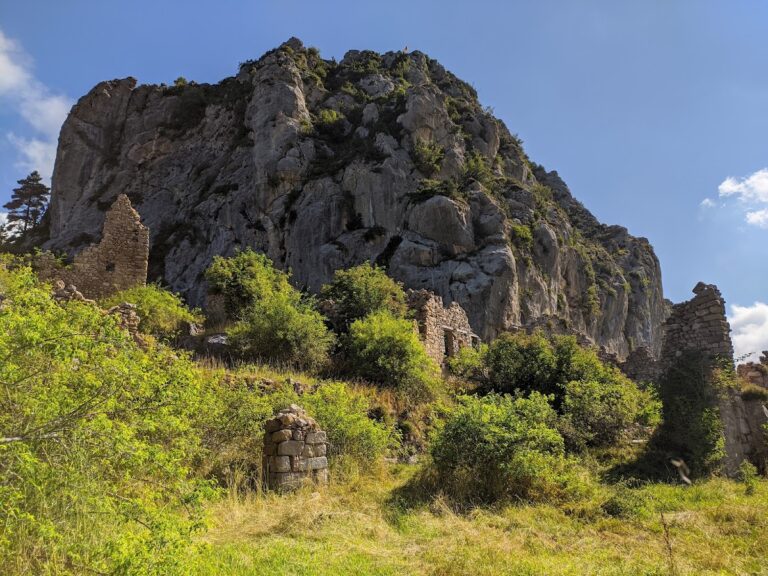
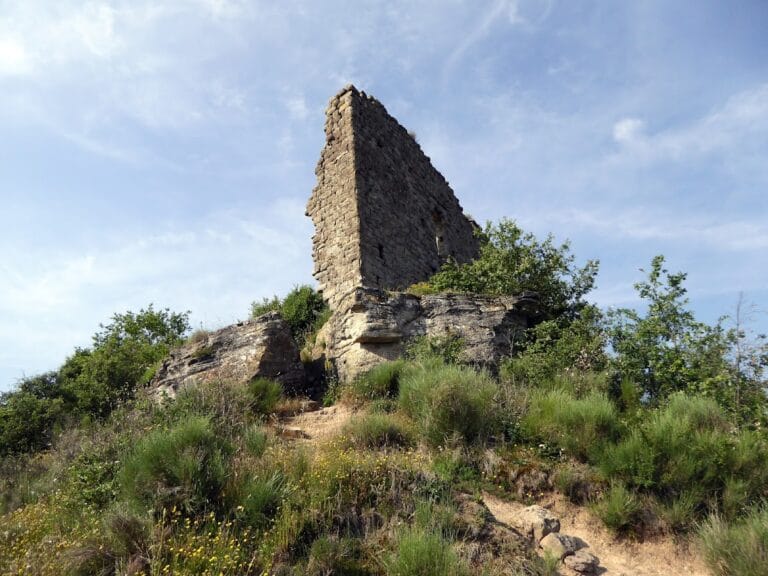
The ruins occupy a rocky hill on the slopes of the Picamill range, overlooking the Vilada valley. Their irregular plan follows the shape of the rocky outcrop, probably because successive extensions had to adapt to the available ground. The surviving constructions measure approximately 20 metres in length, 7 metres in width, and 6 metres in height. Their masonry consists of very regular, carefully laid stones.
Entrance path
On the northern side, a still-paved path rises toward what was probably the original entrance. After an incline of about 10 metres, it reaches the castle’s open area. Holes cut into the rock on both sides of the path mark the bases where a gateway was installed.
Buildings and openings
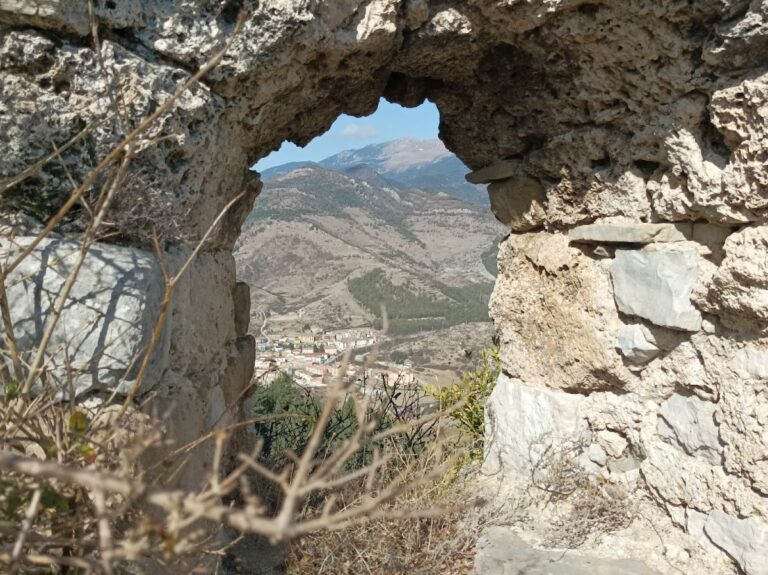
Holes for supporting beams show that the castle had more than one storey. Some windows survive with voussoirs, wedge-shaped stones forming parts of their arches, although these openings are in poor condition. Together with the regular masonry and the surviving wall height, these features reveal a multi-level stone structure fitted closely to the hilltop.
Defensive position and castle communications
A semicircular platform on the northern face probably served as an advanced defensive position. It offered extensive visibility and visual communication with Puigarbessós Castle, another possession of the counts of Pallars in Berguedà. The wider communication line between castles would have run from San Fernando Castle in Berga through Castellberguedà and Puigarbessós to Blancafort and Roset, placing Castell de Roset within a connected chain of fortified positions.
Nearby sites