Gósol Castle: A Medieval Territorial Castle in Spain


Site at a Glance
- Rating
- 4.4
- Popularity
- Low
- Country
- Spain
- Primary era
- Medieval
- External website
- Open
- Eras represented
- Medieval
- Civilizations
- Crown of Aragon
- Site type
- Military
- Remains
- Castle
On this page12 sections
History
Gósol Castle is a medieval territorial castle in Spain, located at Gósol in Lleida. Known as a castell termenat, it governed a defined surrounding district rather than serving only as a fortified building. The settlement called “Gosal” appears in the consecration record of Santa Maria de la Seu d’Urgell, and the castle is documented by the eleventh century.
Counts of Cerdanya and the Pinós family
A document dated between 1068 and 1095 places Gósol Castle under the authority of the Counts of Cerdanya. Galceran rendered formal homage, a declaration of loyalty by a vassal to a superior lord, for Gósol and several other castles. The same group was later acknowledged to Count Bernat and, after the County of Cerdanya was incorporated into Barcelona, to Ramon Berenguer III, Count of Barcelona.
Between 1162 and 1196, Galceran de Pinós stated that he held these castles from Alfons el Cast, also known as Alfonso II of Aragon and Count of Barcelona. Gósol consequently moved from the political sphere of the Counts of Cerdanya to that of the Counts of Barcelona and the rulers of the Catalan-Aragonese house. The castle was held by members of the Galceran de Pinós family and, by the thirteenth century, belonged to the Barony of Pinós, the territorial lordship controlled by that family.
Charter and seigneurial authority
In 1273, Galceran de Pinós and his wife, Esclamunda, issued a charter of liberties to encourage the population of the castle district. The inhabitants were released from several arbitrary levies and from compulsory labor on the castle’s works. At the turn of the thirteenth and fourteenth centuries, the castle and other possessions passed to Sibil·la, the daughter of Galceran and Berenguera, when she married the nobleman Bernat Guillem de Portella.
In 1306, officials acting for Pere Galceran de Pinós were ordered to keep Gósol, Gavarrós, Saldes, and their castles securely guarded. The order arose during a conflict between the king and the Pinós family, as the king sought control over Berguedà, a medieval Catalan territory.
The dispute of 1312–1313
Gósol became involved in a direct confrontation with royal authority in 1312 and 1313. In December 1312, men from the castle killed R. Gros de Mirapol, a royal agent. The following January, Bernat de Vilademany, the veguer of Berga, arrived with a large force to search the castle. A veguer was a royal administrative and judicial official in medieval Catalonia.
At the gate, the knight Tomàs de Vilacorba protested and maintained that the suspected murderer and his companions were not inside. The search was eventually authorized, but Saura de Pinós, lady of the barony, argued that the king had no authority over the castles of Gósol, Saldes, l’Espà, Querforadat, and Balmanya. She claimed that the Pinós held them in allodial ownership, meaning that they were held directly and independently rather than as royal feudal grants.
Late medieval changes
The demographic crisis of the second half of the fourteenth century affected Gósol. A hearth census, which counted households rather than individual inhabitants, listed 51 households in 1365–1370 and 42 in 1381.
In 1414, the castle was pledged as security for a debt. Bernat Galceran de Pinós, an illegitimate son of the baron of the same name, received custody of the castle and valley until his father repaid 30,000 sous. During the Catalan Civil War, Pere Companyó served as captain of the castle. The Pinós family received none of its revenues during this period because they were required for building works and guard duties.
Abandonment and heritage protection
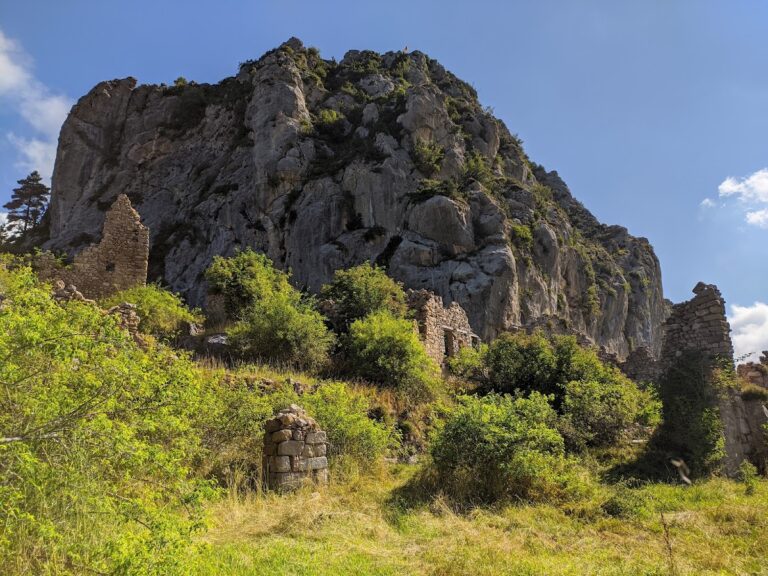
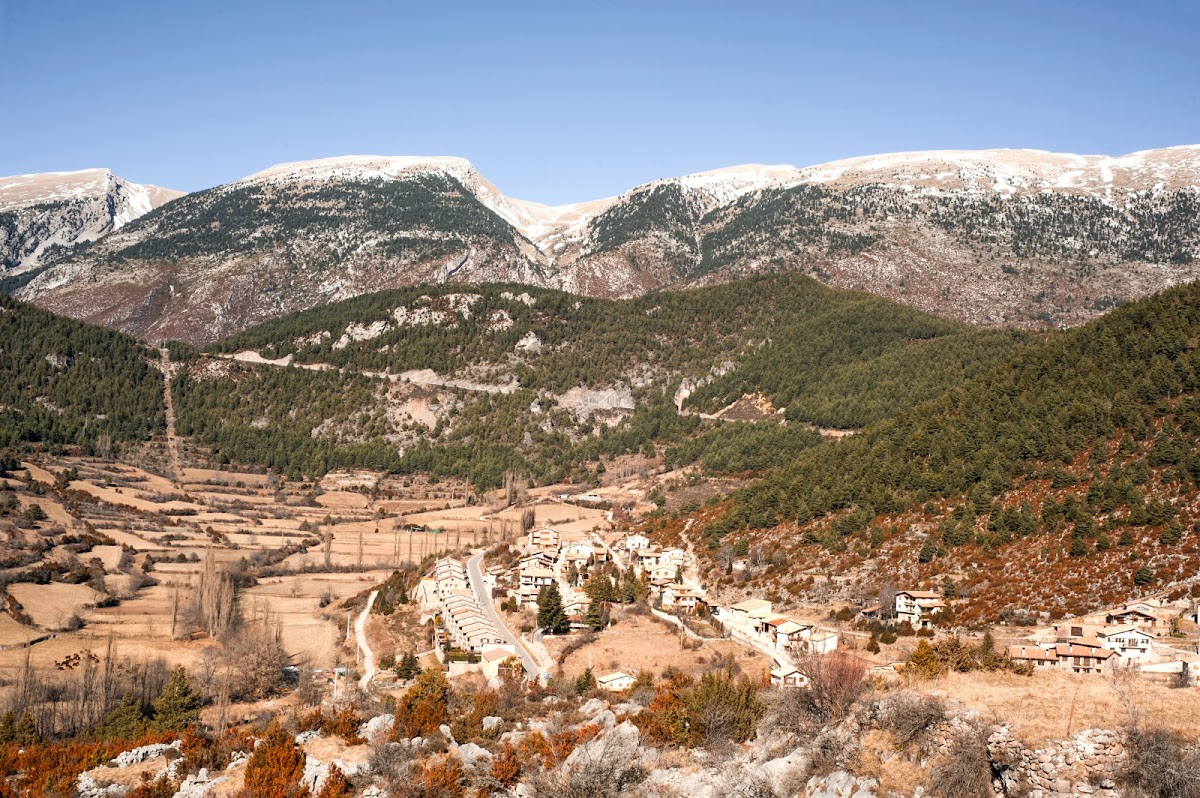
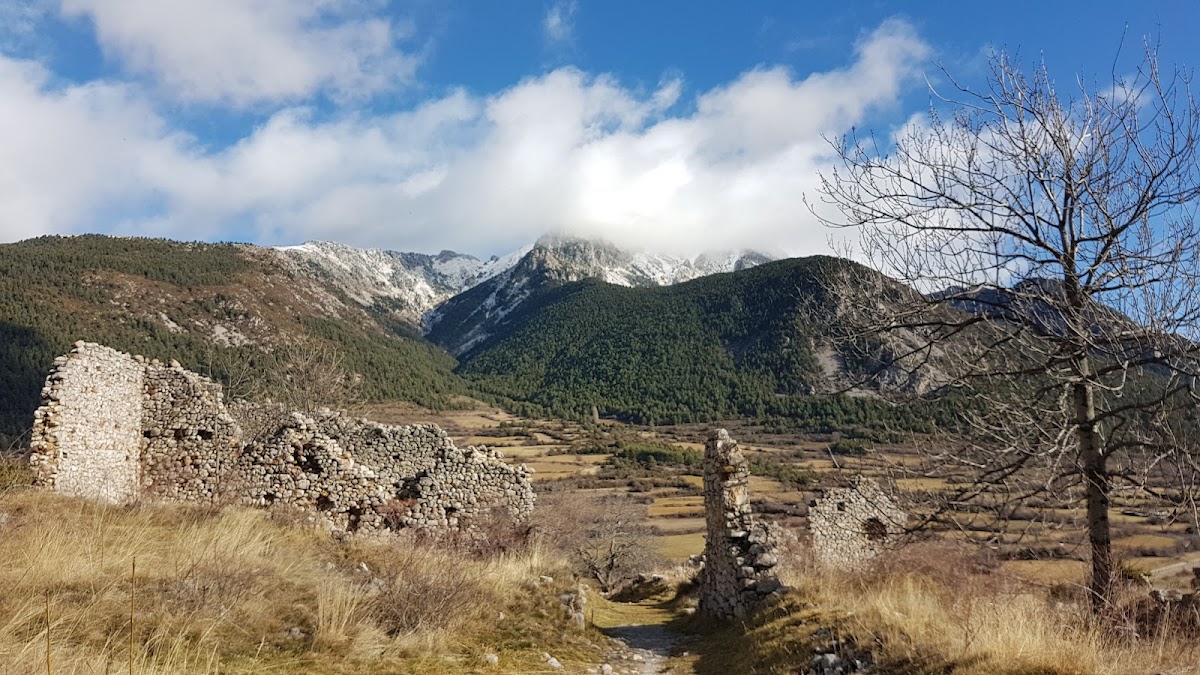
The castle enclosure contains the remains of Vila Vella, an earlier settlement that was abandoned when a new town was built at the foot of the hill. Gósol Castle and the church of Santa Maria were declared a Cultural Asset of National Interest and a historical monument in 1988.
Remains
Hilltop enclosure and settlement
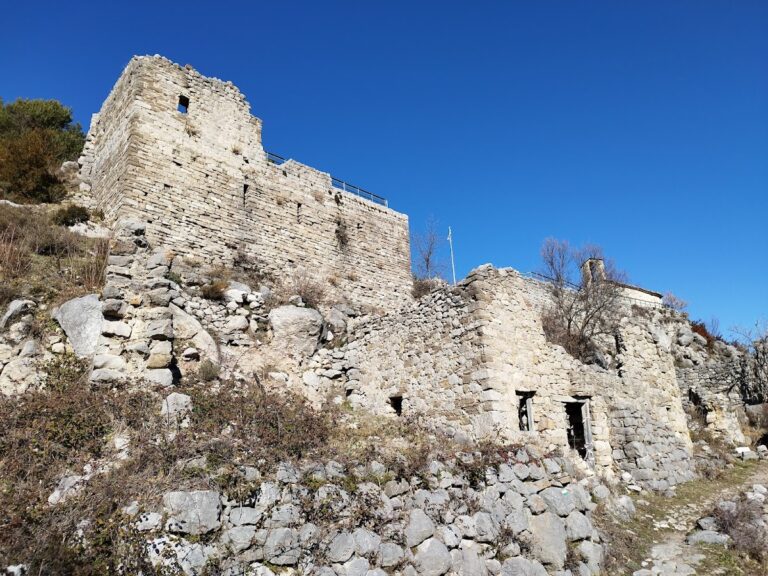
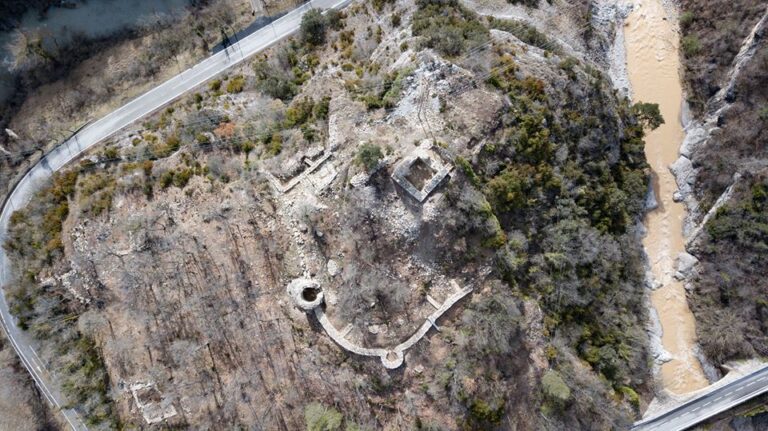
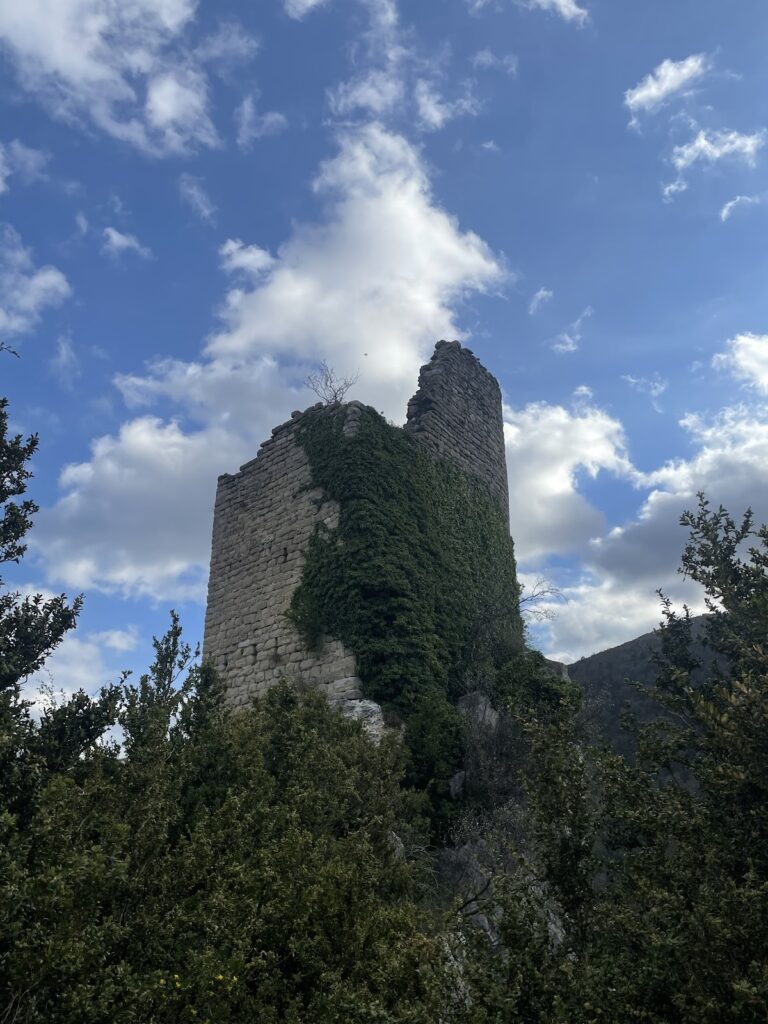
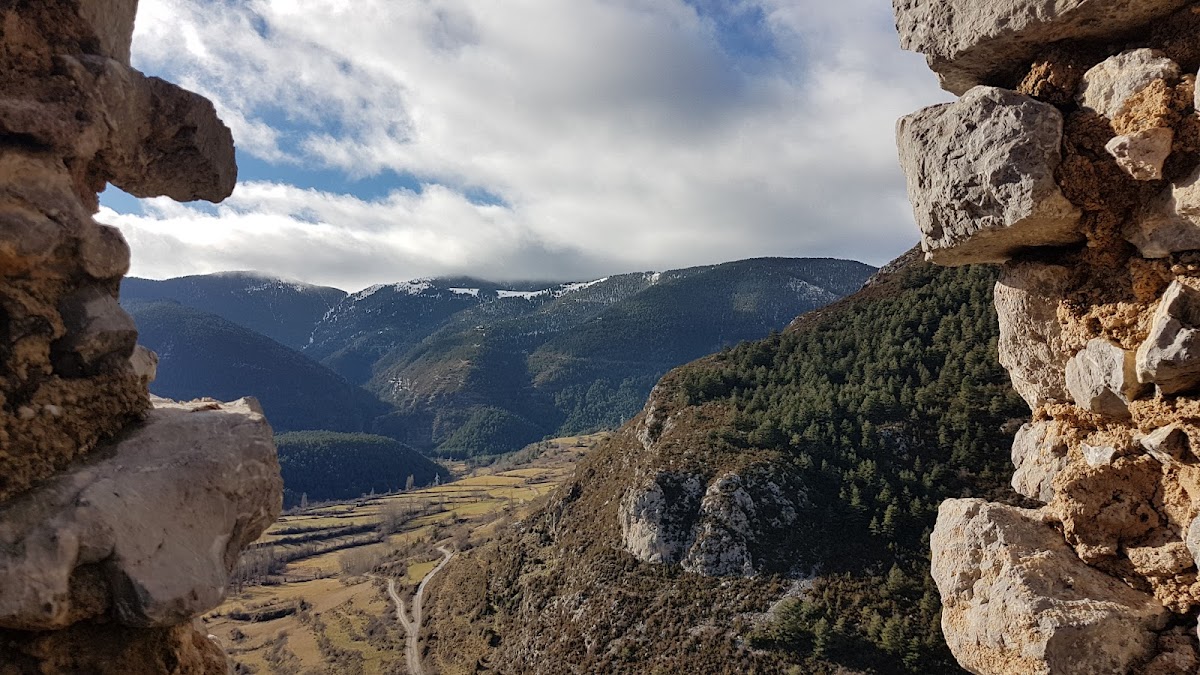
Gósol Castle occupies Tossal de Gósol at approximately 1,480 metres above sea level. The surviving complex includes a large square tower, sections of enclosing wall, the former parish church of Santa Maria del Castell de Gósol, and the remains of Vila Vella.
The castle is thought to have followed a rectangular plan at the highest point of the hill, east of the church. Its presumed position is an esplanade about 18 metres wide and 21 metres long. The settlement probably extended to the east and south of the seigneurial fortress. Parts of its enclosing wall remain, including a northern section made from broken limestone rubble. This wall does not appear to predate the twelfth century and may be later than that period.
The masonry uses small, roughly dressed stones laid in courses and bonded with mortar. Roofs have not survived. Several openings remain, although some are partly collapsed, and some may have been semicircular arches formed with wedge-shaped stones called voussoirs.
North tower
Form and construction
A tower stands on the northern side of the complex. Although it may have served a defensive purpose, its shape and position more likely connect it with the religious building to which it appears to be attached. Major alterations have changed the tower’s original form. It is irregular and slightly truncated-pyramidal, with an interior measuring approximately 412 by 405 centimetres and walls about 95 centimetres thick. Remains of probably four floors can still be seen.
Openings and relationship to the church
The tower has a doorway at ground level, a southern doorway facing the church at the height of the second floor, and a third doorway on the northern side at the level of the third floor. The openings were closed with arches that appear to be horseshoe-shaped. Discontinuities between the tower’s southern wall and the church suggest that the tower may predate the church, perhaps belonging to the eleventh or twelfth century. The northern and northwestern façades retain a coating of plaster or mortar, known as render, up to roughly half their height.
Santa Maria del Castell de Gósol
Santa Maria del Castell de Gósol is the former parish church within the castle enclosure. Its associated tower appears to have been built earlier and later connected to the church. The church itself underwent major historical alterations, leaving the religious building and tower as closely related but materially distinct parts of the surviving complex.