Castell de Falgons: A Historic Castle in Sant Miquel de Campmajor, Spain
Visitor Information
Google Rating: 4.7
Popularity: Very Low
Official Website: invarquit.cultura.gencat.cat
Country: Spain
Civilization: Early Modern, Medieval European
Site type: Military
Remains: Castle
History
Castell de Falgons is located in the municipality of Sant Miquel de Campmajor, Spain. Its origins are closely linked to the Cartellà family, a lineage whose beginnings are wrapped in legend tracing back to the time of Charlemagne in the 8th and early 9th centuries. Although precise records from that early period are lacking, members of this family appear in documented history from the 9th century onward.
The earliest known figure connected to the site is Galceran I, mentioned in the year 823. By the late 10th century, Guillem de Cartellà took part in the reconquest of Barcelona in 985, asserting the family’s early military involvement. Around 1010, Galceran de Cartellà continued this martial tradition by engaging in combat against the caliphate. By the start of the 12th century, the Cartellà family had established control over Castell de Falgons, alongside other fortifications such as Hostoles and Rocacorba.
During the early 13th century, the castle passed to Pere Galceran I de Cartellà (active 1208–1236), with one of his descendants, Galceran V, founding the branch of the family known as Cartellà-Falgons. At this time, in 1251, the castle fell under the jurisdiction of the nearby castle of Finestres. In the late 13th and early 14th centuries, Guillem Galceran II de Cartellà (1232–1322) gained recognition as a distinguished leader of the almogàvers, a group of Catalan light infantry. He notably participated alongside Roger de Llúria in the conquest of the Kingdom of Sicily. Chronicler Ramon Muntaner highlighted him as one of the era’s finest knights.
The Cartellà family gradually transformed the site from a large manor into a fortified castle that served as the center of their barony. From the early 15th century to the late 16th century, family members were buried at the parish church of Sant Vicenç de Felegoso, which is recorded in 14th-century census documents under the name Sant Vicenç de Fulgonitus. In 1463, Pere de Cartellà was registered as a vassal of the Bishop of Girona through his obligation to pay tithes. Several decades later, in 1523, Pere Galceran de Cartellà supported the Catholic Monarch Ferdinand in the campaign that led to the conquest of Granada. The historical record continues to mention the Cartellà family and their lordship over the castle until the 18th century.
Today, Castell de Falgons stands recognized as a cultural heritage site of national importance in Catalonia, representing centuries of regional history intertwined with the Cartellà family’s legacy.
Remains
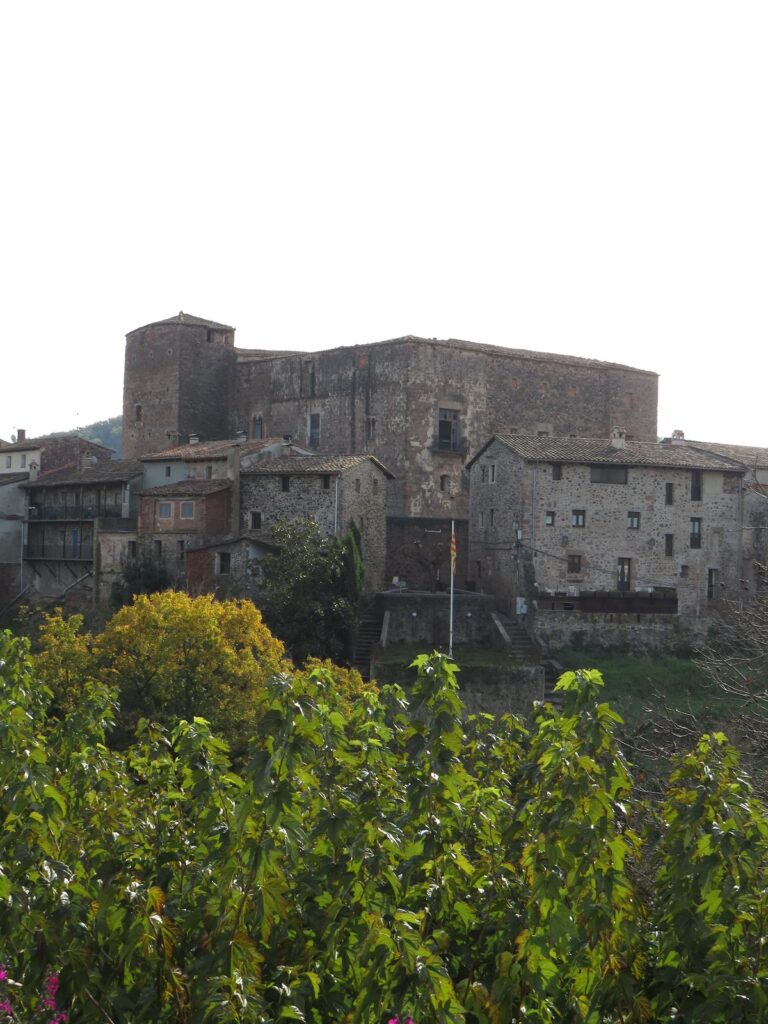
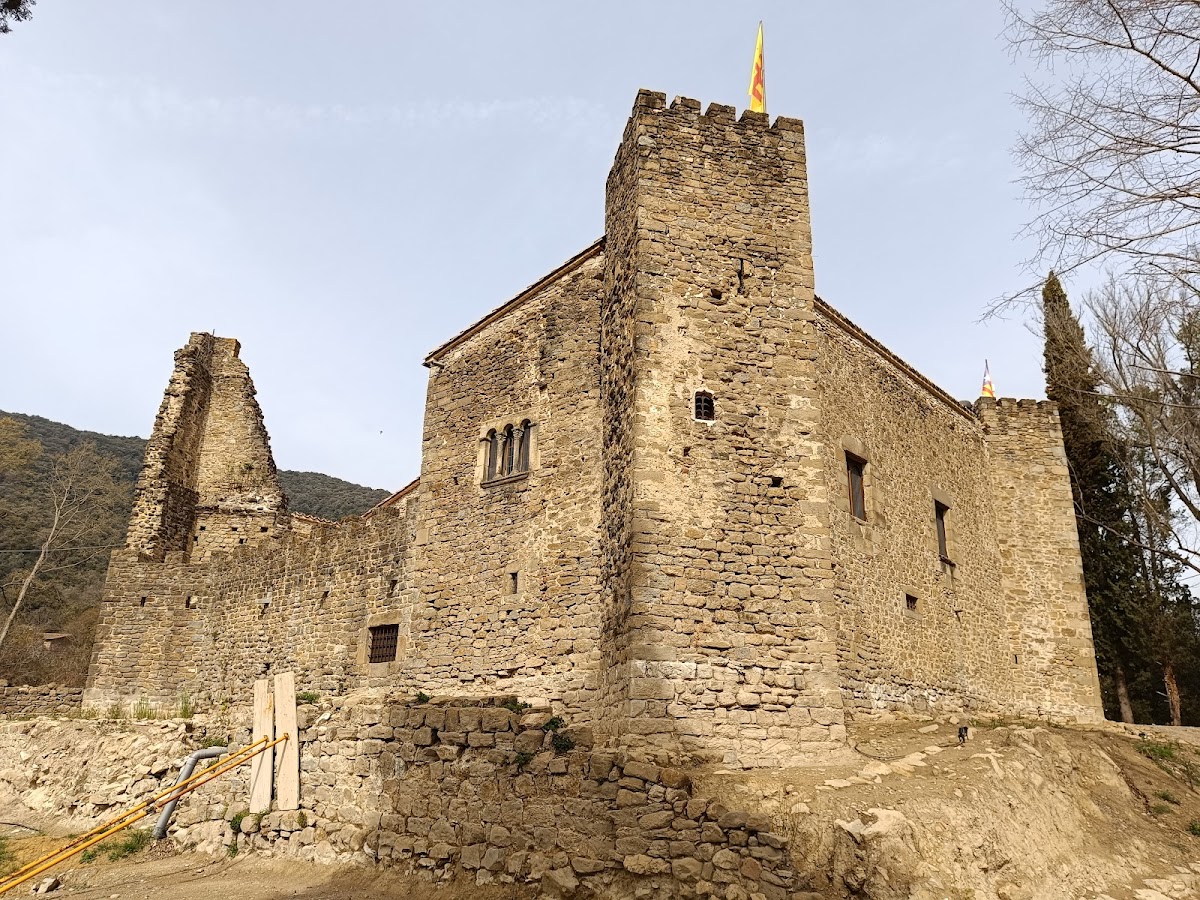
The castle’s layout is a roughly square plan that reflects its long and complex history, evolving from a sizable residential manor into a fortified stronghold. Its distinctive geometric form is the result of several phases of renovation and enlargement, which aimed to strengthen its defenses and adapt its internal spaces.
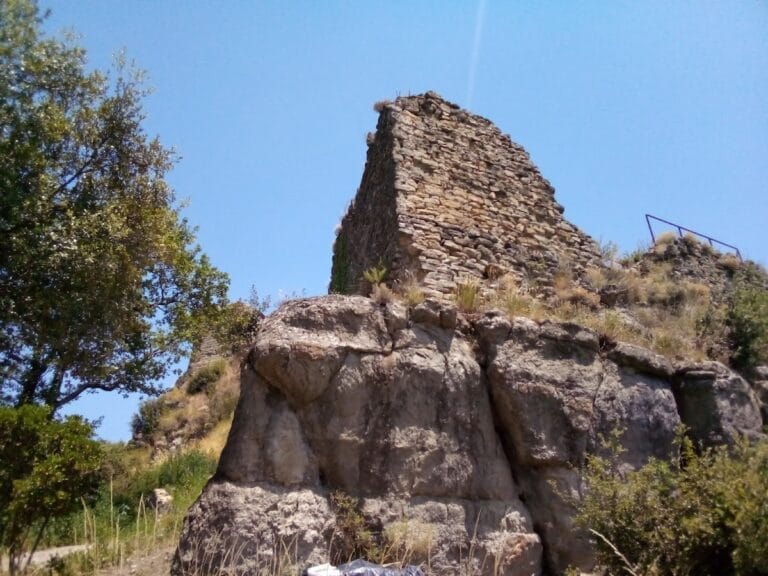
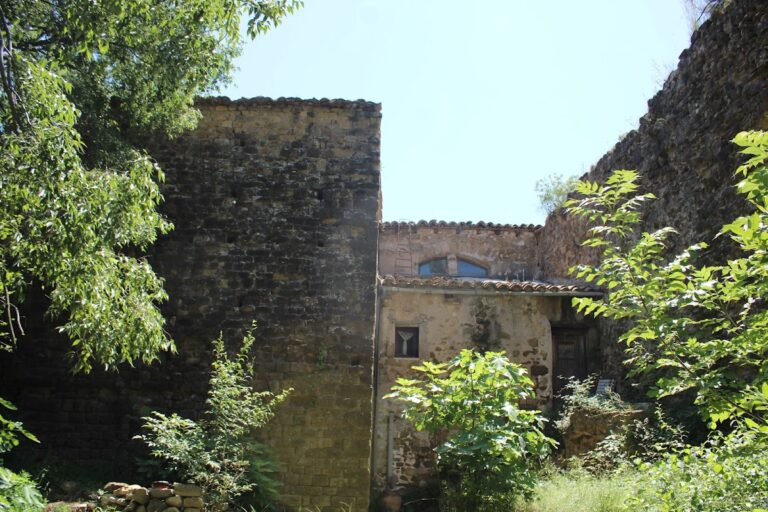
Surrounding the castle are high walls built with finely worked ashlar stone blocks, demonstrating skilled masonry. At each corner of the fortress, defensive towers were constructed to provide fortification and vantage points. While some corner towers have endured well, others show signs of decay. The tower at the southwest corner is partially ruined, with only a section of its wall still standing. The southeast and northwest towers remain mostly intact but no longer reach their original height.
Within the walls, a spacious central courtyard serves as the castle’s core. From this courtyard, a staircase with semicircular arches leads to the upper rooms. Around the courtyard’s edge, spaces once included the chapel of St. Anton, as well as stables and service quarters supporting the castle’s daily functions. The chapel’s presence underscores the castle’s religious connections highlighted in historical records.
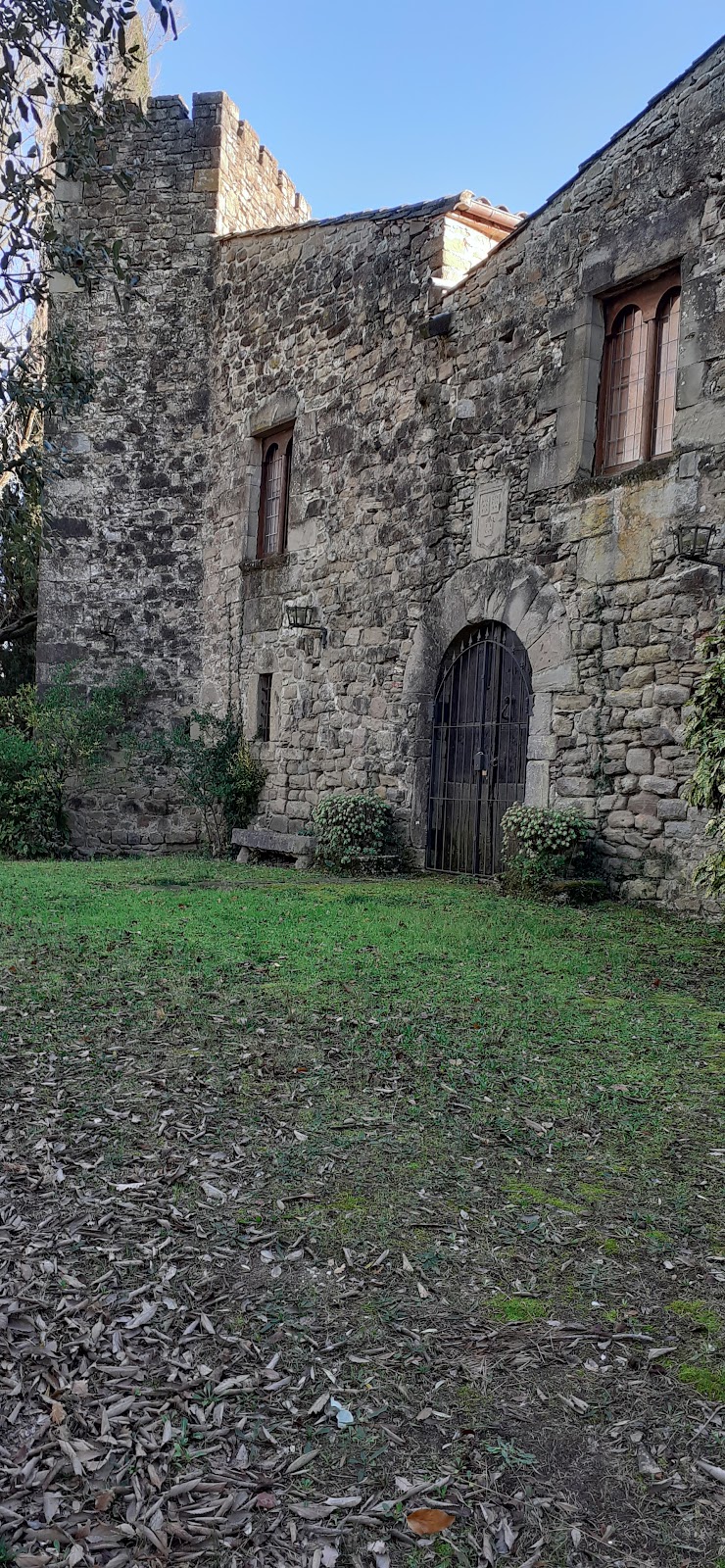
The main entrance is located on the principal façade and features a semicircular arch framed by wedge-shaped stones known as voussoirs. Above this doorway is the Cartellà family coat of arms, a visible emblem of ownership. Windows and other openings in the castle walls are rectangular with simple yet sturdy designs including single pieces of stone for lintels, and supporting stones beneath the sills.
Defense was a key concern in the castle’s design. Loopholes—narrow vertical slits used for archers—are preserved along the ground-floor walls, allowing defenders to observe and repel attackers while remaining protected. The interior courtyard follows a pattern typical for medieval castles, though many architectural details such as doors and windows chiefly date to later alterations in the 15th and 16th centuries.
Archaeological studies by experts like Lluís G. Constans i Serrats have dated significant portions of the castle’s towers and parts of the wall foundations to the 13th century. These elements reflect the medieval origins of the fortress and provide a tangible link to its early defensive role. Through its mixture of early stonework and later renovations, the remaining structures of Castell de Falgons offer a layered glimpse into the castle’s changing function and the heritage of its ruling family.
Nearby sites