Clariana Castle: A Medieval Fortress in Catalonia
Site at a Glance
- Popularity
- Very Low
- Country
- Spain
- Primary era
- Medieval
- Eras represented
- Medieval
- Civilizations
- Unclassified
- Site type
- Military
- Remains
- Castle
On this page7 sections
History
Early records and rebuilding
Clariana Castle was a medieval fortress in Argençola, Catalonia, Spain. It is first mentioned in 989, when Eldemar left it to his brother Sesmon de Oló, father of Guillem de Mediona, a member of the clergy.
Guillem’s clerical status has been taken to suggest that the castle was probably dependent on the church of Vic. The Benedictine monastery of Sant Cugat del Vallès also held rights over Clariana. In 1114, its abbot and Guillem Pere agreed to rebuild and restore the castle. This agreement has prompted the suggestion that the Almoravids, a North African Muslim dynasty that ruled parts of the Iberian Peninsula, had destroyed an earlier fortress.
The Clariana family line took shape around this period. Its members served as castellans, or officials responsible for a castle, while the abbot of Sant Cugat remained its lord.
Later ownership and status
In 1234, James I, the 13th-century king of Aragon, confirmed the monastery’s rights to the castle. During the following century, ownership passed to private individuals, among them Berenguer de la Ciera, Dalmau de Queralt, and J. Moxona.
On 8 November 1988, the castle received the designations Cultural Asset of National Interest and Asset of Cultural Interest.
Remains
Castle remains
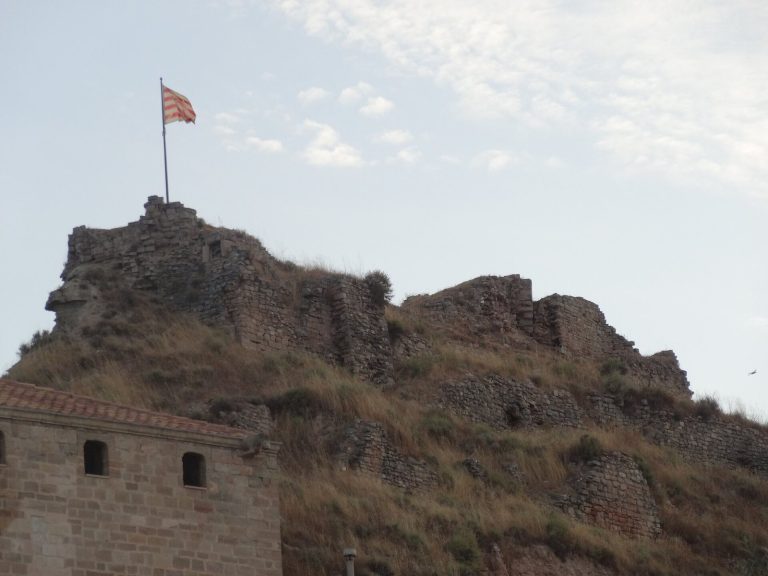
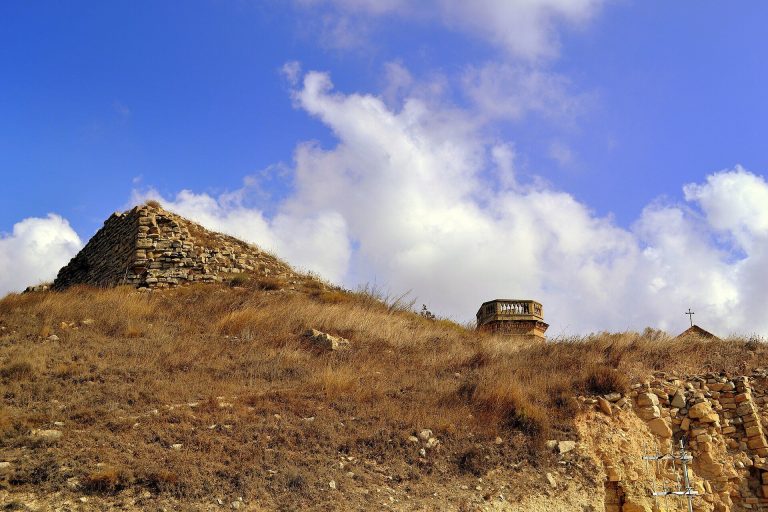
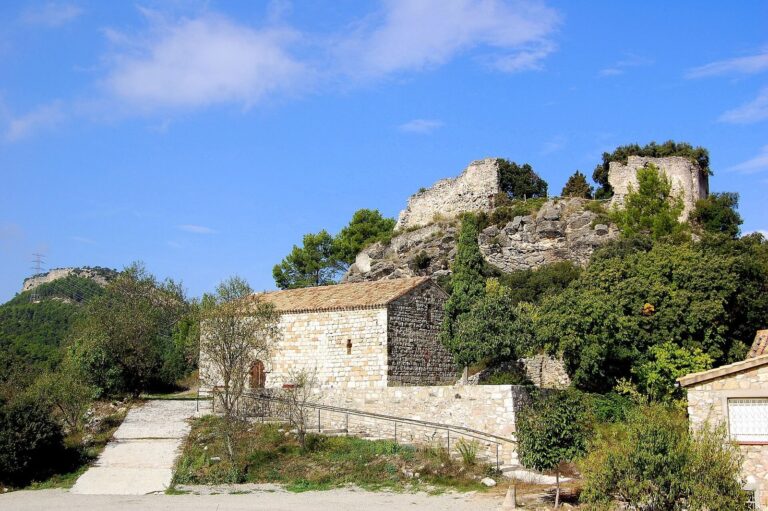
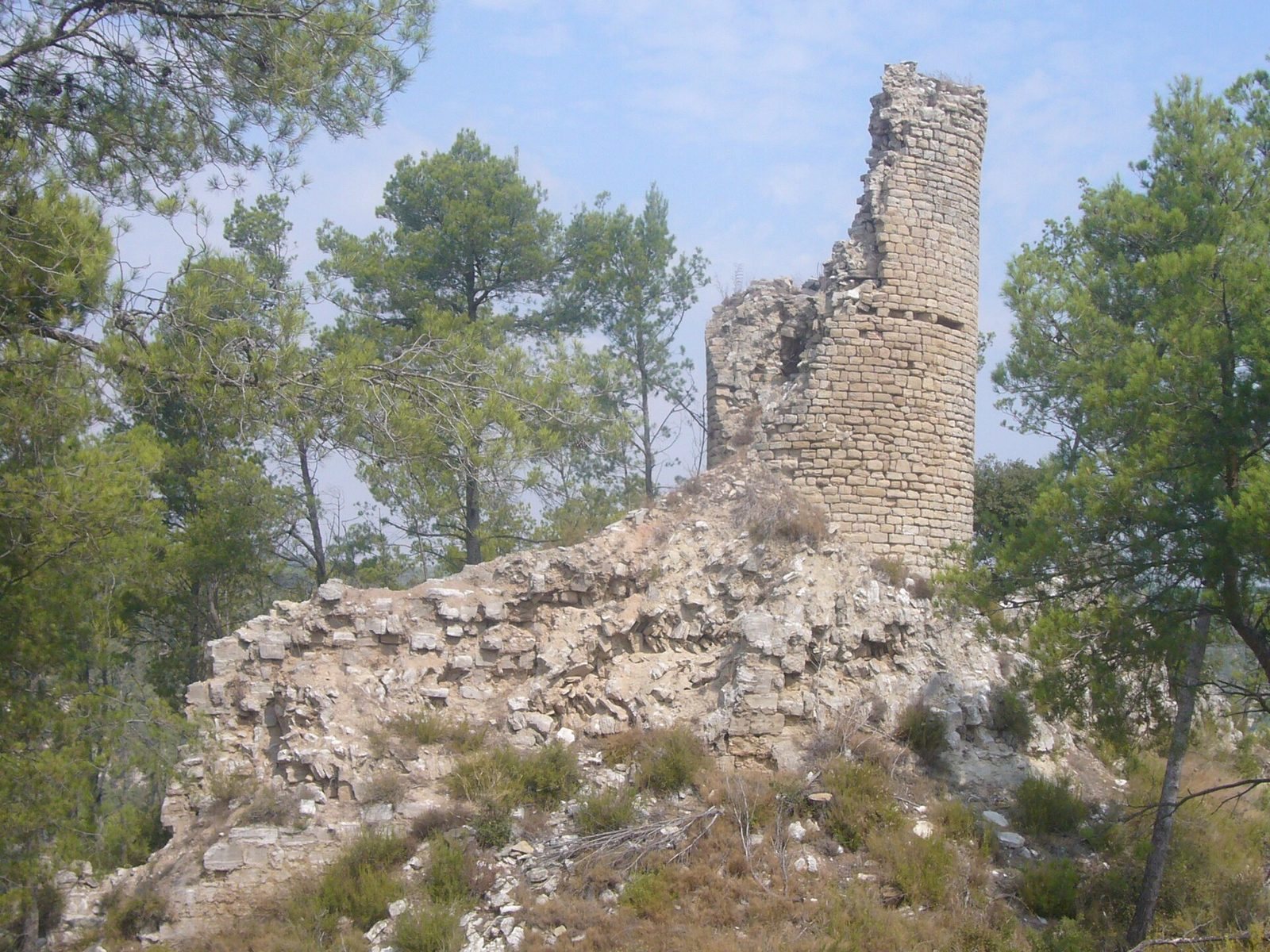
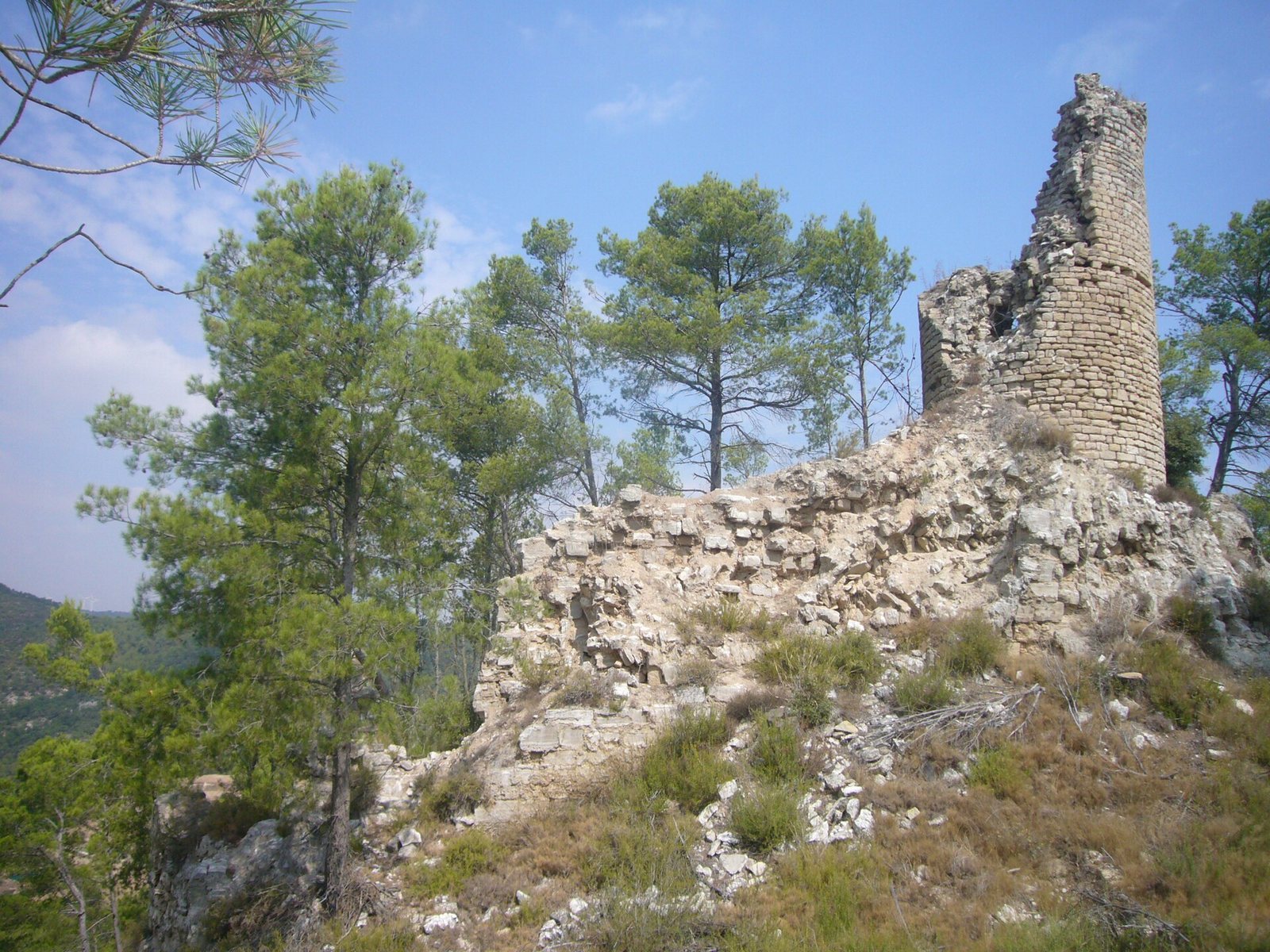
The surviving remains indicate a modest castle, with sections of wall and a circular tower. An arcade is attached to a wall of the Chapel of Santa Maria. The surviving fabric has been dated to around the second half of the 11th century, while the tower is assigned to the 12th century.
Circular tower
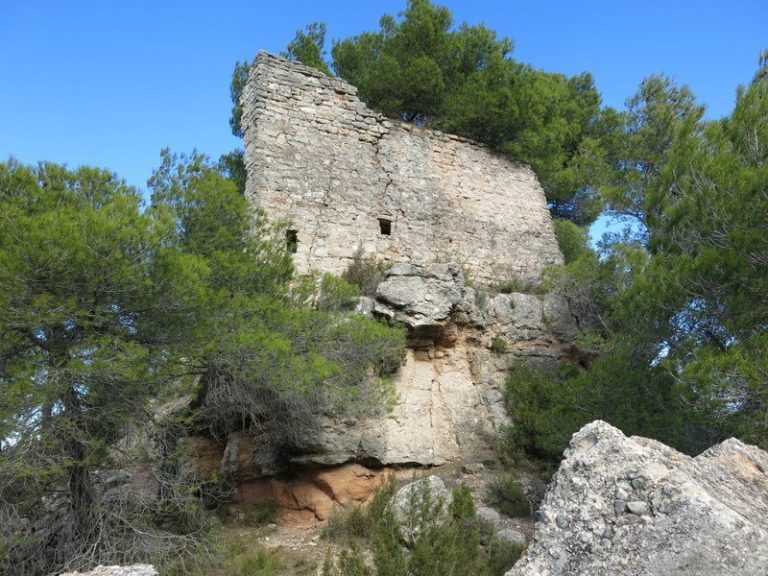
The badly damaged tower has a circular plan, measuring 5.16 metres across at its base and 1.78 metres across inside. It had three storeys, separated by stone vaults. Its masonry consists of small stones and has an overall harmonious appearance.
Chapel wall and rock-cut tomb
The castle’s arcade is attached to a wall of the Chapel of Santa Maria. A rock-cut tomb associated with the site has been looted.