Castell d’Hortal: A Medieval Fortress in Spain


Site at a Glance
- Rating
- 3.8
- Popularity
- Very Low
- Country
- Spain
- Primary era
- Medieval
- External website
- Open
- Eras represented
- Medieval
- Civilizations
- Crown of Aragon
- Site type
- Military
- Remains
- Castle
On this page7 sections
History
Castell d’Hortal is a medieval fortress in Spain, near Llers in Girona, whose first surviving record dates from 1099. In that year, Dalmau Berenguer de Quermançó transferred the castle, named Ordal in the record, to Bernat II, Count of Besalú, to settle disputes between the two counties. Dalmau Berenguer was viscount and lord of Castell d’Ordal and also held Peralada, Rocabertí, and Quermançó.
Conflicts between Besalú and Empúries
The castle later became involved in a conflict between the neighboring counties. Ponç Hug I, Count of Empúries, seized it from Berenguer Renard, Dalmau Berenguer’s son, after invading the borders of Besalú. Berenguer Renard was Viscount of Peralada and a relative of Ponç Hug. The Count of Barcelona, who at that time also held the title of Count of Besalú, returned the castle in 1128.
The Hortal family and the surviving tower
Thirteenth-century documents identify the Hortal family as the castle’s castellans, the people responsible for administering and defending it on behalf of its lord. The Horta family appears as lord of the castle from the beginning of the thirteenth century. The surviving tower belongs to the thirteenth or fourteenth century, placing its construction within the later medieval development of the fortress.
Heritage protection
Castell d’Hortal is protected in Catalonia as a Cultural Asset of National Interest and in Spain as a cultural-interest monument under reference RI-51-0005936. The Spanish designation dates from 8 November 1988.
Remains
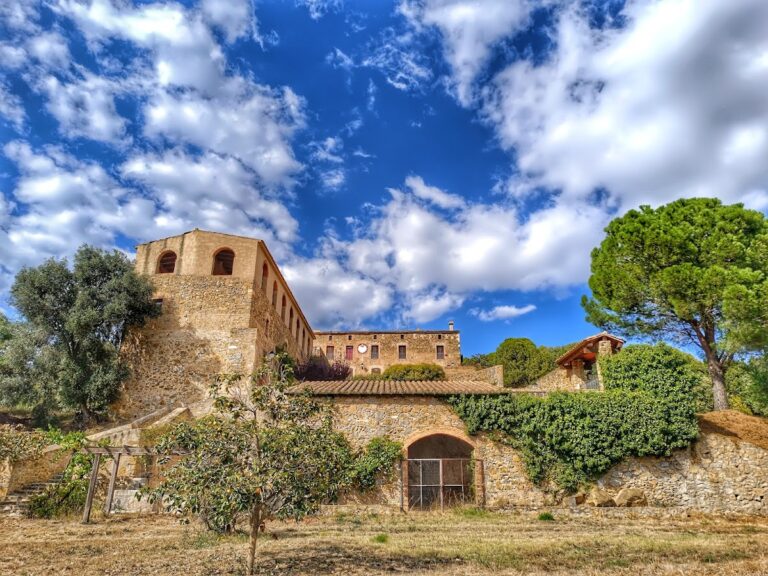
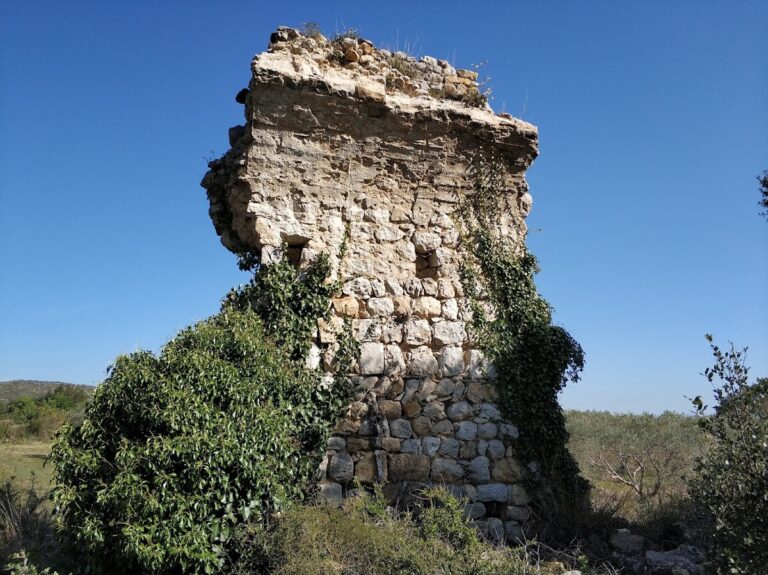
The remains occupy a small plateau about 1 kilometre west of Llers, near Mas de l’Estela in Alt Empordà. The fortress was adapted to the irregular ground and formed a roughly rectangular enclosure. Its surviving fabric is in a very deteriorated condition, with vegetation heavily covering several sections of the walls.
Northwestern tower
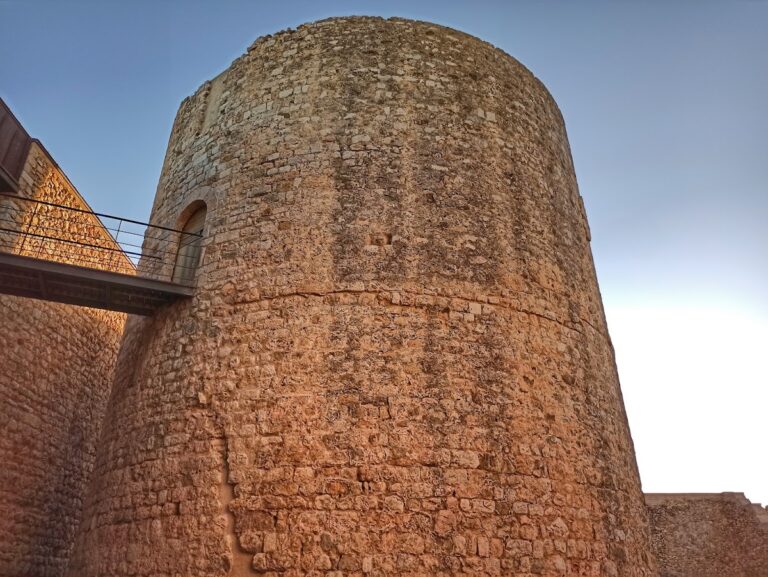
A circular tower stands at the northwestern end of the enclosure. It is approximately 7 metres high and 6 metres in diameter. The tower was built from small stone blocks arranged in continuous courses and bonded with lime mortar. Its upper crowning is badly damaged, while the exterior wall is pierced by scaffolding holes used during construction.
Enclosure walls
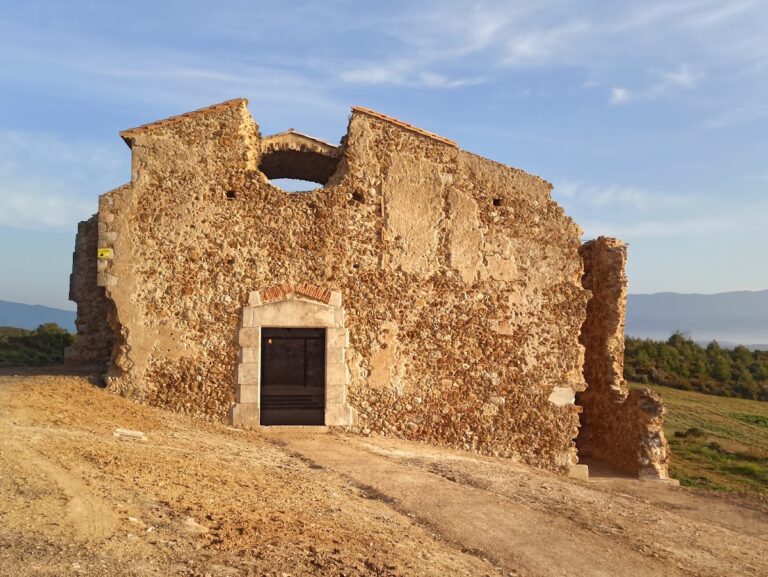
Several sections of the surrounding walls remain. One prominent stretch is approximately 10 metres long and 5 metres high. It consists of unworked or roughly dressed stone mixed with fragments of brick, all bonded with lime mortar. Together with the circular tower, these fragments define the surviving outline of the roughly rectangular fortress.
Castell d’Hortal is an example of vernacular architecture, a form of building shaped by local materials, construction practices, and traditions rather than by a formal architectural style.
Nearby sites