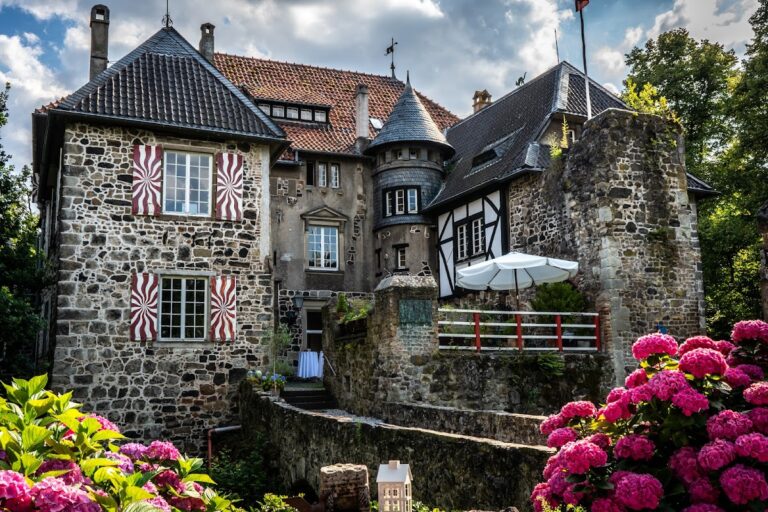
Dransdorfer Burg: A Former Knightly Seat in Bonn

Site at a Glance
- Rating
- 4.8
- Popularity
- Very Low
- Country
- Germany
- Primary era
- Early Modern
- External website
- Open
- Eras represented
- Early Modern
- Civilizations
- Holy Roman Empire
- Site type
- Domestic
- Remains
- Castle
On this page8 sections
History
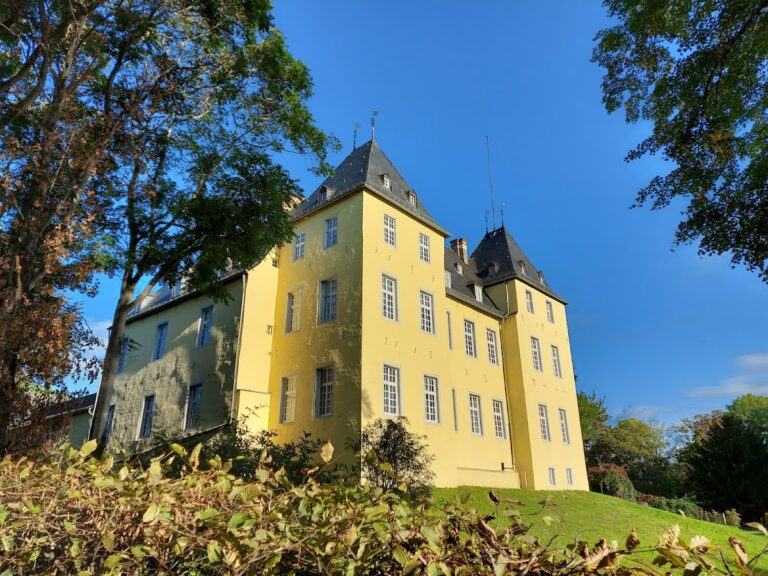
Dransdorfer Burg is a former knightly seat in Bonn, Germany, whose present building was constructed in 1742 after two earlier structures on the site. It developed in the territory of the Electorate of Cologne, an ecclesiastical principality of the Holy Roman Empire ruled by an archbishop who also served as an imperial elector.
Medieval origins and changing ownership
The first predecessor building probably arose around 1139, when Cuno von Travinstorp was documented as a ministerial of the Electorate of Cologne. A ministerial was a legally unfree but often socially elevated official who served a medieval ruler or ecclesiastical prince, commonly in administrative or military roles. The site was associated with the local knightly family by 1224, when Lambertus de Draynstorp was recorded.
Dransdorfer Burg changed hands several times. The Bonn alderman Albrecht von Zweiffel owned it in 1482. By 1664 at the latest, it belonged to the Cologne family von Lyskirchen, and the Junkersdorf family acquired it in the late seventeenth century.
Destruction and rebuilding
French forces burned the castle in 1695 during the War of the Palatine Succession, a European conflict fought from 1688 to 1697 that included French campaigns in the German territories. The castle burned again at the beginning of the eighteenth century, probably after being struck by lightning.
Franz von Groote acquired Dransdorfer Burg through his marriage to Agatha von Junkersdorf in 1716. After the second fire, he built an entirely new castle in 1742. The von Groote family retained ownership until 1860, when the death of Carl von Groote without an heir ended the property’s private ownership. The castle then passed to the Cologne Gymnasium and Foundations Fund, an institutional fund connected with the administration and support of Cologne’s schools and ecclesiastical foundations, which leased it.
Municipal use and protection
The City of Bonn purchased the castle and an estate of 400 Morgen in 1954. After renovation, a branch of the municipal music school opened in the building on 27 September 1973. Dransdorfer Burg and its castle chapel are listed as protected architectural heritage monuments in the City of Bonn’s monument list under designation A 1918.
Remains
The surviving complex consists of the castle building and a small castle chapel, also known as the Antonius Chapel. It stands slightly apart from Siemensstraße near the center of Dransdorf, beside the Ketteler School and opposite St. Antonius Church. The present castle dates from the 1742 rebuilding and is constructed of brick beneath a hipped roof, whose sloping surfaces descend on all sides rather than ending in vertical gable walls.
Castle and chapel
Castle building
The castle building survives either in its entirety or with substantial parts preserved. Its brick construction and hipped roof belong to the rebuilding undertaken by Franz von Groote in 1742. The building now houses a branch of Bonn’s municipal music school.
Castle chapel
The castle chapel, or Antonius Chapel, forms the second surviving element of the complex. First mentioned in 1575, it measures 30 square metres and remains part of the protected historic ensemble.