Holy Trinity Church in Stedro: Parish Church of Segonzano, Italy
Site at a Glance
- Popularity
- Very Low
- Country
- Italy
- Primary era
- Early Modern
- Eras represented
- Medieval, Early Modern, Modern
- Civilizations
- Austria-Hungary, Habsburg, Holy Roman Empire, Italian
- Site type
- Religious
- Remains
- Church
On this page12 sections
History
Holy Trinity Church is the parish church of Stedro, a hamlet of Segonzano in Italy. It belongs to the Roman Catholic Archdiocese of Trento, a Catholic territory led by an archbishop, and the Mezzolombardo pastoral zone, a grouping of parishes for pastoral coordination.
Medieval chapel and Gothic church
The church first appears in written records in 1348. Its predecessor was a Romanesque chapel, built in an early medieval European style and dedicated either to the Holy Savior or to the Holy Spirit. It was demolished between 1468 and 1469 and replaced by a Gothic church, built in a later medieval style. Suffragan bishop Francesco De la Chiesa, a diocesan bishop under a metropolitan archbishop, consecrated the new building on 1 September 1499. It was dedicated to the Holy Trinity, understood in Christian belief as one God in Father, Son, and Holy Spirit, and raised to curacy status. A curacy was an ecclesiastical community served by a priest but below full parish status.
The 1499 church included a sacristy, an ossuary for storing human bones, and an organ gallery along the inside of the façade. After 1632, its decorations were removed because they were considered unsuitable.
Eighteenth-century rebuilding
A pastoral visit found the church too small, prompting extensive rebuilding after 1710. The principal construction work was complete by 1738. A sacristy was added, and the bell tower followed in 1744. The church was consecrated on 1 July 1749, and its paving was laid afterward.
Later changes and restoration
The churchyard remained a cemetery until 1849, when the cemetery was moved a short distance away. The presbytery, the area around the main altar, was enlarged in 1888. The 1976 Friuli earthquake damaged the church. Restoration and archaeological excavation followed in 1977; excavators found traces of an earlier structure that may date to the 12th century or as early as the 10th century. The remains may belong to two successive buildings.
Remains
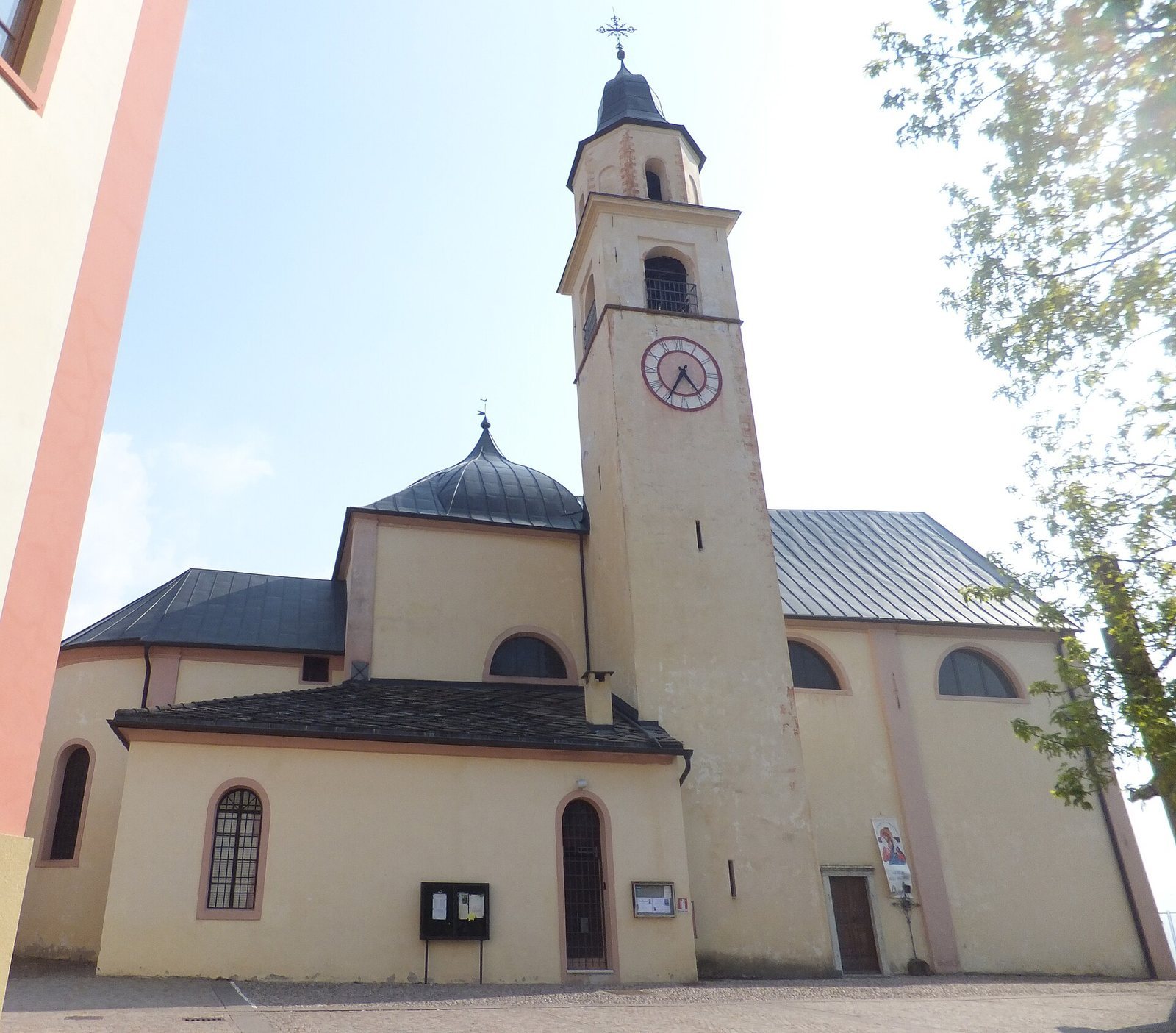
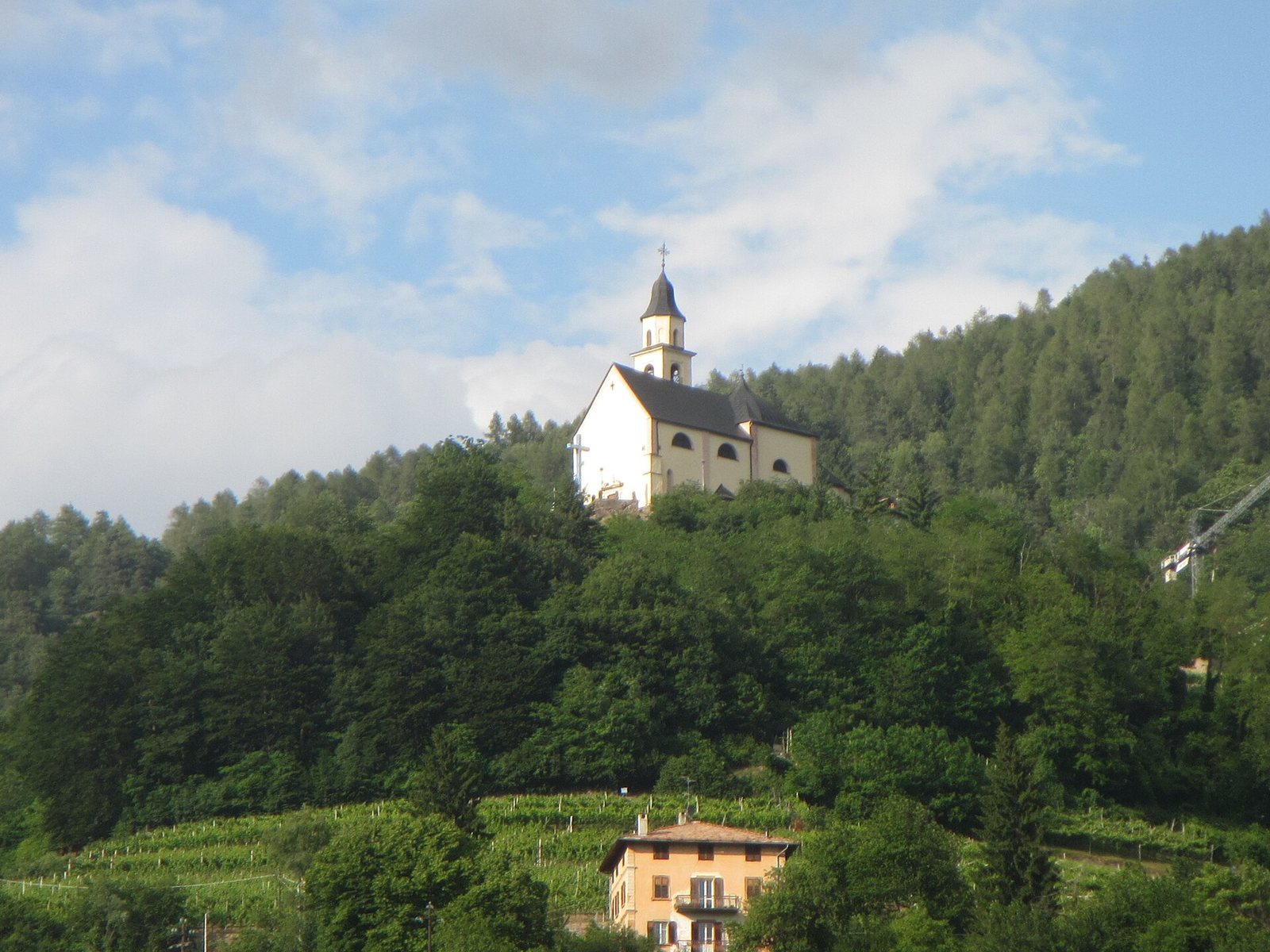
The church stands on a natural terrace rising steeply above the Cembra Valley. Its exterior preserves the façade and right side of the Gothic building alongside fabric from the later rebuilding. The interior has a single nave divided into three sections, with the altar area extending beyond it.
Exterior
Façade and surviving Gothic side
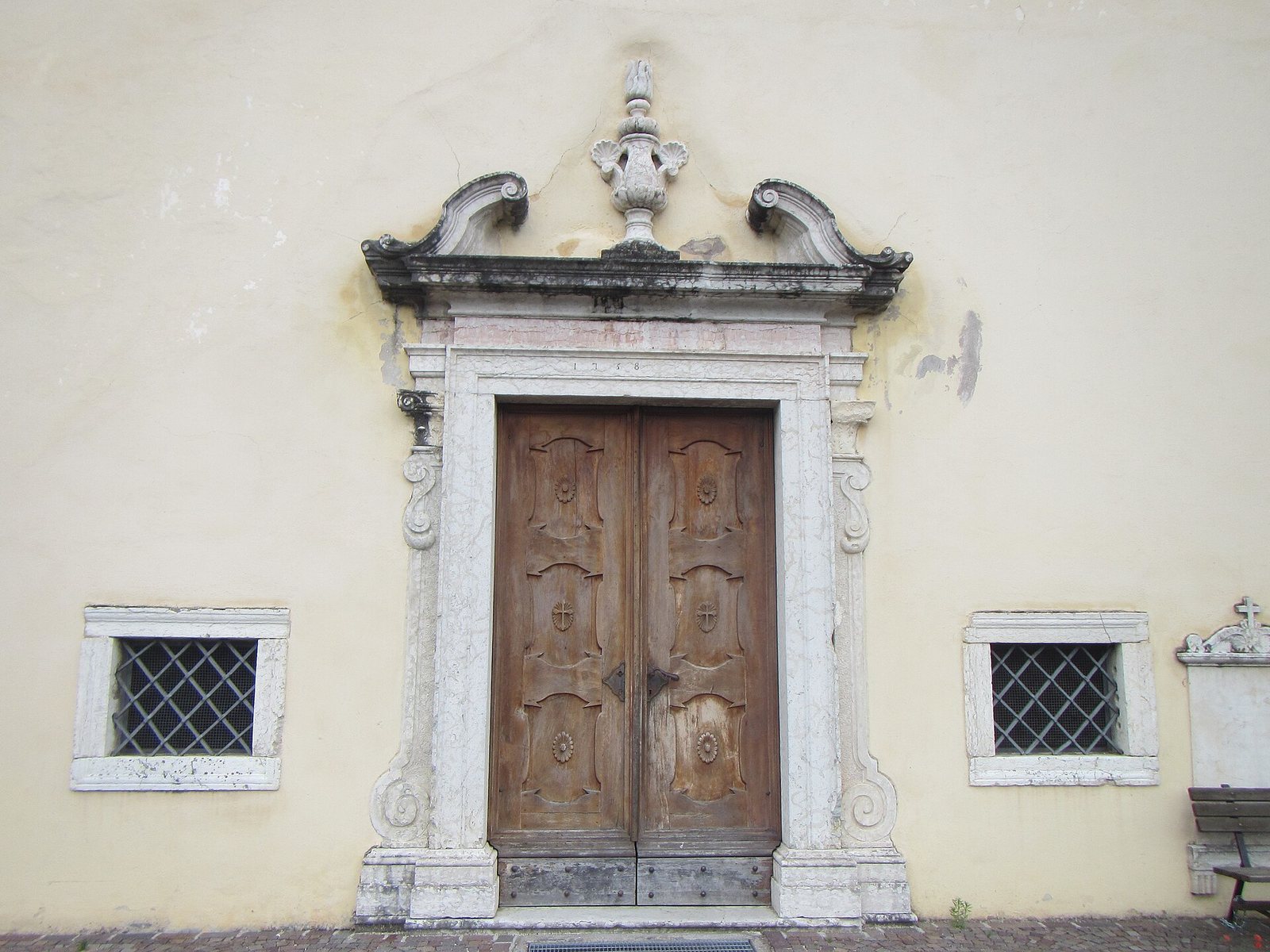
The plain façade is framed by two corner supports. Its central portal sits below two small rectangular windows, with a cross-shaped opening above. The right side retains a blocked pointed-arch window in its first section, a remnant of the Gothic church. Each side elevation is divided by two flat vertical wall strips and has three tall arched windows and a side entrance.
Bell tower and presbytery windows
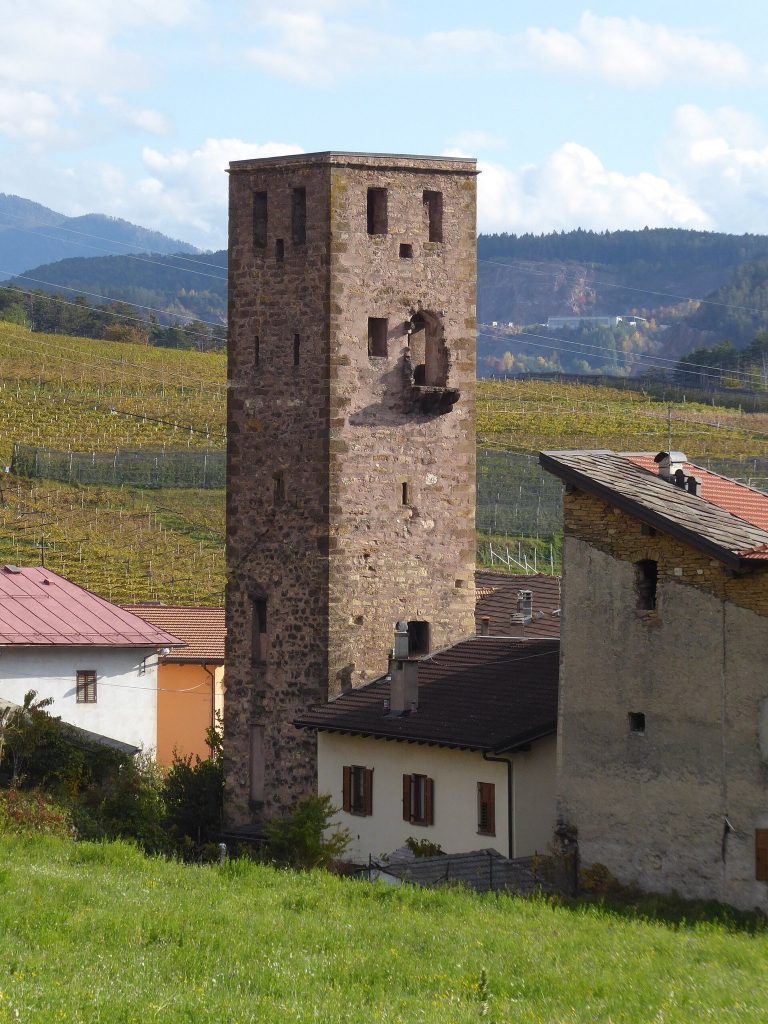
The sacristy and bell tower are attached to the church’s left side. The tower’s bell chamber has openings, each with a single aperture. Above it, an eight-sided section has four open and four blocked single-aperture openings arranged in alternating order. The presbytery has three stained-glass windows, two on the left and one on the right.
Interior and furnishings
Nave and painted decoration
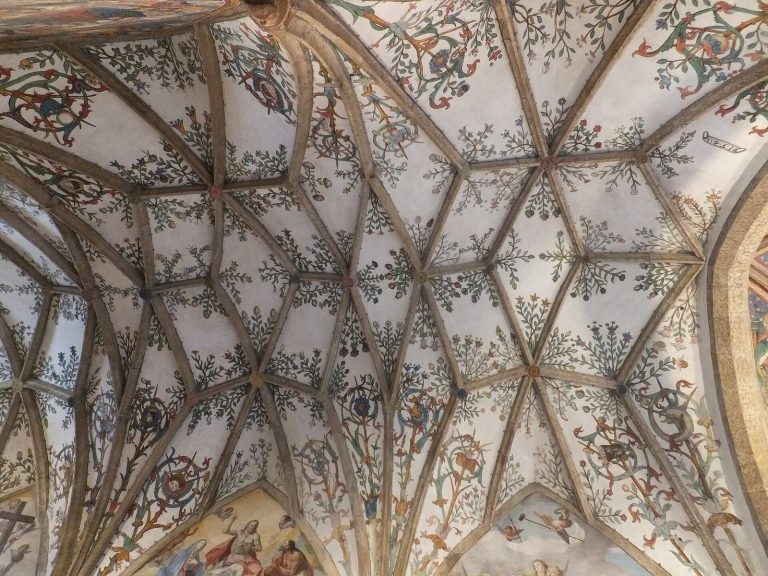
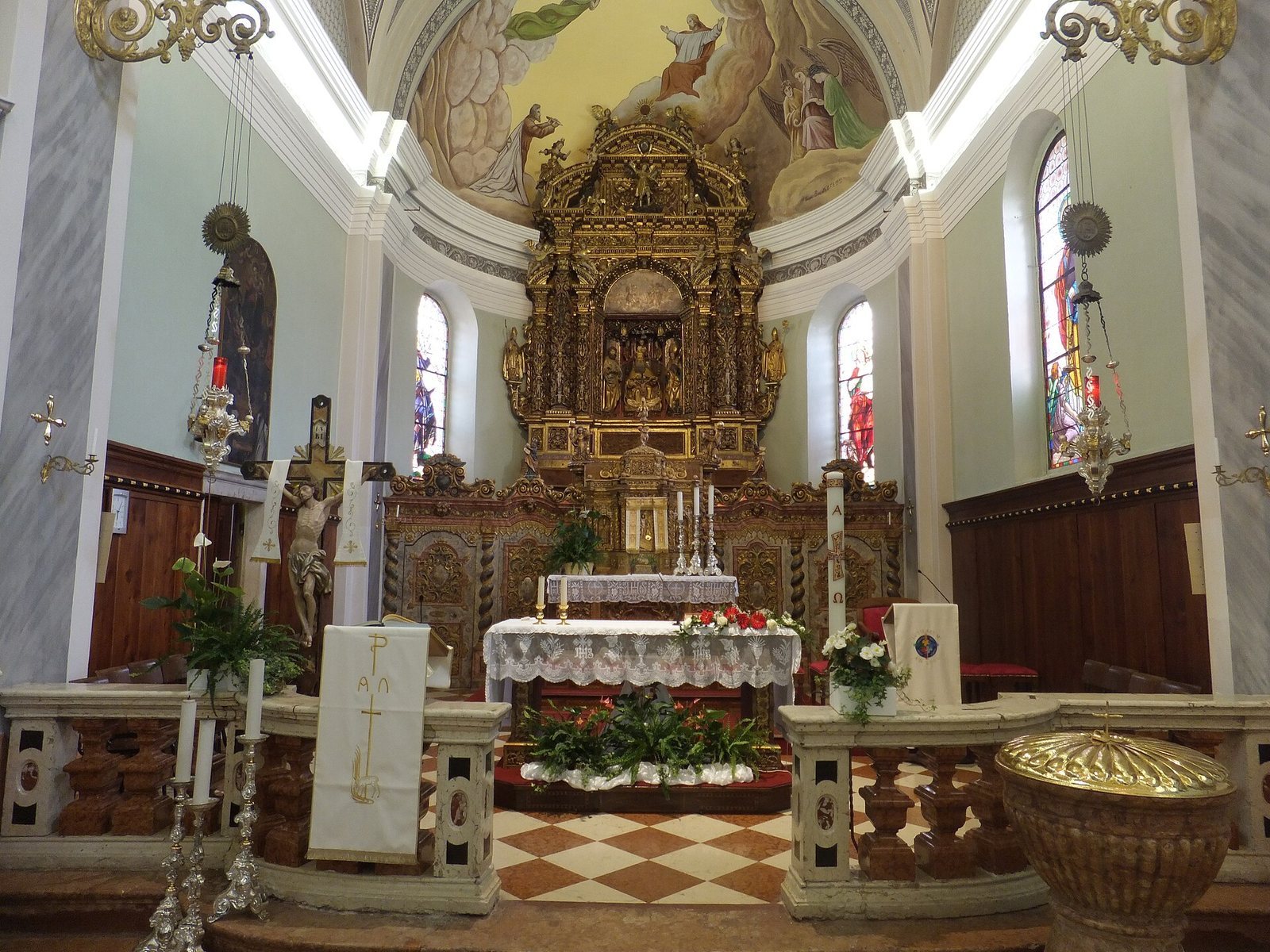
The raised third section of the nave forms an eight-sided dome that originally served as the presbytery. The present presbytery lies beyond the arch at the dome’s end. A wooden gallery above the entrance holds the organ. In 1922, Franciscan friar Nazario Barcatta painted scenes of the Trinity in the dome and saints on the vaulted ceiling. A canvas by Giovanni Battista Rovedata in the presbytery depicts the Madonna of the Rosary with Saints Dominic and Catherine of Siena, alongside souls undergoing purification after death in Catholic belief.
Main altar and shrine
The large main altar is Baroque, a European artistic style. Its gilded tabernacle, an altar container, dates to 1520 and shows Christ emerging from the tomb, accompanied by bishops and angels. The choir doors around the altar date to the first half of the 18th century. At the center of the altar ensemble is a late-Gothic shrine from the mid-15th century. It depicts God the Father holding a crucifix, with Saints Valentine and Augustine. The shrine forms part of a Baroque arrangement dated 1663, with columns, figures, and ornament, topped by the archangel Michael holding scales.
Side altars
Two side altars are dedicated to the Madonna of the Rosary and Saint Bartholomew, the patron saint of Segonzano.