Scharnstein Castle Ruins: A Medieval Hilltop Fortress in Austria
Site at a Glance
- Rating
- 4.7
- Popularity
- Medium
- Country
- Austria
- Primary era
- Medieval
- Eras represented
- Medieval
- Civilizations
- Duchy of Austria, Habsburg, Holy Roman Empire
- Site type
- Military
- Remains
- Castle
On this page4 sections
History
Origins and Habsburg ownership
Scharnstein Castle Ruins are the remains of a hilltop fortress in Scharnstein, Austria, probably built by the Counts of Rebgau during the 12th century. The castle later passed among several noble families, including the Polheim and Walseer families and Bernhard von Scherffenberg. In 1499, Maximilian I, a Habsburg ruler who was then King of the Romans and later became Holy Roman Emperor, purchased it. He enlarged the castle for use as a hunting base and placed its administration in the hands of imperial stewards.
Fire and later ownership
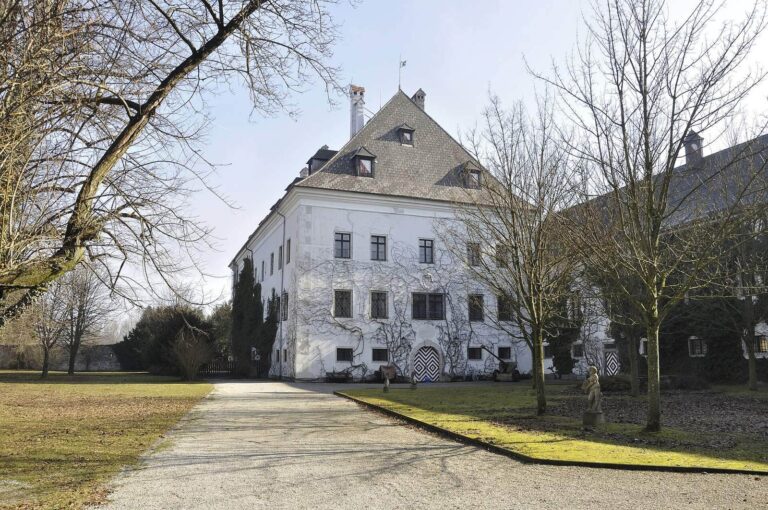
Carelessness caused a fire that destroyed the castle in 1538, after which it remained a ruin. Administration of the estate moved to a newer building near the town, Neuscharnstein, also known as Schafferleithen and now called Scharnstein Castle. In 1584, Helmhart Jörger, who established scythe production in the Almtal, acquired the lordship. He enlarged Neuscharnstein while the older fortress fell into further decay. Kremsmünster Abbey, a Benedictine monastery in Upper Austria, has owned the site since 1626.
Remains
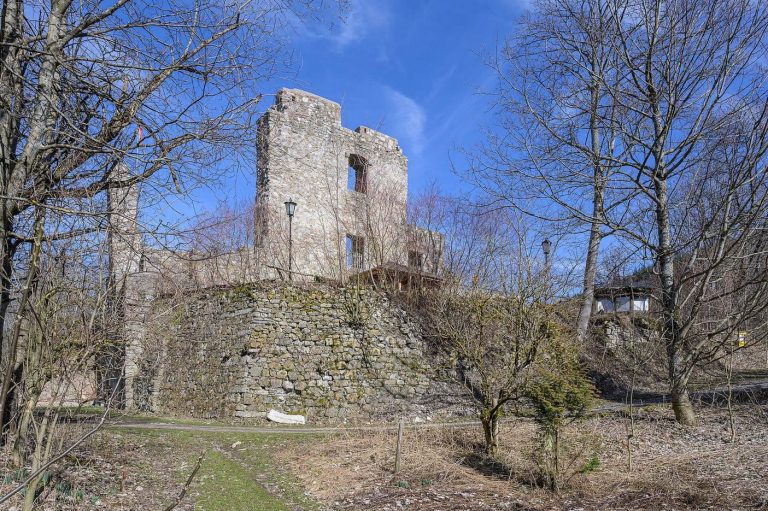
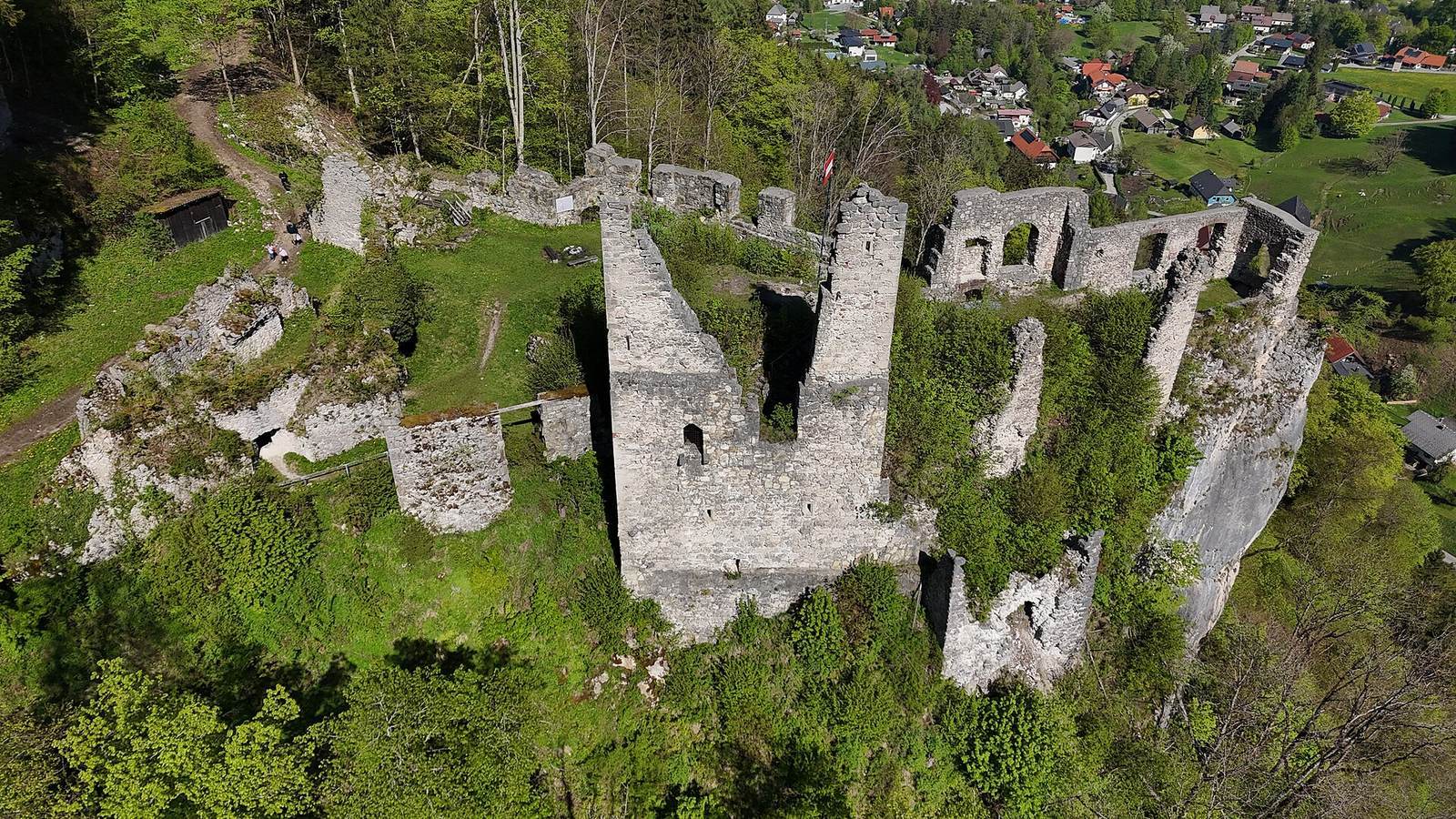
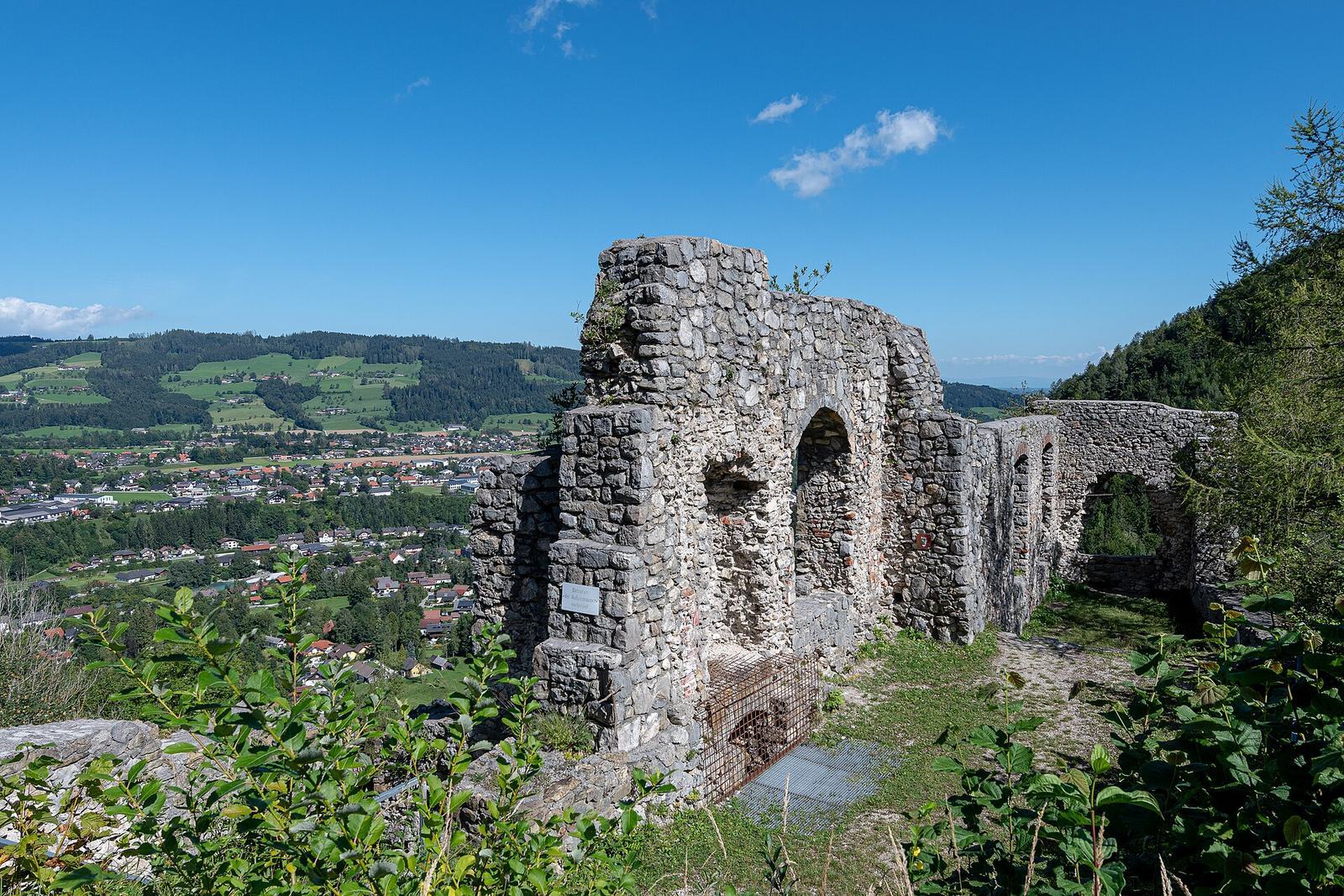
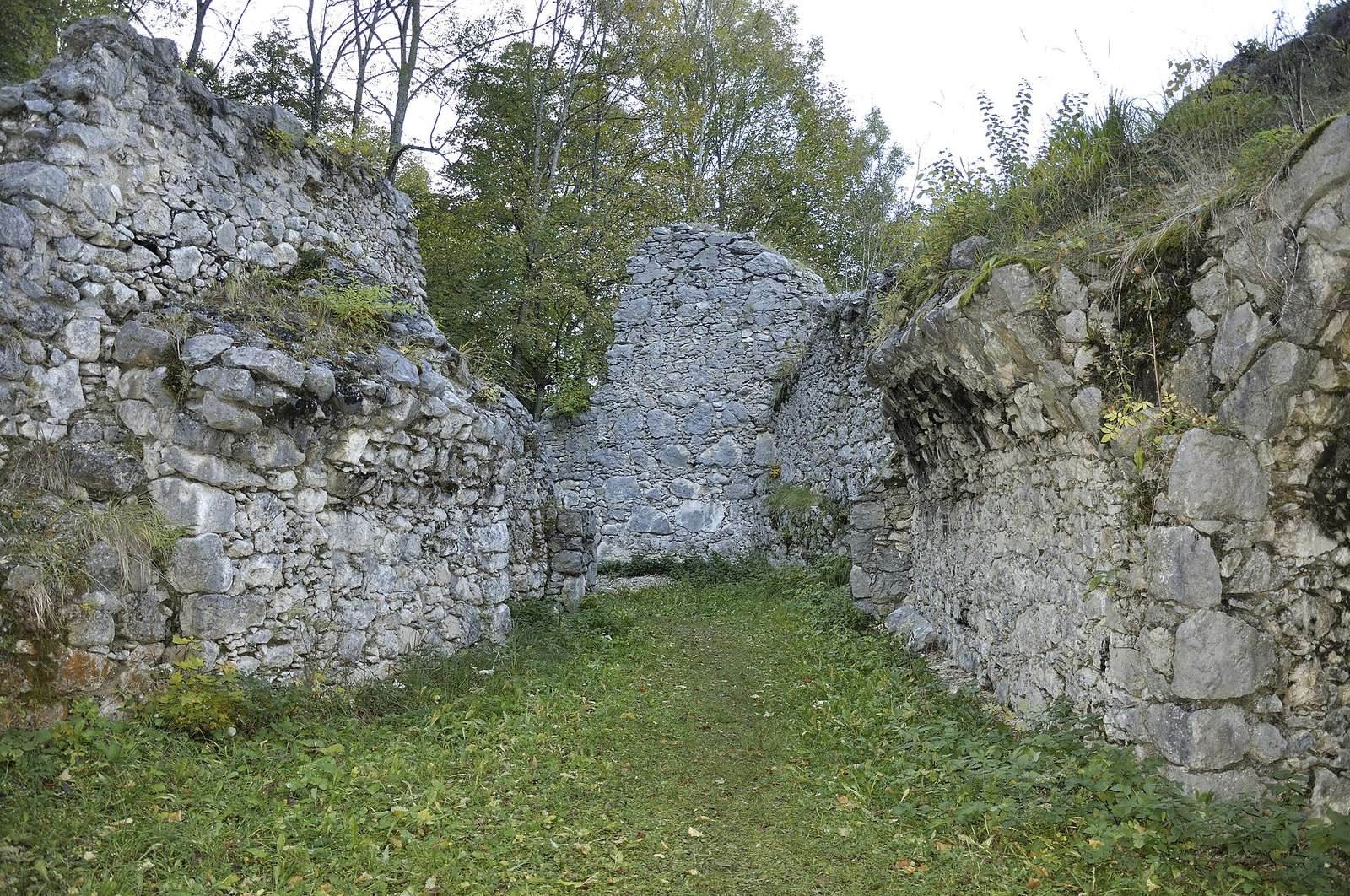
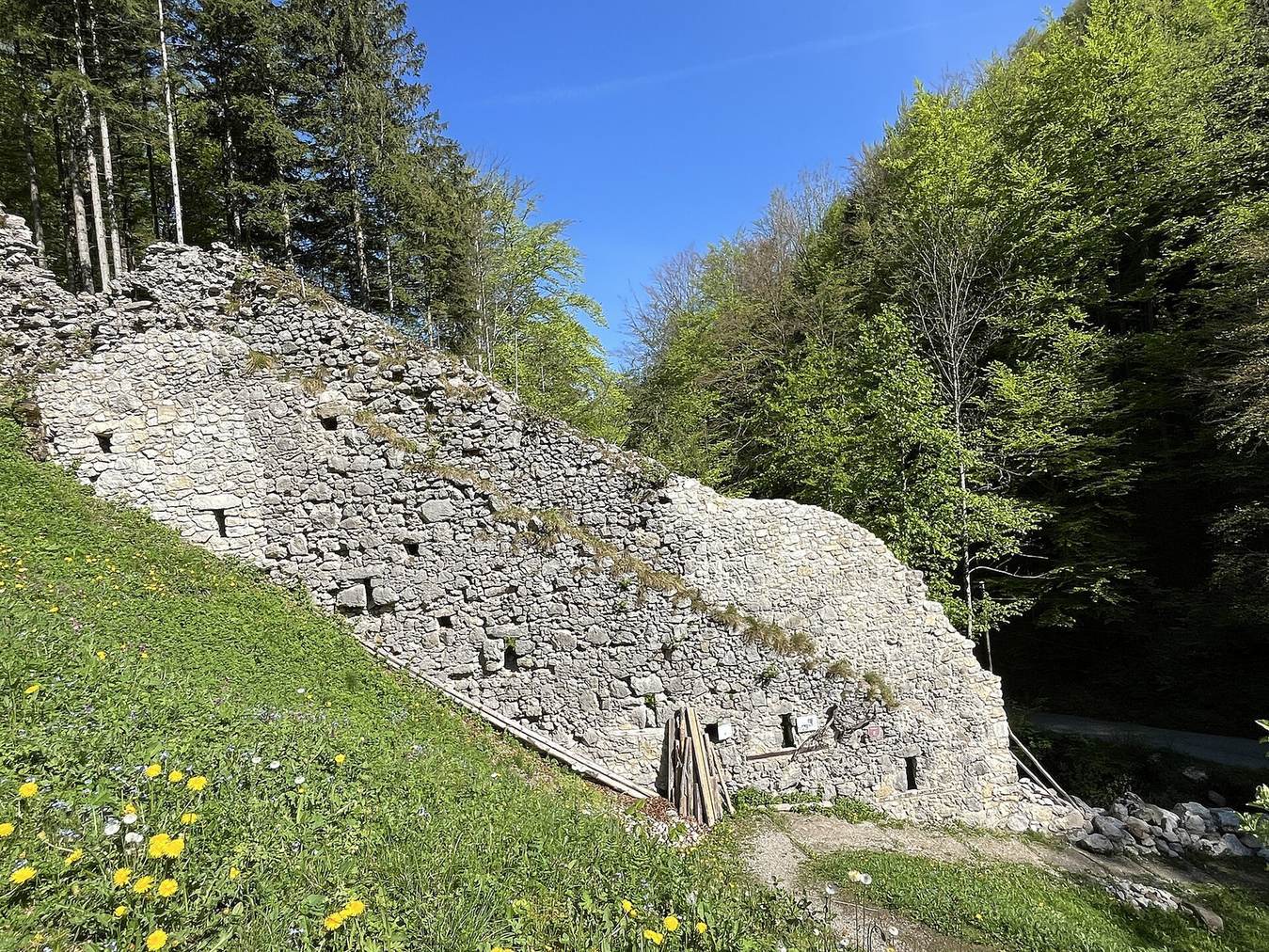
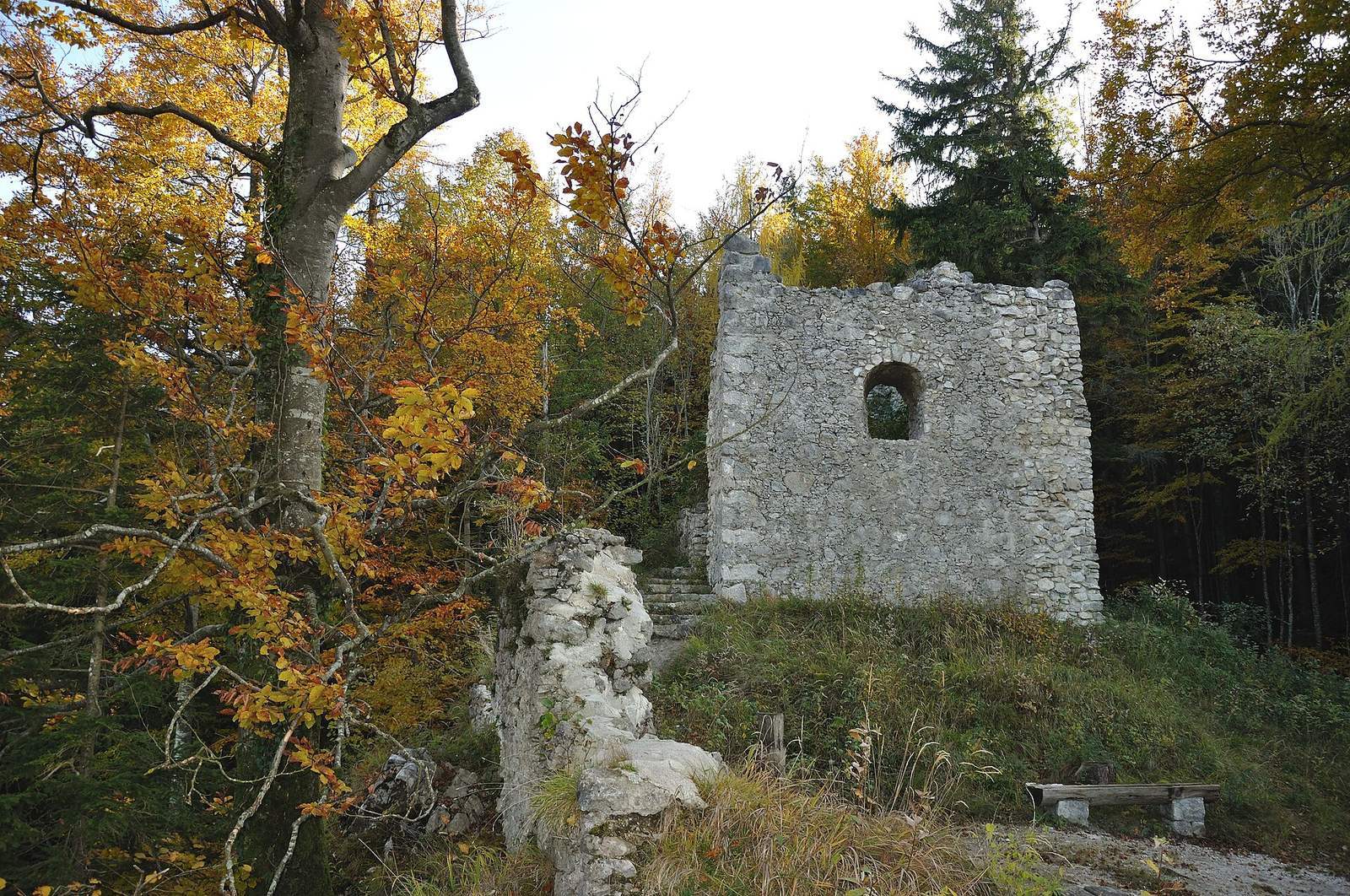
The former fortress occupies a rocky outcrop above the Tiessenbach valley. Its layout rises across the rock, with the Mitterturm, or Middle Tower, set above the main castle and the Hochturm, or High Tower, on a still higher rock.
A rock chapel is located on the ascent from the Tiessenbach. Together, the towers and chapel mark the principal surviving features described at the site.