University of Santa Catalina: A Renaissance University in Spain
Site at a Glance
- Rating
- 4.6
- Popularity
- Low
- Country
- Spain
- Primary era
- Early Modern
- Eras represented
- Early Modern
- Civilizations
- Crown of Castile, Habsburg, Habsburg Spain, Spanish
- Site type
- Civic
- Remains
- University
On this page9 sections
History
The University of Santa Catalina, also known as the University of Osma, was founded in Spain in 1550 by Pedro Álvarez de Acosta, the Portuguese bishop of Osma. Dedicated to Saint Catherine of Alexandria, it taught arts, canon law, medicine, and theology. A papal bull, a formal document issued by the pope, authorized it on 5 August 1550.
Foundation and royal protection
On 31 January 1562, Philip II placed the university under the protection of the Spanish Crown. It consequently held both papal authorization and royal status.
Suspension and political disruption
Political and educational changes, along with a shortage of money, contributed to the university’s decline from 1751. Teaching stopped from 30 October 1770 until 1 December 1778, then resumed during a period of strong intellectual activity. The building underwent reforms in 1779.
The university closed on 5 August 1807 during the Peninsular War, the conflict against French rule in Spain and Portugal. It reopened on 7 October 1814, but teaching and professorships did not return to normal. It shut again from 19 November 1833 to 1 October 1839, after being regarded as a center of political agitation.
The university was transferred to Soria and closed for good in the academic year 1841–42. El Burgo de Osma had supported the losing side in the First Carlist War, a Spanish civil war over succession to the throne.
Closure and later uses
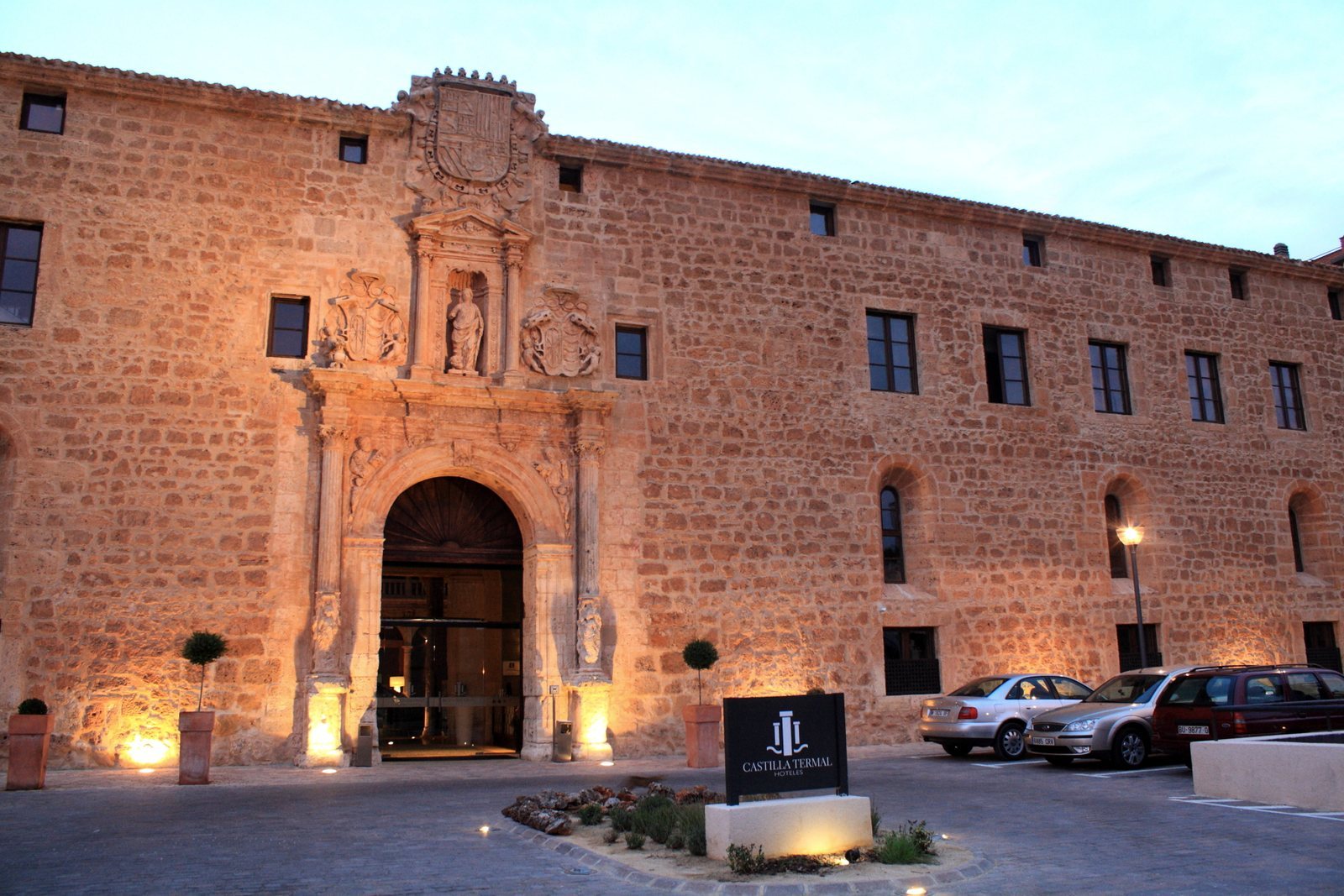
After the university closed, its building served as a secondary school, barracks, and vocational institute. University summer courses were also held there in August. The building was later converted into a hotel and is now the Hotel Termal Burgo de Osma.
Remains
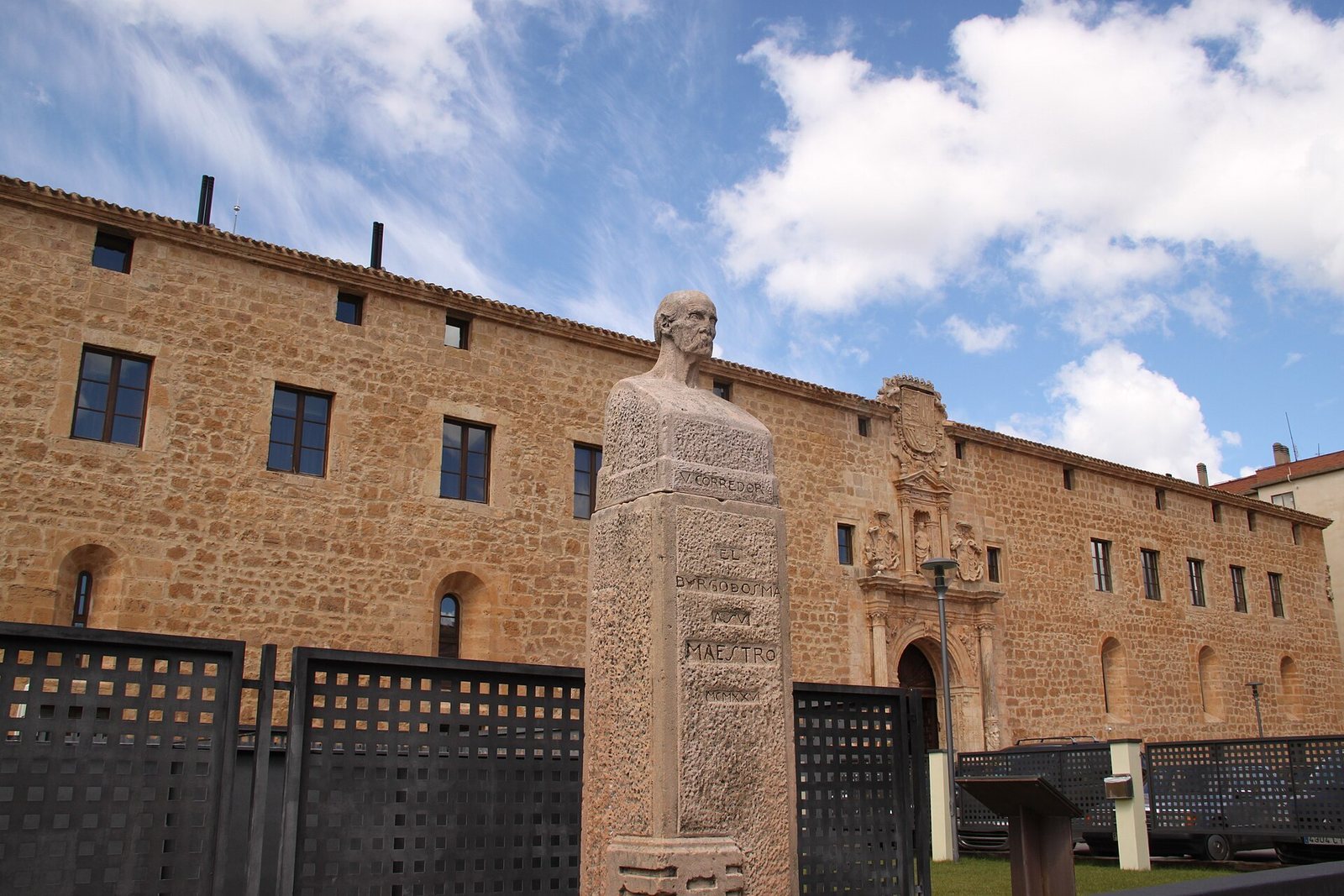
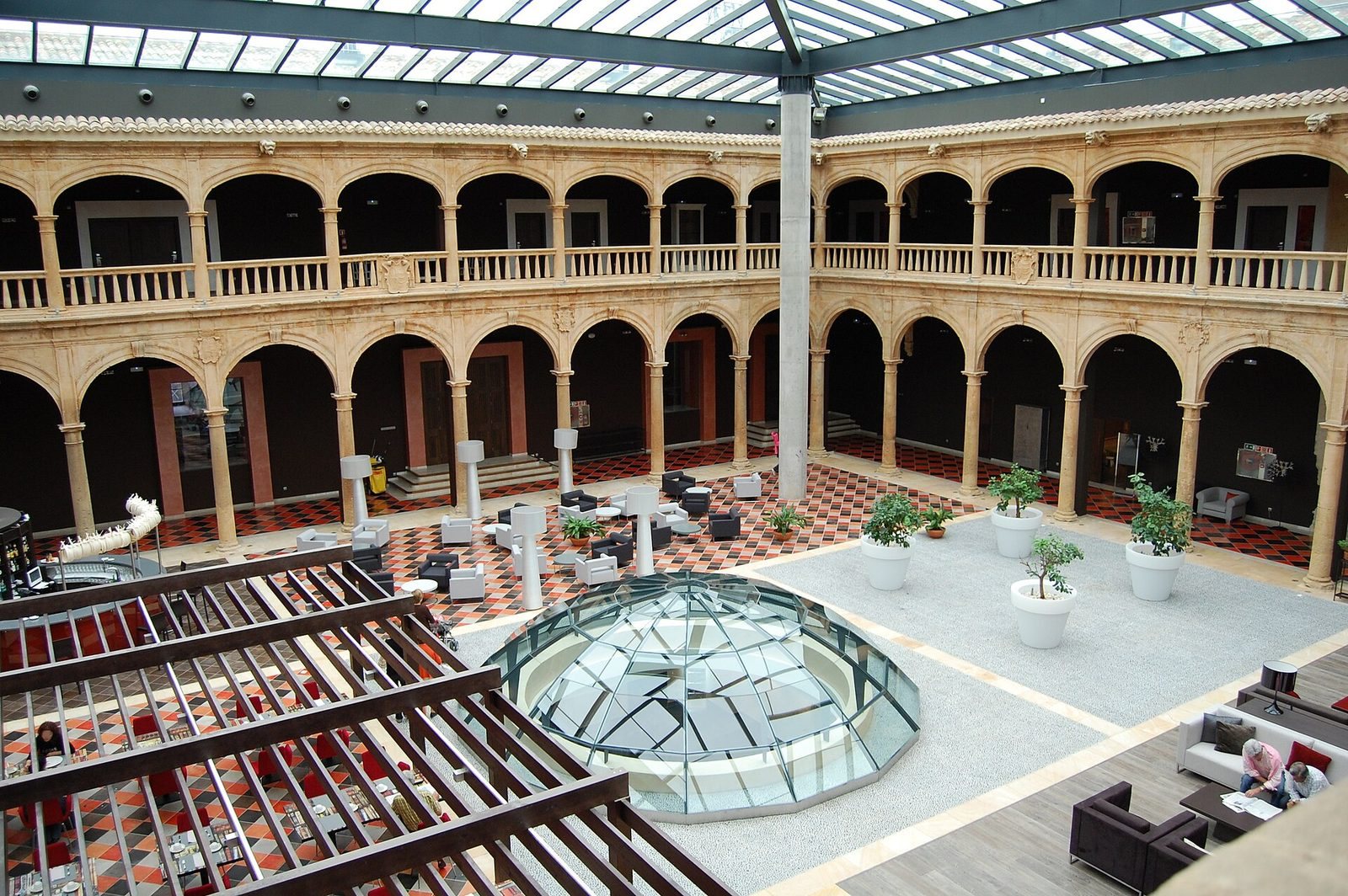
Construction of the university building began in 1541 and was completed in 1549. Its square plan is organized around a central courtyard, with a decorated Plateresque entrance and a two-storey Renaissance cloister.
Building layout
Entrance façade
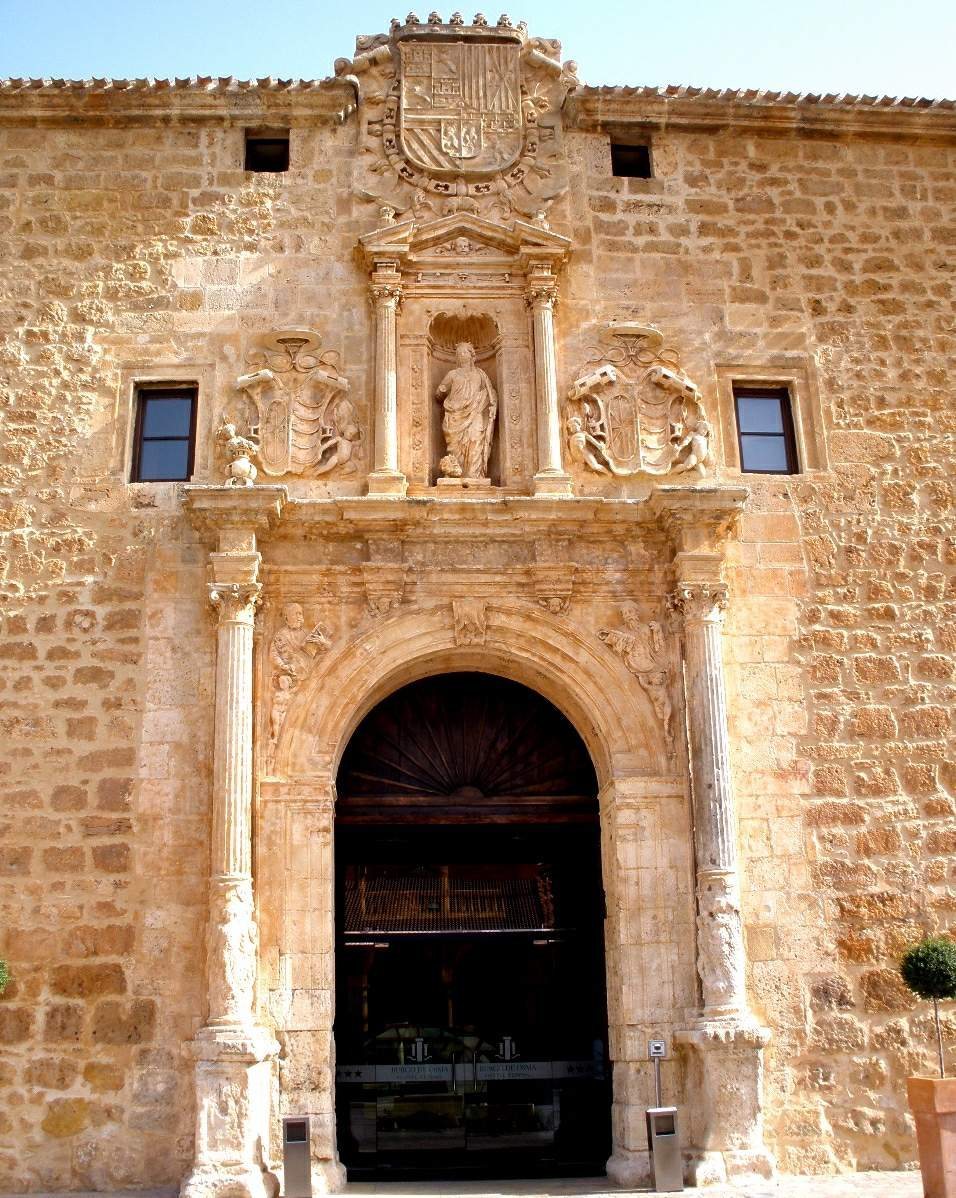
The entrance façade is in the ornate Spanish Renaissance style known as Plateresque. Two large columns frame the entrance; grotesques and relief figures decorate their bases, while their upper sections are fluted. Above the entrance lintel, a niche holds an image of Saint Catherine of Alexandria, with Bishop Acosta’s coats of arms on either side. A triangular pediment crowns this arrangement. Above it, Philip II’s imperial coat of arms, added later, interrupts the cornice.
Central courtyard
The square courtyard has two storeys linked by a monumental staircase. Double arcades run around it on Tuscan columns, which have plain shafts and simple capitals. The lower level has semicircular arches; those above are flattened, low-curving basket-handle arches. The courtyard also bears the university patron’s coats of arms and includes gargoyles.
Hotel conversion
The present hotel includes a thermal area of 1,500 square metres across two basement levels, as well as 62 rooms.