Burgruine Gutrat: A Medieval Rock Castle in Austria
Visitor Information
Google Rating: 4.4
Popularity: Very Low
Country: Austria
Civilization: Medieval European
Site type: Military
Remains: Castle
History
Burgruine Gutrat is a medieval rock castle situated near the town of Hallein in Austria. It was built during the 12th century by the Archbishopric of Salzburg as part of efforts to control key resources and territory in the region.
The fortress was commissioned by Archbishop Adalbert III and constructed under the supervision of Chuno von Werfen-Schnaitsee, who served as a ministerial official to the Salzburg archbishopric. Upon completion of the castle, likely by the year 1209, Chuno adopted the name “von Gutrat,” reflecting his association with the new stronghold. The castle’s main role was to secure the valuable saltworks rediscovered at the base of the nearby Tuval mountain. This resource was crucial for the economy, and the fortress helped assert the archbishop’s dominance over the Salzach valley. It also served to settle territorial disputes with the neighboring Prince Provostry of Berchtesgaden in Salzburg’s favor.
By around 1300, after the salt deposits had been exhausted, the castle’s strategic significance declined swiftly. The Gutrat family, who had held the castle as a fief, fell from the archbishop’s favor, and control over the property reverted to the archbishopric. Although the castle was granted again as a fief, the last known member of the Gutrat lineage died in 1304. Following this, the castle was abandoned and gradually fell into ruin.
The castle’s presence persisted in historical records, including its depiction on a map created in 1626 by Johann Faistenauer. On this map, which delineates the boundary between Berchtesgaden and Salzburg, the site is marked under the name “Gvedrath,” illustrating the evolution of its name over time. In modern history, restoration efforts took place between 2002 and 2004, overseen by the state of Salzburg. Although it remains a ruin, it is now privately owned.
Remains
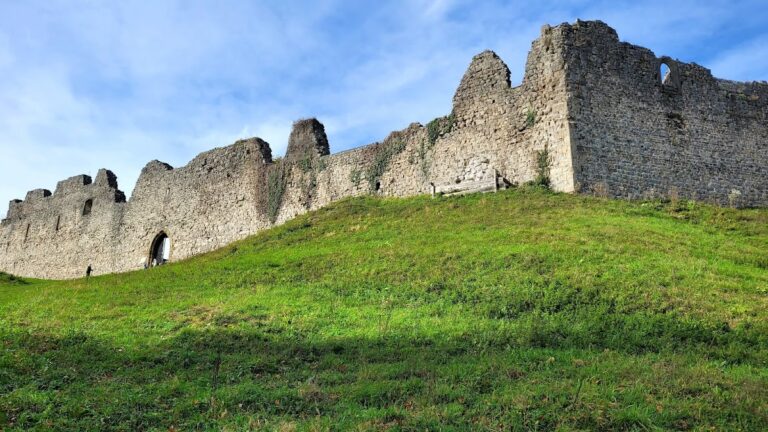
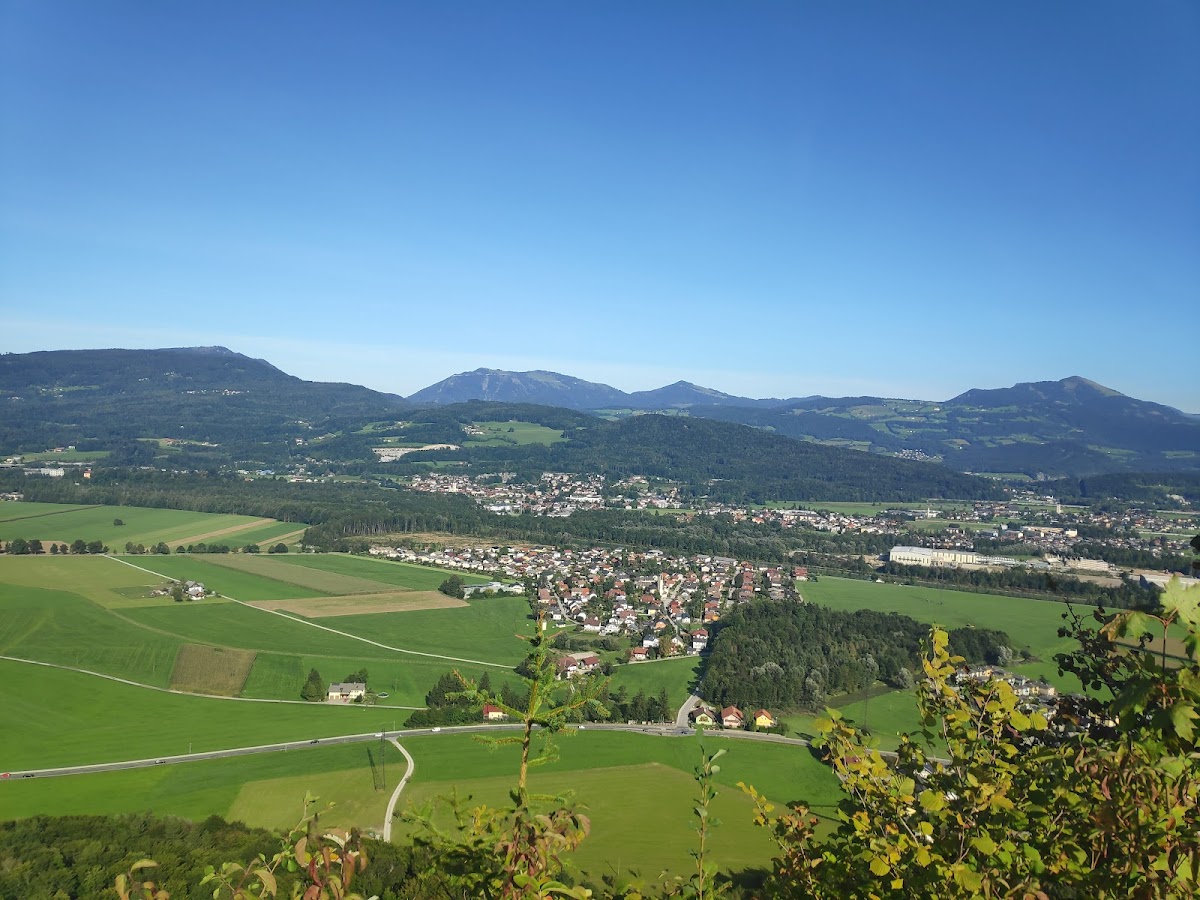
The ruins of Burgruine Gutrat occupy a prominent rocky outcrop made of limestone at an elevation of 622 meters, overlooking the Salzach valley. The castle complex extends in a narrow fashion along a ridge oriented north to south, adapting to the natural contours of the rock. This construction choice reflects a typical medieval approach to building defensive sites that take advantage of natural terrain.
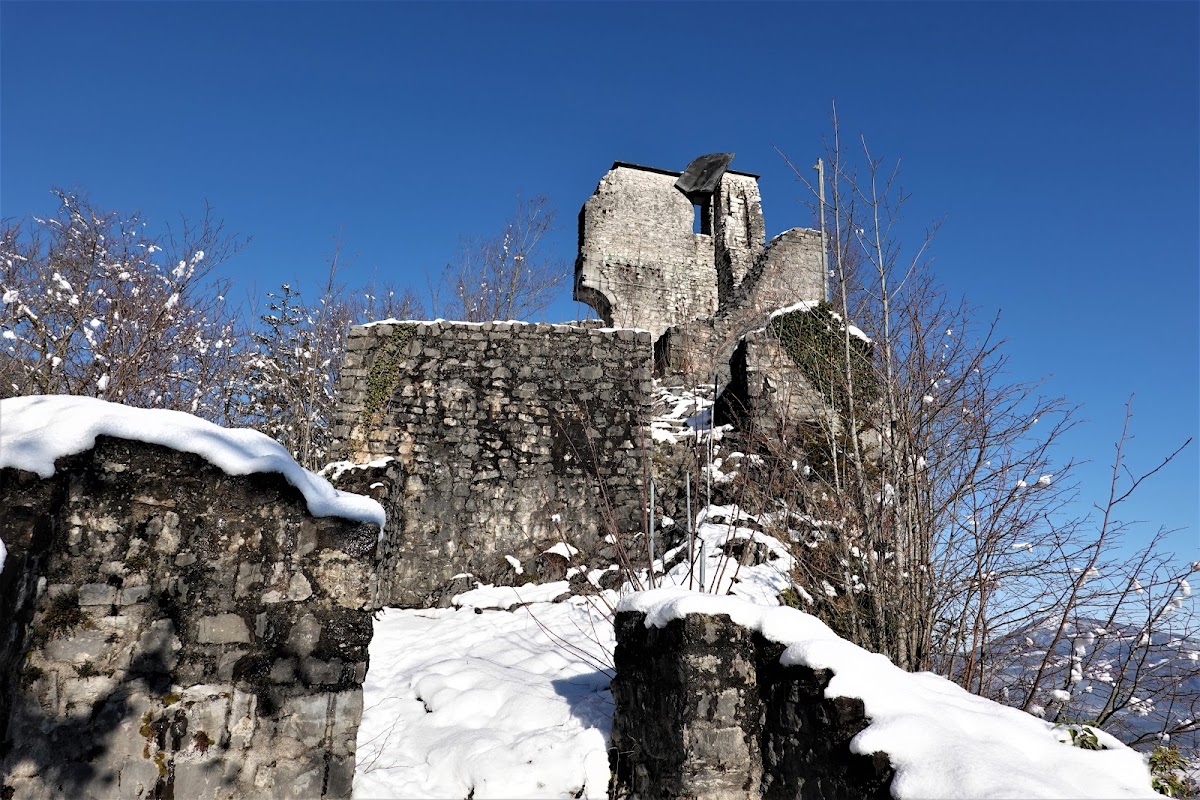
At the northern end of the site lies the highest point, where the palas, or main residential building, is located. This structure once served as the primary living quarters and administrative center of the castle. Adjacent to the palas are the remnants of the bergfried, a tall main tower used primarily for defense and as a lookout point. Though only foundations survive, their location next to the main residence indicates an integrated defensive design.
To the south, the castle features two polygonal outer courtyards, which provided additional layers of defense and space for service buildings or activities. These courtyards are enclosed on their southern edge by a small gate tower, which likely controlled access to the inner castle areas. Access to the ruin today follows the narrow rocky ridge that served as the castle’s natural approach; this route is guarded at a critical turn by a small tower-like structure, emphasizing the defensive strategy employed at vulnerable points.
Physical traces visible on the walls include holes that once supported wooden ceilings, revealing aspects of the castle’s internal construction methods. Built primarily from local limestone, the castle’s walls were closely adapted to the limestone rock outcrop, blending natural and man-made elements. Overall, the surviving remains comprise partial ruins of the palas, bergfried foundations, gate tower, and outer courtyards, offering insight into the castle’s original layout and defensive arrangements despite the passage of centuries.
Nearby sites