Burg Schrofenstein: A Medieval Rock Castle in Austria


Site at a Glance
- Rating
- 4.3
- Popularity
- Low
- Country
- Austria
- Primary era
- Medieval
- Eras represented
- Medieval
- Civilizations
- Holy Roman Empire
- Site type
- Military
- Remains
- Castle
On this page7 sections
History
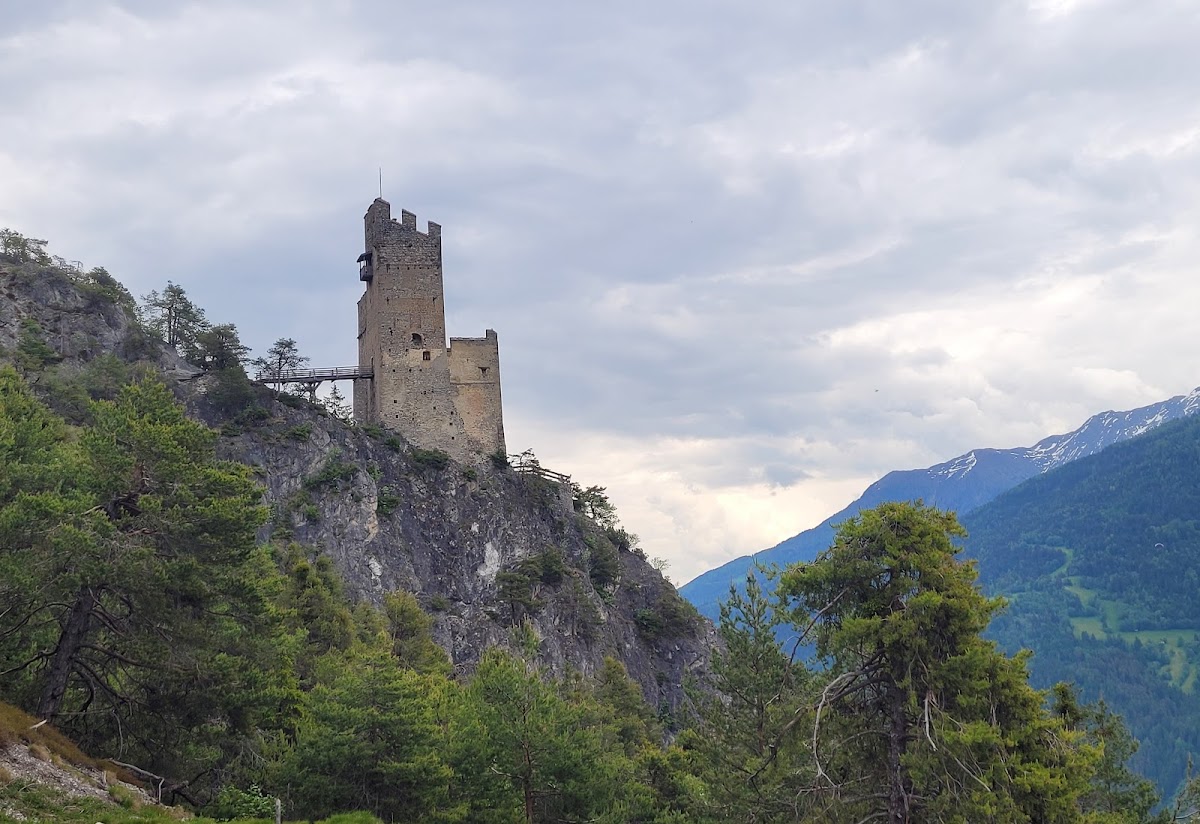
Burg Schrofenstein is a ruined rock castle in Austria, positioned above the Perjen district of Landeck on an elevated mountain spur. From this position, it controlled routes into the Vinschgau through the Arlberg and Fernpass, the mountain passes connecting the surrounding regions.
Medieval lordship
The castle temporarily housed a court and later became the seat of ministerials from Chur. Ministerials were medieval officials or members of the service nobility who held land and authority for a higher lord or institution. Chur was a historic city and ecclesiastical center in present-day Switzerland.
From the thirteenth century, Burg Schrofenstein served as the ancestral castle of the Tyrolean Schrofenstein family. The family died out in 1546, after which the castle belonged for a long period to the Counts and Princes of Trautson.
Decline and preservation
The castle began to decline during the nineteenth century. Its surviving keep was later restored by a private owner, while the wider complex remained a ruin. Burg Schrofenstein is protected as a cultural monument in Austria and is included in the heritage list for Stanz bei Landeck.
Remains
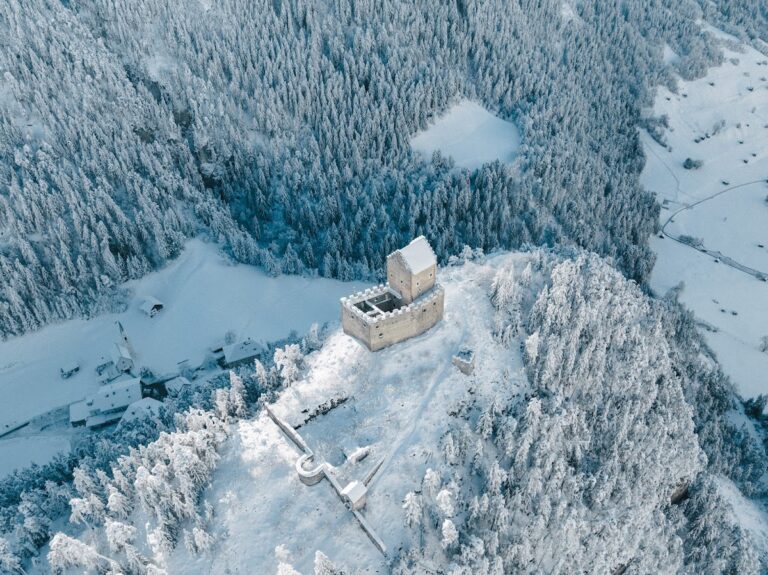
Burg Schrofenstein is a rock castle built directly on a rocky spur at approximately 1,122 metres above sea level. The site lies in the eastern part of Stanz bei Landeck, above Perjen, and is difficult to access. The surviving structures occupy the elevated castle position, with the remains of a lower stable approximately 50 metres below and the former farmyard farther away in the direction of Stanz.
Castle structures
Restored keep
The keep, the main fortified tower of a medieval castle and often its strongest defensive and residential structure, is the principal surviving building at Burg Schrofenstein. It stands approximately 12 metres high and has been restored. The rest of the castle is preserved as a ruin around this remaining tower.
Lower stable
Approximately 50 metres below the castle are the remains of a stable that belonged to the complex. The lower structure survives in a fragmentary state, while the farmyard occupied a more distant position toward Stanz. Together, these remains preserve part of the castle’s wider arrangement beyond the keep itself.