Burg Perchtoldsdorf: A Historic Castle in Austria
Visitor Information
Google Rating: 4.6
Popularity: Medium
Official Website: www.burg-perchtoldsdorf.at
Country: Austria
Civilization: Early Modern, Medieval European, Modern
Site type: Military
Remains: Castle
History
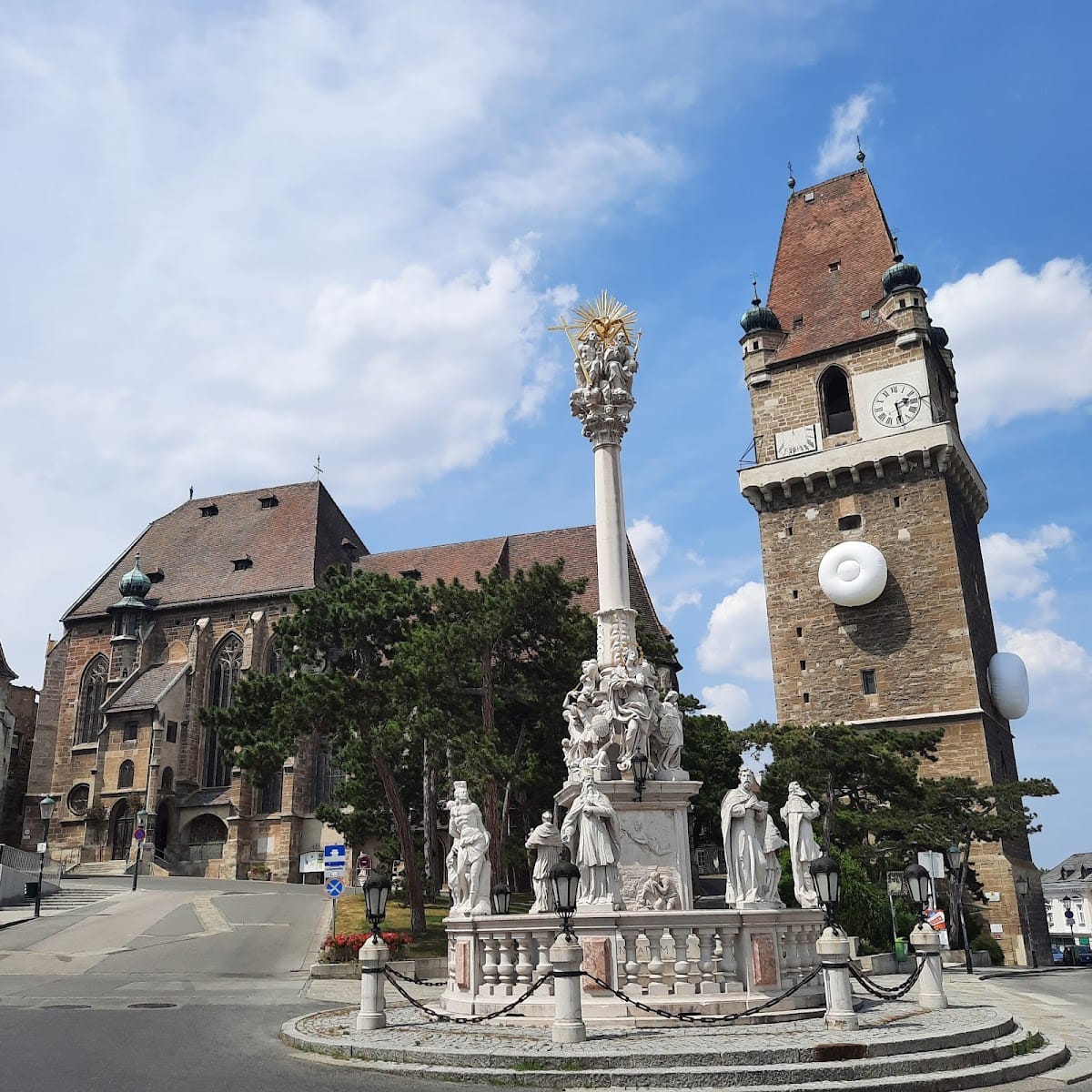
Burg Perchtoldsdorf stands on the northern side of the market square in Perchtoldsdorf, Austria, near the Vienna Woods. Its origins likely date back to before the year 1000, when it was built to defend the Babenberg lands against repeated Hungarian raids. The earliest fortification consisted of a stone tower surrounded by wooden buildings, all enclosed by a palisade and moat. This early castle primarily housed defenders guarding the eastern frontier.
The first known lord, Heinricus de Pertoldesdorf, appears in records from 1138. His successor replaced the wooden structures with stone, adding a bailey enclosed by a wall and constructing the southern tower, known as a bergfried, which still stands today. The castle chapel, located on the second floor, was elevated to parish church status in 1217 by the Bishop of Passau, marking its growing religious importance.
In 1232, Otto I of Perchtoldsdorf transferred ownership of the castle to Melk Abbey as a freehold but kept it as a fief. Otto I later joined a noble revolt against Duke Frederick the Warlike, which led to the castle’s destruction by the duke’s forces. Only the foundations and part of the south wall remained. Otto then moved to Kammerstein castle, a new residence he had built.
A separate town castle was constructed near the southeast corner of the current market square to serve administrative functions. Otto II, who fought alongside Rudolf of Habsburg at the battles of Dürnkrut and Jedenspeigen, rebuilt the ancestral castle, likely completing it around 1270. This reconstruction restored the family’s presence in the area.
Otto III later joined another noble uprising, which resulted in the destruction of all three of his castles—ancestral, town, and Kammerstein—by Duke Albert I around 1290. Otto III probably died while imprisoned following this conflict. After the Perchtoldsdorf family line ended with Heinrich IV, the castle reverted to Melk Abbey, which granted it as a fief to the Dukes of Austria.
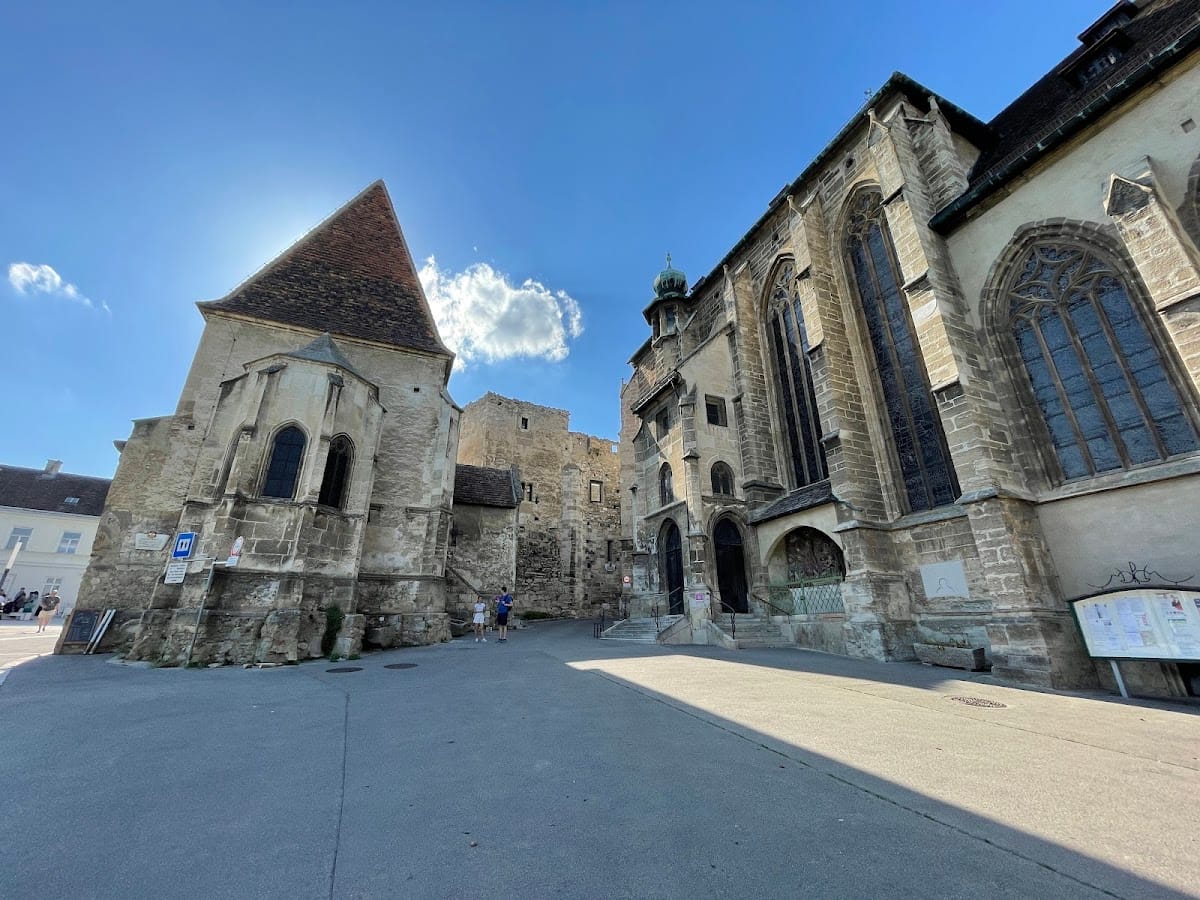
Under ducal ownership, the castle was rebuilt in Gothic style. This phase included the construction of a well and a ducal chapel annexed to the parish church, reserved exclusively for the ducal family. The castle also served as a residence for widowed duchesses, such as Elisabeth of Virneburg and Beatrix of Zollern. Beatrix founded a hospital and the hospital church in Perchtoldsdorf, which still exists today.
The castle and town suffered during the mid-15th century conflicts between Emperor Frederick III and Archduke Albert VI. Later, in the 1480s, King Matthias Corvinus’s siege of Vienna led to the castle’s complete destruction. After Maximilian I recaptured Vienna in 1490, he showed no interest in restoring the ruined castle and sold it to Manngen von Höhenberg.
In the 16th century, the threat of Turkish invasions prompted local inhabitants to restore the castle’s defenses. Windows were replaced with narrow shooting slits, and an outer ring wall was added. The castle successfully resisted the first Turkish siege in 1529, although the surrounding market town was burned. In 1605, the castle again provided refuge during the approach of Prince Stephen Bocskai and his hajduks.
The castle was burned during the second Turkish siege of Vienna in 1683. In 1794, the inner castle wall was demolished, and neglect led to decay. Plans were made to demolish the castle entirely to create farmland. However, in 1871, the southern tower was restored by Joseph Hyrtl and converted into a workspace. After his death, it served as a museum for several years.
The castle armory was renovated in 1928 and later used as a scout clubhouse following a regional exhibition. From 1958, emergency roofing was installed over the palace hall. In 1964, the former residential wing was transformed into a cultural center. Since 1976, the courtyard has hosted annual summer theater performances. Renovations between 2008 and 2010 added a modern underground event hall and foyer, improved accessibility, and connected the old castle to the new festival hall while preserving the historic structure.
Remains
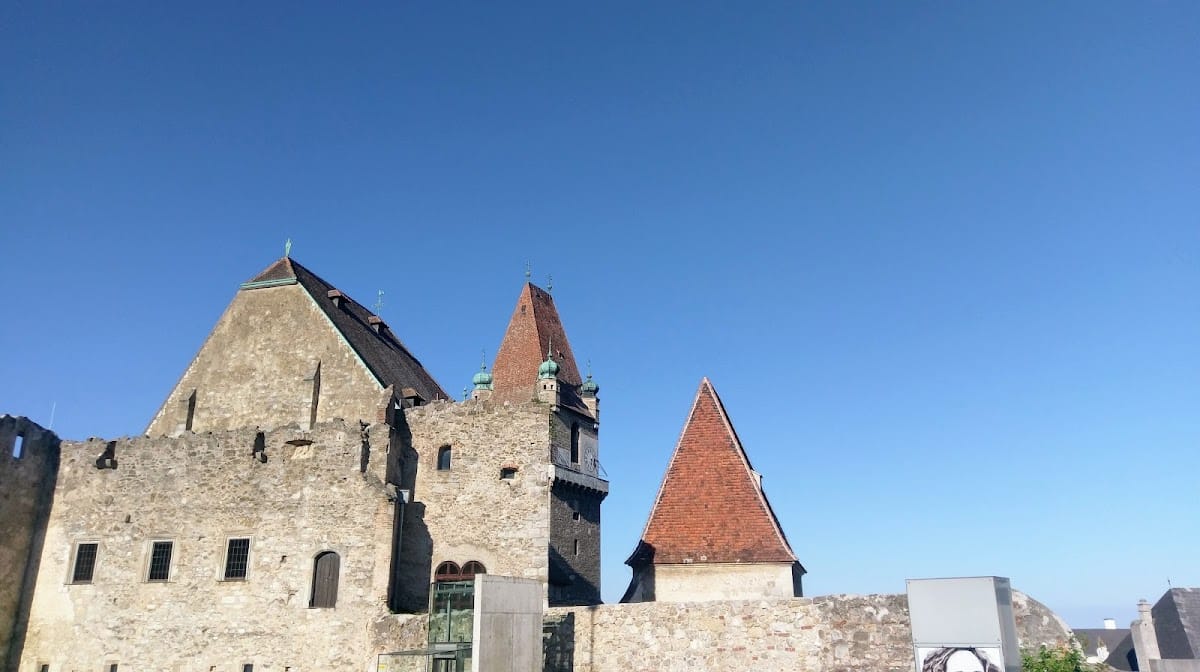
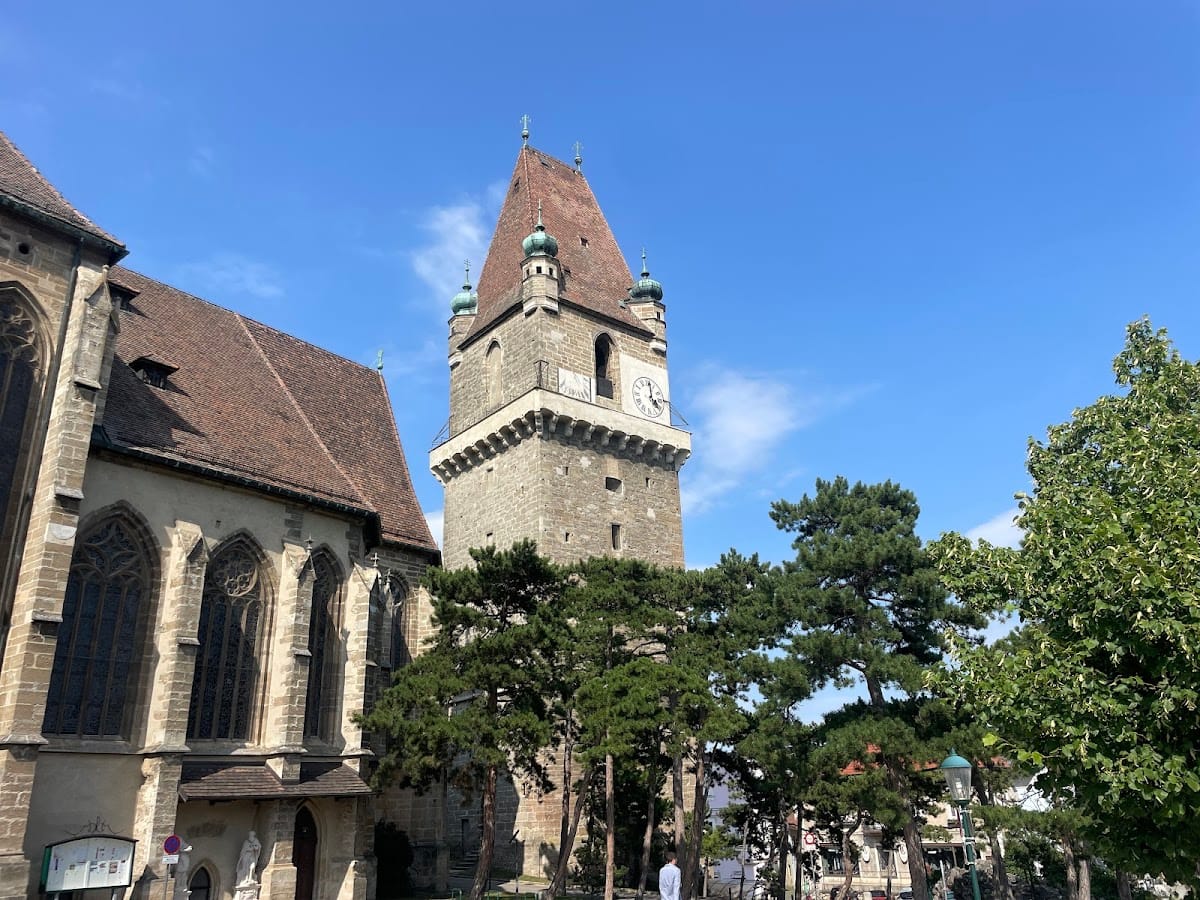
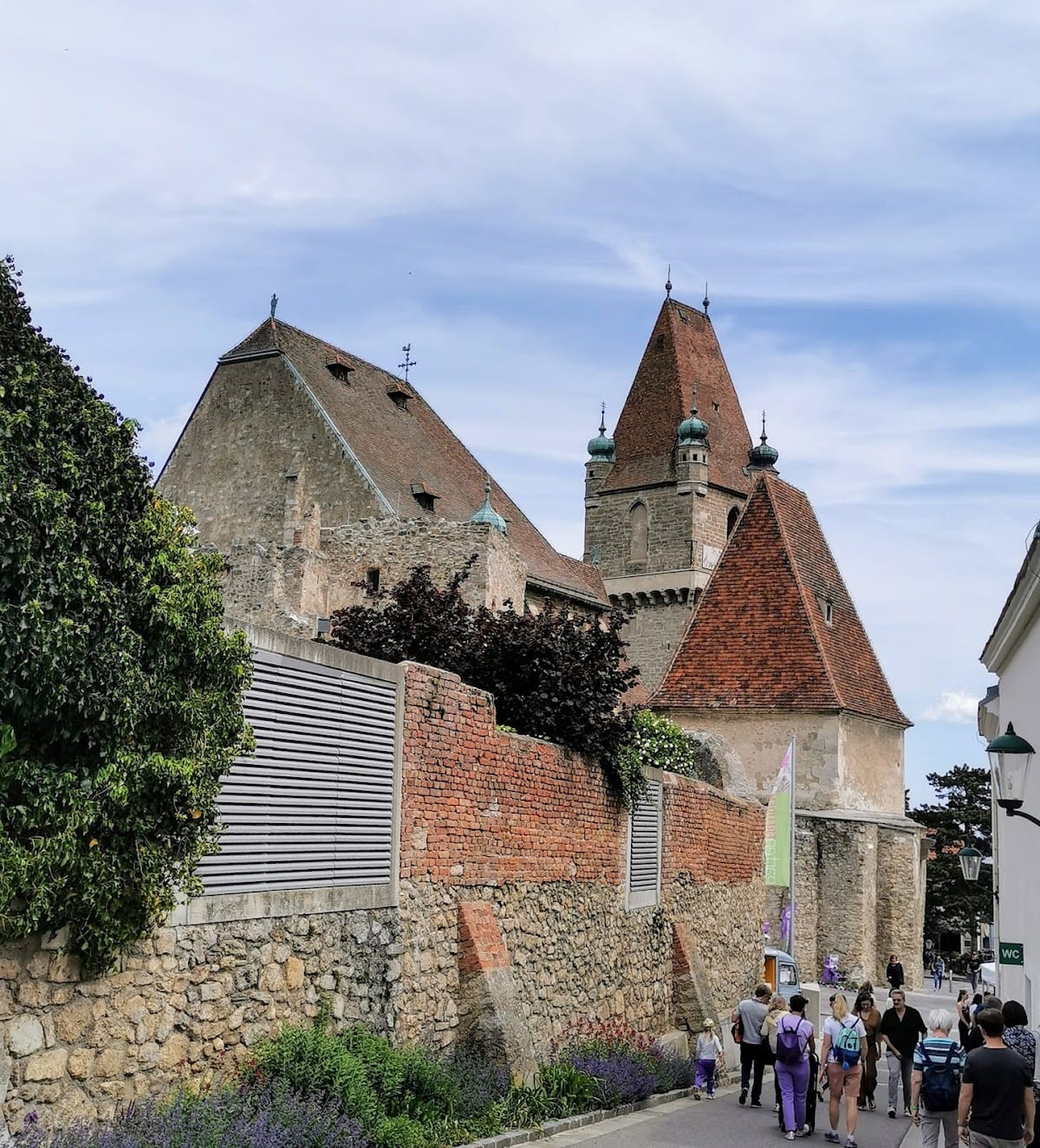
Burg Perchtoldsdorf is a tower castle situated on a slope by the Vienna Woods, originally featuring a stone bergfried and wooden buildings protected by a palisade and moat. The southern tower, built during the early stone expansion, remains standing and served as the main defensive tower. The castle chapel was located on the second floor of this tower and later became a parish church.
A bailey enclosed by a stone wall was added during the early medieval period. Under ducal ownership, a well was constructed within the castle grounds to provide a reliable water source. A ducal chapel was built as an annex to the parish church, reserved for the ducal family’s use.
In response to 16th-century Turkish threats, defensive modifications included replacing windows with narrow shooting slits and erecting an outer ring wall around the castle. After the Turkish sieges, the second courtyard was converted into a cemetery. The inner castle wall was demolished in 1794, and the moat was filled in, altering the original defensive layout.
The southern tower underwent restoration in 1871 and was repurposed as a workspace and later a museum. The armory was renovated in 1928 and adapted for use by local scouts. Emergency roofing was added over the palace hall in 1958 to protect the structure.
Between 2008 and 2010, extensive renovations introduced a modern underground event hall and foyer constructed with glass and steel, replacing the old upper-floor buffet. Barrier-free access and an elevator were installed, and a reinforced concrete passage now connects the historic castle to the new festival hall. These changes sealed the historic exit to the courtyard and rendered the armory gate to the courtyard unusable, balancing modern needs with preservation of the castle’s historic fabric.
Nearby sites